American chestnut returns to Bronx Zoo more than 120 years after blight was first documented; 25 hybrid saplings planted on 265-acre grounds; NYC expands 1,000-tree restoration drive after disease killed nearly 4 billion trees

American chestnut returns to Bronx Zoo more than 120 years after blight was first documented; 25 hybrid saplings planted on 265-acre grounds; NYC expands 1,000-tree restoration drive after disease killed nearly 4 billion trees

American chestnut trees are returning to the Bronx Zoo more than 120 years after the blight was first documented. (Photo: TACF.org) More than 120 years after the American chestnut blight was first documented at the Bronx Zoo, the iconic tree is making a historic return to the same grounds where its devastating decline was first … Read more


At 6, Los Angeles boy Dylan Siegel wrote Chocolate Bar to help his best friend Jonah, who had a rare liver disorder; two years later, the book had raised $1 million for research into the disease

At 6, Los Angeles boy Dylan Siegel wrote Chocolate Bar to help his best friend Jonah, who had a rare liver disorder; two years later, the book had raised $1 million for research into the disease

His mother initially suggested a lemonade stand, but Dylan said he wanted to write a book. At the age of 6, Los Angeles boy Dylan Siegel decided he wanted to help his best friend, Jonah Pournazarian, who had a rare genetic disorder affecting his liver. When his mother suggested that he could raise money through … Read more

In 2012, Tasmania moved 15 devils to Maria Island to protect the species from facial-tumour disease; after 28 were released by 2013, a 3,000-pair penguin colony disappeared

In 2012, Tasmania moved 15 devils to Maria Island to protect the species from facial-tumour disease; after 28 were released by 2013, a 3,000-pair penguin colony disappeared

The facial tumour had severely affected devil populations in many parts of Tasmania In 2012, 28 Tasmanian devils were brought to Maria Island off Tasmania’s east coast as an “insurance population” when facial tumour disease was severely affecting the species. The devils have since thrived, with their numbers reaching up to 90. But their success … Read more

Meet Claire Jiang, the 18-year-old New Jersey student diagnosed with juvenile arthritis in third grade who built a lab model of the disease; her research won $70,000

Meet Claire Jiang, the 18-year-old New Jersey student diagnosed with juvenile arthritis in third grade who built a lab model of the disease; her research won $70,000

Claire Jian, Bergen County Academies, Hackensack, NJ (Source: Society for Science) An 18-year-old student who was diagnosed with juvenile idiopathic arthritis in primary school has won seventh place and a $70,000 award in the 2026 Regeneron Science Talent Search for developing a new laboratory cell model of the disease. Claire Jiang, a senior at Bergen … Read more

60 years after Dutch elm disease devastated America’s 100 million iconic trees, now scientists have infected 6,000 young elms in a radical bid to bring them back

60 years after Dutch elm disease devastated America’s 100 million iconic trees, now scientists have infected 6,000 young elms in a radical bid to bring them back

Six decades ago, Dutch elm disease swept across the United States, killing an estimated 100 million American elms that once shaded streets, parks and college campuses from coast to coast. The fungus, carried by bark beetles, turned majestic, vase-shaped trees into dead standing skeletons and changed the look of countless towns. Now, in a bold … Read more

The disease that decimated American elms could help bring them back

The disease that decimated American elms could help bring them back

MONTPELIER, Vt. — The very disease that has decimated millions of American elms in the U.S. is now being used to bring the iconic trees back. The disease that decimated American elms could help bring them back In Vermont, Leila Wilson, a research ecologist with the U.S. Forest Service, is one of the scientists leading … Read more

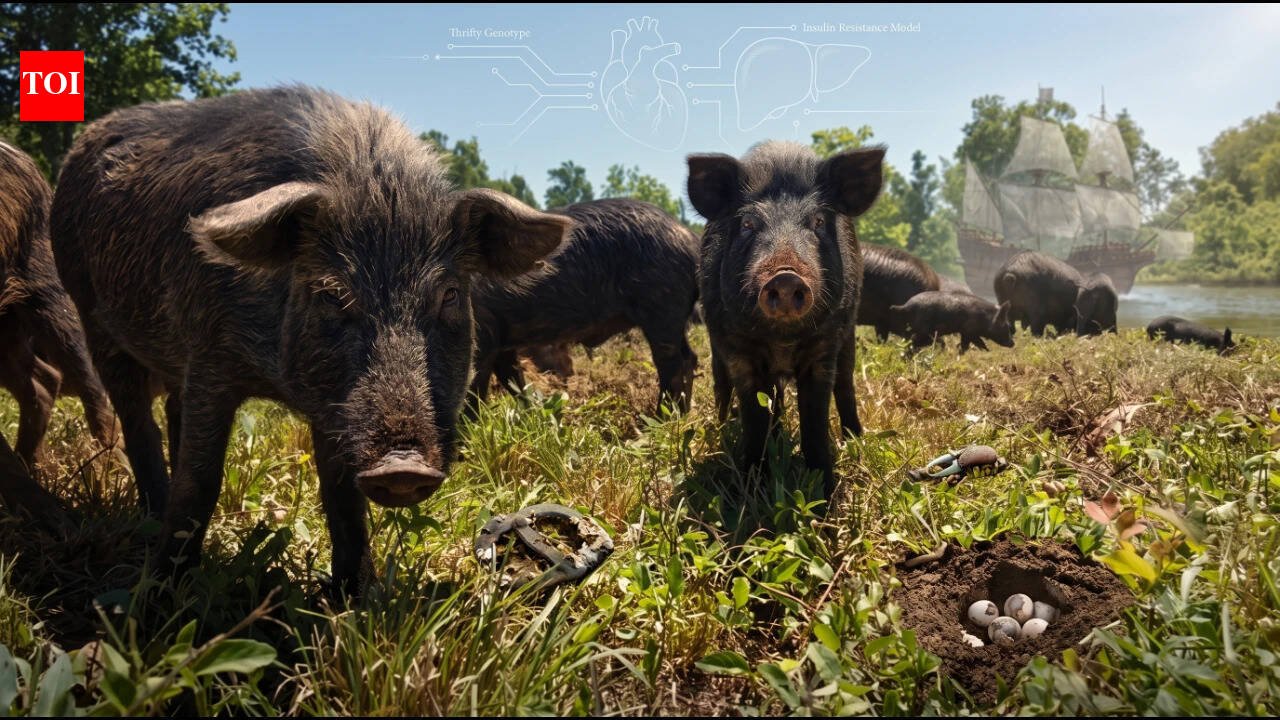
In the 1500s, Spanish explorers left pigs on a Georgia island as future food; centuries of feast and famine produced hogs that rapidly store fat and are now used to study obesity and metabolic disease

In the 1500s, Spanish explorers left pigs on a Georgia island as future food; centuries of feast and famine produced hogs that rapidly store fat and are now used to study obesity and metabolic disease

Ossabaw Island Hogs (Representational Image Generated using AI tool) Centuries ago, Spanish explorers sailing along the coast of what is now the United States brought pigs with them as a practical food supply. Some escaped, while others were deliberately released so future expeditions would find animals waiting when they returned. On Ossabaw Islanda barrier island … Read more