
A student built a particle detector for just $100; the pocket-sized device can track invisible particles raining down from space at light’s speed; it is now being used in high-altitude balloon missions and major physics experiments
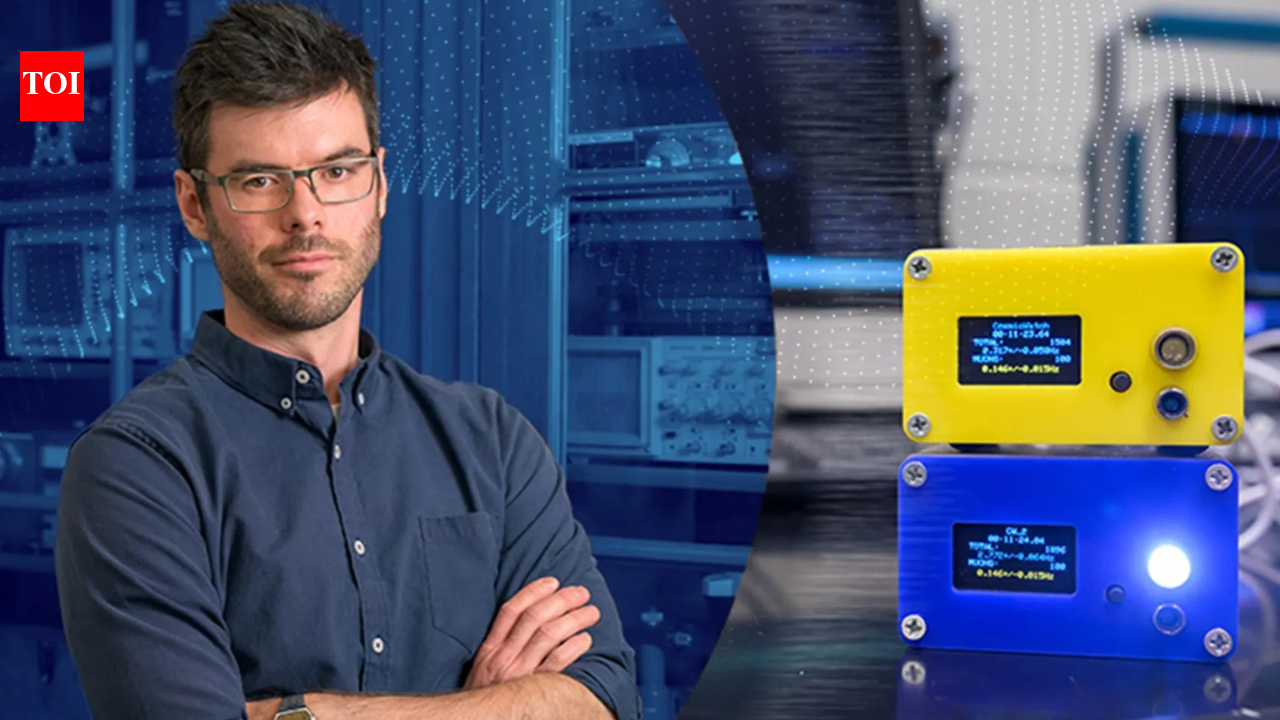
A student built a particle detector for just $100; the pocket-sized device can track invisible particles raining down from space at light’s speed; it is now being used in high-altitude balloon missions and major physics experiments

A device that can detect particles arriving from space does not necessarily require a multimillion-dollar laboratory. A compact detector developed by physicist Spencer Axani began as a low-cost student project and has since grown into a tool used for particle-physics research, education and high-altitude experiments. The University of Delaware detailed its latest developments in September, … Read more

A World War II submarine detector was later used to map magnetic stripes on the seafloor, helping scientists prove that Earth’s tectonic plates move

A World War II submarine detector was later used to map magnetic stripes on the seafloor, helping scientists prove that Earth’s tectonic plates move

A device built to track enemy submarines during the Second World War went on to become one of the most important tools in Earth science. The fluxgate magnetometer, first developed to detect small disturbances in the planet’s magnetic field caused by metal hulls beneath the ocean surface, was later adapted by scientists to study the … Read more