
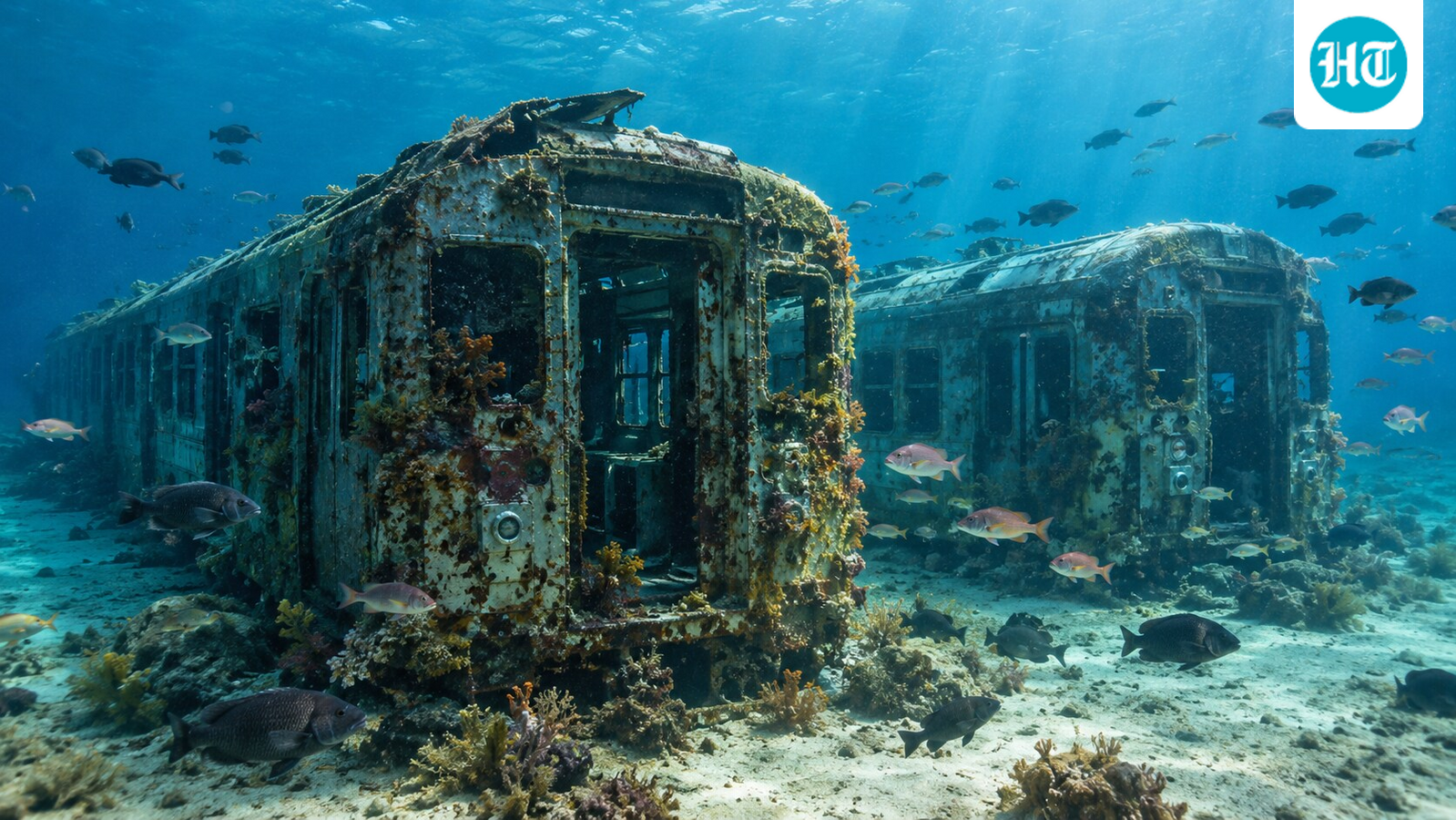
Imagine your daily commute ending at the bottom of the sea. That’s the new life for two retired Atlanta subway cars that Georgia sank in the Atlantic in December 2023. According to a MARTA press release published by Mass Transit magazine, a state team dove on the cars seven months later, in July 2024. They found soft coral and nine species of game fish. That’s not a bad second act for two trains whose journey ended on land.

Where did the subway cars go?
These cars once belonged to MARTA, the transit system of Atlanta, which retired them in 2022. They were then donated to the Georgia Department of Natural Resources (DNR). Each car is 72 feet in length. Before their trip, they were cleared of any hazardous substances and checked by the United States Coast Guard. The cars were transported by barge to the Artificial Reef L, located about 23 nautical miles from Ossabaw Island, in waters 55 to 65 feet deep. The reef covers about two square miles. The cars were deployed on December 21, 2023, and weren’t the first big objects sitting there. The reef already housed U.S. Army M-60 battle tanks, barges, tugs, and New York subway cars. It was created by Georgia in 1976 as part of 32 offshore reefs.
What the divers found
It was the first dive since deployment. The divers saw a good amount of soft coral beginning to grow and nine species of game fish, the kind that anglers like to catch. The sources, however, do not name the species. Marine biologist Cameron Brinton said the team was encouraged by the coral growth and the amount of wildlife activity. One car’s roof had collapsed, which he called typical. Eventually, he said, the cars will continue to change and become a home for sea creatures, including popular sport fish and endangered sea turtles. MARTA noted that fish and other marine life, such as sea turtles, were likely the first to check out the cars, but now corals, sponges, and other encrusting organisms are taking over. Atlanta Magazine adds more detail on the order of arrival. On Georgia’s reefs, smaller baitfish are typically the first to arrive. They are usually followed by bigger game fish and turtles that look for cover in the nooks and crannies. This matters because most of Georgia’s seafloor is sand and shell; only about 5% has the right habitat for game fish. Divers and anglers are already using the reef.
Do artificial reefs really help fish?
Researchers from NOAA science centers, led by Avery Paxton, reviewed 39 studies from around the world. Their 2020 paper published in Frontiers in Marine Science analysed fish communities on artificial reefs compared to fish on natural reefs. It found artificial reefs tend to support similar fish density, biomass, species richness, and diversity. As the papers were collected from all over the world, it gives us a global outlook, not just a localized one to Georgia. However, there is a catch. The authors mention that the results differed according to geographic settings and reef materials. So, reefs should be used strategically, on a location-specific scientific basis.
What we still don’t know
MARTA’s August 2024 release said the longer the cars are underwater, the more corals, sponges, and other organisms will keep growing, but only time will tell what happens next. These updates are also coming from agencies behind the project, so independent studies would give a fuller picture. The review also only considered four fish measures. However, the early signs look promising. For now, there are two old city trains that spent their time on land transporting humans, providing a new home for sea life.