
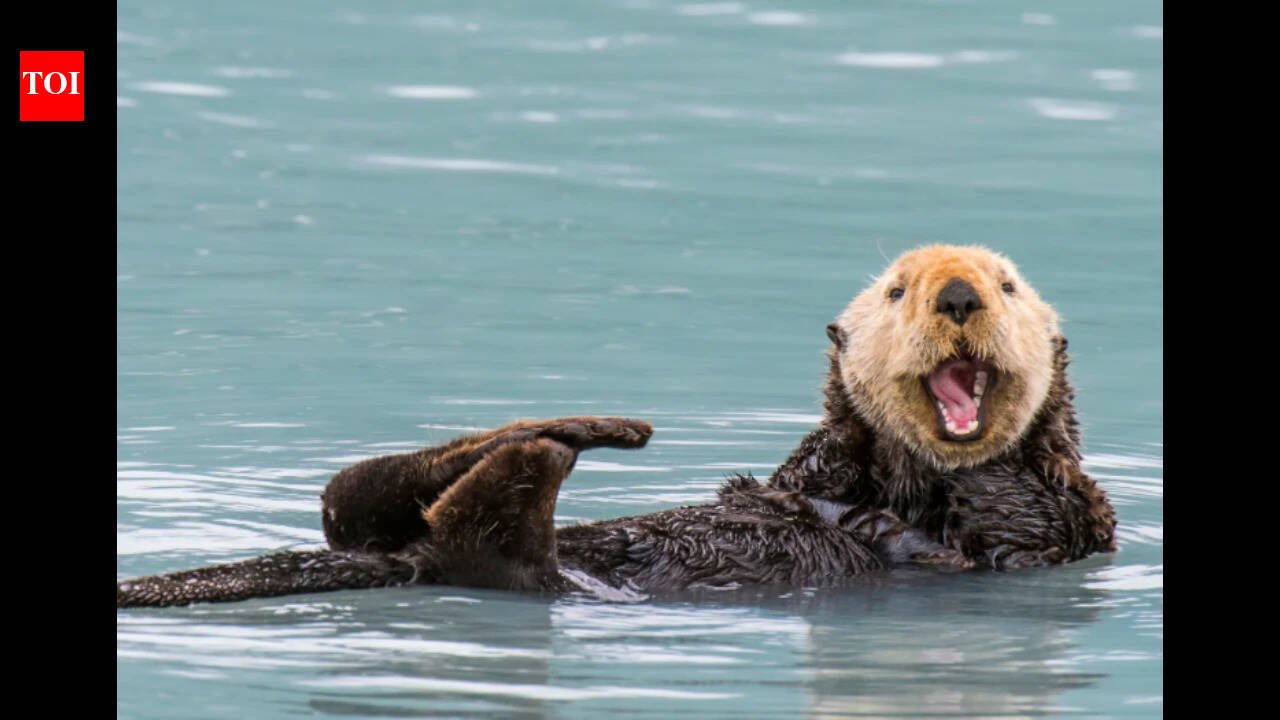
When sea otters returned to California’s Elkhorn Slough in 1984, the estuary was already facing severe environmental pressure. The coastal wetland had high nutrient levels linked to its agriculture-dominated watershed, while eelgrass had fallen to an all-time low of just 2 hectares.Decades later, researchers found that the return of the predators had effects far beyond their own population. Since sea otters recolonised the estuary, the extent of eelgrass beds increased by 600%. A later study also found that erosion of creek banks and marsh edges in areas with large otter populations slowed by an average of 69%.The two studies show how the recovery of a top predator can affect different parts of an ecosystem. The first study, published in PNAS in 2013, examined the relationship between sea otters, crabs, smaller grazers and eelgrass. The second, published in Nature in 2024, found that the effects extended to the physical stability of salt marshes.Elkhorn Slough is a highly nutrient-loaded estuary on California’s central coast. Nutrient concentrations increased sharply in the 1970s, and these changes were associated with a decline in eelgrass between 1965 and 1984. At the same time, nutrient loading in the watershed continued to increase.The return of sea otters changed this pattern through a trophic cascade, a chain of effects that begins with a predator and moves through several levels of the food web.
How Sea Otters Helped Eelgrass
Sea otters feed on crabs, which prey on smaller animals known as mesograzers. These include animals such as sea slugs and isopods. Mesograzers feed on algae growing on eelgrass.This algae, also called epiphytes, can cover eelgrass and reduce the light reaching its leaves. By eating crabs, sea otters indirectly allow more mesograzers to survive. These grazers then remove more algae from eelgrass.The 2013 study found that crabs made up 52% of the diet of sea otters feeding on or near eelgrass beds. Crabs of the Cancer genus alone accounted for 43% of their diet.After sea otters returned, crab biomass and size declined significantly. Researchers also found a strong relationship between sea otter predation on crabs and eelgrass expansion between 2006 and 2012.The pattern was also seen when researchers compared different parts of the ecosystem. Areas with more sea otters had fewer and smaller crabs, more large mesograzers, lower loads of algal epiphytes and greater eelgrass biomass.Experiments supported the same explanation. When researchers simulated low sea otter predation by using large crabs, more sea slugs died, algae increased and eelgrass lost biomass. When crab predation was reduced, mesograzers increased and eelgrass performed better.The findings were significant because nutrient pollution continued to affect the estuary. Despite these pressures, sea otter predation helped reduce one of the biological effects of nutrient loading and supported eelgrass growth.
From Eelgrass To Marsh Stability
The 2024 Nature study looked at another part of Elkhorn Slough- its salt marshes and creek edges. Researchers found that as sea otter numbers increased, erosion of marsh edges generally slowed, even as the ecosystem faced physical pressures including rising sea levels, stronger tidal currents and increased water flow from inland areas.The Elkhorn Slough Foundation said erosion of creek banks and marsh edges in areas with large otter populations slowed by an average of 69%.The researchers linked this change to the predators’ effect on marsh crabs. These crabs burrow into salt marsh soil and feed on marsh roots. Their activity can weaken the edges of marshes and contribute to erosion.“Crabs eat salt marsh roots, dig into salt marsh soil, and over time can cause a salt marsh to erode and collapse,” Brent Hughes, lead author of the study, said.“This had been happening at Elkhorn Slough for decades until sea otters recolonized the estuary in the mid-1980s,” he added. “After a few decades, in areas the sea otters had recolonized, salt marshes and creekbanks were becoming more stable again, despite rising sea levels, increased water flow from inland sources, and greater pollution.”Researchers conducted predator-exclusion experiments in five marsh creeks. These experiments showed that sea otters suppressed burrowing crabs, which increased marsh-edge strength and reduced erosion.
A Predator With Wider Effects
Together, the studies show that the return of sea otters affected both living organisms and the physical structure of the coastal ecosystem.The earlier research showed how the predator’s presence moved through the food web: fewer crabs meant more mesograzers, fewer algae on eelgrass and greater eelgrass growth.The later research found another chain of effects. Fewer marsh crabs meant less damage to marsh roots and soil, helping creek banks and marsh edges remain more stable.The researchers said the findings suggest that the loss of top predators can contribute to the decline of coastal wetlands, while restoring them may help re-establish ecosystem function and geomorphic stability.