
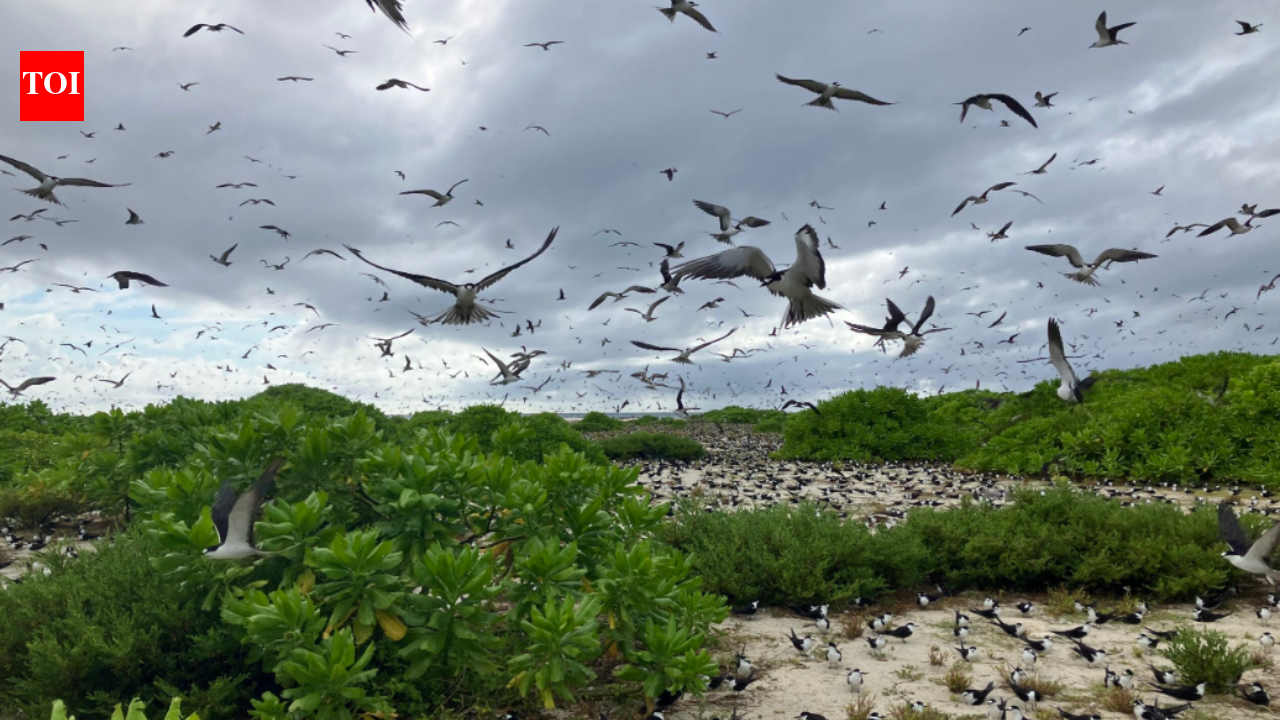
A tiny coral island on the northern edge of the Seychelles Bank was once close to ecological collapse. Years of commercial farming, habitat destruction and wildlife exploitation had badly damaged its natural environment. Today, after more than five decades of careful conservation, Bird Island is home to hundreds of thousands of breeding seabirds and has become one of the world’s striking conservation success stories. The turning point came in 1967, when Seychellois accountant Guy Savy and his partners bought Bird Island. At the time, decades of human activity had reduced the island’s natural ecosystem to a fraction of what it once was.
Decades of environmental decline
European explorers first recorded the island in 1771 as a place with “birds innumerable”. But by the late 19th and early 20th centuries, much of its natural environment had been destroyed. Between 1896 and 1906, industrial operations removed about 17,000 tons of guano from the island for export. Agricultural clearing then replaced native vegetation with plantations of papaya, cotton and coconut. Thick coconut trees reduced the open ground needed by nesting seabirds, while introduced rats, rabbits and large-scale egg collection put further pressure on wildlife. The island’s sooty tern population suffered badly. Once numbering more than one million breeding pairs, it had fallen to only about 18,000 to 20,000 pairs by the mid-1960s. The remaining birds were restricted to a small sandbank at the northern end of the island.
Reversing the damage
According to historical records published by Bird Island Seychelles, Savy and his partners realised that the island needed a completely different approach to land management. They began a long-term programme to restore damaged habitats while developing a low-impact eco-tourism business that could help pay for conservation work. Workers removed dense areas of coconut palms and reopened the sandy spaces needed by ground-nesting birds. Conservation teams also began removing introduced pests and eventually succeeded in eliminating rats and invasive rabbits from the island. Over time, native plants were allowed to return across the island. As the vegetation and habitats recovered, they created better conditions for native wildlife to breed and survive.
Major milestones in recovery
The island’s recovery took place gradually over several decades:
- 1967: Savy and his business partners buy the island and stop destructive commercial activities.
- 1973: Bird Island opens its first 10 eco-chalets, creating a source of income to support conservation.
- 1990s: Conservationists begin formal sea turtle monitoring programmes and continue pest control efforts.
- 1998: Broadcaster Sir David Attenborough and a BBC camera team visit the island to film its recovering sooty tern colony for The Life of Birds.
Native species make a comeback
Data recorded by the Island Conservation Society shows how strongly wildlife responded as breeding areas were restored. The sooty tern population grew from fewer than 20,000 breeding pairs in 1967 to an estimated 700,000 pairs in recent counts. The colony is now one of the largest and most important seabird colonies in the Western Indian Ocean. The migratory birds return every year around late March, arriving during the south-east trade winds. They lay their eggs in May and remain on the island until around October before returning to the open ocean. Tracking studies have shown just how far the birds travel outside the breeding season. They can cover thousands of miles across the Indian Ocean, reaching areas as far away as the Bay of Bengal and waters around Sri Lanka. The recovery has not been limited to seabirds. Conservation programmes developed with marine biologist Dr Jeanne Mortimer have helped protect nesting beaches used by hawksbill and green turtles. Bird Island also provides a protected home for giant tortoises, including “Esmeralda”, a giant tortoise recognised as a world-record animal.
Marine threats remain
Despite the island’s success on land, conservationists warn that the seabirds still face serious threats in the surrounding ocean. Reports from the Island Conservation Society point to several pressures, including microplastic pollution in feeding areas, over-fishing of tuna that can affect the movement of smaller prey towards the surface, and changes in sea temperatures. Researchers say keeping the island’s nesting grounds safe and free of invasive species remains essential. A protected breeding habitat gives the seabirds a better chance of surviving the wider environmental changes taking place across the ocean. Bird Island’s transformation shows how badly damaged island habitats can recover when land is managed for conservation over the long term. Its experience also offers an example of how private ownership and carefully managed eco-tourism can work together to restore wildlife and protect fragile island ecosystems.