
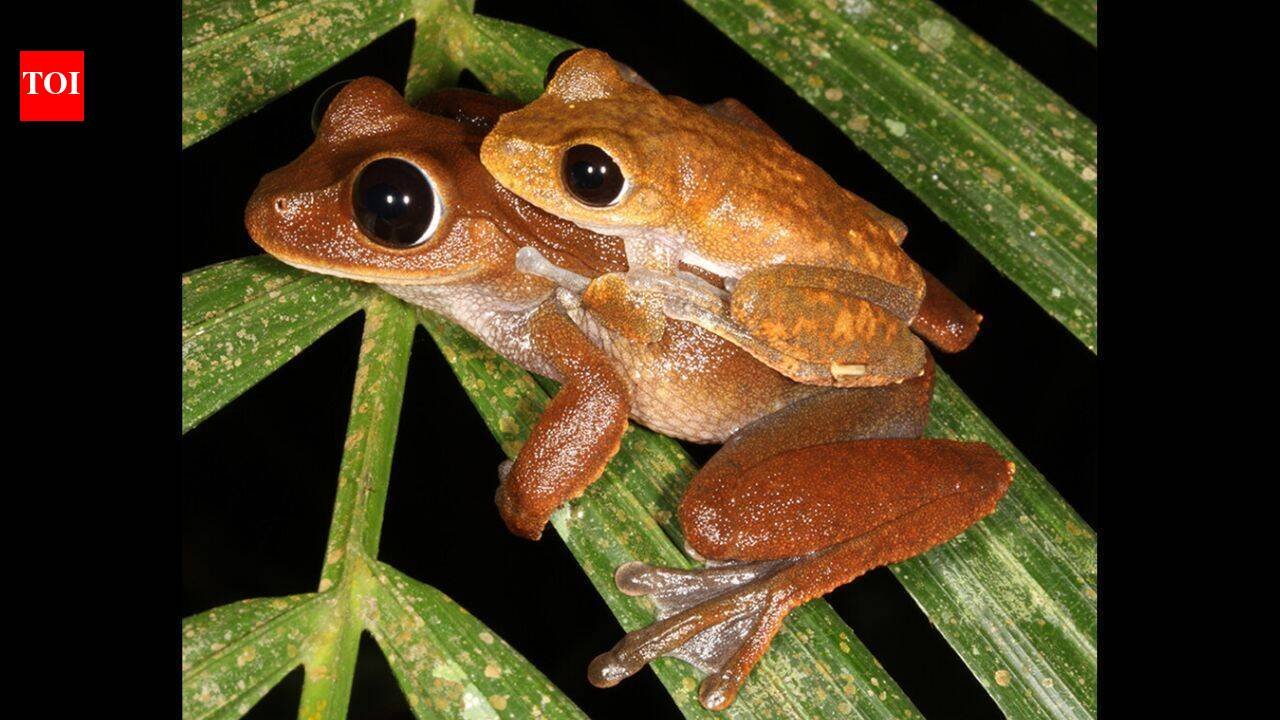
In the cool, wet upland streams of Queensland’s Wet Tropics, several species of rainforest frog were pushed to the brink in the 1980s and 1990s by chytrid fungus, an aquatic pathogen that attacks frog skin and has driven extinctions worldwide. For decades, researchers lacked clear data on whether some of these species still persisted in remote creeks or had vanished entirely. Now, a team from James Cook University (JCU) has used environmental DNA (eDNA) to detect threatened frogs without ever seeing or hearing them, analysing tiny water samples collected up to 22 km downstream from where the animals live. As reported by JCU, the study confirms that some populations are more widespread and, in some cases, recovering than previously thought.A deadly fungus reshaped Australia’s frog communitiesThe chytrid fungus arrived in Australia through the international trade in frogs, with outbreaks first recorded in the late 1970s. Since then, it has been recognised as one of the biggest drivers of biodiversity loss in recent decades, particularly among amphibians.“The fungus has had its greatest impact on frogs in cool wet areas. The upland frogs that hang around streams were hardest hit,” said JCU Professor Conrad Hoskin, a co-author of the research paper. In North Queensland’s Wet Tropics rainforests, the Waterfall Frog and Lacelid Frog were largely extirpated from the uplands by the early 1990s, leaving researchers with little survey data to assess whether they persisted in many creeks, as per the report.Good news: “They’re bouncing back”JCU TropWATER’s Dr Cecilia Villacorta-Rath led the new study, which used eDNA to search for genetic traces of three endangered frog species in creek and stream water. The results showed that the frogs were more widespread than previously thought, turning up in many creeks, including areas where they had not been recorded since the chytrid outbreaks.“It’s good news that the frogs were more widespread than previously thought,” Dr Villacorta-Rath said, as reported by JCU. “They’re bouncing back.”The findings offer a rare positive signal in a story dominated by decline. For conservationists, knowing where these species still occur is the first step toward protecting and potentially expanding their remaining populations.The Armoured Mistfrog: one surviving population confirmedOne of the most dramatic cases involves the Critically Endangered Armoured Mistfrog, which was thought to be extinct in the early 1990s until it was rediscovered at a single site in 2008. The new eDNA results confirm that this single location is indeed the only population that survived the catastrophic impacts of chytrid disease.“When we sampled historic creeks and other likely creeks we didn’t find any evidence of them,” Professor Hoskin said, as per JCU’s report. That finding sharpens the focus for conservation efforts: protecting and possibly bolstering this one remaining group is now the top priority for the species.How eDNA works: tiny drops, big answersTraditionally, surveying for frogs in the Wet Tropics has meant trekking into extremely remote and inaccessible locations, upland waterfalls and streams buried deep within the rainforests of Far North Queensland. This time, the research team took a different approach. They sampled water from more accessible lowland locations in creeks and streams of the Daintree Rainforest, then analysed the samples for genetic traces or DNA fragments shed by the three endangered frog species.“Our eDNA techniques can successfully detect frog populations using water samples collected as far as 22 km downstream from where they live,” Dr Villacorta-Rath said. As frogs move, feed and breed, they leave behind skin cells, mucus and other biological material in the water. Modern lab methods can detect even tiny amounts of this environmental DNA, revealing which species are present without needing to spot individuals directly.“Environmental DNA helps us find endangered populations without having to check every river and stream to spot individuals directly,” she explained, according to the report.Opening the door to citizen science and broader monitoringThe simplicity of eDNA field sampling is one of its biggest strengths. The protocol is user-friendly enough to be used by a wide range of end-users, including Indigenous rangers, government agencies, industry partners and citizen science groups.“The eDNA field sampling protocol is very user-friendly. But guidance on interpretation of results is needed, given that there are many factors that affect eDNA detectability,” Dr Villacorta-Rath said. Things like water temperature, flow rate, time since rain and how samples are stored can all influence whether DNA is detected.In a related project, the team is already asking citizen scientists to collect eDNA samples from waterways in Far North Queensland to better understand fish diversity. Over time, similar approaches could be expanded to monitor frogs, turtles, crustaceans and other aquatic wildlife across the region.A valuable first step for conservationTropWATER at JCU is leading advances in eDNA science to address ecological challenges in the Australian Tropics. Projects like this frog study are a valuable first step: they identify where at-risk populations may still be found, allowing managers to prioritise protection, restoration and, where appropriate, reintroduction efforts.The research was supported with funding from the Australian Government under the National Environmental Science Program and has been published in the journal Conservation Science and Practice. For scientists and conservation agencies, it demonstrates how a tiny drop of water can reveal the hidden presence of species that have long been assumed lost, or at least much rarer than they really are.