
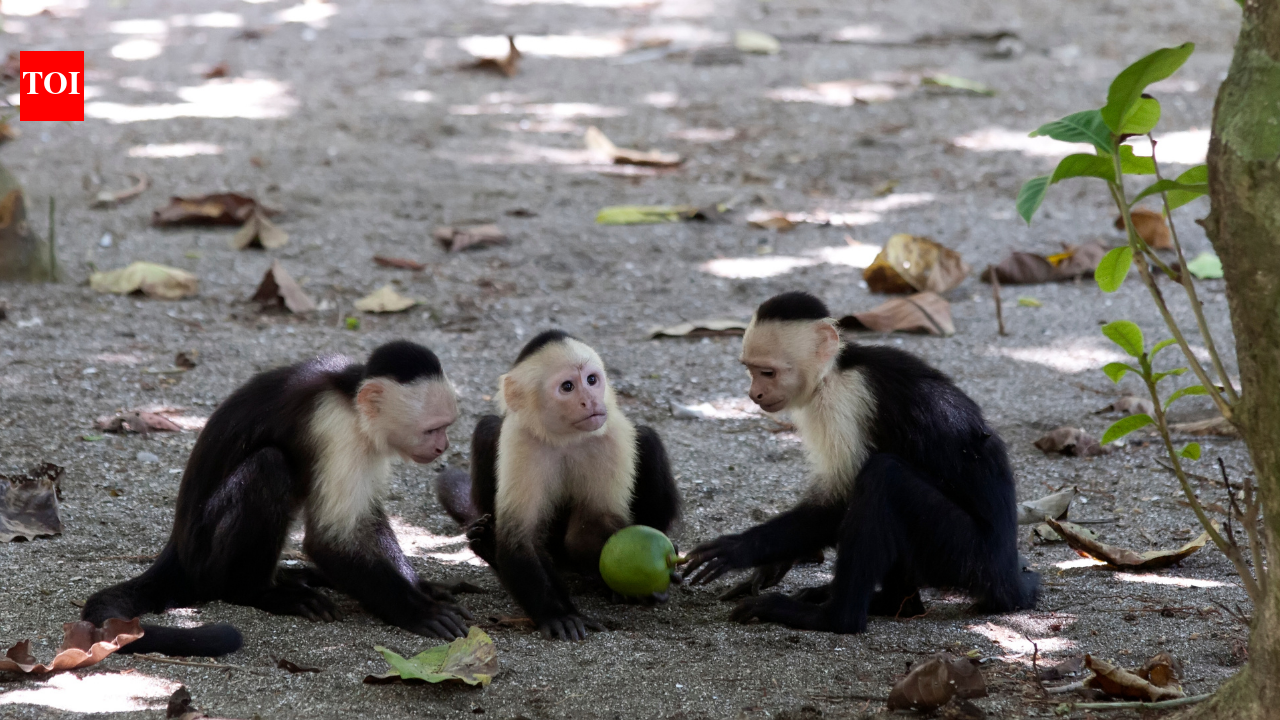
For most people, monkeys are closely associated with fruit, leaves and insects. But when their preferred plant foods become harder to find, some capuchin monkeys appear willing to switch strategies. They hunt and eat small vertebrates, including mammals and reptiles, turning to animal prey as an important source of energy when fruit availability falls. The behaviour offers a fascinating glimpse into the flexibility of primate diets and may also help scientists think about how early human ancestors gradually expanded their own use of animal foods. A new study published in journal PLOS ONE provides the most extensive record yet of vertebrate predation by wild bearded capuchin monkeys (Sapajus libidinosus). The research, conducted by an international team led by Susana Carvalho and colleagues, followed two groups of monkeys in northeastern Brazil over 45 months. By examining thousands of hours of observations, the researchers investigated when the monkeys hunted, which animals were more likely to do so and how the availability of other foods influenced their behaviour.
A flexible approach to food
The study was carried out at Fazenda Boa Vista in the Brazilian state of Piauí, where researchers observed two groups of wild bearded capuchins. One group received supplemental food during the study period, while the other did not. Together, the researchers accumulated more than 5,000 hours of observation, creating a detailed record of how often the monkeys captured and consumed vertebrate prey.The results suggest that hunting was not simply a random or occasional behaviour. Mammal and reptile consumption appeared to be a habitual part of the diet for this population. More importantly, the monkeys hunted small vertebrates more frequently when fruit became less available.That finding supports the idea that animal prey can serve as a nutritional fallback when preferred plant foods are scarce. Capuchins are highly adaptable omnivores, and fruits and insects can often provide food without the risks and effort involved in chasing another animal. But during periods when fruit becomes harder to obtain, the additional energy available from vertebrate prey may make hunting a more worthwhile strategy. The findings add to growing evidence that these monkeys do not rely on a fixed menu. Instead, they can adjust their feeding behaviour according to changing conditions, increasing their pursuit of small animals when one of their major food resources becomes limited.
Who does the hunting?
The researchers also found clear differences between individuals. Male capuchins showed higher rates of vertebrate predation than females, while adults consumed vertebrate prey more frequently than infants. The difference between adults and younger monkeys may reflect experience. Capturing a fast-moving lizard or another small vertebrate can require speed, coordination and knowledge of how to handle prey. Adult monkeys have had more time to develop these skills, which may give them an advantage over younger individuals.The higher predation rates among males may reflect a combination of behavioural, ecological or energetic differences, although the study does not establish a single reason for this pattern. Nevertheless, the findings show that sex and age can influence how individuals obtain animal prey. Another striking observation involved how the monkeys consumed their prey. Researchers found that the brains and internal organs were often accessed before the rest of the body. These parts can be particularly rich in nutrients and energy, suggesting that they may provide valuable nutritional benefits.
Food availability matters
One of the study’s most revealing findings came from the comparison between the two groups. The group that received supplemental food showed lower rates of vertebrate predation than the group that did not. This pattern strengthens the idea that hunting small animals becomes more important when other reliable food sources are limited. When calories are more easily available, the monkeys may have less reason to spend time and energy pursuing difficult prey. When those alternatives decline, however, vertebrates can become a valuable addition to the diet.The researchers also examined other environmental factors, including rainfall, humidity, temperature and insect availability. Their broader goal was to understand the conditions that influence the decision to hunt rather than simply describing individual predation events.
What it could mean for human evolution
The study is particularly interesting because researchers see capuchin behaviour as a possible model for understanding an earlier stage in the evolution of human hunting. Humans today are unusual among living primates in regularly exploiting animals as large as, or even larger than, themselves. But this complex predatory pattern did not necessarily emerge all at once. The researchers suggest that regularly catching smaller animals may have provided an important stepping stone before early hominins developed the ability, technology and cooperation needed to exploit larger prey. The exploitation of small animal resources by early hominins may therefore offer a useful point of comparison, making the behaviour of modern capuchins relevant to discussions about the evolution of hunting.Of course, capuchin monkeys are not miniature versions of early humans, and their behaviour cannot provide a direct reconstruction of human evolution. But their dietary flexibility offers clues about how primates respond when preferred foods become scarce. The ability to shift from easily available plant foods to harder-to-catch animal prey may have offered important nutritional advantages in changing environments.The new research ultimately highlights a simple but important point: when circumstances change, diets can change with them. For bearded capuchins in Brazil, a shortage of fruit can mean that small animals become worth the effort of the hunt. And by studying that shift, scientists may gain a clearer understanding of one of the behavioural transitions that may have eventually helped shape the human relationship with animal food.