
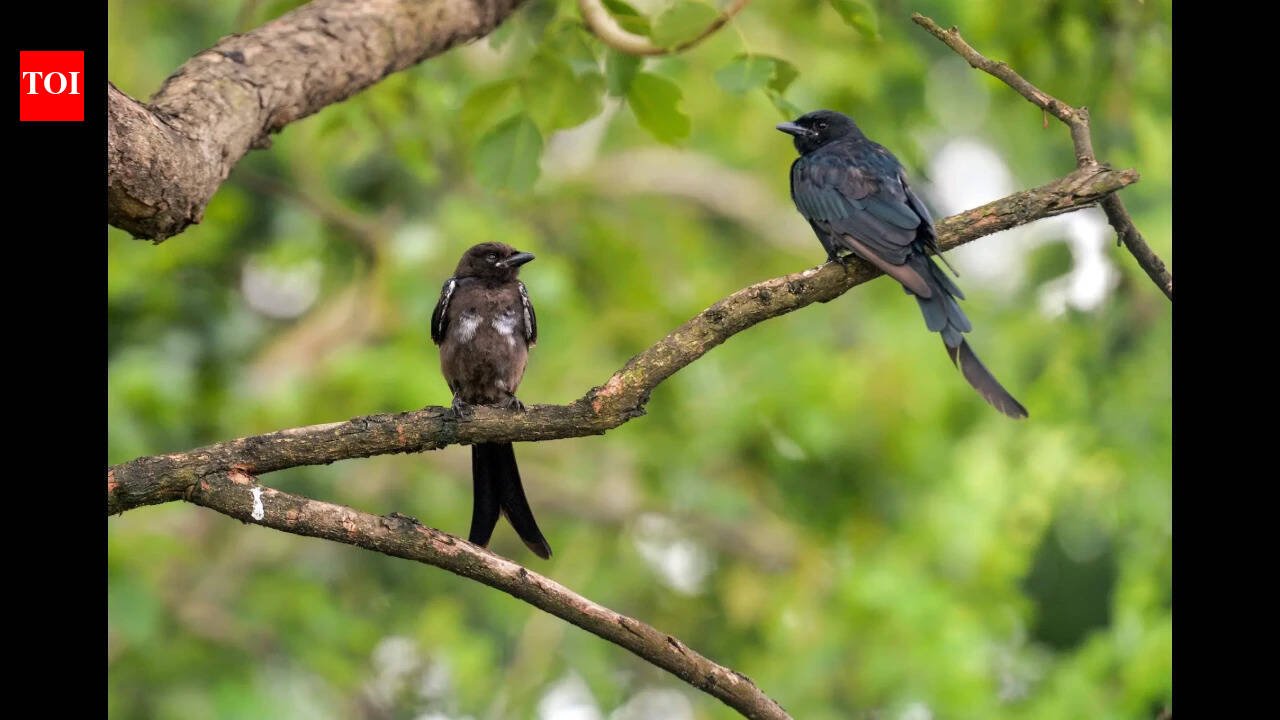
In 1935, the Japanese South Seas Development Company made a decision that would have repercussions for Mariana Islands’ ecosystems for nearly 100 years. In search of a natural method for controlling agricultural pests, they imported black drongos (Dicrurus macrocercus) from Taiwan to Rota. At the time, it seemed a simple fix: introduce an insect-eating bird to protect crops. But nature rarely travels in straight lines.An experiment in pest control that would, decades later, become a cautionary tale of the unforeseen consequences of introducing species to new environments.A good-intentioned introductionThe black drongo is a striking bird, shiny black with a distinctive forked tail, native to South and Southeast Asia. An agile insectivore, it is known for its ability to catch insects on the wing and its bold, territorial nature. In 1935 these traits made it an attractive candidate for biological pest control on Rota, the third largest human-inhabited island in the Mariana archipelago. The drongos thrived in their new home.They adapted quickly to the island’s open habitats and lower elevations, where they found abundant food and few natural predators. Within a few years, they had established a stable population. But their success came at a cost, according to a documentshared by Guam National Wildlife Refuge Comprehensive Conservation Plan.Spread to GuamBy the 1950s, black drongos had dispersed across the sea to the neighbouring island of Guam. The journey, likely undertaken by a few bold individuals, marked the beginning of a new chapter in the bird’s invasive story.By 1967, drongos were the fourth most commonly seen birds in roadside counts on Guam. Today, they are the most abundant bird on the island.The drongo’s arrival coincided with a period of ecological upheaval on Guam. The island’s native forest birds were already under pressure from habitat loss and the introduction of the brown tree snake, which has been responsible for the extirpation or serious reduction of most native forest bird species. But the drongo added another layer of complexity to the crisis, as per the report.A threat to native birdsBlack drongos are strongly territorial and aggressive. They are known to harass and displace smaller birds that might otherwise nest within their territories. On Rota and Guam, researchers have observed drongos harassing Mariana Crows, a critically endangered species, and preying on Rota bridled white-eyes.While no data exist to conclusively show that drongos contributed to the decline of any bird species, their presence is widely thought to be a contributing factor. The impact of the drongo is of particular concern for small endemic birds such as the Rota white-eye, which feed in exposed microhabitats and fall within the drongo’s prey size range. Predation and harassment by the introduced drongo have been suggested as factors in the decline of several native species, including the Guam flycatcher and the Rota bridled white-eye.A complicated legacyThe story of the black drongo in the Mariana Islands is a reminder of the fragility of ecosystems, and the risks of human intervention.What was initially a good-faith effort to protect crops has morphed into a complicated ecological problem. Today, conservationists are wrestling with the difficult job of managing drongo populations while at the same time protecting the islands’ last native birds. Steps are being taken to limit the proliferation of the drongo and reduce its impact.But the success of the bird as an invasive species reveals a greater truth: once an introduced species establishes itself, reversing its effects is seldom an easy task.Lessons for the futureThe black drongo’s journey from Taiwan to Rota and Guam is more than a bird’s story, it’s a lesson in humility. Introduced in 1935 to control crop pests, the drongo grew in number but brought unintended consequences for native island birds.The drongos’ success is evidence of nature’s ability to adapt. But it is also evidence of how well-intentioned actions can sometimes upset delicate ecosystems. The story of the drongos is a reminder to be careful about introducing species to new environments. It is also a reminder of the need to monitor change over time. In the Mariana Islands it is a symbol both of human ingenuity and of ecological vulnerability. For conservationists the story of the drongos is a warning. Even small changes can have far-reaching effects, reverberating into the future in ways we can never foresee.