
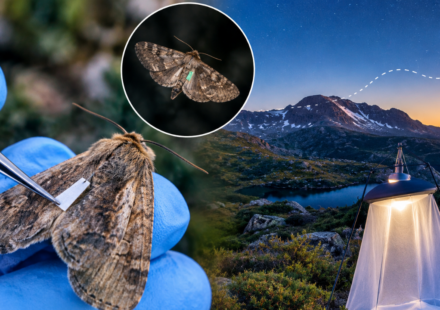
Scientists tagged 14,000 endangered Australian moths with paint and eyelash glue to trace their migration; not one was found, and researchers say that may be good news

Representative Image (AI-generated) More than 14,000 Bogong moths were tagged in an unusual attempt to uncover the secrets of one of Australia’s most remarkable insect migrations. Researchers marked the endangered moths in the Snowy Mountains and hoped…
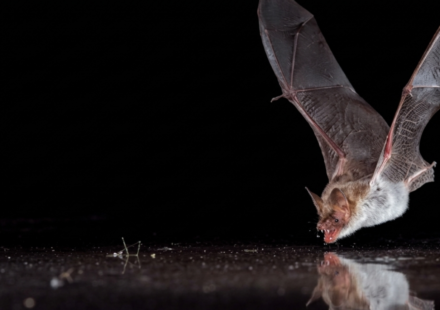
Scientists covered bat drinking pools with clear plastic; 11 bat species tried to drink from the fake water
A thirsty bat sweeps over a pond, listens to the echoes returning from its surface and drops closer to drink. But what happens when that same acoustic signal comes from something that only looks like water to its echolocation system? Scientists have…

Scientists are using worms that eat human waste to turn toilet waste into compost, but parasitic eggs can survive the process
Tiger worm toilets are designed to turn human waste into vermicompost using worms that feed on and break down organic material. The approach can reduce the amount of waste that builds up in a toilet and has been studied as a form of non-sewered…
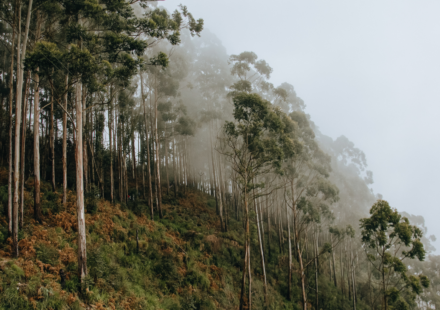
Brazil planted vast eucalyptus forests for pulp; 45 years later scientists found groundwater had fallen by 4.5 metres
Brazil’s eucalyptus industry was built on a simple promise: grow trees quickly, harvest them for pulp and create a renewable supply for the global paper industry. Over decades, however, the enormous plantations have transformed landscapes across parts of…
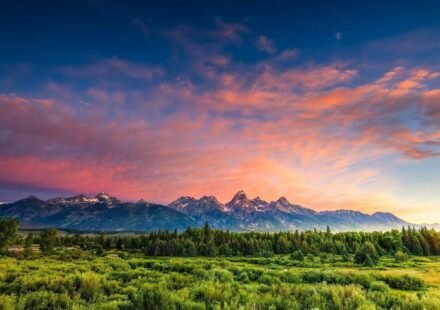
Scientists reconstructed a Wyoming forest from 56-million-year-old fossil leaves; it lost about 60% of its canopy during ancient warming and took more than 100,000 years to recover
Wyoming tetons Representative image from Canva Deep in the rock record of Wyoming, a layer of fossil leaves tells a quiet but powerful story about what happens to forests when the planet warms rapidly. About 56 million years ago, during a spike in global…
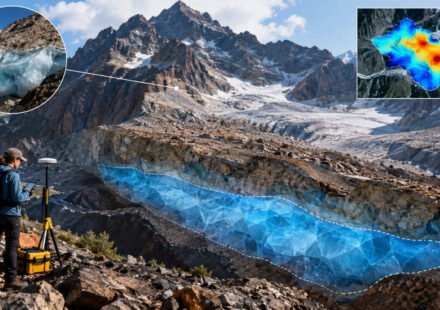
Scientists discover nearly 1 billion tons of water locked inside Utah’s rocky glaciers, using gravity measurements to map ice buried beneath mountain debris
At first glance, Utah’s rocky mountain slopes may look completely dry, with loose stones and boulders covering the ground. But beneath some of those rocks lies an enormous store of frozen water. Researchers have now estimated that Utah’s rock…
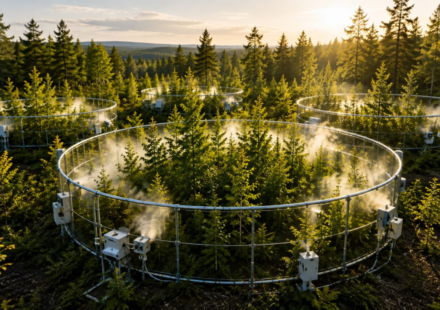
Scientists altered the air around a Wisconsin forest for 11 years; extra CO₂ drove 39% more productivity, but ozone reversed part of the gain
Representative Image (AI-generated) What happens when young forest communities spend more than a decade growing in air with unusually high levels of carbon dioxide and ozone? Scientists in Wisconsin set out to find the answer by changing the atmosphere…
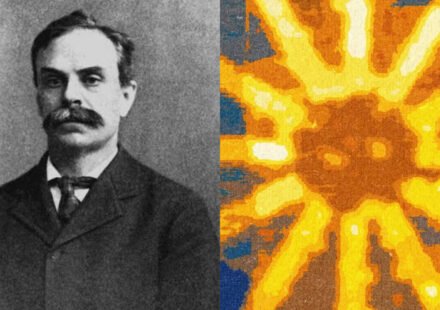
In 1879, Edwin Hall discovered an electrical effect thought to need a perpendicular magnetic field; 147 years later, scientists have shown it can work with the field in-plane
An atomic force microscopy scan of a nanometer-sized device developed by Carnegie Mellon scientists that demonstrates a new form of the Hall effect. For more than a century, the Hall effect has been taught with a simple picture that electricity flows…
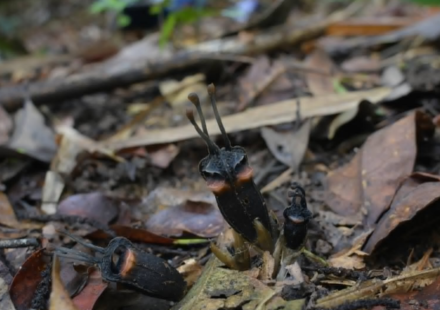
A ‘devil flower’ with no leaves, no branches, no green part has been discovered in a Thai forest, scientists say its bizarre appearance is hiding an even stranger secret
It has no leaves, no branches and no green parts, and spends much of its life concealed beneath fallen leaves on the forest floor. Scientists have now described a bizarre new flowering plant from Thailand, naming it Thismia daemona, the “devil flower”,…
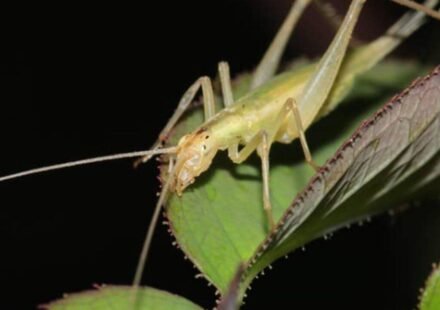
Scientists used fossil wings, lasers and AI to recreate the calls of insects from 165 million years ago; some Jurassic species were already communicating above human hearing
The research focused on nine extinct insect species related to modern crickets and katydids. For 165 million years, the sounds made by insects living alongside dinosaurs were lost to time. Scientists have now recreated some of those calls using…