
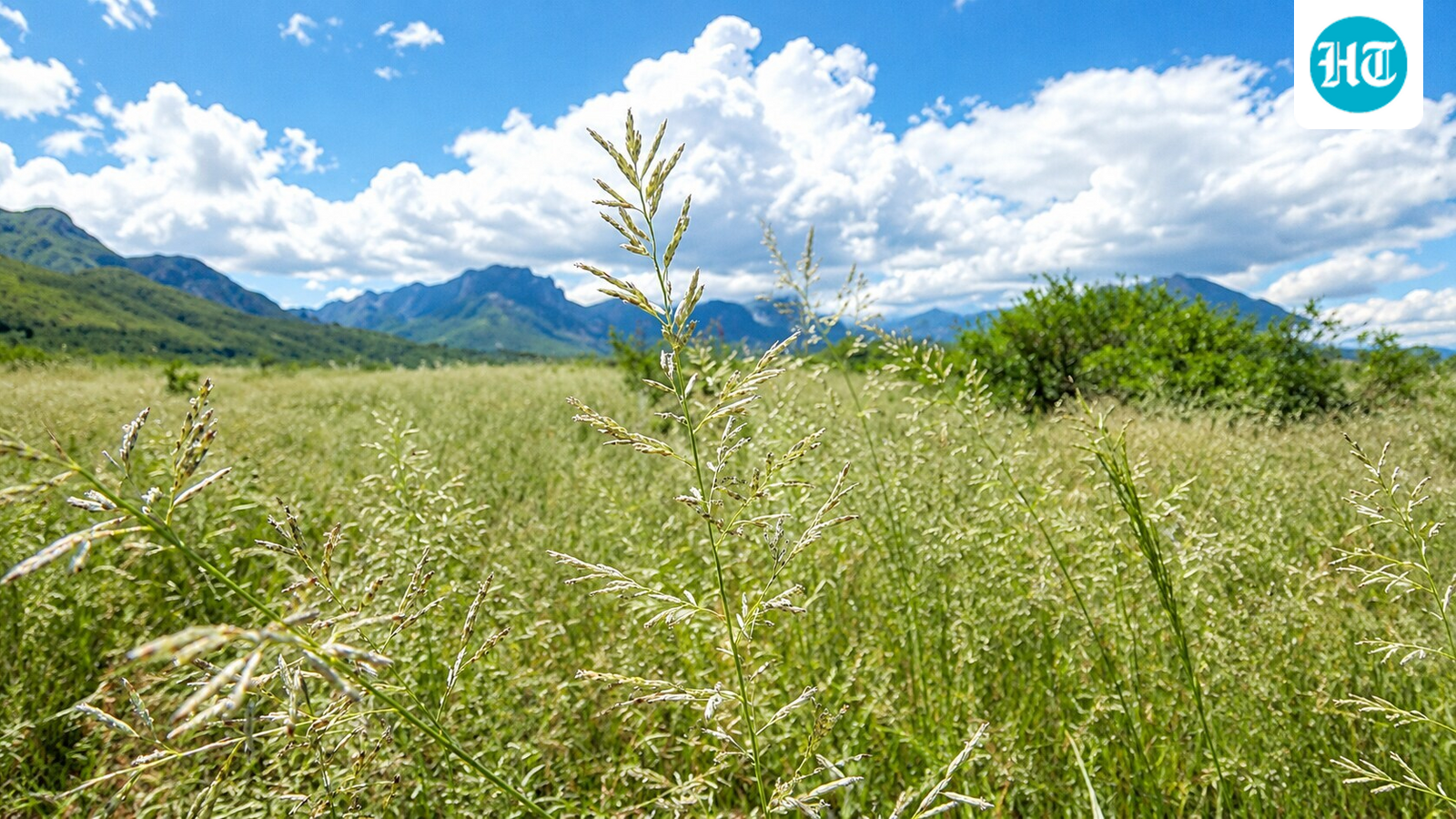
Imagine grass being taken across the ocean to help damaged land, then imagine that same grass showing up on hundreds of thousands of acres. That’s the story of Lehmann lovegrass in Arizona. The USDA Forest Service’s Fire Effects Information System reports that between 1940 and 1980, ranchers and other land managers established it on over 172,000 acres. Later researchers described how far it spread and what that meant for native plants.
Why Arizona chose a foreign grass
Rangeland is open land that is used mostly for grazing livestock. Lehmann lovegrass is a perennial grass and comes back every year. It is native to South Africa. According to a 1992 study by Michael Anable, Mitchel McClaran, and George Ruyle published in the journal Biological Conservation, it was introduced to Arizona in 1932. The authors examined how the grass spread after it was introduced.
From 172,000 acres to 347,000 acres
The Forest Service review has two critical numbers. Between 1940 and 1980, ranchers and government land managers planted Lehmann lovegrass on more than 172,000 acres. The review said grass was a major plant species on approximately 347,000 acres in 1988. Much of that land is in southeastern Arizona. The second figure is roughly twice as large as the first. The first counts land where people planted the grass, and the second counts land where it was a major species, which suggests it did not stay where it was planted.
What a long-term study found
The 1992 study focused on the Santa Rita Experimental Range in southern Arizona. The researchers tracked the grass’s spread there from 1954 to 1989. By 1989, the grass was present on over 85% of the 75 non-seeded permanent plots. In these plots, it formed over 40% of all perennial grass individuals.
Anable and team found that livestock grazing was not necessary for the grass to spread. They estimate that, through seeding and spread since its 1932 introduction, the grass has transformed at least 350,000 acres (145,000 hectares) of semi-desert grassland in southern Arizona. At times, the grass forms more than 90% of the grass biomass, which refers to the total mass of the grass. It produces two to four times more biomass per year compared to native grasses.
What it means for native grasses
The Forest Service review says Lehmann lovegrass has displaced Arizona cottontop, threeawn grasses, and grama grasses on much of the Santa Rita Experimental Range. It also states its seed matures earlier than native perennial grass seed. The 1992 study authors conclude that the dominance of lovegrass is likely to decrease wildlife diversity and increase the frequency of fire. They recommend strong consideration of these changes before the species is seeded.
This is not to say that every planting project is a mistake. It does show how hard it is to figure out what a new plant will do once it gets a hold. Checking long-term effects before planting is a lesson worth keeping for anyone who cares about land.