
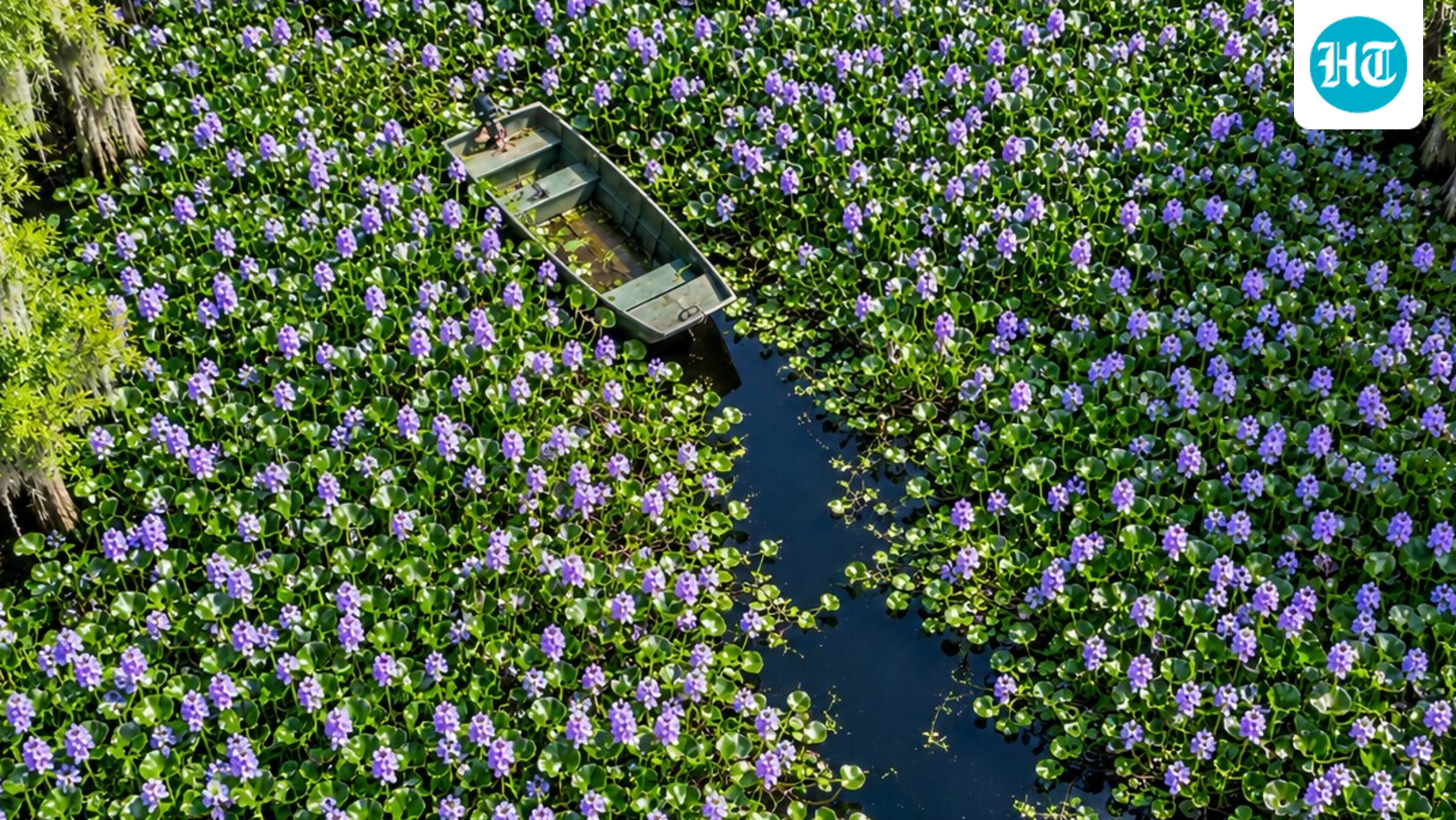
Some plants look too pretty to cause trouble. Water hyacinth is a good example. The floating plant was introduced to Florida in the 1880s, according to the Florida Fish and Wildlife Conservation Commission. By the early 1960s, it spanned more than 120,000 acres of public lakes and navigable rivers. That’s a lot of water going to one plant. Here’s how a garden favorite became a long-standing problem.
A souvenir with showy flowers
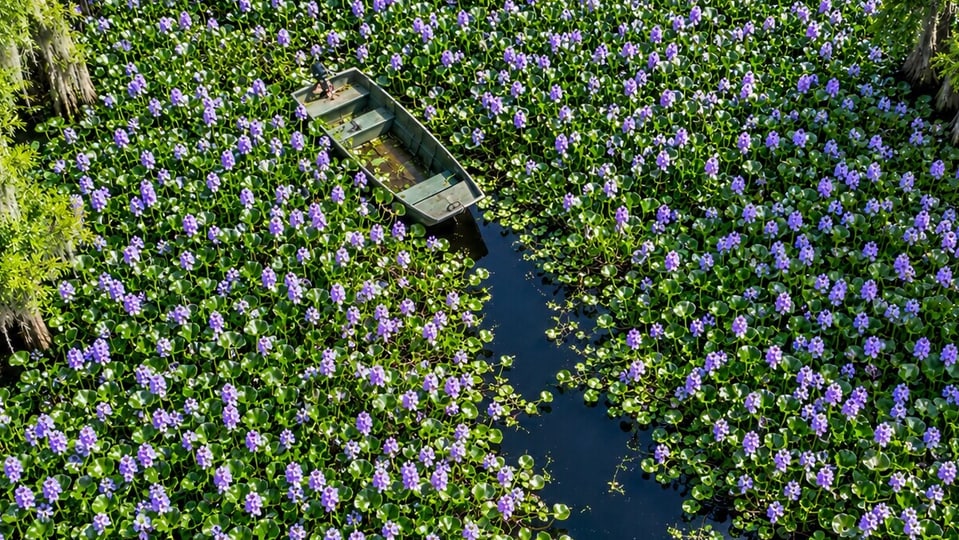
Water hyacinth is native to South America. Its flowers are lavender-blue to purple, with a yellow spot on the upper petal. AUniversity of Florida extension publication by Lyn Gettys explains how it reached the United States. The plants were handed out as souvenirs to visitors at a cotton expo in New Orleans in 1884. Many of those plants went into Louisiana, Texas, and Florida waters. One story says a woman, Mrs. Fuller, was attracted to the flowers and took some home to a water garden near the St. Johns River. The publication notes this is an anecdotal report. It says she tossed her excess plants into the river near Palatka in 1890.
Rapid growth, real damage
The water hyacinth produces short runners that eventually develop into plants, and it can reproduce through seeds as well. The number of its plants can double in just two weeks, and its growth rate is one of the fastest among all known plants, the commission states. Humans helped as well. According to the university publication, the settlers who lived along the St. Johns River wanted to make the river look beautiful near their homes, so they moved the plants around. In just ten years, the river was so choked that boats could not go through it anymore.
Thick mats of water hyacinth block waterways, the commission notes: they limit boat traffic, recreation, and flood control. They also compete with native underwater vegetation. Mats can deplete the water of oxygen, damaging fish populations. They can act as dams and cause more floods in rivers and canals. They’re also great breeding grounds for mosquitoes. One acre of the plant can deposit up to 500 tons of rotting plant material on the bottom of a waterway each year. Simply put, it cuts down on biodiversity in Florida.
Old fixes and today’s picture
Harsh substances, including arsenic and sulfuric acid, were used in early attempts to clear it, says the university publication. Some worked, but were toxic to cattle that grazed treated plants. Hand removal of plants was expensive and ineffective as the plants grew faster than they could be harvested. That was the only tool until the discovery of synthetic herbicides in the 1940s. The publication adds that the St. Johns stayed clogged for decades and was brought under control only after those herbicides arrived. The commission says intensive management coordinated by the Florida Department of Environmental Protection and the U.S. Army Corps of Engineers has reduced the plant to about 2,000 acres statewide. In Florida, it is illegal to have them without a special permit.
A lesson for plant lovers
This story sends out a warning to everyone who loves good plants. No matter how beautiful, a plant that finds its way into waterways will affect the environment adversely. According to the UF/IFAS extension publication, the best way to manage water hyacinth is by preventing it from getting into our waterways. While illegal in Florida, it is still occasionally sold at farmers’ markets, aquarium and nursery shops, and online sources in other states. Therefore, as you plan on getting your plant, ensure that it’s not an invasive species where you live. And never dump the unwanted plants into a lake or river. You never know what a simple toss can turn into.