
- Much of Sweden’s
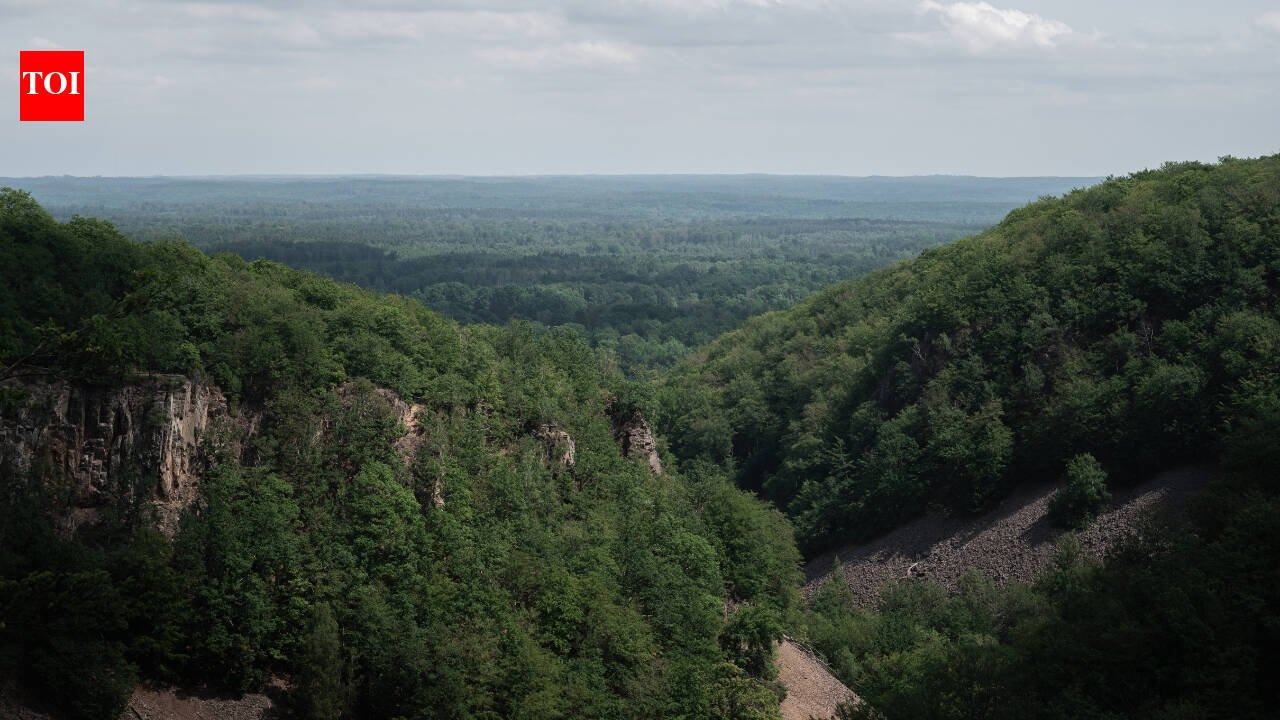
Söderåsen plateau was once far more open than the dense woodland visitors see today. A 2025 study published in The Holocene found that the landscape became much more open during the 18th and 19th centuries as grazing intensified, with grazed heathland developing on parts of the plateau. Today, the picture is dramatically different.Söderåsen National Park established in 2001, protects 1,625 hectares of the landscape and is now described as one of northern Europe’s largest continuous protectedbroadleaf forests .
From forest to open heath
Söderåsen is a prominent ridge in Skåne, southern Sweden, surrounded by a comparatively flatter landscape. Its present-day appearance is dominated by deciduous woodland, steep valleys, exposed rock formations and streams.But the landscape has not always looked this way. A 2025 study published in The Holocene examined sediment from Lake Odensjön to reconstruct roughly 600 years of forest development and land-use history in Söderåsen. The evidence showed that large parts of the plateau became much more open during the 18th and 19th centuries, with grazed heathland developing in areas that had previously been more heavily wooded. Forest clearing followed by burning probably occurred to improve conditions for grazing.That history is difficult to reconcile with the woodland that covers the landscape today. Beech trees dominate much of the forest, while other deciduous species including oak, alder and birch are also present. Sweden’s national parks authority lists deciduous forest as the main natural environment within the park, alongside some planted spruce forest.The recovery of woodland demonstrates how dramatically landscapes can change over relatively short periods when land use changes and natural regeneration is allowed to take place.
A national park takes shape
The transformation gained an important layer of protection in 2001. Söderåsen National Park was formally established on May 10 that year, covering 1,625 hectares in the municipalities of Klippan and Svalöv in Skåne County. The official purpose of the park is to preserve a large, continuous section of the South Swedish horst landscape in a largely unchanged state.Rather than protecting just an isolated patch of woodland, the national park safeguards a connected landscape containing forests, valleys, cliffs, streams and other habitats. That continuity is particularly important for a broadleaf forest ecosystem. The park’s woodland supports a variety of plants, fungi, insects, birds and other organisms, while fallen and decaying wood provides habitat for species that depend on dead trees and natural forest processes.One of the landscape’s most striking features is the Skäralid valley, a deeply cut valley surrounded by steep cliffs. Another well-known location is Odensjön, a small lake surrounded by steep, forested slopes. These geological and ecological features are part of the landscape protected within the national park.
A forest shaped by both nature and people
Söderåsen’s story is not simply one of an ancient forest that survived untouched. It is a landscape shaped by geological forces, human land use and subsequent ecological recovery. The sediment evidence from Lake Odensjön offers a glimpse into that changing relationship between people and the plateau. Earlier generations used the land for grazing and altered its vegetation through burning and other forms of land use. Over time, however, woodland returned, creating the extensive forest visitors encounter today.The national park’s protection has helped preserve this larger landscape for future generations. Länsstyrelsen Skåne manages its 1,625 hectares on behalf of the Swedish Environmental Protection Agency, focusing conservation efforts on maintaining the area’s natural character. Today, Söderåsen offers a striking example of how a landscape can change from heavily used and more open terrain into a substantial protected forest. Its story also shows that conservation is not always about preserving a landscape exactly as it has always been. In some places, it can mean giving ecosystems the opportunity to recover and allowing forests, wetlands and other habitats to develop again.From a plateau once extensively cleared and burned for grazing to a protected broadleaf landscape covering more than 1,600 hectares, Söderåsen’s history is a reminder that nature can reclaim lost ground when conditions allow.