Pakistan has a strange gift: when the world starts to take it seriously, it produces an “oops” moment so spectacular that the script writes itself. A week after it positioned itself as a key mediator between the United States and Iran, the next, a U.S. senator publicly asked whether it had quietly parked Iranian military aircraft at its air bases. Recent events may not come as a surprise to many, as Pakistan’s strategic doctrine is often akin to a friend telling a serious lie, being caught on CCTV, but still insisting that everyone else has misunderstood the situation. Whether harboring terrorists, denying military links or claiming neutrality when picking sides, Islamabad has perfected the art of saying “nothing is happening here” even though satellite images and foreign intelligence suggest otherwise.That’s why U.S. Senator Lindsey Graham’s blunt statement on Tuesday — “I don’t trust Pakistan” — is what’s coming. The direct trigger was the latest report that during the confrontation between the United States and Iran, Iranian military aircraft, including reconnaissance aircraft, were allowed to take refuge at Nurhan Air Base in Pakistan. But the reason is simple: For many countries from New Delhi to Washington, Pakistan’s credibility carries a permanent asterisk: Treat it with caution, and have a long history.
Iranian plane parked at Pakistan Air Force base
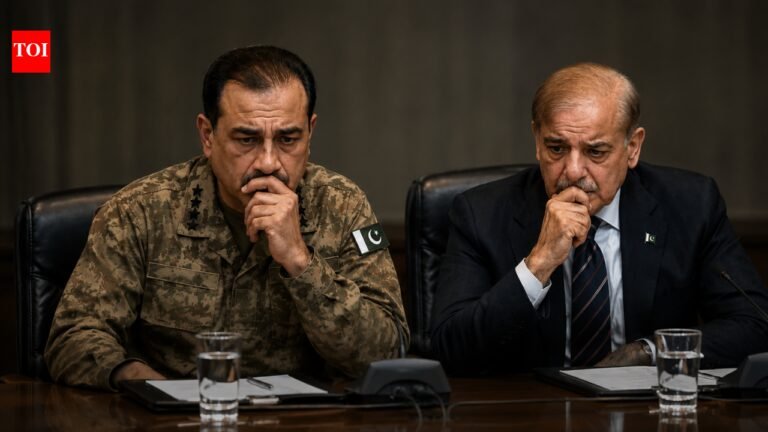
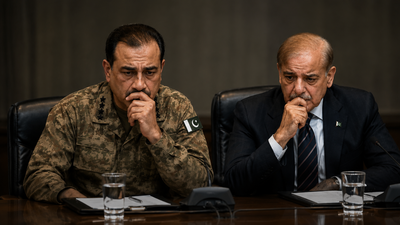
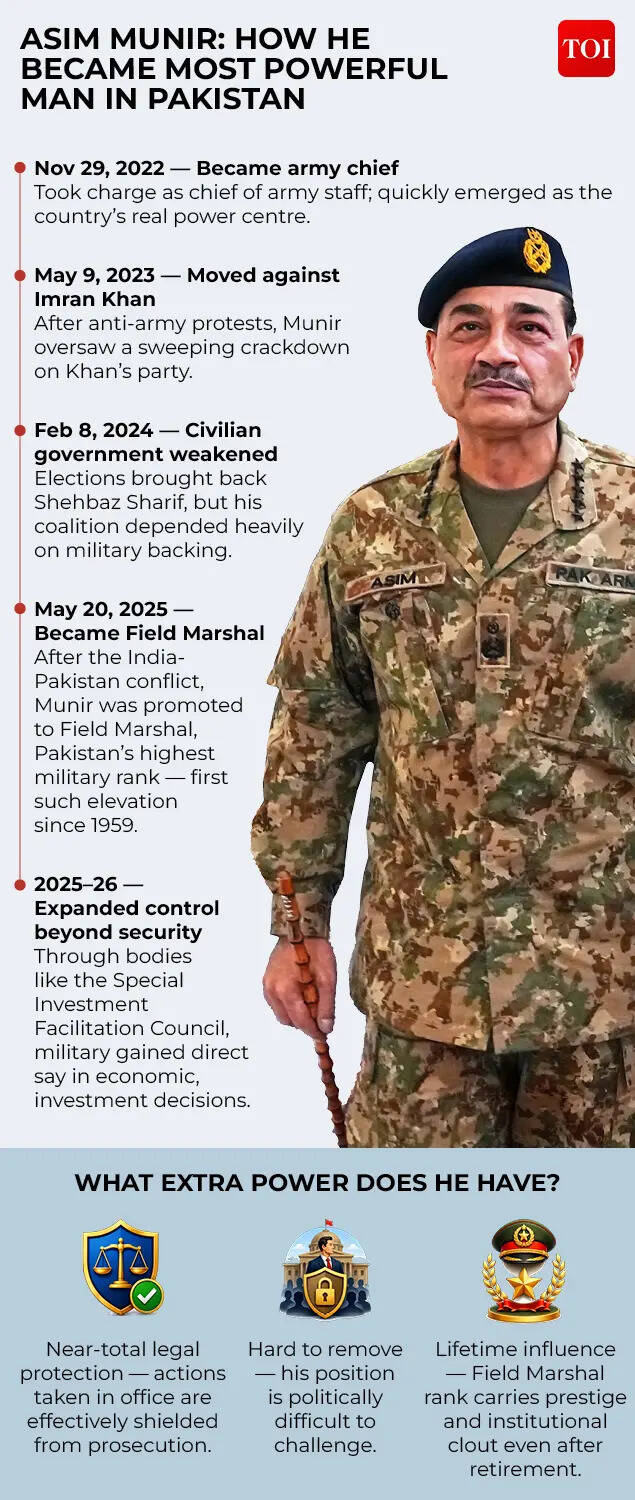
CBS News reported that during the ceasefire phase of the US-Iran conflict, Iranian military aircraft used Pakistani facilities including Nurhan Air Base, which caused controversy. The suggestion is explosive: A country that bills itself as a neutral intermediary in peace talks may have been quietly helping Tehran protect strategic assets from possible attacks by the United States.Pakistan, of course, denies this. Its foreign ministry said the aircraft and personnel were related only to diplomatic logistics for the Islamabad Talks, back-channel negotiations chaired by Prime Minister Shehbaz Sharif and Army Chief Asim Munir. It called the military angle “misleading and sensational.”This scrutiny has been heightened since Asim Munir is not an ordinary military chief in the current system. His recent elevation in Pakistan’s power structure, with the military increasingly eclipsing civilian authority under Sherbaz Sharif, has reinforced the idea that foreign policy, security decision-making and even crisis diplomacy are being conducted through the military rather than the democratically elected government.
But the trust deficit runs so deep that Islamabad’s denials are no longer enough. U.S. officials are increasingly suspicious that Pakistani intermediaries are softening Iran’s stance and conveying a more “rosy” picture to the Trump administration than Tehran actually offers, CNN reported. Several Trump officials now believe Pakistani intermediaries were not forceful enough in conveying Trump’s frustrations to Iranian negotiators, according to CNN sources.In other words, Pakistan is accused not only of facilitating diplomacy but also of using public opinion to buy Iran time.
The argument that “terrorists don’t exist” collapsed in a few days
For India, the freshest example is in operation sindor. India attacked terror infrastructure in Pakistan and Pakistan-occupied Kashmir after the Pahalgam terror attack, and Islamabad’s official response was immediate and unequivocal: there are no terrorist camps, no terrorist commanders, and India is targeting civilians.And then there’s the funeral video. Pakistani military personnel, including uniformed officers, were seen attending the funeral of terrorists with links to banned groups. For India, this is a perfect display of a familiar contradiction: harboring terrorists while denying the existence of such an ecosystem.
Abbottabad Template
Long before Operation Sindoor or the Iranian aircraft dispute, there was an event that raised suspicion among Americans for a generation: Osama bin Laden in Abbottabad.For years, Pakistan insisted that the al-Qaida leader was not on its soil at all. However, in 2011, U.S. Navy SEALs discovered that he was living in a compound not far from the Pakistan Military Academy.
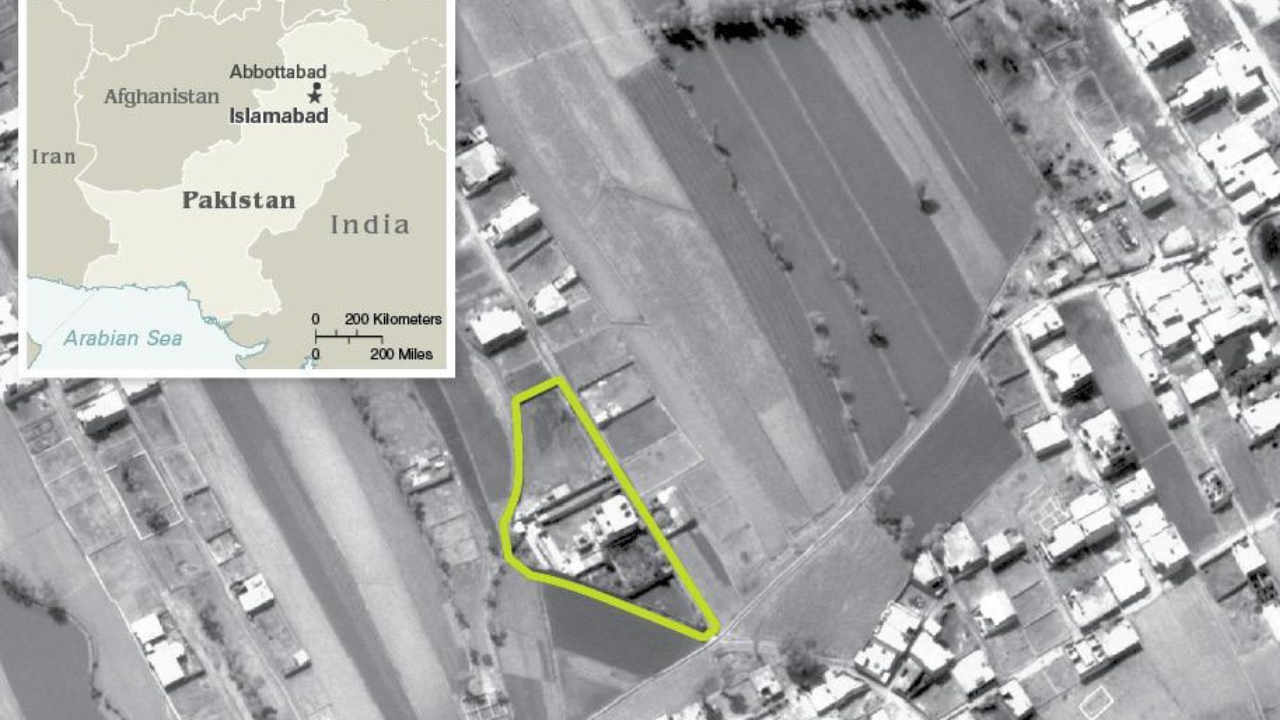
The Americans did not notify Pakistan before the attack, fearing that someone within the regime had tipped him off.This remains perhaps the most famous “oops” incident in intelligence history. Pakistan either didn’t know that the world’s most wanted terrorist lived next to one of its main military establishments, or it did know and concealed it. Neither explanation inspires confidence.
Double Game as Doctrine
Complicating the dual game is Pakistan’s own third-line security crisis, a kind of domestic “three-body problem” that the Pakistani military has been trying to contain. On one side is the Afghan Taliban regime, whose return to power has not translated into strategic calm in Islamabad; on the other is the Tehreek-e-Taliban Pakistan (TTP), which has stepped up attacks inside Pakistan and in the southwest, where the long-standing Baloch insurgency continues to challenge state control.
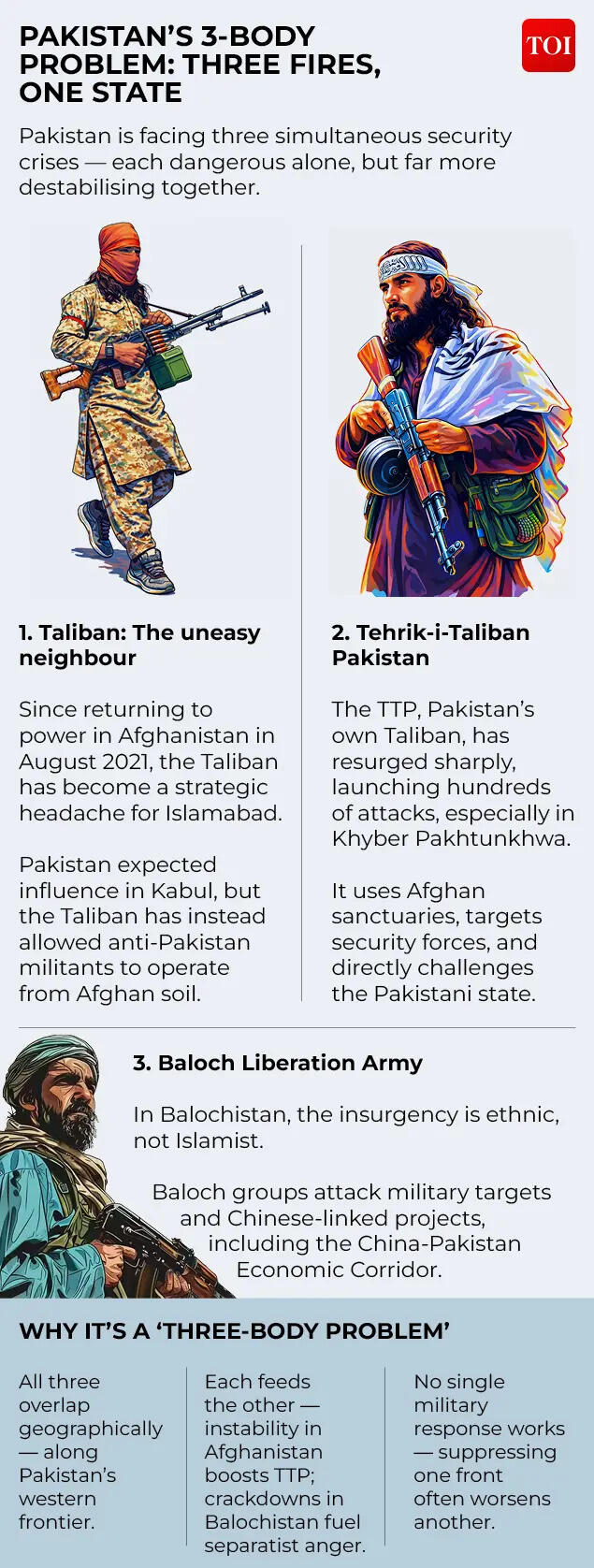
With the crisis coming from three directions, Pakistan’s establishment is struggling to manage external influences while putting out fires at home.This recurring pattern has led many analysts to believe that Pakistan’s “double game” is not accidental but structural. It has long used non-state actors, strategic ambiguity and carefully calibrated deniability as tools of statecraft.During the U.S. war in Afghanistan, Pakistan was designated a major non-NATO ally while being accused of allowing the Taliban leadership and the Haqqani network to operate on its soil. U.S. aid is pouring in; rebel sanctuaries are said to remain. By the time Kabul fell in 2021, strategic circles in Washington had largely accepted Pakistan’s role as both sponsor and ally.The same script appears to be playing out again in 2026.Pakistan wants to be seen as an integral part of Washington while also retaining influence over Tehran, Beijing, Gulf states and domestic constituencies. It tries to be a conduit for everyone and no one’s enemy. But Islamabad’s behavior often leaves the opposite impression: It tells different truths to different capitals. Pakistan likes to portray itself as a bridge between the Muslim world and the West, between rivals, between war and diplomacy. But it only works if both sides believe the bridge will hold.Today, that trust is clearly eroding. In Washington, some members of the Trump administration are reportedly considering whether Pakistan should continue to play a central role in the U.S.-Iran channel. Pakistan’s internal instability will only deepen this distrust. Imran Khan’s removal from office and jailing after a clash with the military establishment has heightened the awareness that the real power in Islamabad still lies not with elected leaders but with the generals in Rawalpindi.
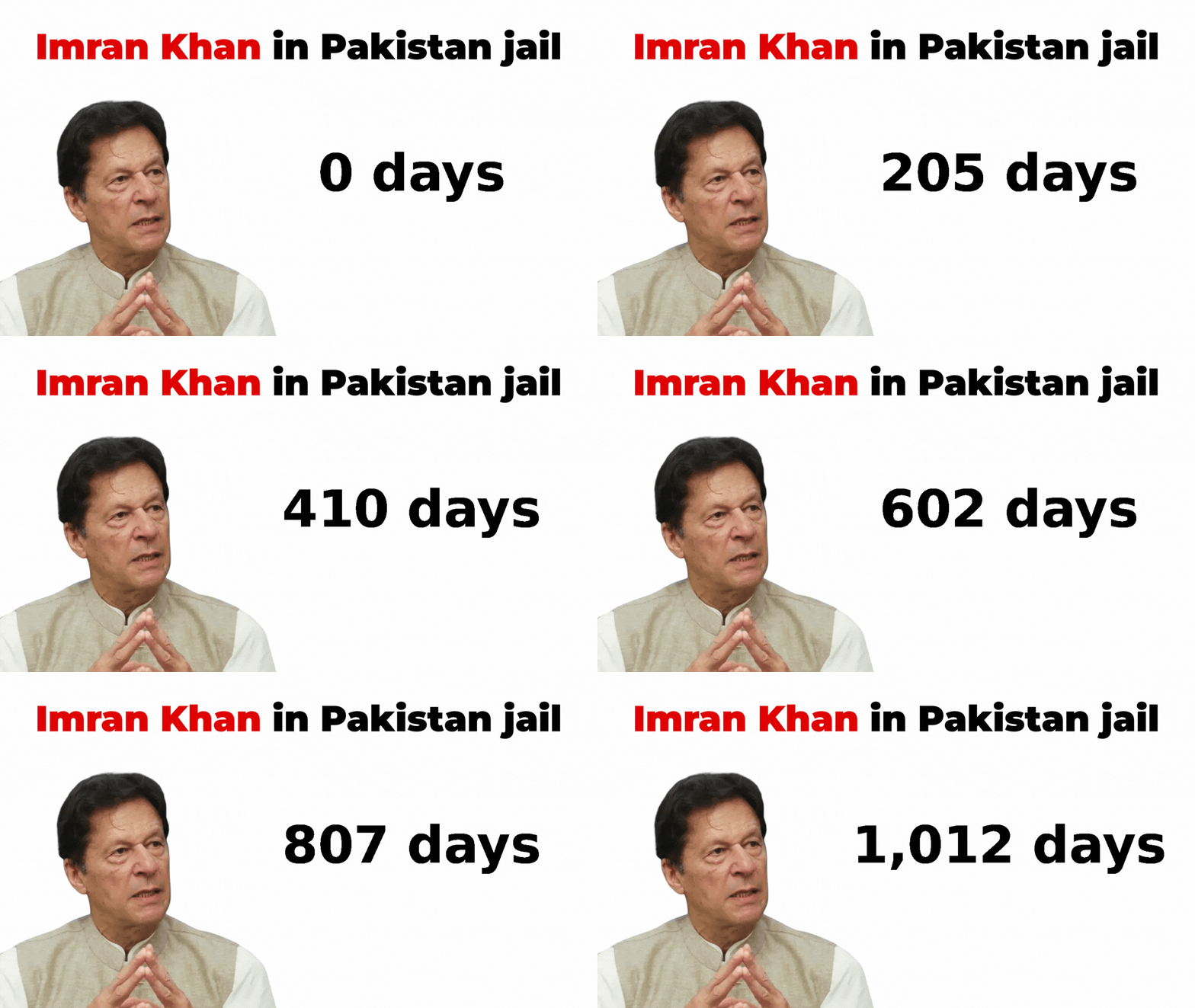
For outside powers, this means that any diplomatic assurances from Pakistan come with an obvious question: Who really speaks for the country?
Bonus: An “oops” moment that became a global meme
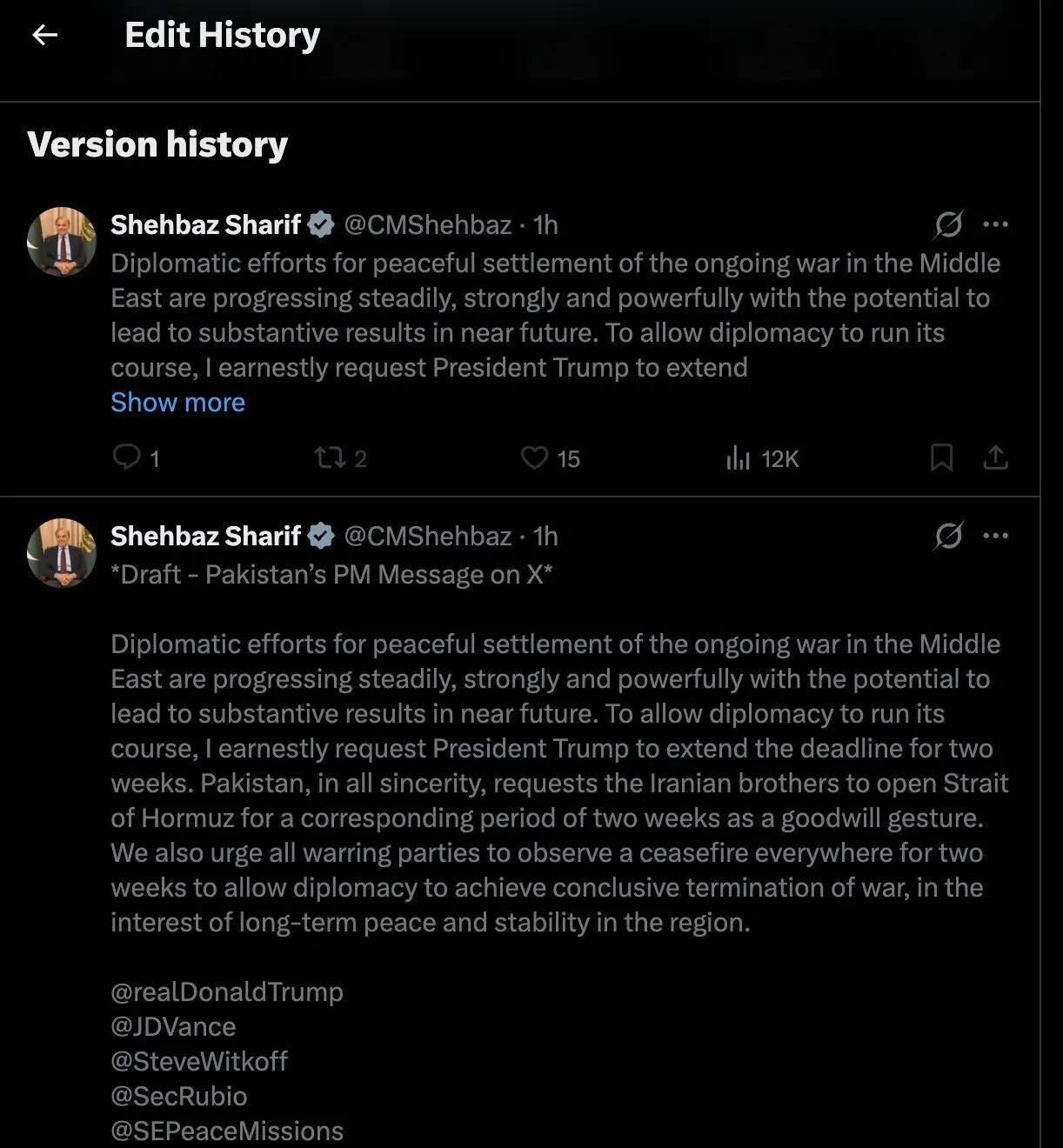
Some of Pakistan’s credibility crisis is geopolitical. Others take matters into their own hands, eschewing diplomacy altogether and entering into meme culture. Islamabad’s global image has been tarnished in recent years not only by accusations of double-dealing but also by a series of fast-spreading communications missteps.The freshest occurred in April 2026, when Prime Minister Shehbaz Sharif briefly posted a seemingly unedited draft message on X while commenting on the US-Iran ceasefire. The post, which was widely shared online, was reportedly labeled “Draft – Message from Pakistan Prime Minister on X” before being edited, fueling speculation that Islamabad accidentally released an internal script at a sensitive diplomatic moment.
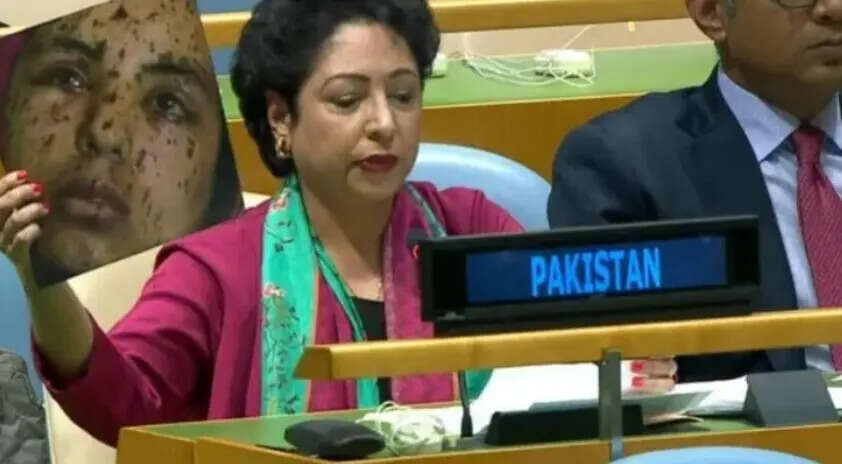
Back in September 2017, Pakistan suffered one of its most high-profile diplomatic setbacks at the United Nations. Its envoy Maleha Lodi held up a photograph as evidence of Indian atrocities in Kashmir. The photo was quickly identified as that of a Palestinian girl injured in Gaza in 2014, turning Pakistan’s rebuttal into international humiliation.
For Pakistan, the real issue is no longer any single allegation, whether about Iranian planes, terrorist sanctuaries or diplomatically mixed messages. Decades of strategic ambiguity have created credibility traps where every denial is now fraught with doubt and every crisis threatens to become another global “bad” moment.
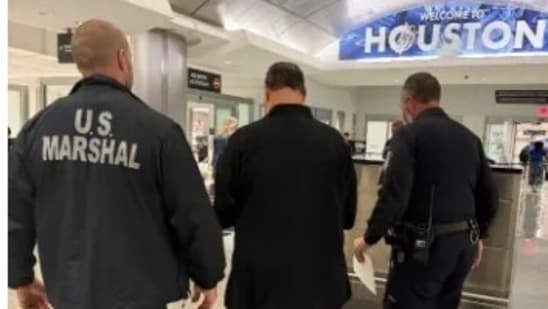

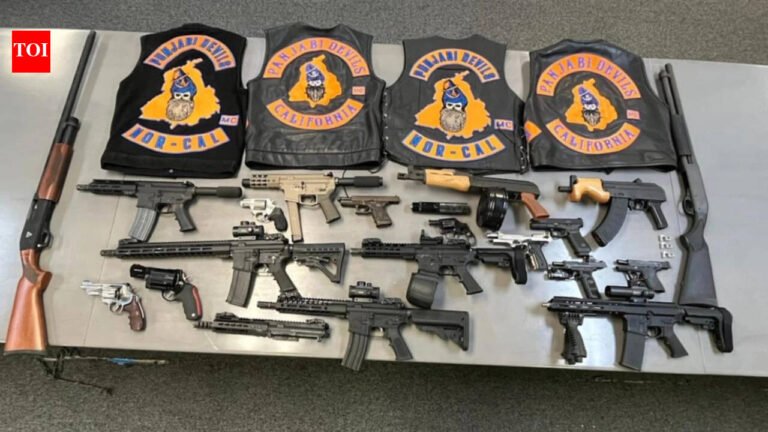
 Jashanpreet Singh, 27, of Lodi, California, was sentenced to five years and four months in prison for illegally dealing in firearms and possessing a machine gun, according to the U.S. Attorney’s Office for the Eastern District of California.U.S. Attorney Eric Grant announced the sentence, saying Singer was convicted of illegal gun dealing and illegal possession of a machine gun. Singh founded the Punjab Devils Motorcycle Club, an outlaw motorcycle gang based in Stockton. His motorcycle club uses Punjabi-themed symbols and Sikh imagery.The case stems from an undercover operation conducted on June 6, 2025, in which Singer allegedly attempted to sell weapons and firearms-related equipment to an undercover officer. The items included a short-barreled rifle, three assault weapons, three machine gun conversions and a revolver.Authorities later searched Singer’s home and vehicle and found more weapons and accessories, including another machine gun conversion device, a machine gun and a silencer. Investigators also seized gun parts, high-capacity drum magazines and other items related to illegal possession of firearms.During the search, officials discovered a “pineapple-style” capped fusion grenade, as well as a suspected military electronic cap Claymore. The bomb squad then carefully destroyed both items at the scene.Singer originally faced charges in San Joaquin County but did not appear in court on July 21, 2025. A warrant was issued for his arrest.A few days later, on July 23, 2025, the FBI received information from U.S. Customs and Border Protection stating that Singh had booked a flight to India and would depart from San Francisco International Airport on July 26. Law enforcement officers arrested him at the airport before he could board his flight. Federal authorities said Singer has since been detained to prevent him from escaping.The prosecution is part of Operation Take Back America, a U.S. Department of Justice (DOJ) initiative focused on combating violent crime, organized gangs, illegal immigration, and transnational criminal networks.
 According to Sussex Police, emergency services were alerted at around 5.45am local time after concerns were raised about three women in the water near Madeira Avenue on Brighton’s east seafront. Their bodies were later recovered from the sea.