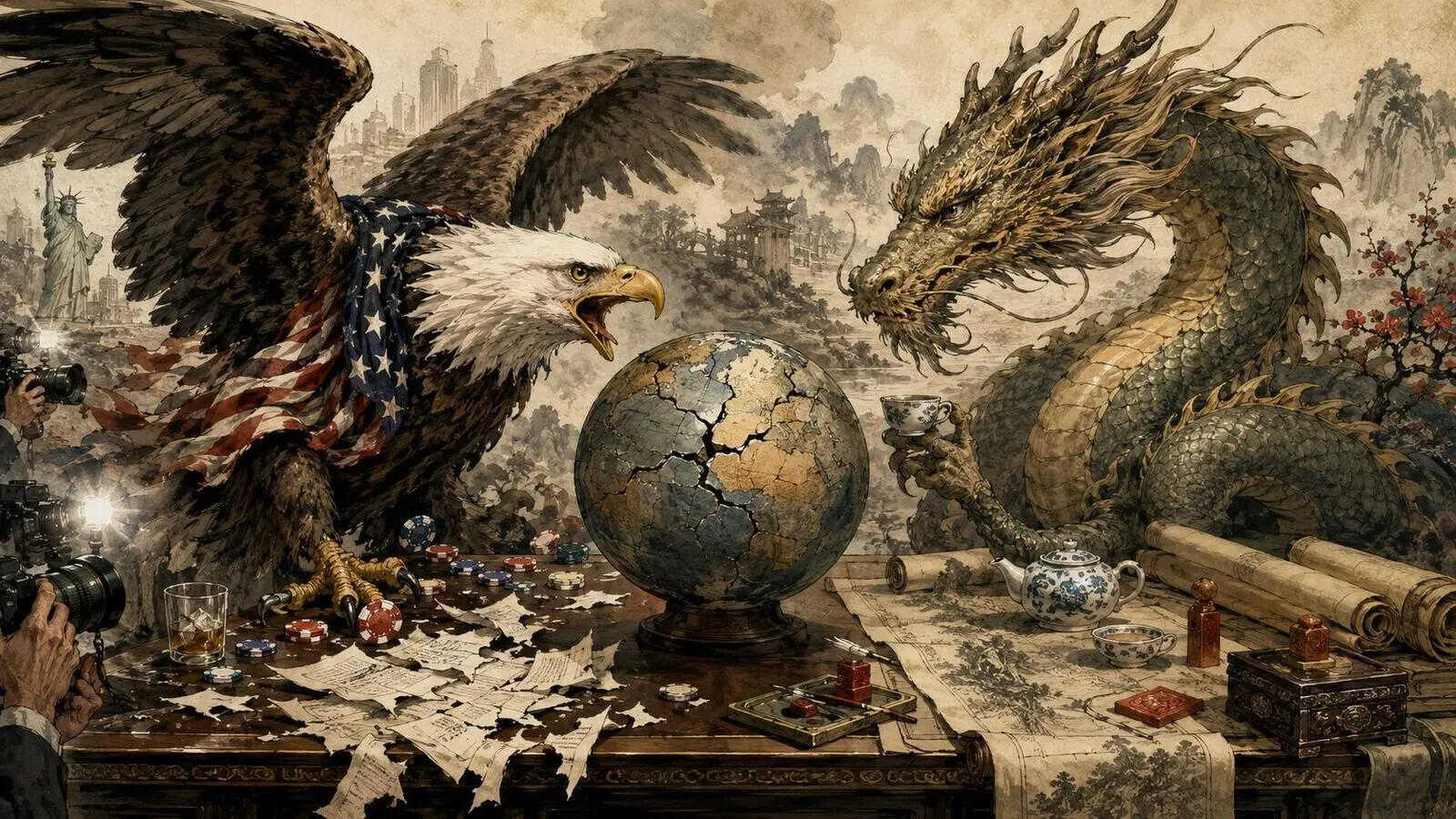
In April of this year, a particular meme took the Chinese internet by storm: “Tang Zi”. portmanteau of Donald Trump and Sun Tzu, which imagines the 47th president of the United States as a strategic sage whose wisdom somehow escapes grammar and causality. The meme is filled with Trumpian “winning” sayings, including “Break the enemy’s blockade by blocking the enemy’s blockade,” “If you don’t know what you’re doing, your enemy doesn’t either,” and “If you don’t have a goal, you can’t lose.” Sun Tzu wrote “The Art of War”. Tangzi seems to have written “The Art of What’s Happening?” 》This meme works because it captures the reality of how Trump uses power. He does not practice strategy in the old sense of dogma, discipline, patience, and a clearly defined end state. His genius, if he was being generous, was in turning chaos into leverage. He makes so much noise that everyone else has to explain it. He declares victory before, during, after, and sometimes in place of the battle. In Trump’s world, this declaration is not a description of reality. This is an attempt to replace it.
watch
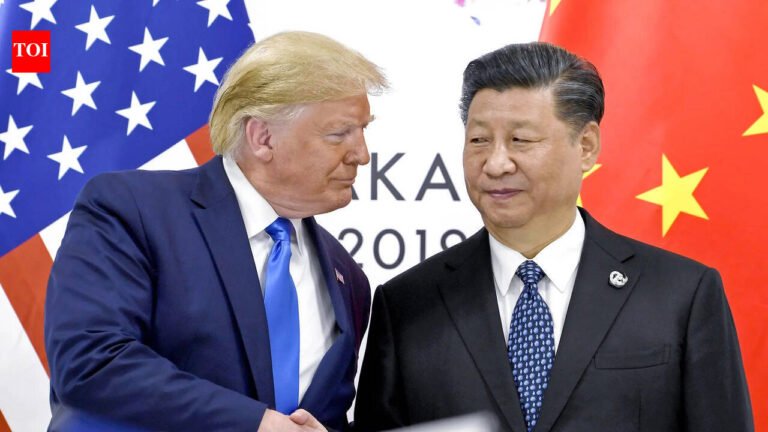
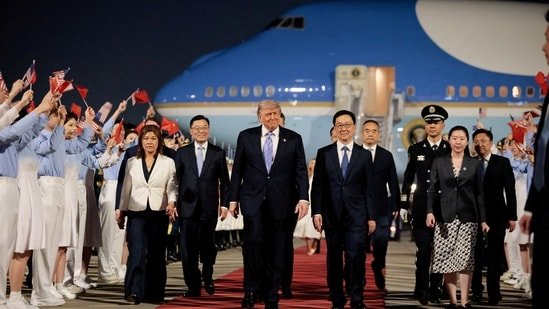
Trump lands in Beijing; Xi Jinping doesn’t welcome US president in person | See what happened
Which brings us to the man across the table. If Trump is a traitor, Xi Jinping Is the philosopher king. A recent New York Times closed-door profile of Xi Jinping described a ruler who has no close domestic rivals, is willing to lecture weaker leaders and conducts himself in the manner of China’s ancient rulers, blending political authority with civilized teachings. Tang Zi is interesting because he turns strategy into nonsense. Xi Jinping is disturbing because he turns other people’s nonsense into evidence of his own seriousness. Trump behaves in politics like a man who believes the room exists because he has entered it. Xi Jinping behaves in politics like a man who believes this room has been there for five thousand years and has been patiently waiting for others to learn the correct form of address.
the art of winning no coherence
Trump’s philosophy is often mistaken for no philosophy, but without enough confidence to practice it, no philosophy can become an institution. Every issue becomes a deal, every deal becomes a show, every show needs a winner, and the winner, ideally, before anyone checks the papers, is Donald Trump.
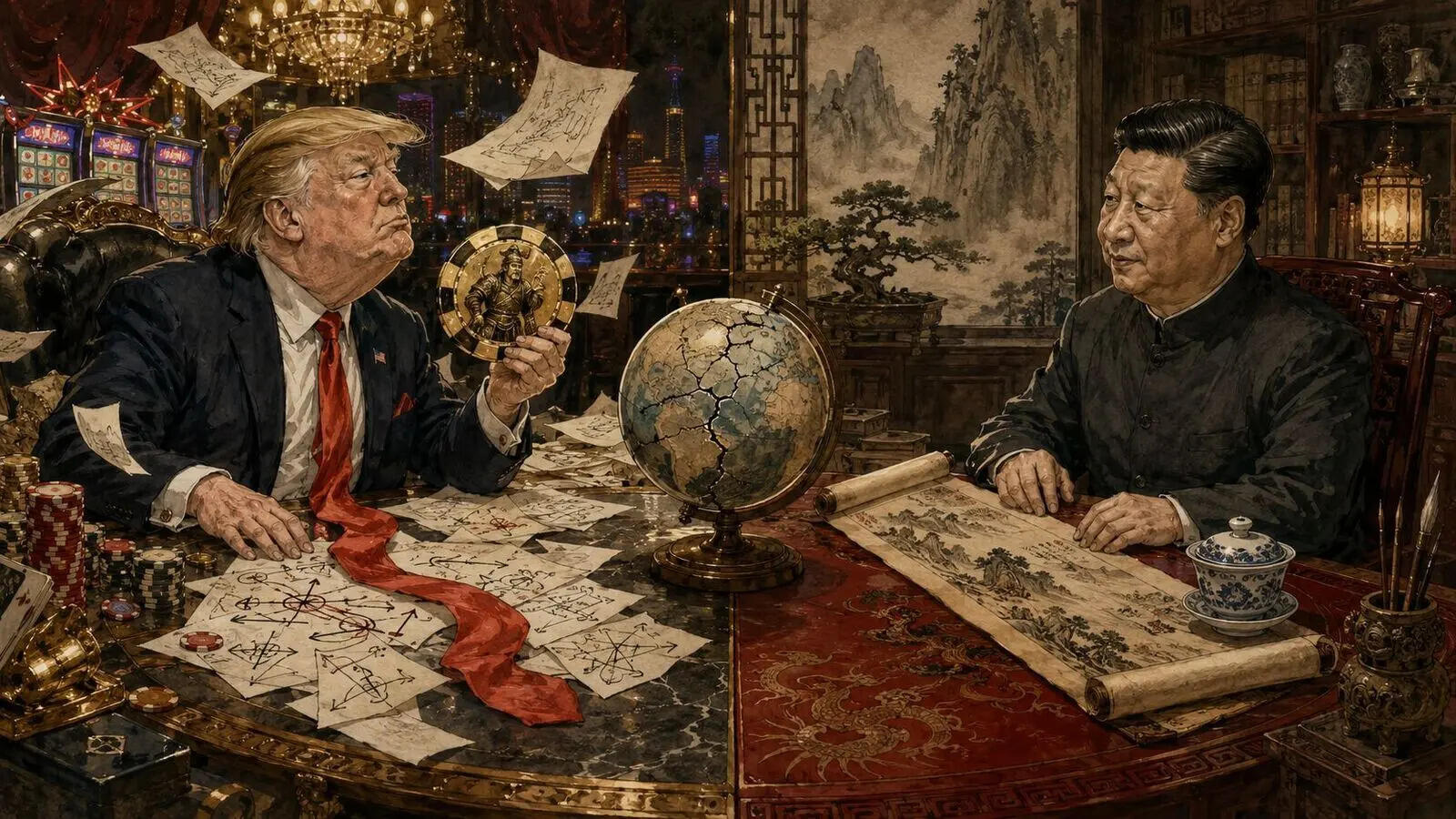
That’s why Trump’s foreign policy has always had the air of a casino, complete with hosts, bodyguards and people selling souvenir steaks near the exits. Alliance is an unpaid invoice. A trade deficit is an insult. The summit is a televised contest of manliness, and then someone has to show up and tell the cameras that this conversation was historic, beautiful, and very powerful. Form is more important than substance because form is substance.Trump’s incoherence has political utility because it exhausts explanation. Allies, foes, markets, bureaucrats, generals and journalists expended enormous energy trying to decipher whether his latest statement was policy, a provocation, a bargaining chip, a grievance, brain static or some previously undiscovered fifth state of matter. If you don’t know what you’re doing, your enemies won’t either. Without a clear goal, failure is impossible. If reality contradicts claims, reality is accused of liberal bias.
The use of Xi and order
Xi Jinping seemed to understand Trump early on, but did not express admiration. In Xi’s account of his last meeting with Barack Obama in Lima in 2016, Trump had just shocked the world by winning the US presidential election, and Xi seemed bewildered that American voters would choose someone so unconventional. Obama has sought to explain Trump’s rise as a result of setbacks in the U.S. economy, including anger over the loss of manufacturing jobs and the theft of intellectual property. Xi Jinping was reportedly dissatisfied with this. He put down his pen, crossed his arms, and delivered a sentence that sounded less like a diplomatic analysis and more like a verdict carved on a palace wall: If an immature leader plunges the world into chaos, the world will know who to blame.That moment was important because it showed how aligned Xi Jinping is about Trump, America and democracy. Trump proves that American institutions have lost their ability to filter out unserious content, that democracy can turn resentment into leadership, and that the liberal order has created a people who see institutions as pillars and norms as traps. For a leader who has spent years portraying China as stable, disciplined and historically consistent, Trump’s rise is a gift from the comparative political gods. Beijing does not need to invent arguments about Western chaos. The United States has exported live streaming.Xi Jinping’s political performance is based on the opposite proposition: Chaos is Western, order is Chinese, and history has finally found adult supervision. The Chinese Communist Party derives its legitimacy not just from revolution or economic growth, but also from its role as the guardian of China’s history. Xi Jinping reinforced this claim. He spoke as if China was not just a modern nation-state but a civilization that had experienced a brief few bad centuries and was now recovering its rightful place in the universe. During Obama’s 2014 visit to Beijing, aides were expected to discuss the South China Sea. Instead, Obama and Xi reportedly had a lengthy conversation about whether individualistic and collectivist Confucian societies could be compatible. This is politics as the study of civilization.
How do they treat middle powers?
The treatment of middle powers reveals the differences between Trump and Xi with unusual clarity. Trump treats middle powers like supporting actors in a drama of American discontent. Canada, Denmark, NATO allies and trading partners often serve not as diplomatic entities with their own limits and dignity, but as extras in the White House’s propaganda of American power. The Greenland incident remains the clearest example. Trump’s continued interest in acquiring or controlling the self-governing Danish territory has turned the ally’s sovereignty issue into a ritual of domination, with the island’s people and Denmark forced to continually explain that they are not non-performing assets on a golf course’s balance sheet. Trump’s approach is to apply pressure with a microphone. He didn’t just want to give in; He wants to see other countries forced to make concessions.
Xi Jinping’s approach to middle powers is different in style but not necessarily softer in substance. He doesn’t need a carnival. He prefers controlled rooms, tight smiles and polite reprimands. Exchange 2022 justin trudeau Still the most obvious example. Xi Jinping confronted the Canadian leader at the G20 summit in Indonesia after media reported details of their earlier conversation. Xi told Trudeau that was inappropriate and inconsistent with the conversation. Trudeau tried to explain that Canada believes in open dialogue and diplomacy that seeks common ground while reserving differences. Xi interrupted him, said to create conditions first, shook his hand and walked away.In that brief exchange, Xi Jinping’s power grammar was reflected. He wasn’t just against leaks. He was against violating the hierarchy. Speak in the right room. Use the right tone to raise objections. Do not embarrass the monarch in public. Mark Carney’s account of his meeting with Xi points in the same direction. According to Carney, Xi spent the first part of their interaction explaining how he hoped to develop a personal relationship. As Carney explained, the message was simple: no surprises, direct, ask questions privately, don’t lecture me in public.So the difference is obvious. Trump humiliates middle powers through public pressure; Xi Jinping restrains them by sanctifying protocol. Trump uses them to prove that America can still push. Xi Jinping uses them to show that China cannot be treated like another country.
Gratitude and fate
Their critique of democracy is equally illuminating. Trump’s criticism was emotional. Democracy is legitimate when it loves him, dubious when it rejects him, and sacred when it returns him to power. Xi Jinping’s criticism is historic. Joe Biden recalled that Xi Jinping told him that democracies could not survive in the 21st century because reaching consensus was too difficult, while authoritarian countries could go faster. For Trump, democracy is a test of loyalty. For Xi Jinping, this is a museum exhibit: noble perhaps, certainly interesting, but too slow for centuries to come.Their foreign policy flows naturally from these temperaments. Trump wants a deal. Xi Jinping wants architecture. Trump wants visible concessions: purchases, tariff relief, a promise to build factories, a handshake he can sell to voters. Xi hopes for a slower, deeper shift: one that accepts China’s red lines, respects its status, and recognizes that Taiwan is not just a flashpoint but a sacred issue of national integrity. Trump’s time frame is the news cycle, market reaction and rally applause. Xi Jinping’s time horizon is the Party Congress, the five-year plan and the historical arc. Trump wants the trophy. Xi Jinping wants maps.
new world chaos
It is easy to understand that Trump and Xi Jinping are opposites: Trump is chaos, Xi Jinping is order; Trump is chaos, Xi Jinping is order; Trump is chaos, Xi Jinping is order; Trump is chaos, Xi Jinping is order. Trump improvises, Xi Jinping plans; Trump shouts, Xi Jinping preaches; Trump is the casino, Xi Jinping is the court. The further you read the more disturbing it becomes. They are competing answers to the same crisis. Both emerged at a time when the old liberal order no longer commanded automatic belief. Both speak of grievance. Neither trusts constraints. Both personalize power. Both view rules as tools created by others for their own benefit.The difference lies in the approach. Trump wants to start every morning in order with his mood. Xi Jinping hopes that China will have order in every century. Trump distorts reality by overwhelming it. Xi Jinping distorts reality through historicization. Trump turned politics into spectacle and attention into authority. Xi Jinping has turned politics into destiny, and authority has become inevitable.The situation of Tang Zi and Zhe Wang Xi happens when the old world loses confidence in its own rules. One man said there are no rules, only victory. Another said there are rules, but China sets the rules before you are born. The rest of the world sits between them, waiting to find out whether the future will be shaped by those who see geopolitics as a casino, or those who see geopolitics as a dynasty with broadband.



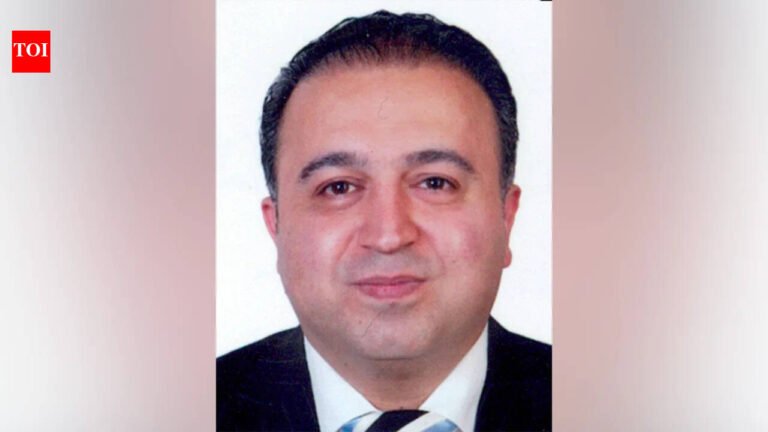
 The accused was identified as Sharon Gohari. They are naturalized U.S. citizens living between Iran and Nassau County, New York.Authorities said Goharie conducted an ongoing scheme from at least December 2020 through May 2025 in which he solicited and received payments from Iranian nationals and others trying to enter the United States illegally. He arranged and facilitated their travel, including assisting with visa applications at the Mexican Embassy in Iran and organizing journeys into the United States through Mexico and other transit countries.Gohari worked with colleagues in Iran and elsewhere to charge thousands of dollars per client. At least one individual he assisted is alleged to have ties to Iran’s Islamic Revolutionary Guard Corps (IRGC), which is designated a foreign terrorist organization by the U.S. State Department. The man was later detained by U.S. border authorities.During the course of the investigation, federal agents also discovered child sexual abuse material on Gohari’s phone, including multiple videos depicting the rape of children. Some of the material involves children as young as five years old.Investigators found hundreds of photos and videos on his devices showing women in public places in New York City, including on trains and in cafes, that were recorded without their knowledge. Some of the photos were taken from close range or in a way that suggested the victim was being followed. Gohari shared some of the material with overseas accounts, including one based in Iran.In communications after receiving the child sexual abuse material, Gohari stated his intention to seek out a sexual partner at a high school.The case involves immigration-related crimes and child exploitation offences. The alien smuggling charge carries a mandatory minimum sentence of three years and a maximum of 10 years in prison, while the child sexual abuse material charge carries a mandatory minimum sentence of five years and a maximum of 20 years. Sentencing is scheduled for later.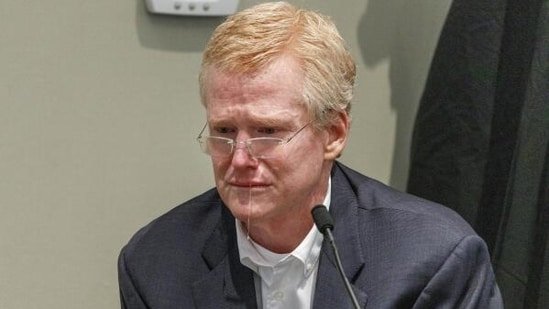

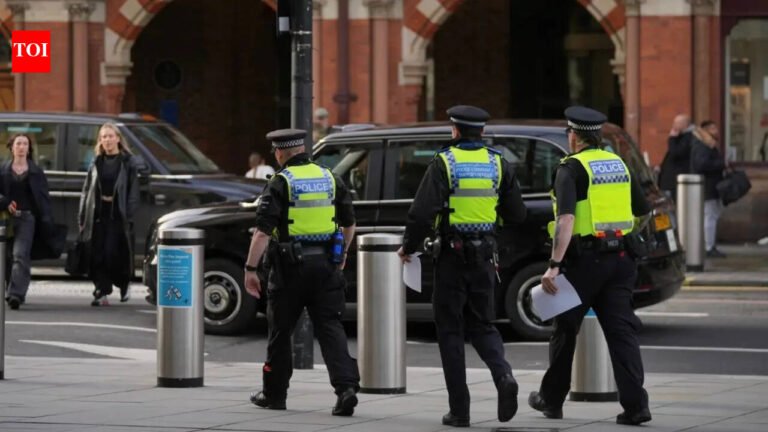
 Beytullah Gunduz, 39, who prosecutors say has links to the Hackney Turks gang, also known as Bombacilar or the “Bombers,” has been charged with plotting to murder restaurant owner Onur Guzel following a bitter turf dispute involving rival Turkish gangs, Sky News reported.The gang suspected Guzel’s family of supporting rival Tottenham Turks financially and allegedly demanded an “eye-watering” sum weeks before the shooting, according to Old Bailey prosecutors.The attack took place outside the family-run Umut 2000 restaurant in Dalston on June 20 last year. CCTV footage played in court reportedly showed Guzel lying on the pavement, shot in the torso and screaming in agony.Although Guzel survived, he suffered life-changing injuries and is now reportedly living with an ostomy bag.Gunduz dismissed a charge of conspiracy to murder and a separate charge of conspiracy to cause grievous bodily harm.The accused gunman, Dogan Over, did not face trial because he is believed to have fled to Istanbul after the attack. Prosecutors said the white Kia Niro used in the shooting was burned minutes later.The court also heard the Guzel family and their restaurant had been targeted in two previous shootings linked to tensions between London’s Turkish gangs.Prosecutor Jane Bickerstaff KC told jurors that Gunduz and an associate initially approached the family after the shooting at the Guzel brothers’ home on April 5, allegedly blaming the Tottenham Turks and offering help.However, after another shooting at the restaurant on April 7, the gang allegedly accused Guzel’s father of secretly paying their rival.“His father denied giving the money, but the people he spoke to did not seem to believe him,” the prosecutor told the court. “They said Tottenham Hotspur were their enemy and gave his father a week to give them £100,000.”According to reports, Guzel had met Guenduz earlier on the day of the shooting but did not notice the attacker while talking on the phone outside the restaurant.“He just heard a loud bang and immediately felt a fever. He knew it was blood and realized he had been shot,” the prosecutor told the jury. The trial is currently underway.