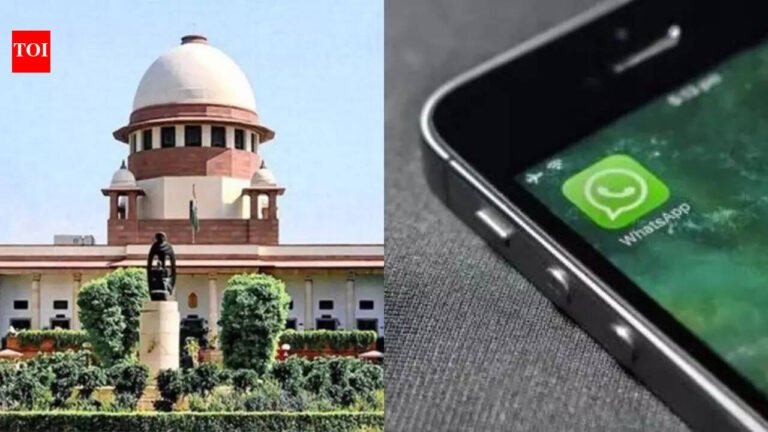
NEW DELHI: Social media giants Meta and WhatsApp on Monday told the Supreme Court that they will not insist on seeking a stay from the Appellate Company Law Tribunal (NCLAT) order banning them from sharing data on non-core services and direct them to provide users with a transparent opt-out option to withdraw consent for such sharing.Two weeks after the SC came down heavily on their complex procedures for data sharing and withdrawal of user consent, senior advocate Kapil Sibal informed a bench of CJI Surya Kant and Justices Joymalya Bagchi and Vipul M Pancholi that Meta and WhatsApp will fully comply with NCLAT directions in both respects within three months, i.e. March 16.While the bench disposed of two petitions by Meta and WhatsApp seeking stay on the NCLAT order, Competition Commission of India (CCI) senior advocate Madhavi Divan said the main issue was the direction of the regulator to impose a five-year ban on data sharing for advertising purposes. The SC has posted further hearing on April 19. Sibal tried to sidestep the issue, first arguing that the decision could be decided at the final hearing of appeals filed by Meta, WhatsApp and CCI, and later arguing that the law requires the companies to comply with the Digital Personal Data Protection (DPDP) Act by June 2027. Divan said NCLAT has been one of the important directives issued by the regulator to WhatsApp not to share user data collected on its platform with other Meta companies or Meta company products for advertising purposes for five years.This needs to be adjudicated and NCLAT’s direction on the issue needs to be put on hold, she said. She added that while NCLAT agreed with the CCI that the two companies enjoyed a dominant position in the market and cross-sharing of data between them enhanced Meta’s competitive advantage in the display advertising market, it created a hurdle for rivals who did not have access to WhatsApp data.The CCI said that if the five-year advertising data sharing ban is not enforced, “it will cause severe damage to the OTT messaging app market on smartphones and the Indian online display advertising market.”
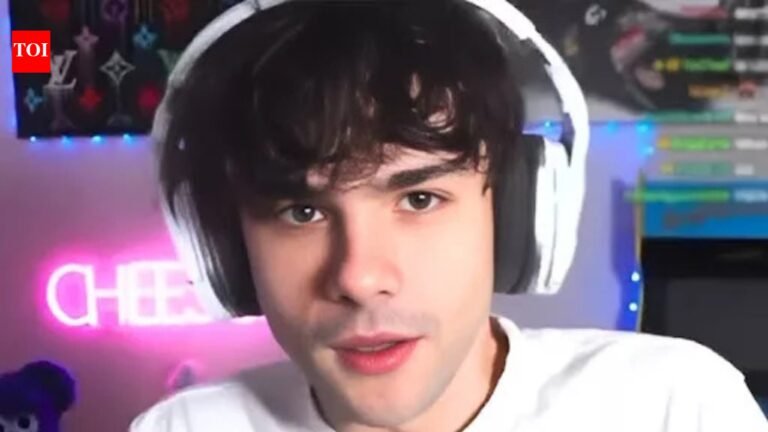
Who is Chisel? Twitch and Kick streamer Nermin Dzaferovic trending after viral message about CJNG leader El Mencho Intel (Image via Getty)
Kick and Twitch streamer Cheesur is suddenly at the center of a huge online storm. The viral post claimed he provided “critical intelligence” that helped Mexican forces track down and kill drug cartel leader Nemesio Rubén Oseguera Cervantes, also known as “El Mencho.” The theory spread quickly after reports emerged that El Mencho had died during a military operation in Mexico. But there is no evidence that Cheeseur played any role in the operation. Mexican authorities did not name him and there were no official reports linking him to the mission. For now, the story linking him to El Mencho is based solely on social media chatter and not confirmed facts.El Mencho, 59, is the leader of the Jalisco New Generation cartel, also known as the CJNG. Mexican officials said he was seriously injured during a clash with security forces in the town of Tapalpa, Jalisco state, and later died on a plane to hospital. After the operation, violence broke out in several areas as cartel members reacted. As the real news comes to light, Cheeser’s name starts trending, and that’s where the confusion begins.
how Nelmin Zaferovichknown as Cheeseur, linked to El Mencho and CJNG rumors
Cheesur’s real name is Nermin Dzaferovic. He is 23 years old and lives in Jacksonville, Florida. He started streaming on Twitch in 2019, mainly playing NBA 2K. Over time, he built a following on both Twitch and Kick, and now has approximately 142,000 followers on each platform.His connection to El Mencho rumors dates back to November 2024. At the time, Cheeseur posted a strong message on X targeting the cartel leaders. The post quickly went viral. Soon after, he briefly disappeared from social media. A missing persons flyer with his real name and details began to circulate online. He later returned and said his identity had been stolen.That incident has stayed in people’s minds. Then in February 2026, reports alerted the public that the U.S. government was offering a $15 million reward for information leading to El Mencho’s arrest. Around the same time, Cheeseur made comments online suggesting he would claim the reward. Some viewers thought he was joking. Others believed he was serious.So when the Mexican army declared El Mencho dead, social media users took it upon themselves to connect the dots. Old posts reappear. The clip has been shared again. Some users even claimed he provided “critical intelligence.”However, there have been no official statements from Mexican authorities, the U.S. government or law enforcement to support this claim. As of now, there is zero verified evidence linking Cheeseur to this military operation.Cheesur has faced controversies unrelated to this situation in the past, including online controversy and criticism of fundraisers. Because of this history, his name often comes to people’s attention quickly.Still, being mentioned alongside one of the world’s most dangerous cartel leaders is a serious matter. So far, what has been confirmed is simple: El Mencho was killed during a military operation in Mexico. The claims about Cheeseur have not been confirmed and are not supported by official sources.
the only passenger in the car Ruben Ray Martinez when ICE officer He died in another car crash last year when he was shot to death in South Texas, his attorney told Newsweek. Joshua Orta, 25, had some harsh words to say about Martinez’s shooting, contradicting official reports.
This undated photo provided by Rachel Reyes on Friday, February 20, 2026, shows U.S. citizen Ruben Ray Martinez, who was shot and killed by federal immigration agents in Texas last year. (Rachel Reyes via AP) (AP)
Horta, a close friend of Martinez and the only known witness to the death, reportedly plans to formally sign a statement and assist in further investigating the incident. However, Martinez was killed in an unrelated highway accident near San Antonio over the weekend, according to his family attorney.
Martinez, 23, was shot to death on South Padre Island on March 15, 2025. Texasduring a meeting with federal agents. Authorities later confirmed that the shooting involved U.S. Immigration and Customs Enforcement (ICE) Homeland Security Investigations. At the time, involvement in the incident had not been publicly disclosed.
What Joshua Orta said
Horta previously described the events leading up to the shooting in a sworn statement to attorneys representing Martinez’s family, calling them “spontaneous” and “relaxed” as they recounted a trip to South Padre Island to visit friends days after Martinez’s birthday.
Horta said local and state officers approached their car as they drove carefully through traffic. He disputed the official version, saying Martinez never hit anyone, accelerated dangerously or posed any threat.
“The officer appeared to be trying to get in front of the car and just as we were trying to turn around and leave, he didn’t move out of the way like the officer told us,” Horta said in a witness statement obtained by Newsweek and reported earlier by The New York Times.
He claimed that a federal agent fired several shots at Martinez from a few feet away without giving him any warning or a chance to comply. He also accused police of delaying medical attention for at least 10 minutes after Martinez was shot and handcuffing Martinez while he was unconscious.
“Following the shooting, law enforcement officers pulled Ruben from the vehicle, where he was apparently unconscious or dead,” Horta wrote. “Nonetheless, they placed him face down on the sidewalk and handcuffed him. At least 10 minutes passed before CPR or other treatment was administered to Ruben.”
He added: “Reuben was driving carefully in the correct lane and certainly did not hit anyone with his vehicle.”
Horta also claimed that Martinez’s family was unable to obtain records of his death. He claimed authorities charged Martinez with illegally entering an ambulance lane, assaulting a police officer and possessing drugs and alcohol. Horta claimed that none of the accusations were true.
Horta further claimed that the federal agent who shot Martinez and other law enforcement officers at the scene did not activate his body camera at the time of the incident.
“Ruben was unarmed and non-violent when he was shot, without running away or resisting. His killing was unjust and excessive,” Horta wrote in September.
What did the Department of Homeland Security say?
DHS agents were assisting the South Padre Island Police Department in a major incident, the Department of Homeland Security said in a statement to Newsweek on Friday about Martinez’s death.
“A blue Ford driver intentionally ran over a Homeland Security Investigations agent, leaving him on the hood of the vehicle. Upon witnessing the incident, another agent fired his weapon defensively to protect himself, his fellow agents and the public,” an agency spokesman said.
“The driver was transported to a local hospital where he was pronounced dead. The agent who was run over suffered a knee injury and was transported to the hospital,” the spokesman added.
At the time, a Department of Homeland Security report on the incident identified the deceased as a U.S. citizen from San Antonio. The report also said that the second person in the car was Horta, who is also a U.S. citizen and has been detained by South Padre Island police pending charges.
“First and foremost, Joshua’s death is a terrible tragedy for his family and friends, and the Reyes family is devastated for them,” Alex Stam, attorney for the Reyes family, said in a statement. “The world has now also lost a key witness in the death of Ruben.”
Officials are now calling for further investigation into Martinez’s death. Texas Democratic Representative Joaquin Castro said on social media that he wanted to know why there was an “eight-month cover-up.”
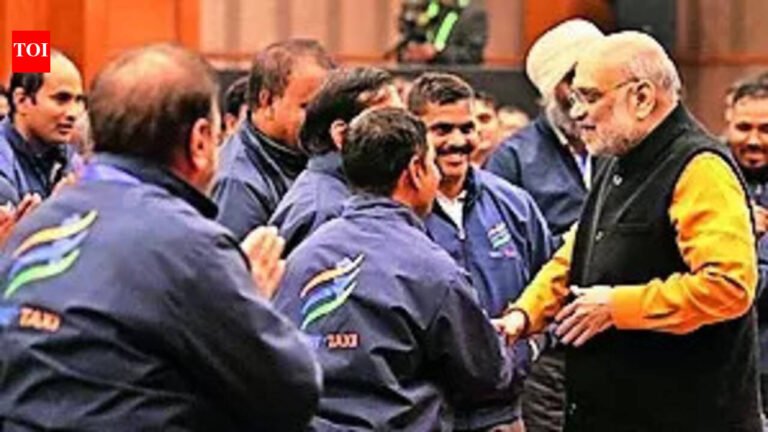
New Delhi: Minister for Cooperation Amit Shah Taxi drivers registered on the Bharat Taxi platform on Monday assured a minimum basic fare, saying the operating model of existing corporate aggregators is focused on maximizing profits.Addressing a town hall for taxi and auto drivers from Delhi-NCR and Gujarat, Shah said drivers will get 80 per cent of their income based on mileage traveled, while 20 per cent will be retained as partnership capital. “No matter what business you are in, your minimum rate should be fixed. Anything above that has to come back to you,” he said, adding that the three major aggregators told him they had not set any minimum base rate.He announced the launch of a dedicated ‘Saarathi Didi’ feature that will allow women traveling alone to prioritize women drivers. Launched earlier this month, Bharat Taxi operates in NCR and Rajkot and aims to expand to every city with a civic body. Shah said it will follow the Amul model, with 85% of profits returned to the manufacturer. Drivers can become co-owners by purchasing a share of Rs 500 and as membership grows, board seats will be reserved for driver representatives.
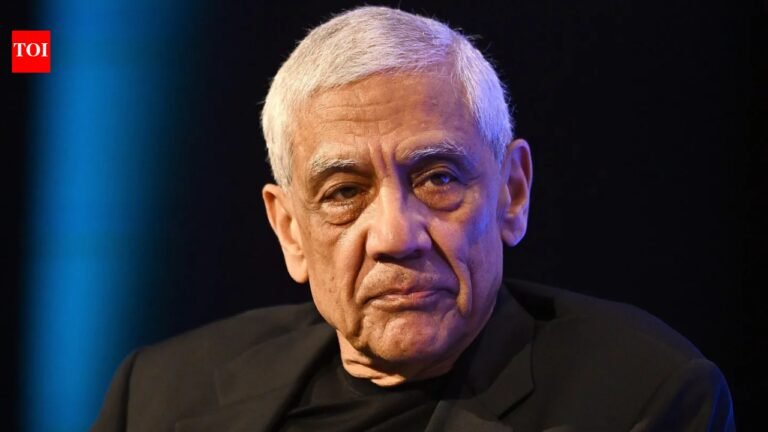
Indian-origin billionaire Vinod Khosla launches blistering attack on U.S. lawmakers Bernie Sanders and Rockana A post on X read: “Bernie Sanders, Ro Khanna warn of potential negative consequences of artificial intelligence. Idiots like Ro Khanna and Bernie Sanders will block everything AI can do to protect their religion. For these socialists/communists, good intentions but bad results are acceptable. ” The article was published after Sanders and Khanna spoke at a public discussion on artificial intelligence at Stanford University.The exchange took place at a Stanford University town hall on February 20, 2026, at which Sanders stated that artificial intelligence is developing faster than existing economic and political systems can sustain. He casts doubt on Silicon Valley’s assertions that artificial intelligence will naturally bring widespread public benefits, saying similar assurances were made during previous waves of technological change when wealth and power became more concentrated. Sanders warned that rapid deployment of artificial intelligence could accelerate job losses and widen inequality if it relies primarily on market forces.Khanna, who represents a district in Silicon Valley, has proposed what he calls a “democratic AI” framework, arguing that current trends in AI favor big tech companies. He said AI systems should prioritize adding workers rather than replacing them, and suggested policy intervention was needed to prevent productivity gains from flowing mainly to businesses. Khanna pointed to the potential uses of artificial intelligence in areas such as health care and clean energy, but he argued those results are not guaranteed and criticized what he said was Silicon Valley’s tendency to resist outside scrutiny.Khosla, the co-founder of Sun Microsystems and a prominent investor in companies focused on artificial intelligence, has repeatedly said that excessive caution and regulation could delay breakthroughs that would improve living standards. In a post in response to the Stanford incident, he attributed lawmakers’ warnings to ideological motivations and said slowdowns in artificial intelligence could impede advances in health care, medical research, drug discovery, education, clean energy, scientific innovation and overall economic productivity, thereby hindering the technology’s broader societal benefits.The incident highlights growing tensions between parts of Silicon Valley and policymakers over how artificial intelligence should be governed, with divisions growing in high-profile public forums and social media platforms.
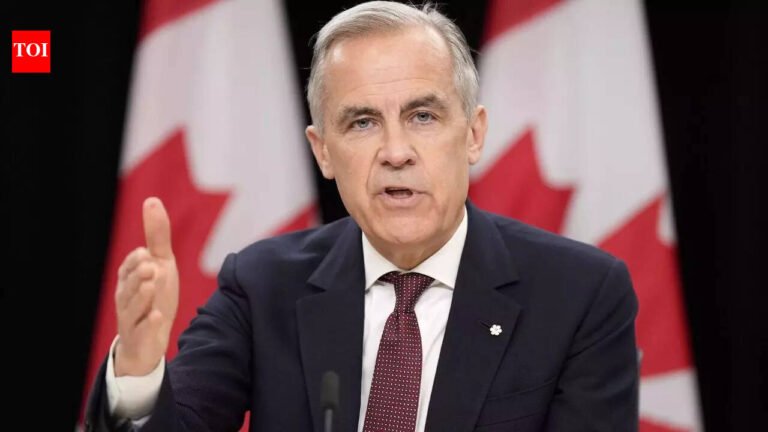
New Delhi: Canadian Prime Minister Mark Carney will pay a three-day visit to India starting this week, Ottawa said in an official statement. Karni will stay in Mumbai for two days before arriving in New Delhi on March 2 for a bilateral meeting with Prime Minister Narendra Modi that is expected to further cement ties shaken by the killing of Sikh separatists in 2023.Apart from security, issues such as energy, trade, defense and technology are likely to be high on the agenda of Carney’s first visit to India as prime minister. Leaders will review efforts to reach a framework for the Comprehensive Economic Partnership Agreement.India and Canada are seeking new talks on a trade agreement that would help achieve $50 billion in annual trade by 2050. India’s 10-year deal to purchase uranium from Canada is likely to be signed during the visit.Canada stated that the leaders of the two countries will focus on improving and expanding Canada-India relations and establishing ambitious new partnerships in areas such as trade, energy, technology and artificial intelligence, talent and culture, and defence. He will meet with business leaders to identify investment opportunities in Canada and forge new partnerships between businesses in both countries.“In a more divided and uncertain world, Canada’s new government is focused on what we can control. We are building a stronger, more independent and more resilient economy. We are building strength at home, diversifying trade overseas and attracting significant new international investment,” Carney’s office said in a statement announcing the trip to India, Australia and Japan.“To that end, Prime Minister Mark Carney announced that he will visit India, Australia and Japan from February 26 to March 7, 2026, unlocking new opportunities for Canadian workers and businesses in trade, energy, technology and defence. Through visits to three of Canada’s strongest Indo-Pacific partners, the Prime Minister will deepen regional relationships that are critical to our security and prosperity.”
A fire breaks out at the Camden Westwood Apartments in the Cary neighborhood of Morrisville, North Carolina. The complex is located on the Summit Ridge Loop, near the Park West Village shopping center.
Massive fire breaks out in Morrisville, North Carolina. (no splash)
Video from the scene showed fire and thick smoke billowing from the building. Firefighters are on scene working to control the blaze.
The cause of the fire is currently unclear, and it’s unclear whether anyone was injured.
Many witnesses and local residents said social media Report the incident.
One person wrote on Facebook: “There’s a fire next to the Trader Joes’ in Morrisville. Hope everyone is okay. Someone in the parking lot said it was a big apartment complex but I’m not sure. There’s so much smoke I have to get out of there.”
Another added, “I hope everyone is okay, I knew something was wrong when four fire trucks passed me on my way home.”
A third person reported: “There’s a fire going on right now at the Camden Apartments in Morrisville.”
Another resident wrote: “I can see smoke coming out of Target! I hope everyone is okay.”
In March 2019, a similar fire broke out in the same apartment building. About 30 firefighters, assisted by personnel from the Apex, Cary and Western Wake fire departments, extinguished the blaze within 30 minutes.
The Town of Morrisville said 35 residents and nine pets were displaced at the time. Fire officials said about 17 apartments were affected. No injuries were reported.
Resident Michael Giangrasso told ABC 11 he had just been out walking his dog when the fire broke out.
“When I took Jesse out, I looked around the rest of the apartment and didn’t see any smoke,” Giangrasso told the outlet. “I rushed home and our place was completely gone.”
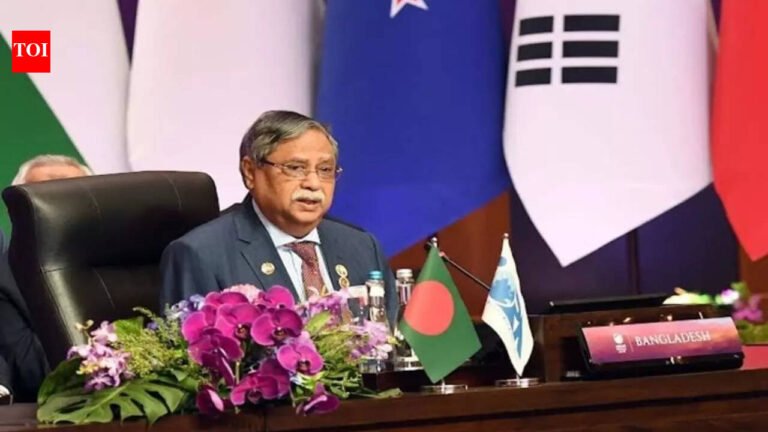
Dhaka: Bangladesh President Mohammad Shahabuddin has launched a blistering attack on Mohammad Yunus, accusing the former interim government chief of plotting to overthrow him, destabilizing the country and creating a constitutional vacuum.“They are trying to keep me in the dark. They don’t want people to recognize me. They don’t allow me to participate in events abroad or at home,” the president said, giving another glimpse into a hidden side of the Nobel laureate. The Nobel laureate won over an influential global lobby by casting himself as a peace-loving academic, but his tenure as interim administrator has been defined by manipulation, semi-authoritarian tendencies and the unbridled indulgence of violent fundamentalists.Notably, Shahabuddin claimed in an interview with Bangladeshi daily Kaler Kantho that Bangladesh’s trade agreement with the United States was implemented in a “highly secretive manner” and even the president’s office was not informed about it. This disclosure will strengthen the view of those who insist that the protests against former Prime Minister Sheikh Hasina were instigated by foreign powers.The interview also confirmed estimates that Yunus’ authoritarian ways have unsettled both the BNP and the military, with Shahabuddin saying he would not remain president without the support of the armed forces and the BNP leadership from “the highest levels” during the “challenging” 18 months of Yunus’ interim government.
Yunus-appointed prosecutor Tajul Islam replaced
The Tarique Rahman-led BNP government on Monday fired Tajul Islam, chief prosecutor of the Congress-aligned Bangladesh International Crime Tribunal (ICT), who represented the former interim government of Mohammad Yunus in the Crimes Against Humanity 2024 case in which former Prime Minister Sheikh Hasina was sentenced to death in absentia, Ahsan Tasnim reported. Tajul has been replaced by Supreme Court lawyer Md Aminul Islam, a key member of the legal team of former prime minister and BNP matriarch Khaleda Zia. “My clear message is that those who have not committed any crime will not face any harassment but the real perpetrators will have to be punished,” Aminu told reporters.
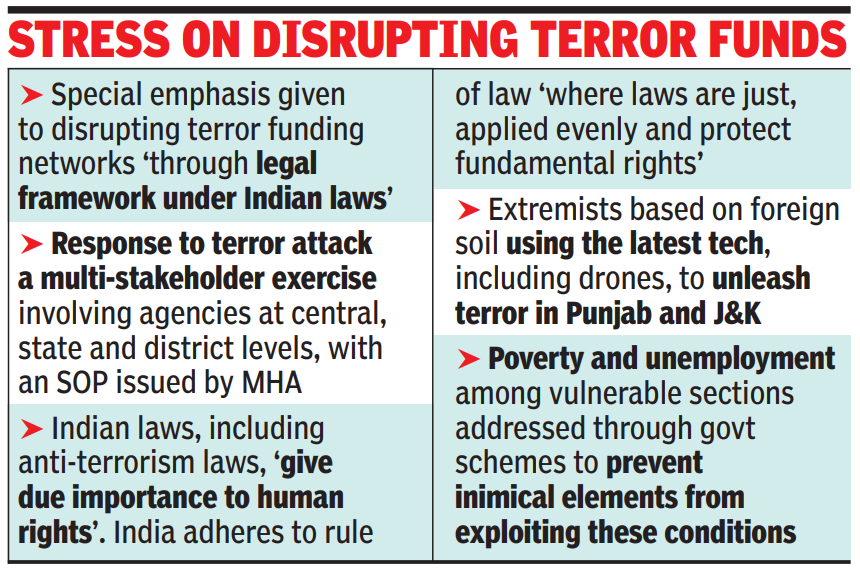
NEW DELHI: The government on Monday unveiled the country’s first-ever counter-terrorism policy, taking its “proactive and intelligence-led” approach to a doctrinal level, focusing on the emerging challenges of terrorists using modern communication equipment and criminal networks, besides the ongoing threat of terror deployment by “hostile neighbours”.‘Prahal’, short for India’s comprehensive counter-terrorism policy and strategy, aims to criminalize all acts of terrorism and starve terrorists, their sponsors and backers of funds, weapons, safe havens and cyber resources.The policy is based on seven key pillars, represented by each letter of the acronym. It focuses on “prevention” of terrorist attacks; prompt and proportionate “response”; “aggregation” of internal capabilities to adopt a whole-of-government approach; “human rights” and rule-of-law-based processes to mitigate threats; “weakening” of the conditions in which terrorism thrives, including radicalization; “coordination” of international counter-terrorism efforts; and “recovery” through a whole-of-society approach.
.
The policy notes that India has been at the forefront of the fight against terrorism and refers to “neighboring countries” that use terrorism as a state tool, highlighting threats from jihadist groups and global terror groups such as the Islamic State and al-Qaeda.
Prahal aims for a graduated police response to radicalization
In describing the way forward, the policy hints at the scope for further cooperation between agencies in intelligence collection and investigations. While seeking revisions to the legal framework on counter-terrorism “from time to time”, it highlighted the ongoing need to build the capacity of national-level counter-terrorism mechanisms and the harmonization of their structures, resources, training and investigative methods.The policy stated that violent extremists based in foreign territories are using the latest technology, including drones, to carry out terror attacks in Punjab and J&K, and pointed out the use of organized criminal networks for logistics and recruitment to carry out terror attacks in India.
Prahal calls for global cooperation to fight terrorism
Additionally, the policy draws attention to the use of social media and messaging applications for terrorist communications and propaganda, acknowledging how encryption, the dark web, and cryptographic technologies allow terrorist groups to operate anonymously.As foreign terrorist groups rely on the infrastructure, logistics and terrain knowledge of local groups to carry out transnational terrorist attacks, Prahal stressed the need for international cooperation and collaboration, including through technology investments and partnerships with private businesses, to combat the misuse of information and communications technology (ICT) by terrorists.The counter-terrorism strategy aims to prevent attacks in a “proactive and intelligence-led” manner through coordination between central and state agencies. Likewise, it calls on law enforcement agencies (LEAs) to proactively disrupt terrorist groups’ cyber activities and to sustainably disrupt ground staff networks.For timely counter-terrorism response, the strategy requires all stakeholders at the central, state and district levels to have a unified counter-terrorism structure and standard procedures. As for “convergence” capabilities, law enforcement and security agencies must modernize with the latest tools, technologies and weapons. Prahal also sought to safeguard human rights through legal processes that would allow for multiple levels of redress and appeals against terrorism charges.The policy aims to grade police responses to radicalization and take legal action based on the level of radicalization. At the same time, the socioeconomic conditions of vulnerable youth and groups must be addressed through education and constructive engagement, in addition to deradicalization programs.The need to coordinate and shape international counter-terrorism efforts through treaties and procedures such as extradition and deportation in accordance with United Nations norms was also outlined.
Amid arguments that the US Supreme Court has struck down President Donald Trump’s global tariffs as “illegal”, the Republican leader has issued a new threat to countries that want to “play games”, warning them of “much higher tariffs and worse”.
U.S. President Trump announced that he would raise the previously imposed 10% tariff to 15%. (Bloomberg)
Friday, Scotts Ruling 6-3 that Trump’s tariffs are invalidfound that the president exceeded his legal powers. Hours after the ruling, Trump signed an executive order imposing 10% global tariffs on foreign goods, moving quickly to maintain his trade plans.
The next day, the president announced that the previously imposed 10% tariff would be increased to 15%.
Trump’s renewed tariff threats come amid ongoing scrutiny and global allies such as the European Union and Britain reconsidering trade deals with the United States.
Trump wrote in an article published in “Truth Social”, “Any country that wants to ‘play’ with the Supreme Court’s ridiculous ruling, especially those that have ‘blackmailed’ the United States for years, even decades, will face tariffs that are much higher, or even worse, than they recently agreed to. Buyer beware!!!”
In the Supreme Court’s ruling, Chief Justice John Roberts wrote the majority opinion, saying any “extraordinary assertion” of such power would require “clear congressional authorization,” which Trump did not have.
The ruling is over Trump administrationInstead of imposing broad trade taxes, use laws historically designed to freeze assets or impose sanctions on adversaries.
The U.S. president has used the International Emergency Economic Powers Act (IEEPA), a 1977 law, to impose taxes on imports from nearly all trading partners without seeking approval from the U.S. Congress.
Trump’s global tariffs target allies from Canada to India; until recently, the latter faced 50% tariffs. The trade deal with New Delhi reduces tariffs to 25% and then to 18%.