Random Thoughts: Why the shooter at the White House Correspondents’ Dinner epitomized American idiosyncrasy World News

America may be a shining city on a hilltop with free speech and endless refills of soda, but it does have its own unique characteristics that are reflected in the tough issues that divide the country, like abortion, gun control, gender theory, and whether Diet Coke is better than Coke Zero. An SNL skit perfectly captured this silly feeling washington’s dreamin which the Founding Fathers of the United States explained that the real reason Americans needed freedom from British rule was not to secure freedom but to implement their own measurement system and grammar. Jean-Paul Sartre once said: “Freedom is what you do with what others do to you,” and America, free from the influence of Britain and other colonial powers, developed its own specialties, one of which was the White House Correspondents’ Dinner, a night where the media and the White House ostensibly glossed over their differences through a few shots. Usually, these shots are jokes, like Obama’s angry translator or Reagan making a phone call after an assassination attempt, but this year they’re from the barrel of a deranged gunman who manages to waltz through security.
The friendly Federation assassin’s manifesto included an apology to everyone involved, a list of his targets, and even a postscript complaint about the poor security at the event. Sure, Trump sees his third attempt at life as a sign of his own importance in the American pantheon (just look at the name) and uses it to promote his new ballroom (more secure and drone-proof), but what exactly is the White House Correspondents’ Dinner? How did it happen? Why does the president laugh at a joke made at their expense? Why does this annual dinner feel like the most American thing ever in a country that invented both the First Amendment and the AR-15 as competing forms of self-expression? Like many strange rituals in Washington, it began with reporters worried about gaining access. In 1914, White House reporters heard that President Woodrow Wilson’s administration might decide which reporters could ask questions of the president. This was an unacceptable situation and the White House Correspondents Association was born. It was never meant to be a celebrity gala, a scholarship fundraiser, a comedy rant, or a place where cable TV anchors sit next to actors and pretend not to be excited. It was created because reporters wanted to make sure the White House didn’t dictate who could question the White House, a clothing-upgraded union. The first dinner took place in 1921, with “Silent Cal” Calvin Coolidge as the first guest. The ritual quickly developed, with presidents keen to lash out at questioners and reporters pretending their points mattered. Early dinners were clubby, reflecting American democracy: cigars, songs, jokes, men deciding the fates of others and women conspicuous by their absence. That changed as Helen Thomas raised the issue and Kennedy refused to attend until the ban on women ended. Soon it became a true American tradition. C-SPAN shows the world this. That changed dinner, just like the camera changed everything. A private dinner party is suddenly transformed into a national show, becoming more about access and optics.
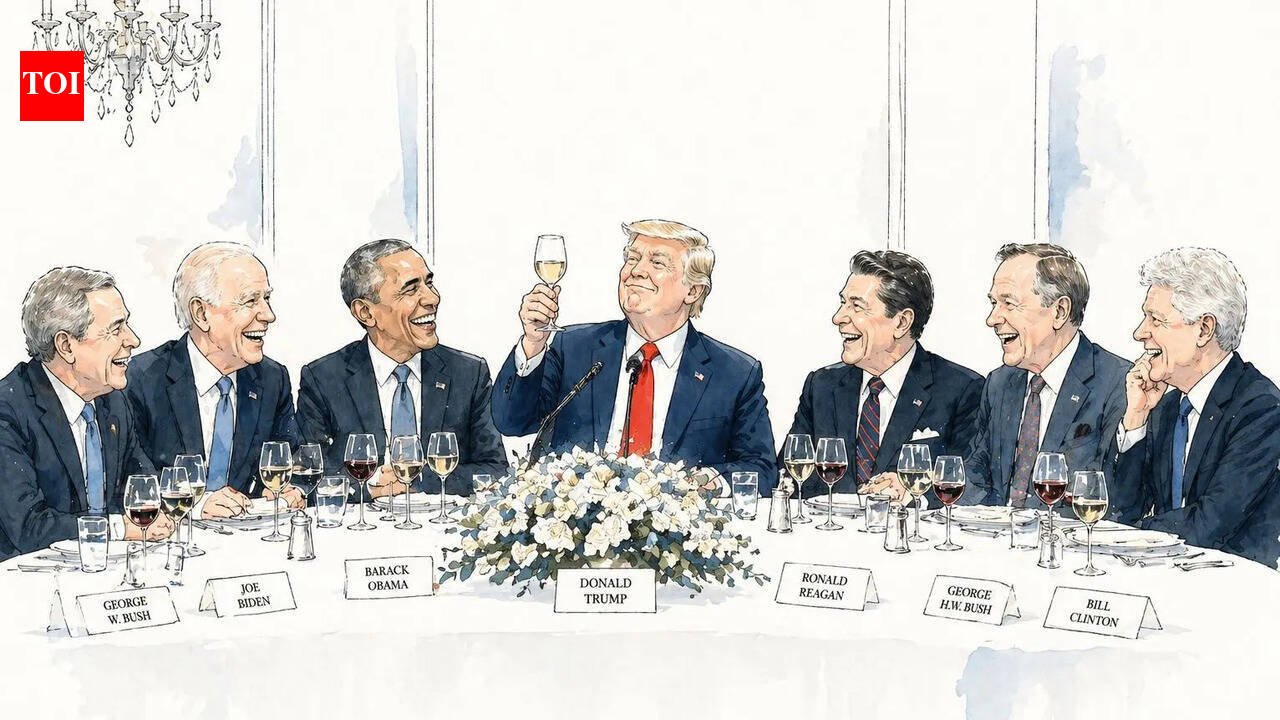
The format becomes strange and specific. Presidential speech. Comedians speak. The room laughed, sometimes out of amusement, sometimes out of obligation, sometimes out of the quiet recognition that the joke wasn’t really a joke but a statement that could have been made at a better time. It was less a dinner than an elaborate ceremony, with the media and the president rehearsing their relationship in public. The relationship has always been strange. The purpose of media is to question power. The president is destined to withstand such doubts. The Dinner Party compresses this energy into an evening where questions come in the form of humor and power responds with laughter. This is the conversion of responsibility into entertainment, and a system that only works if everyone agrees on that conversion. For a long time, that’s what they did. Ronald Reagan, who understood the drama of the event even if he wasn’t there, called after an assassination attempt to remind attendees that American politics preferred wit when it could. barack obama Distilling it into something closer to performance art, nowhere was this clearer than when he pulled out the “Anger Translator,” allowing a composed public persona and imagined private frustrations to coexist on stage. It works because it acknowledges the gap between words and deeds, which is what politics is all about anyway. Even the more poignant moments follow the same internal logic. Stephen Colbert’s 2006 performance made the room uncomfortable because it didn’t soften its edges, while Michelle Wolf’s 2018 performance did something similar in a different register. The reaction to both incidents tells you a lot about Washington’s tolerance for being laughed at. The dinner attracted ridicule, but only to the extent that it was identifiable. Walking out of it, everyone in the room had forgotten how to laugh. Lately, the ritual continues in a familiar form. Comedians like Colin Jost stand on stage and tell jokes about the president, age and the absurdity of the whole exercise, while people in the room do what they always do: laugh, frown, applaud, and move on. It’s truly as American as apple pie and the greedy obesity it induces, and it becomes even more American with the presence of the gunman, a true tribute to America’s obsession with carrying weapons. Trump’s refusal to attend during his first term was considered un-American. Yet, in a strange and uncomfortable way, it feels entirely American now. Because what could be more American than this contradiction: a country that uses the First Amendment as a shield for disagreement and the AR-15 as a tool for occasionally expressing it? A dinner party that aims to turn hostility into humor suddenly encounters a man who refuses to translate and insists on speaking in the original language of violence. The White House Correspondents’ Dinner was supposed to be a civilized version of the conflict. Here, the president is mocked rather than attacked, reporters ask questions rather than shout, and the tension between power and scrutiny is briefly resolved through laughter. But when the dissenter decides that dissent requires a trigger rather than a punchline, the ritual doesn’t collapse so much as exposes its limitations. Maybe that’s why the nights feel more American now than ever. Not because of the jokes or the president or the celebrity, but because it encompasses in one room the entire range of ways in which dissent is expressed in this country, from satire to spectacle to something less clear. At this dinner party, the powerful deserve to be shot at the joke, and more and more people seem determined to take the metaphor literally. The White House Correspondents’ Dinner is now the perfect metaphor for American democracy, celebrating the two things that are its bulwark and hallmark: free speech and assault rifles.