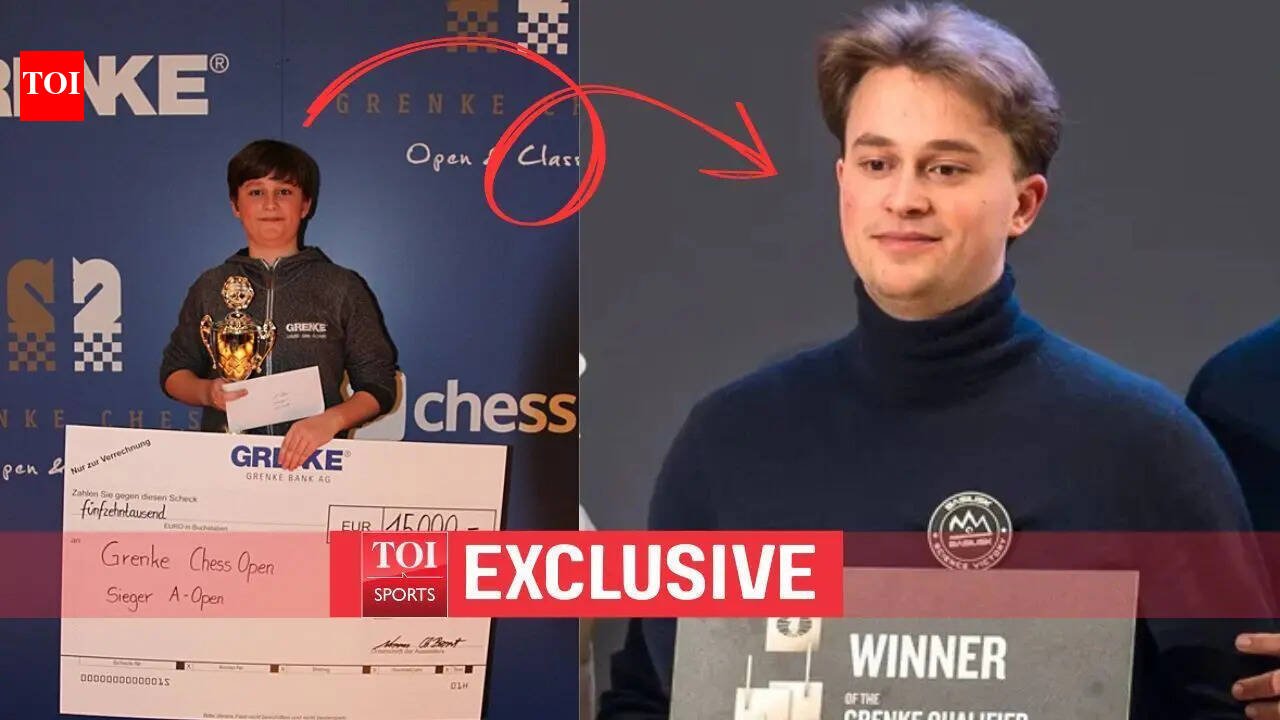

New Delhi: Vincent Keymer is an International Master (IM) who first established his authority on home soil when he won the prestigious Gronk Chess Open in 2018, when he was barely 13 years old. The Grunke Festival is held in the German city of Karlsruhe and has always been a proud place for Germany’s rich chess tradition.In a poetic cyclical moment, 21-year-old Kaymer, who is also Germany’s number one, returned to Grenke Freestyle 2026 this year to claim the title, defeating Maxime Vachier-Lagrave with a remarkable tie-break on the final day of the event, which with 3,658 participants made it the largest open chess tournament in the world.
Keimer comes from a musical family and has become a permanent fixture among the world’s elite. In an exclusive interview with TimesofIndia.com, Keimer talks about his latest victory, his unique journey and taking on the five-time world champion Magnus Carlsen. extract.
Return to Karlsruhe
You recently won the Grenke Freestyle Championship in Karlsruhe, a venue that means a lot to you. How would you describe the overall experience of winning such a big tournament?Keymer: This is a special place for me. In 2018, I won the Open Championship at the age of 13, which kind of launched my professional chess career. So for me, coming back to Karlsruhe, playing in that hall, playing in such an atmosphere, is always special. They also significantly increased the number of participants, making it even larger. It feels great to win there again after a long time.Entering the final day, the standings are extremely tight. How do you control your nerves?I have to say, I wasn’t too (nervous), just because there’s not much you can do. At the end of the day, I felt like I was playing pretty good chess. So I knew that as long as I kept at it and managed to stay tight, things would go well.
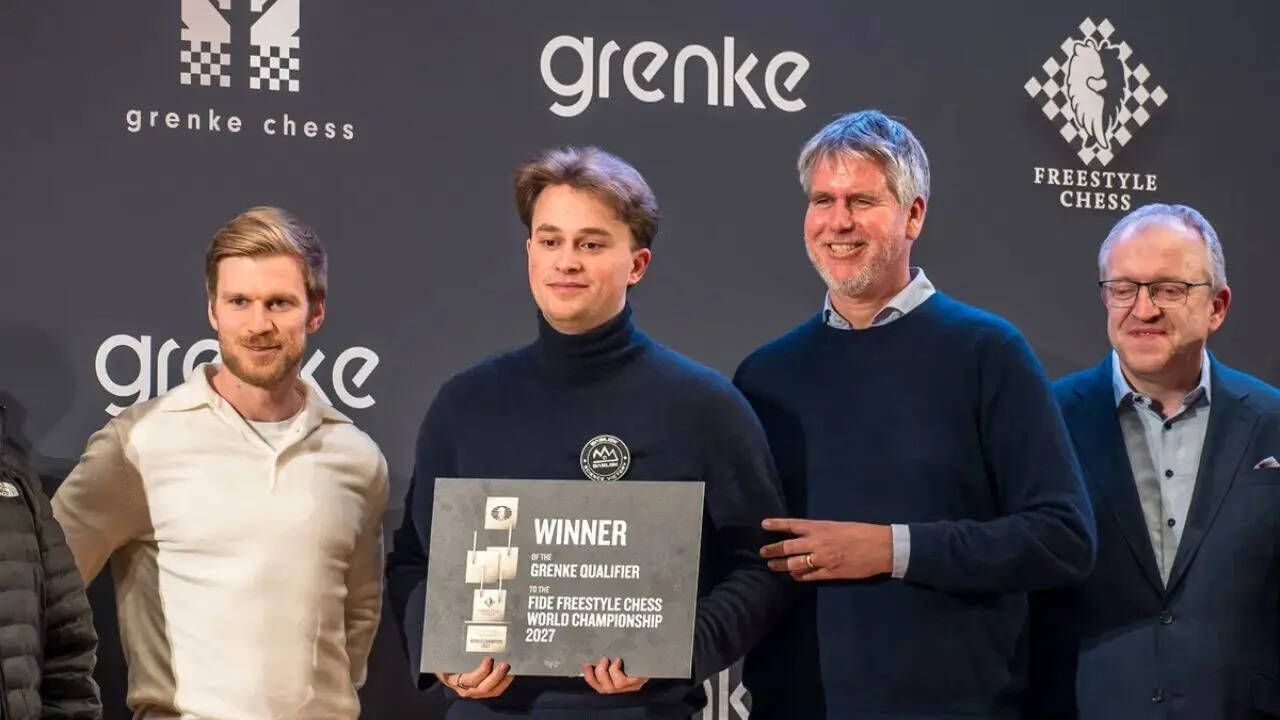
Vincent Keymer wins Grenke Freestyle Championship (Special Arrangement)
master the art freestyle chess
You have become a dominant force in freestyle chess (Chess960). After winning at the Weissenhaus last year and finishing fourth at this year’s FIDE Freestyle World Championships, you are clearly at the top of the form. For Indians, this form is somewhat mysterious. What are your tips for preparation?(Laughs) I’ve never prepared for freestyle, so I can’t give any advice on that. I firmly believe that if you are a good chess player, you are also a good freestyle chess player. If you understand position, structure, where the pieces belong and how they move (which I believe is part of being a good chess player), that’s enough to understand the difference in the new starting position. If we continue doing this for a few years and start repeating positions, preparation may be important, at least for the first few moves of a set. But for now, I’ve never had to prepare specifically for freestyle.Does this mean that freestyle is more about intuition rather than the deep calculations we see in classical chess?Of course more, yes. You have more options to get a new starting position, but few can be ruled out because you don’t know which moves are good or bad. There is no designated center to store parts or some of the structures you analyze in your home. These things simply don’t exist, so your gut tells you which direction to go.
Magnus Carlsen’s ‘intimidation factor’
You’ve played a lot of games with Magnus Carlsen now. Is there a real “intimidation factor” against a player of his caliber? How do you cope?Yes, I think it’s there. It’s a little different, but the more you play against him, you realize that, yes, he’s a great chess player, but he’s human and he makes mistakes and you can beat him.
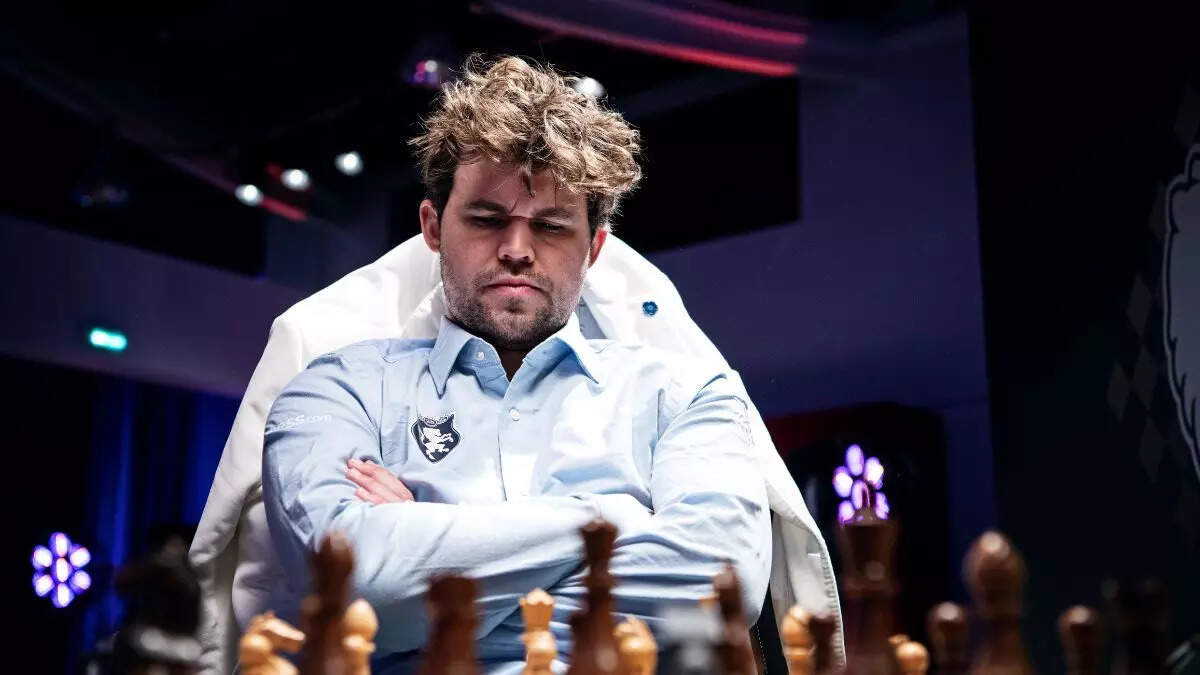
Magnus Carlsen (Image: Freestyle Chess/Steve Bonhage)
For me, especially after beating him in an actual match at Weissenhaus, things changed a bit because I had lost to him so many times before that. That doesn’t make him a great chess player, but a lot of it is mental. The more you feel like you have a chance against him, or that you’ll be able to defeat him if things go your way, the more the mystery unravels.
Keymer’s journey from a musical family
You come from a family of musicians, not chess players. How did your journey begin? How did you get on the path to becoming number one in Germany?Yeah, it’s kind of specific, like almost everyone’s story. I come from a musical family, so chess was not popular at home. I started playing chess when I was five years old after discovering a chess board and becoming curious about it. I kind of annoyed my parents until they showed me the rules and then I realized I really enjoyed this game.After that, I started going to local clubs, playing a bit, watching chess DVDs, and eventually playing in junior tournaments, first regionally and then nationally. I seemed to do well with relatively little training at first, so there was a feeling that maybe I had some talent.I think a big part of it is I never felt a lot of pressure to perform or be a certain type of player. At that age, I was basically enjoying it, which is probably why things went so well.However, around the age of 13, things become more difficult. I had reached a rating of 2400 when I was 11 years old, but then I was stuck there for a long time. The Grenke Championship and the whole year have been great for me. I came very close to reaching the final Grandmaster standard in 2018, so it took me another full year to complete it in 2019, when I was 14 years old.Of course, that was still young, but compared to other top juniors my age, it felt too late. Players like Praggnanandhaa and Nihal Sarin were already above 2600 level at that time. During COVID-19, I really pushed myself to catch up, and then in 2021, in Switzerland, I became number one in Germany.
I used to play the piano, but that was a long time ago
German Master Vincent Kemer
You come from a musical family. Do you still have time to play any instruments?I used to play piano, but unfortunately that was a long time ago. It still means a lot to me, but from a time perspective it’s no longer feasible. In Germany, I worked as a chess professional while still going to school regularly. You don’t really have much choice.I had some special arrangements so that I could go to games, but whenever I got home I still had to go to school and take tests. It was already quite difficult to combine a semi-professional chess career with school, and at some point there simply wasn’t enough time to play the piano.
The current state of German chess
How would you describe the chess culture in Germany?Of course, Matthias Blübaum performed well enough to qualify as a candidate and reach 2700 points, so it’s great to see German chess improving overall. We do have talented players, but maybe not many stand out. In Germany, the support system for professional chess players is very different from, say, India. It is possible for a child to choose chess as a career, but the path is not really paved for you and you have to fight to succeed.Now, being in the top five in the world, I would say everything is going well for me. We also have a very strong national team and hopefully we can compete for medals at the next Olympics. If you look at the majority of these players, many still go to school regularly, some have even completed college degrees, and most rarely receive professional coaching and tend to just train in groups. With that in mind, it’s amazing how powerful they’ve become.I was lucky enough to have the support of Péter Lékó from the age of 13, which was great for me.
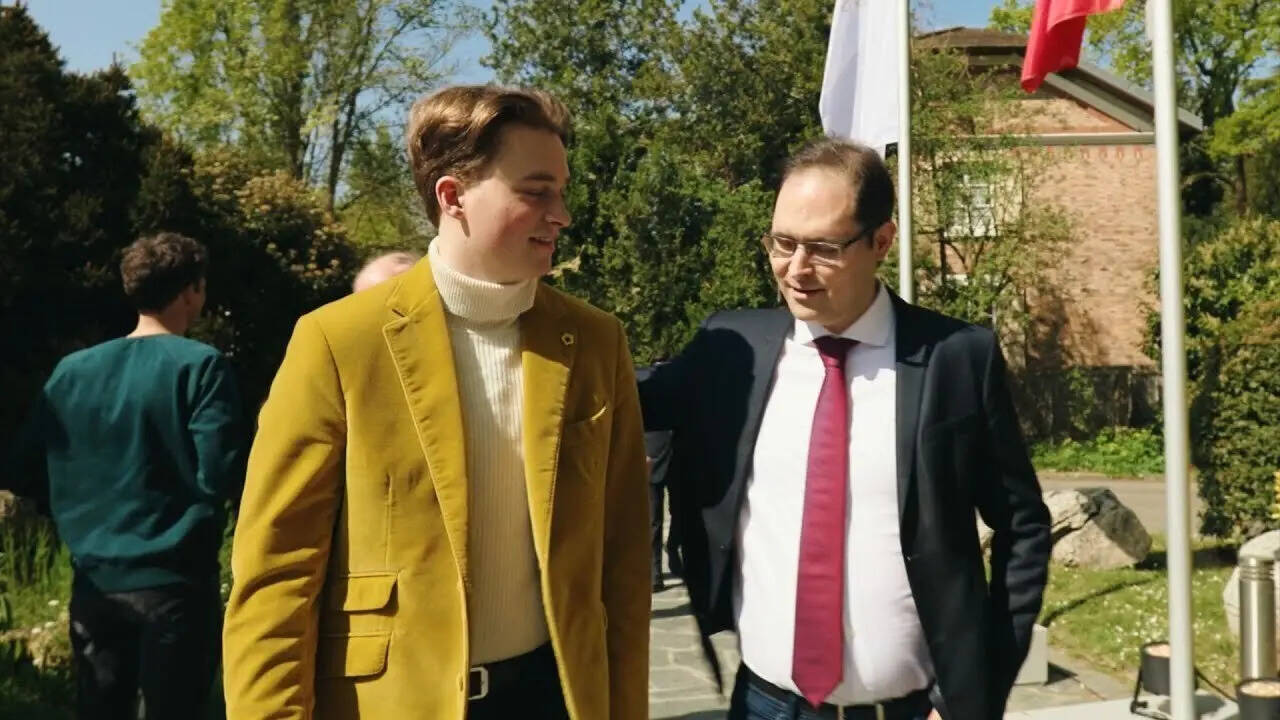
Vincent Keymer and Péter Lékó (by special arrangement)
Speaking of Péter Lékó, he is known for his endless passion for the sport. What is he like as a coach?Well, as you said, he makes a living from chess, that’s for sure. Even though he rarely plays anymore, you can still feel that this is his passion. Especially in the beginning, it was great to have him there explaining how things worked, how to prepare for the start, how to approach your first big tournament and how to choose events.For example, when I qualified for the 2019 Grand Swiss, there were a lot of things I simply didn’t know. You can solve these problems on your own, but that usually means making mistakes many times before you find the right approach. Having a player who has done it all and been in the top 10 for 10 years in a row helps a lot. Of course, not everything that worked for him worked exactly the same for me, but this gave me a very strong starting point, and most of the advice was very helpful.
Most important updates
Fan question: When are you going to update your Instagram profile photo? They feel the same as they have in a long time!(Laughs) Indeed! I think I’ll be doing that soon. It’s definitely long overdue!Also read: Following D Gukesh’s coach Judit Polgar, 12-year-old Aarav Sarbalia reinvents chess as content