
New Delhi: Center and delhi police Social media platform The center said in a note to the court that X failed to remove “illegal content on its platform” despite having “actual knowledge” and that such inaction amounted to a failure to comply with due diligence requirements under the law.
‘Are you Usain Bolt?’ Zaheer recalls heated exchange with Ponting during 2010 Mohali Test
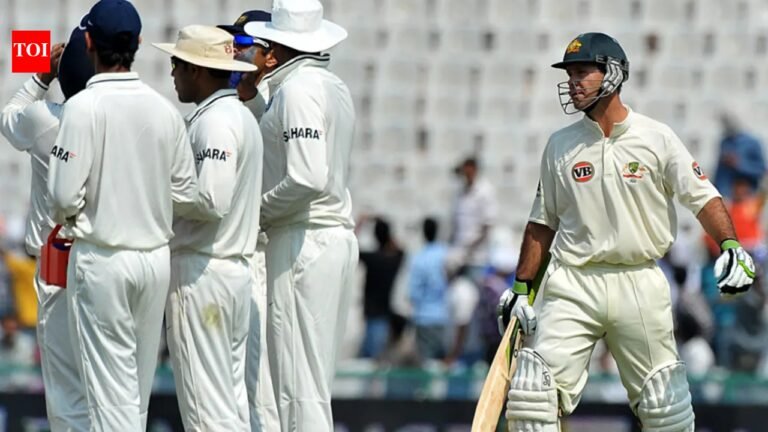
India vs Australia, 2010 (Photo: Screengrab)
More than a decade after one of the most talked-about flashpoints in India vs Australia cricket, the former India pacer Zaheer Khan Finally revealed what he said Ricky Ponting Their intense encounter in the 2010 Mohali Test.The incident, etched in cricketing memory, happened after Ponting was run out after receiving a hard direct hit from the batsman. Suresh Raina. Ponting’s elimination came at a crucial moment in the Test and the dismissal clearly made the Australia captain uncomfortable. As he walked past the Indian player, he immediately turned back, pointed his bat at him, and had a brief but intense exchange of words before the on-field umpire intervened.For years, fans have wondered what exactly triggered Ponting’s reaction. Zahir has now solved the mystery.“You think you are Usain Bolt? “Zahir said with a smile in an interview with The Indian Express. The cheeky remark was made in response to Ponting’s quick single attempt and came as India celebrated a crucial breakthrough.Zahir’s broader perspective on the practice is quite interesting, though.“Sledding isn’t about swearing. It’s about using it to your advantage and not losing yourself in the process,” he said.At that time, neither party paid much attention to it. After a long day in the fields, Pragyan Ojha To sum it up simply: “When two top teams compete fiercely, exchanging notes, that’s what cricket is.” Especially in Test cricket, there’s nothing more to it than that.Tests to RememberThe Mohali Test in October 2010 was one of the most dramatic matches in Test history as India registered a stunning 1-wicket victory. Australia has set a fourth-innings target of 216 for India. India collapsed early on at 124/8 and seemed to be heading towards defeat. but Pipe Laxmanfighting severe back pain, shot a heroic unbeaten 73, anchoring a miraculous chase.He found an unlikely partner in off-spinner Ishant Sharma, who scored a crucial 31 runs to help India get within striking distance. After Ishant’s dismissal, last man Pragyan Ojha had a tense moment to seal the win with Laxman.Australia, led by Ricky Ponting, had chances, most notably Nathan Hauritz’s missed catch, which turned out to be costly.
What will happen after Artemis 2 splashes down? NASA’s post-mission process explained

winner splash The end of NASA’s Artemis 2 mission marks the end of a historic journey around the moon. But it also triggers a series of crucial post-mission steps for space agencies and astronauts.

After nearly 10 days in space, Orion capsule carries four passengers astronaut The safe return to the Pacific Ocean ended the first human voyage to the moon in more than 50 years.
What follows is a carefully planned process involving rehabilitation and medical examinations.
1. Immediate recovery at sea
Recovery operations began within minutes of splashdown. According to Reuters, a U.S. Navy team was in place early to protect the capsule and assist in the evacuation of the astronauts.
The process is very methodical and can take close to an hour. Crews used boats to access the capsule and attached an inflatable platform to the hatch. The astronauts were then carefully rescued, assessed and airlifted by helicopter to a nearby Navy ship: the USS John P. Moussa, The Guardian reported.
2. Health check and return to Earth
Once aboard the recovery ship, the astronauts will undergo an initial medical evaluation. Even after the task is successfully completed, NASA Closely monitor the physical effects of deep space travel and re-entry.
The crew is expected to remain under observation before flying to Johnson Space Center in Houston, where they will be reunited with their families and continue to recover, Reuters reported.
Also read: Tim Cook celebrates the return of Artemis II: “Taking iPhone photography to new heights”
3. Spacecraft inspection and data review
While the astronauts recovered, engineers focused their attention on the Orion spacecraft. The capsule experienced high-speed reentry, reaching temperatures of about 5,000°F (2,760°C), making this phase a critical test.
Reuters described the descent as a “tense” fall, while a NASA commentator called the landing a “perfect bullseye splashdown.” Data collected during the mission, specifically from the heat shield and onboard systems, will now be analyzed to improve future flights.
4. Preparing for future lunar missions
In addition to recovery and analysis, Artemis II plays an important role in NASA’s long-term goals. As The Guardian points out, this mission proves that humans can once again safely travel through cislunar space: the area between the Earth and the moon.
Also read: NASA Artemis II update: Why the trip home is the most dangerous part of the entire mission
Astronauts also tested critical systems, including life support, radiation detection and operating procedures necessary for deep space missions.
These insights will feed directly into planning for Artemis 3, which aims to return humans to the lunar surface later this decade.
While splashdown marked the end of Artemis 2, it was ultimately a transition point. From astronaut recovery to spacecraft analysis and mission planning, every step is designed to establish continued human exploration beyond Earth.
BJK Cup: Mongolia won completely, South Korea’s challenge is imminent


Dominate: Sahaja Yamalapalli defeated Jargal Altansarnai 6-0, 6-0
New Delhi: India beat Mongolia 3-0 in the Billie Jean King (BJK) Cup Asia/Oceania Group One, but their hopes of making it to the World Group playoffs remained shaky heading into the final day.The hosts performed brilliantly on Friday, not losing momentum at any stage to beat a listless Mongolia side. However, despite its resounding victory, India’s destiny is no longer entirely in its own hands. A 3-0 win against South Korea on Saturday is vital to keep their promotion hopes alive. India’s election campaign has been characterized by inconsistency. An unexpected loss to Thailand in their opening match continued to haunt the team, especially after their impressive bounce-back in a 3-0 sweep of New Zealand. However, the subsequent 0-3 loss to the Indonesian team was a major blow.The qualification equation is simple but demanding. India must beat South Korea 3-0 and hope Indonesia can beat South Korea as well, which will play into the ratio of innings and matches. Even so, progress is far from guaranteed. “We won’t dwell on Thailand’s defeat. The focus is on beating South Korea 3-0. That’s what matters now,” said India captain Vishal Uppal. Against Mongolia, India barely broke a sweat.Zeel Desai and Sahaja Yamalapalli won 6-0 and 6-0 respectively before Vaishnavi Adkar and Rutuja Bhosale sealed the doubles draw.Zeel defeated 15-year-old Anu-Vjin Gantor in just 37 minutes, while Sahaja defeated Jargal Altansarnai in 42 minutes at the DLTA complex. Vaishnavi and Rutuja completed the formalities by defeating Khongorzul Aldarkhishig and Jargal Altansarnai 6-1, 6-0.
“Mahatma Gandhi’s ideas are rising day by day, brother”
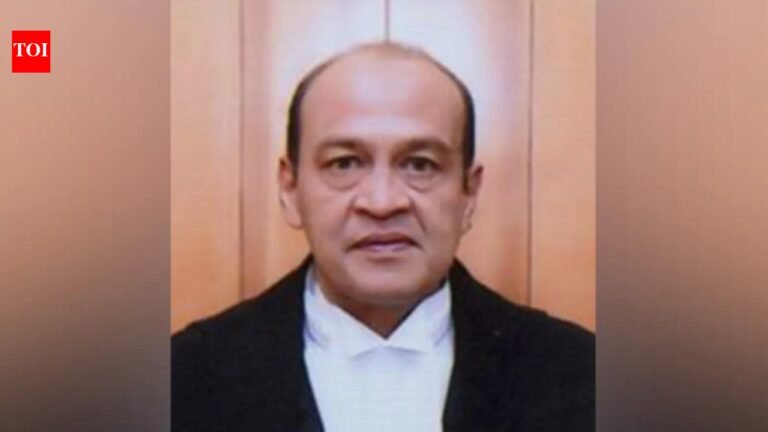
NEW DELHI: “Mahatma Gandhi mein aag lag rahi hai bhai” (Mahatma Gandhi is on fire) – the frantic shouting of a fireman captured on video has become the focus of an investigation into the fire that broke out at Justice Yashwant Varma’s residence in the capital last year.At around 11:35 pm on March 14, police and fire personnel rushed to 30 Tughlaq Crescent (Varma’s residence) in central Delhi.
Two fire engines were dispatched to the scene and, together with police, the flames in the storage room were extinguished within 15 minutes. That should have been the end of the emergency response, but as first responders walked through a thin layer of smoke they were in for a surprise – a stack of partially burnt high-denomination Indian currency notes lay in the storeroom.The quote in the video, a direct reference to Gandhi’s image on the burned 500-rupee note, turned what started as an emergency call into a scandal that reached the highest echelons of the judiciary and branded a young police officer a “whistleblower” because he quickly realized the seriousness of what was happening to his men and alerted his superiors because he showed composure.Delhi Police Commissioner Sanjay Arora informed Delhi High Court Chief Justice DK Upadhaya about the incident at noon on March 15 when Justice Varma cut short his trip to the Satpura Tiger Reserve in Madhya Pradesh and returned to the capital.An official report has been sent to the Union Home Ministry, based on a WhatsApp video of the debris filled with cash.
‘Posture’ ahead of talks: US, Lebanon ask Israel to suspend attacks
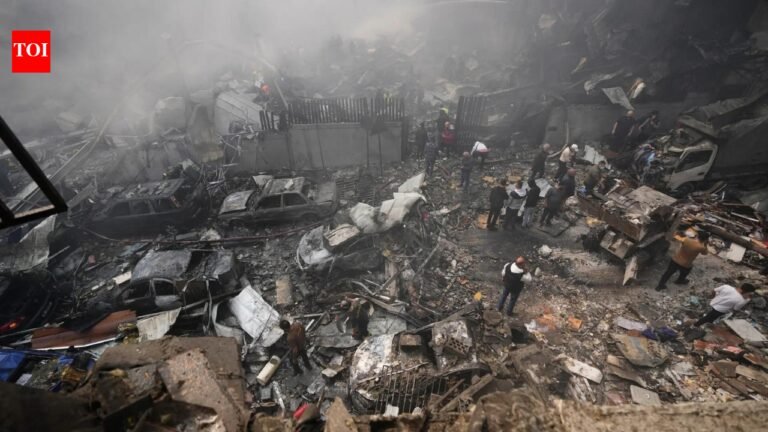
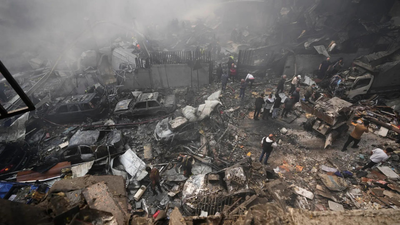
Destruction in Lebanon (file photo)
The Lebanese government and the administration of Donald Trump have asked Israel to suspend attacks on Hezbollah ahead of direct Israeli-Lebanese talks next week, according to people familiar with the matter.Axios sources said the request was not for a formal ceasefire but rather as a “gesture” to allow talks to begin in a less hostile environment. The move comes as Israel’s attack on Lebanon remains a key point of tension in broader regional diplomacy involving the United States and Iran.
U.S. officials said they supported Lebanon’s request and urged Israel to consider de-escalating the situation. They insist that while Lebanon is not formally included in any of the ceasefire frameworks cited by Iran, reducing military activity could help create space for negotiations.However, Israeli officials said that a ceasefire has not yet been achieved. They said Israel was willing to reach a broader agreement with Lebanon but would not negotiate a ceasefire with Hezbollah.According to Axios sources, Lebanon has conveyed a proposal to Israel through U.S. mediators to scale back its strikes and limit operations to imminent threats, effectively restoring understandings related to the November 2024 ceasefire arrangement. The United States is said to support the idea and urge Israel to accept it. They further claimed that the request was being reviewed by Israel. While Prime Minister Benjamin Netanyahu has not yet made a decision, officials have said a brief tactical pause in airstrikes has not been ruled out.The developments come ahead of a U.S.-hosted meeting between Israeli and Lebanese ambassadors in Washington next week, marking the first round of direct talks. Lebanese Prime Minister Nawaf Salam is also expected to visit Washington to discuss the next phase of negotiations with Secretary of State Marco Rubio.
Tim Cook celebrates the return of Artemis II: “Taking iPhone photography to new heights”

Tim Cook Reacting to the successful splashdown of Artemis 2 in the Pacific Ocean. While expressing his joy at the return of the four astronauts, Apple’s CEO also mentioned photos taken by the astronauts with their iPhones in space.

“Congratulations on the successful mission of Artemis 2! You’ve beautifully captured the wonders of space and Earth, taking iPhone photography to new heights, and we’re so grateful you shared it with the world. Your work continues to inspire us all to think differently. Welcome home! ” Cook tweeted.
Also read: Apple CEO Tim Cook reveals how millions of people interact with Apple Intelligence
Space images captured by iPhone:
NASAWhen sharing a set of pictures from the moon landing mission, it was revealed that some of the pictures were taken using iPhone 17 Pro Max. Astronauts including NASA Astronaut Commander Reid Wiseman, pilot Victor Glover, mission specialist Christina Koch and the Canadian Space Agency’s Jeremy Hansen were allowed to carry iPhones aboard the Artemis II mission.
NASA Administrator Jared Isaacman tweeted on February 4 that astronauts can carry smartphones, but did not specify the brand. “NASA astronauts will soon be flying using the latest smartphones, starting with Crew-12 and Artemis II. We give our staff the tools to capture special moments for their families and share inspiring images and videos with the world. ” Isaacman wrote.
Of all the photos, the one that got the most attention was the one of Lieutenant Colonel Reed Wiseman looking out of the window of Orion. The Earth in the photo appears in the distance. A pale blue globe against dark space. The image was reportedly captured using the iPhone’s front-facing camera.
What’s it like to take photos in space?
“It’s like going back to your home and trying to take a picture of the moon. That’s what it’s like right now trying to take a picture of the Earth,” Wiseman told Mission Control during a live broadcast.
How was the social media reaction?
One person posted: “Great adventure! iPhone in space!” Another said, “Thanks Apple, this mission produced some incredible images. Can’t wait to see what flies next.”
A third commented: “Photography with iPhone has now become a veritable interstellar space. So proud to see the photos taken by the Artemis 2 astronauts. Congratulations to Tim Cook and the NASA team! Apple has proven itself once again when it comes to technology.” A fourth wrote: “BTW, these photos are the best iPhone ads ever.”
Judge resigns after a year after huge amount of cash found in home
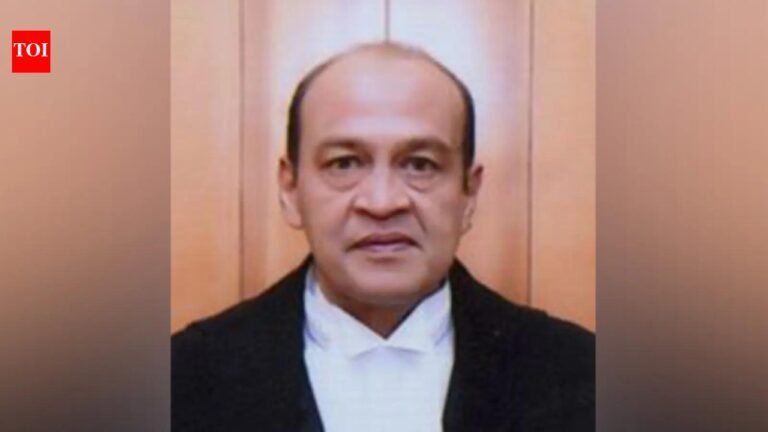
NEW DELHI: Justice Yashwant Varma, who has resigned as a judge of the Allahabad High Court, has spent more than 13 months at the eye of the storm ever since a stack of burnt notes was accidentally discovered in his official bungalow in New Delhi. In a letter to President Drupadi Murmu on Friday, Varma said he would resign “immediately”, bringing an end to what looked like a promising judicial career until March 2025. A bench inquiry headed by Supreme Court Justice Aravind Kumar heard eyewitness testimonies from firefighters and police officers to convince the controversial high court judge to give up his resistance, according to a removal motion. On the night of March 14-15 last year, while responding to the 112 fire emergency, they stumbled upon several bags of cash in the bungalow of Justice Varma, then a judge of the Delhi High Court, on Tughlaq Road in New Delhi. Justice Varma wrote: “While I do not intend to raise any grounds before your august office compelling me to submit this letter, it is with deep anguish that I hereby tender my resignation as Judge of the Allahabad High Judicial Court with immediate effect.”
PBKS vs SRH: Shreyas vs Harshal, Ishan vs Chahal: 5 key battles of today’s match


5 crucial battles between PBKS vs SRH
In the 17th match of IPL 2026, Kings XI Punjab (PBKS) will face Sunrisers Hyderabad (SRH) on April 11 at the Maharaja Yadavindra Singh International Cricket Stadium in Mullanpur. The day’s match is scheduled to start at 3:30 pm (IST). PBKS have started the season strongly and currently sit in second place in the table with 5 points and remain unbeaten so far. In contrast, SRH had a shaky performance and finished sixth with just two points.Historically, SRH have dominated this rivalry, winning 17 of their 24 encounters with PBKS. They’ve also won four of their past five games, including a memorable 246-game run in 2025.With both teams looking at key points, here are five key matchups that could impact today’s game:
1. Shreyas Iyer vs Harshaal patel
The battle between Shreyas Iyer and Harshal Patel was heavily tilted towards the bowlers. Harshal Patel dismissed PBKS captain Shreyas Iyer 3 times in 4 IPL games, conceding just 17 runs. This fight could have been decisive if Harshaal was effective in the death overs.
2. Ishan Kishan and Yuzvendra Chahal
An exciting midfield duel awaits as Ishan Kishan takes on Yuzvendra Chahal. While Kishan has scored at a high rate against leg-spinners, Chahal has successfully dismissed the SRH captain many times in IPL history. Chahal dismissed him three times in seven innings, conceding only 55 runs.
3. Abhishek Sharma VS Arsdeep Singh
In today’s PBKS vs SRH match, the battle between Abhishek Sharma and Arshdeep Singh is a high-profile showdown between the domestic Punjab teammates. Abhishek Sharma dominated the encounter, scoring 60 runs in three games, while Arshdeep Singh dismissed him just once. Notably, Abhishek scored a staggering 141 in their last encounter in 2025.
4. Heinrich Klassen VS Yuzvendra Chahal
A true battle of the heavyweights. Heinrich Klaasen, one of the best spinners in world cricket, will be up against IPL’s leading wicket-taker Yuzvendra Chahal. Chahal dismissed Klassen three times in six encounters, although the South African still managed to score 133 runs.
5. Travis Hyde vs. Xavier Bartlett
The Powerplay is likely to witness a crucial showdown between Australia vs Australia. Travis Head’s aggressive approach will be tested by Xavier Bartlett, who is in red-hot form after dismantling KKR’s top order. This early game could set the tone for the game.
Why doesn’t Iran reopen the Strait of Hormuz? Invisible dangers at sea


The Strait of Hormuz remains a critical choke point in the conflict involving the United States, Iran and Israel. US President Donald Trump has repeatedly warned that Tehran could face serious consequences if it does not open the strategic waterway to safe traffic.The narrow strait between the Persian Gulf and the Gulf of Oman has been a focus of controversy because it carries nearly a fifth of the world’s oil supplies and is a vital artery for global trade.It’s also a critical route for liquefied natural gas and other essential goods, so any disruption would be a global concern.
Why can’t Iran fully reopen the strait?
Iran’s inability to restore normal shipping traffic is largely due to the mines it deployed early in the conflict. Many of those mines are now impossible to locate, according to U.S. officials. The New York Times reported that forces linked to the Islamic Revolutionary Guard Corps used small boats to lay the stones. Some of these mines may have drifted due to ocean currents, further adding to the uncertainty. This means that much of the waterway remains unsafe, as even a single undetected mine can severely damage a ship. As a result, shipping lines are reluctant to resume normal operations without verifying safe routes.
Technical limitations and security issues
Clearing mines is much more difficult than placing them. The process requires specialized equipment and trained personnel, and must be done slowly to avoid accidents. Iran currently lacks the ability to conduct large-scale mine clearance operations in a short period of time.The situation is further complicated by ongoing security risks. There are concerns about possible drone or missile attacks, as well as the presence of small boats that could be used to disrupt shipping. Even if naval assets are destroyed, Iran still has the ability to sow uncertainty in shipping lanes, making a full reopening difficult.
strategic pressure and negotiation
The issue also lies at the heart of current diplomatic efforts. The ceasefire conditions highlighted by Trump require a “complete, immediate and safe” reopening of the strait. However, Iran said any reopening would be subject to “technical restrictions”, which Foreign Minister Abbas Araghchi put forward.Talks between U.S. Vice President Vance and Iranian officials are expected to discuss how to restore safe passage. At the same time, Iran proposed measures such as transit fees and control of shipping routes, but the United States rejected it, calling the strait an international waterway.These overlapping challenges have delayed the full reopening of the Strait of Hormuz. The channel is likely to operate at below normal capacity until safe navigation is guaranteed, resulting in ongoing impacts on global energy flows.
Trump rejects Iran toll plan
Amid the crisis, Trump has strongly opposed Iran’s reported proposal to impose transit fees on ships passing through the strait. He told reporters on Saturday (local time) that the United States would not allow any such move, stressing that the waterway was an international shipping lane.“No, we’re not going to allow that to happen, this is international water. If they do, we’re not going to let that happen,” Trump said, dismissing the possibility of allowing charges.He also criticized Tehran’s attempts to use the strait as negotiating leverage, saying such actions constituted short-term pressure on global trade.

© Newspaper WordPress Theme by TagDiv