
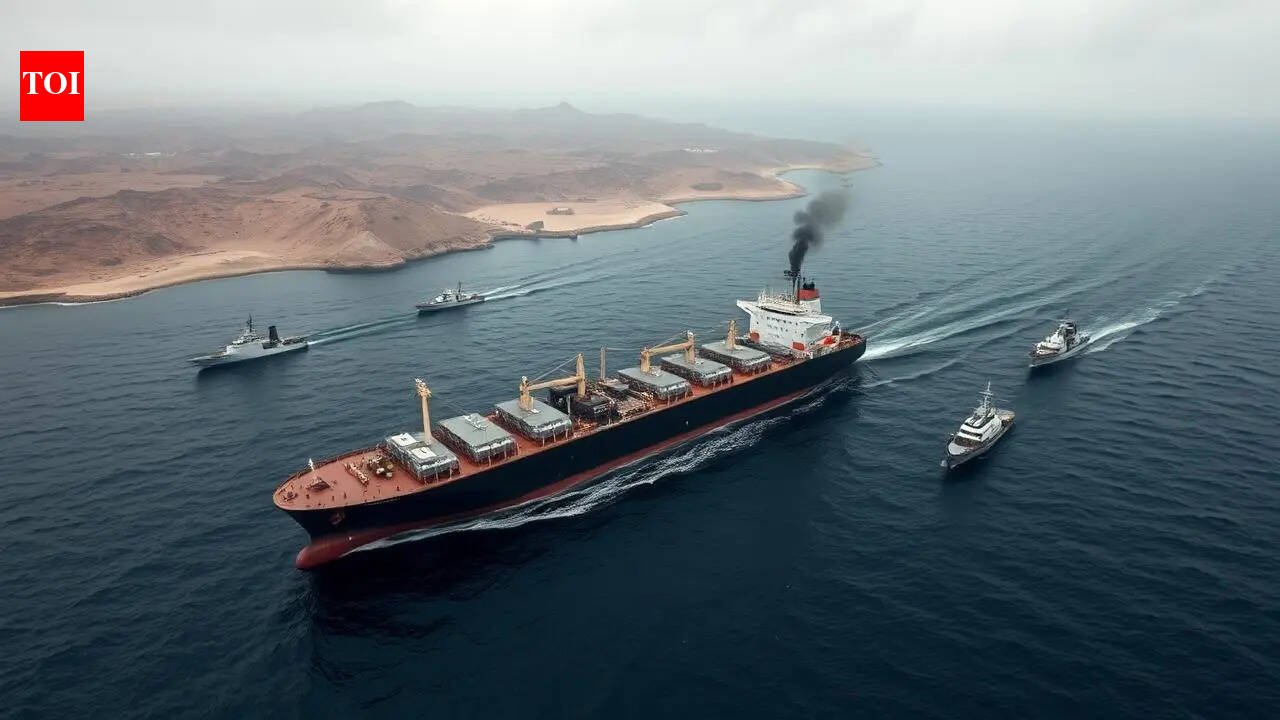
The Strait of Hormuz remains a critical choke point in the conflict involving the United States, Iran and Israel. US President Donald Trump has repeatedly warned that Tehran could face serious consequences if it does not open the strategic waterway to safe traffic.The narrow strait between the Persian Gulf and the Gulf of Oman has been a focus of controversy because it carries nearly a fifth of the world’s oil supplies and is a vital artery for global trade.It’s also a critical route for liquefied natural gas and other essential goods, so any disruption would be a global concern.
Why can’t Iran fully reopen the strait?
Iran’s inability to restore normal shipping traffic is largely due to the mines it deployed early in the conflict. Many of those mines are now impossible to locate, according to U.S. officials. The New York Times reported that forces linked to the Islamic Revolutionary Guard Corps used small boats to lay the stones. Some of these mines may have drifted due to ocean currents, further adding to the uncertainty. This means that much of the waterway remains unsafe, as even a single undetected mine can severely damage a ship. As a result, shipping lines are reluctant to resume normal operations without verifying safe routes.
Technical limitations and security issues
Clearing mines is much more difficult than placing them. The process requires specialized equipment and trained personnel, and must be done slowly to avoid accidents. Iran currently lacks the ability to conduct large-scale mine clearance operations in a short period of time.The situation is further complicated by ongoing security risks. There are concerns about possible drone or missile attacks, as well as the presence of small boats that could be used to disrupt shipping. Even if naval assets are destroyed, Iran still has the ability to sow uncertainty in shipping lanes, making a full reopening difficult.
strategic pressure and negotiation
The issue also lies at the heart of current diplomatic efforts. The ceasefire conditions highlighted by Trump require a “complete, immediate and safe” reopening of the strait. However, Iran said any reopening would be subject to “technical restrictions”, which Foreign Minister Abbas Araghchi put forward.Talks between U.S. Vice President Vance and Iranian officials are expected to discuss how to restore safe passage. At the same time, Iran proposed measures such as transit fees and control of shipping routes, but the United States rejected it, calling the strait an international waterway.These overlapping challenges have delayed the full reopening of the Strait of Hormuz. The channel is likely to operate at below normal capacity until safe navigation is guaranteed, resulting in ongoing impacts on global energy flows.
Trump rejects Iran toll plan
Amid the crisis, Trump has strongly opposed Iran’s reported proposal to impose transit fees on ships passing through the strait. He told reporters on Saturday (local time) that the United States would not allow any such move, stressing that the waterway was an international shipping lane.“No, we’re not going to allow that to happen, this is international water. If they do, we’re not going to let that happen,” Trump said, dismissing the possibility of allowing charges.He also criticized Tehran’s attempts to use the strait as negotiating leverage, saying such actions constituted short-term pressure on global trade.