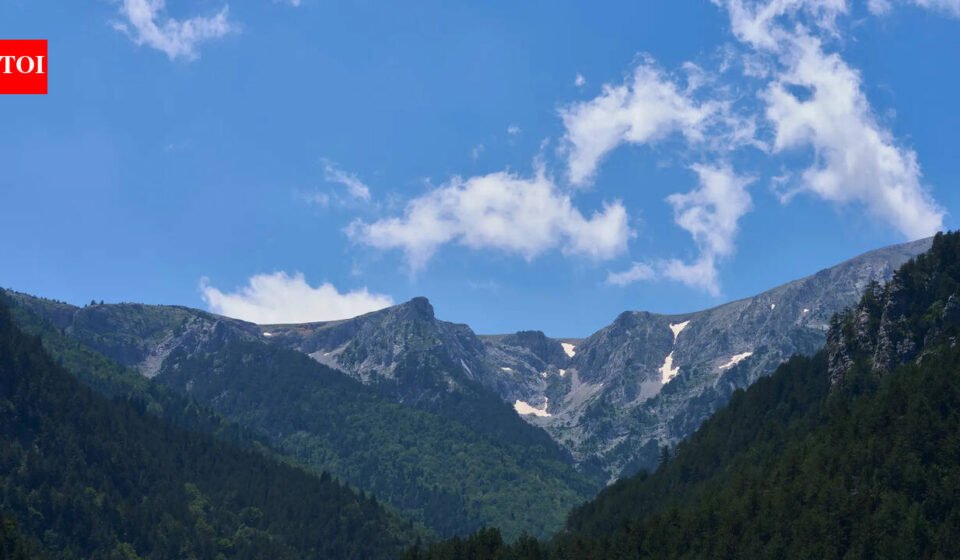
Mount Olympus, the mythical home of Zeus and the ancient Greek gods, is being considered for UNESCO World Heritage status as Greece seeks to protect its tallest mountain

Covered in snow for much of the year and often shrouded in mist, Mount Olympus has guarded Greece for as long as people can remember. For the ancient Greeks, it was more than a mountain—it was home. Home of Zeus and the Twelve Olympians, where thunder is thrown, fate is decided, and myths are born.Now, modern Greeks hope the mountain will be recognized in another powerful way: by being included on UNESCO’s World Heritage list as a site of cultural and natural significance. The nomination, years in the making and currently being discussed by the World Heritage Committee in Busan, South Korea, feels deeply personal to those who live in its shadow.
This mountain is part myth, part everyday life
Mountain Olympus With an altitude of 2,918 meters (9,573 feet), it rises almost directly from the sea to jagged peaks. The tallest of these, usually shrouded in clouds, was imagined to be the throne of Zeus, king of the gods. For the people of the nearby town of Litochoro, the myth doesn’t just exist in books; It’s part of the landscape they see every day.“Olympus is our life. This is where we grew up,” said Evagelos Geroliolios, mayor of Dion-Olympus in Litochoro. For him and many others, the mountain is both familiar and monumental – a backdrop for everyday life but also a place full of stories, history, biodiversity and “extraordinary beauty”.It’s no surprise that Olympus keeps returning to the cultural scene. Even now, new productions are reviving interest in Greek mythology, including a major film adaptation of Homer’s Odyssey, in which the mountain once again becomes home to Zeus and the gods who shaped Odysseus’ journey.
Holy Land: From Pagan Ritual to Church in the Clouds
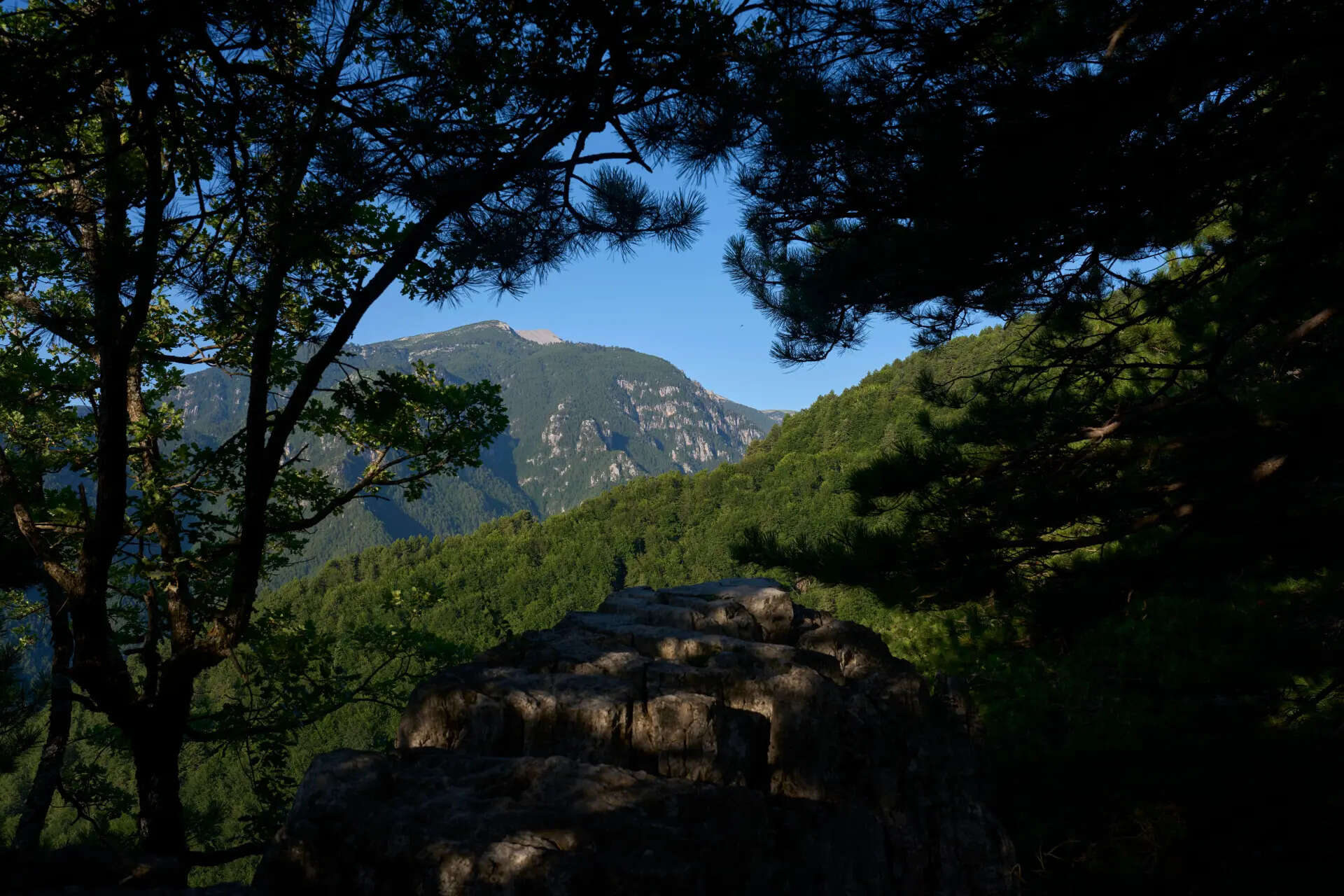
Mount Olympus is seen from the lower slopes of the mountain near Litochoro in northern Greece on Wednesday, July 15, 2026. (AP Photo/Petros Giannakouris)
In Greek mythology, few places occupy as central a place as Mount Olympus. According to legend, Zeus established his court there after overthrowing his father Cronus in a ten-year war that ended the Age of the Titans. This story alone weaves Olympus into the fabric of Greek identity.But the mountain’s sacred role doesn’t end with myth.On one of the lower peaks, archaeologists discovered an open-air sanctuary with artifacts dating back to the Hellenistic period (323-30 BC). Ancient texts suggest that this may have been the site described by Plutarch, where processions climbed to sacrifice animals to Zeus. People don’t just tell the story of Olympus; They walked the slopes, performed rituals, and viewed it as a place to get close to the gods.Centuries later, as Christianity spread in Greece, spiritual connections grew rather than disappeared. On the top of Mount Prophet Elias, 2,803 meters above sea level, a church was built – considered the highest Christian Orthodox church in the world. Further down, the Enipeas Gorge hides the remains of a monastery founded in 1542. From there it’s a short walk to the Holy Cave of St. Dionysios, where a chapel is carved into the rock and a gurgling spring is considered sacred.In this way, Mount Olympus carries layers of faith: ancient worship of Zeus, Byzantine monastic life, and modern pilgrimage. The mountain has been the seat of the gods, a refuge for monks, and a destination for hikers seeking a purpose beyond themselves.
A living mountain: forests, cliffs and fragile ecosystems
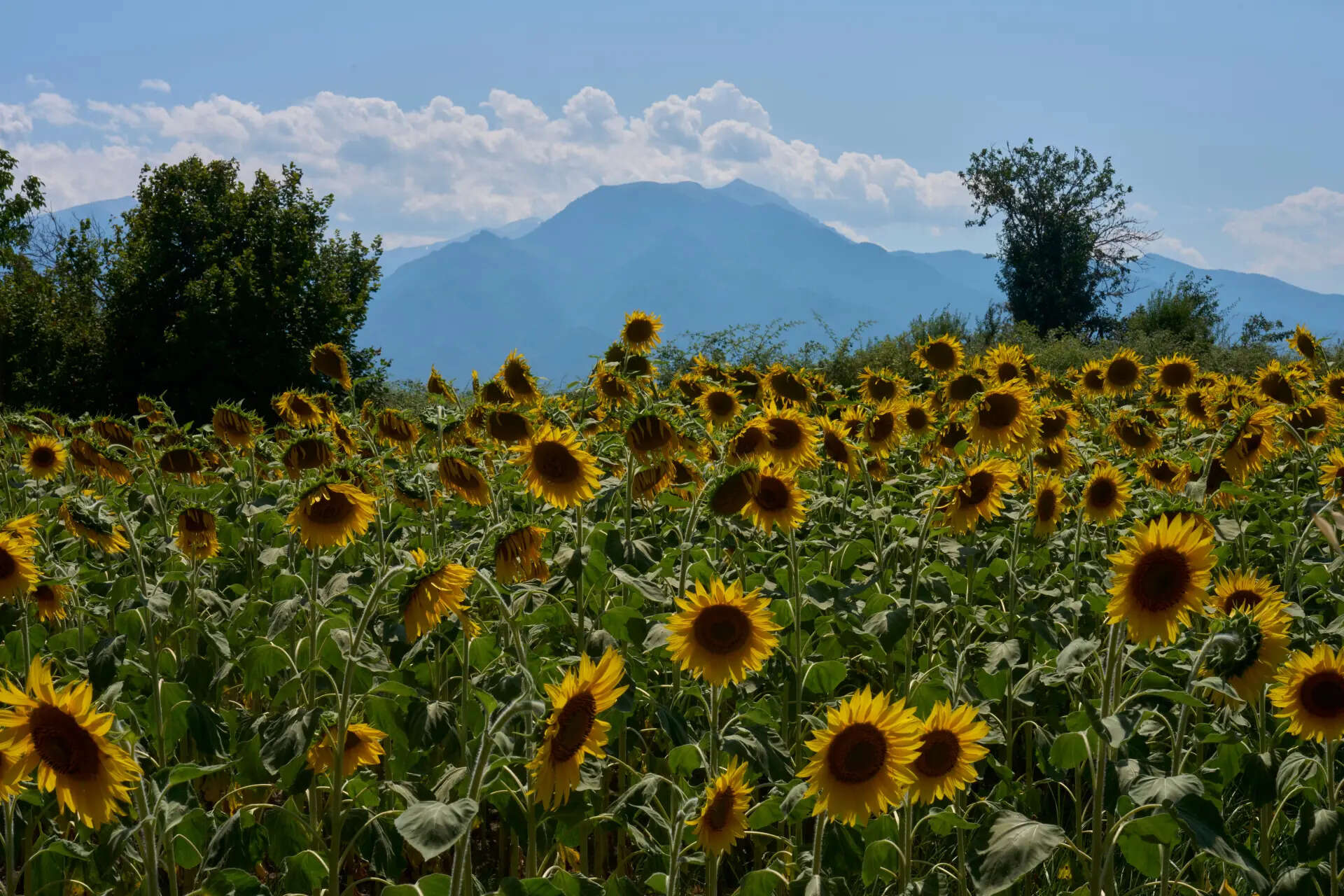
Sunflowers bloom with Mount Olympus in the background on Wednesday, July 15, 2026, in Kalyvia Varikou near Litochoro in northern Greece. (AP Photo/Petros Giannakouris)
Olympus is not only a cultural symbol; This is a living ecosystem.Its slopes extend almost all the way to the shoreline, creating a dramatic transition from ocean to forest to exposed rock. Along its slopes, the mountain is home to a rich variety of flora and fauna, including species found nowhere else. This fusion of mythology, history and biodiversity is why Greece is pushing for Mount Olympus to be listed as a “hybrid” World Heritage Site – one that recognizes both cultural and natural values.Locals see the mountain’s global recognition as a way to respect and protect it.
The road to UNESCO: full of hope but no guarantees
Greece began its journey toward formal World Heritage recognition in 2014 by adding Mount Olympus to its tentative list. This is the first step every country must take before nominating a site. Since then, the process has been careful and lengthy:The initial assessment measures whether the site meets UNESCO standards.Complete nomination documents are prepared detailing cultural significance, physical features, history, management plans and threats.Advisory bodies including ICOMOS (cultural heritage) and IUCN (nature) spent about 14 months reviewing the document.Their recommendations will be submitted to the World Heritage Committee, made up of representatives from 21 countries, where they will be discussed and voted on at its annual meeting.For Olympus, the outcome remains uncertain. A draft agenda document for the Busan meeting suggests the committee may refer the nomination back to Greece for more details rather than approve it outright. This means more work, more evidence and more time before a final decision is made.Even so, people in the region remain hopeful. They believe the mountain’s unique combination of mythology, history, churches, monasteries and natural beauty will ultimately secure it a spot on the list and help push for stronger protection.
Protection and stress: loving a place without dying
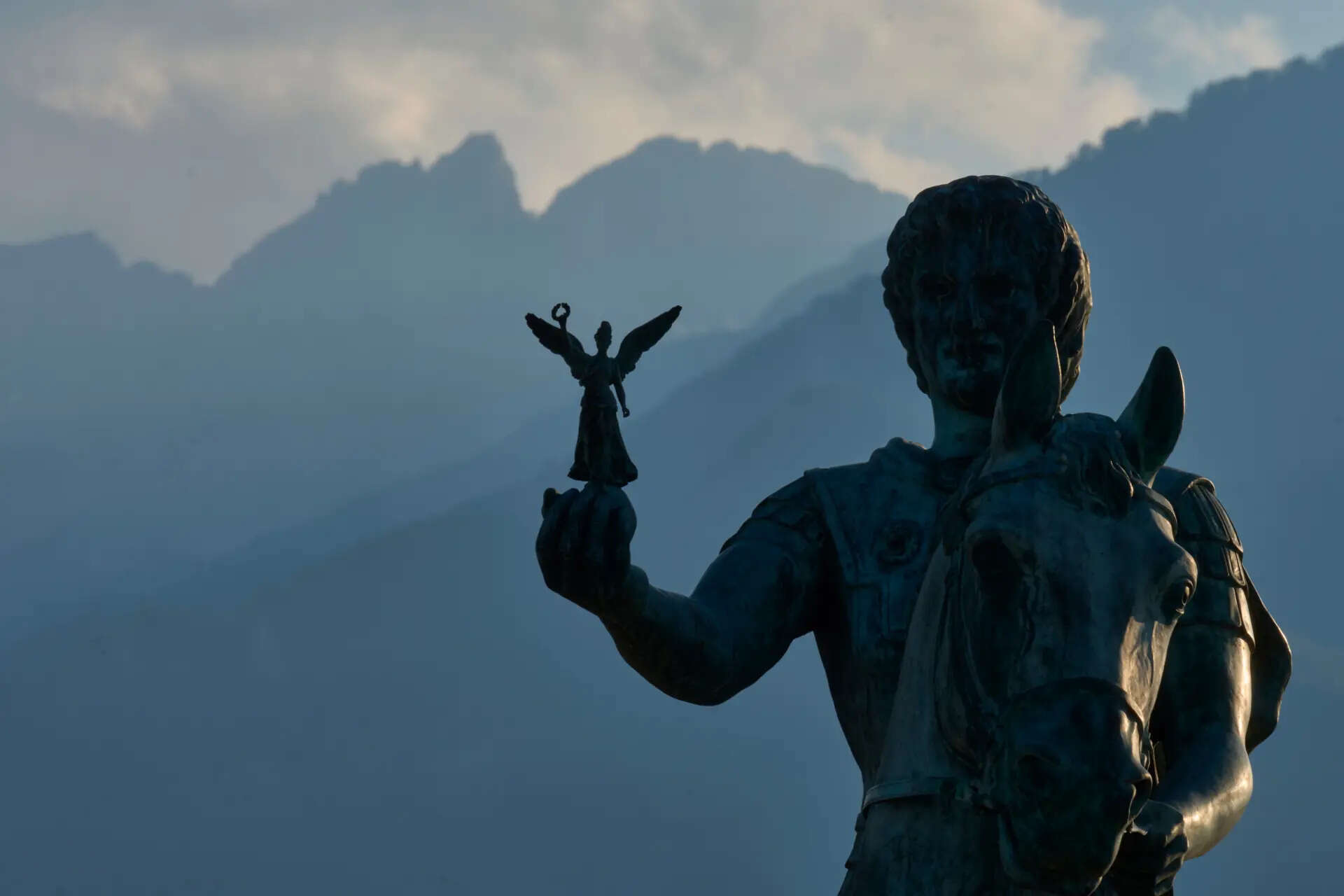
A statue of Alexander the Great holding Nike, the Greek goddess of victory, stands near Litochoro in northern Greece on Tuesday, July 14, 2026, with Mount Myticus and Mount Stefani, the highest peaks of Mount Olympus, in the background. (AP Photo/Petros Giannakouris)
With recognition comes responsibility. As Mayor Jerollios points out, being designated a World Heritage Site “gives us a greater obligation to protect this environment.”This is a heavy burden for those who work directly with the mountain, such as mountain guide Babis Marinidis, president of the Litohoro Alpine Club. Olympus has attracted visitors from all over the world: hikers, climbers, nature lovers and mythology enthusiasts. UNESCO status will almost certainly bring more.“How many people can this mountain, this ecosystem, support?” Marinidis asked.While much of Mount Olympus has long been designated a national park, not all regulations are followed. Marinidis found visitors ignoring “no swimming” or “no camping” signs, sometimes leaving waste behind or damaging sensitive areas. Growing numbers have forced local authorities to consider measures such as entrance fees or visitor registration.“I was against it,” he admits. “But there are so many people now that I think some restrictions have to be put in place.”The challenge is to welcome people without overwhelming the mountains they admire.
Beauty and danger: a mountain that demands respect
For many people, Olympus is a dream hike: the chance to stand where the mythical gods once lived. Reaching the summit doesn’t always require technical climbing, but that doesn’t mean the mountain is gentle.The weather changes quickly. Trails can be steep, rocky, and exposed. Ice and snow persist in high altitude areas until the end of the year. Olympus has claimed many lives over the years.In July 2024, a 64-year-old Greek hiker died after falling on the trail. In May, a 25-year-old Spanish climber disappeared while trying to reach the summit in heavy snow, and rescuers found his body days later. Stories like this remind us that even familiar mountains need care.In Litochoro, hotelier Stavroula Vourou sees many hikers setting out with excitement and ambition. Her message to them is simple and down-to-earth: “Everyone sets out to climb and conquer a mountain that demands respect. You respect the mountain and it respects you. “
A mountain belongs to the world and to the people living under it
Whether or not UNESCO grants Mount Olympus World Heritage status this year, the mountain’s significance is already enormous. It contains:– Stories of ancient gods and wars that shaped the Western imagination.– Physical traces of rituals, churches and monasteries reveal centuries of beliefs.– Forests, cliffs and endemic species make it a refuge for life.The daily perspectives and personal memories of those who woke under its gaze.For locals, Olympus is more than a place to be managed; This is part of who they are. For visitors, it’s a reminder that places can be both mythical and real—requiring not only wonder but also responsibility.Now, when you imagine Mount Olympus, do you see it more as the legendary home of the gods, or as a living, fragile mountain that relies on human respect and care to remain wild and intact?(With input from The Associated Press)