

The safety rules for operators of private charter flights are very different from commercial airlines: Pilots don’t need as much experience, black boxes aren’t always required, and there isn’t a mandated retirement age.
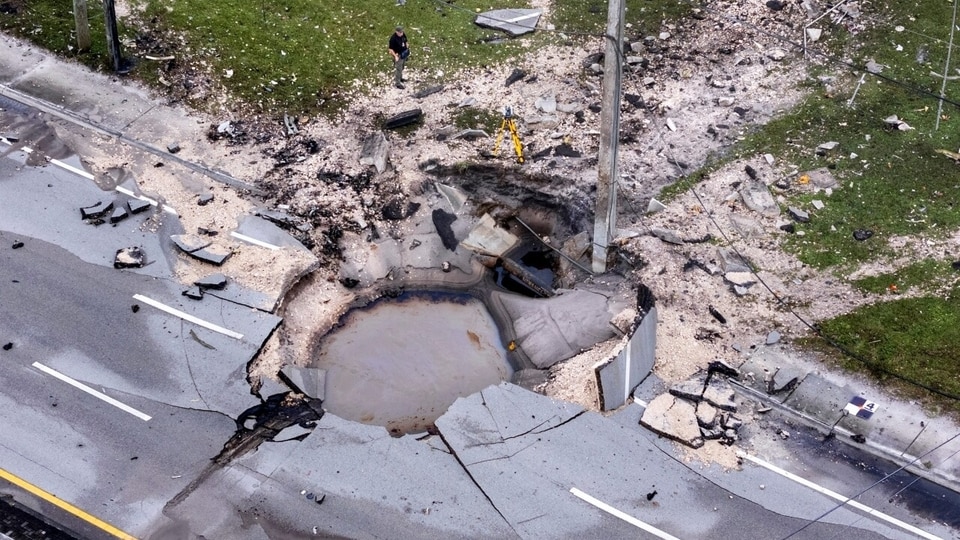
Chartered flights account for a fraction of U.S. civilian air traffic, and federal safety requirements are less stringent for those operators than for airlines. The Sunday crash of a Learjet in Palm Beach County, Fla.,—killing all nine aboard—has cast a spotlight on the regulatory standards for private charter operators.
Aviation industry officials said the attention to safety varies widely among private charter operators. The Air Charter Safety Foundation, an industry group, said it helps operators go above and beyond minimum safety requirements. The Federal Aviation Administration said it has sought to help smaller charter operators standardize pilot training.
Still, private charter operators in the U.S. have consistently had a higher accident rate than airlines since at least 2015, according to data from the National Transportation Safety Board.
In 2024, the most recent year for which data is available, the accident rate was five times higher than passenger and cargo airlines. That year, airlines also had no fatal accidents.
Aurora Aviation, which was doing business as Upper Jets and operated the aircraft involved in Sunday’s accident, didn’t respond to a request for comment Tuesday. Previously, the charter operator said it was cooperating with the NTSB’s crash investigation.
Here are some of the potential differences in safety between private charters and major airlines:
Flight dispatchers on duty
Many airline passengers don’t know about the behind-the-scenes work of flight dispatchers who work with pilots to chart their routes—and avoid problems such as bad weather.
The NTSB has recommended that the FAA require certified dispatchers for most private charters, but air-safety regulations don’t currently require them. FAA rules require private charter operators to name in manuals management personnel responsible for flight operations.
“With the airlines, you have joint decision-making between the dispatcher and the crew,” said Greg Feith, a former senior NTSB investigator. With many private charter operators, it is the pilots alone evaluating factors such as weather and making the call on whether to fly or not, he said.
Investigators probing Sunday’s deadly crash are trying to learn what led the pilots to fly into a dangerous thunderstorm capable of ice, hail and turbulence.
Pilot experience and age
Pilots must generally complete 1,500 hours of flying to work for airlines, in addition to meeting other requirements. That rule is controversial among political leaders and aviation industry officials, with opponents saying it ignores quality of experience.
For private charters, pilots are generally able to get their licenses to serve as second in command with at least 250 hours of experience. Acting as the pilot in command on a private charter generally requires at least 500 or 1,200 hours under their belt, depending on what conditions they are flying in.
The FAA has a mandatory retirement age of 65 for pilots operating aircraft for airlines. There isn’t a federal age ceiling for operators of chartered flights, though pilots must maintain FAA medical certification and pass certain tests.
The rules can result in variability of pilot quality at charter operators, said Bruce Landsberg, a pilot who is a former NTSB vice chairman. Financial pressures at some charter operators can also influence hiring decisions, he said.
“Some of these operators are working on a very thin margin,” he said. “You can pay a junior first officer a fraction of what you will pay an experienced pilot.”
Safety management systems
Government and industry officials tout safety management systems as a way to monitor and stamp out risks before they lead to bigger problems. These systems, required of major airlines and manufacturers such as Boeing, have non-punitive ways for staff to report issues.
Private charter companies only recently faced an FAA requirement to establish such systems. Aside from some of the smallest operators, they are required to comply with the safety-system rule by May 28, 2027.
Black boxes aren’t always required
The NTSB said maintenance records indicate the Learjet 60 that crashed Sunday at some point had a cockpit voice recorder, one of the black boxes that could help investigators piece together what led to the tragedy. The safety board said it wasn’t clear if the recorder was still on the plane.
Private charter operators aren’t necessarily required to have both cockpit voice recorders and flight data recorders like airlines do. Requirements depend on the number of seats and engines on the aircraft.
Pressure from the back of the plane
When it comes to potentially dangerous weather, airline pilots can blame air-traffic controllers or company dispatchers for not letting them fly.
Private charter pilots can face pressure from clients who pay top dollar for the experience and want to get to their destinations.
“If you’re a charter operator and you’ve got a jet that you’re not using that often, you don’t want to lose the business,” said Peter Goelz, former NTSB managing director. “You tend to be more responsive to those kinds of demands.”
Write to Andrew Tangel at andrew.tangel@wsj.com