

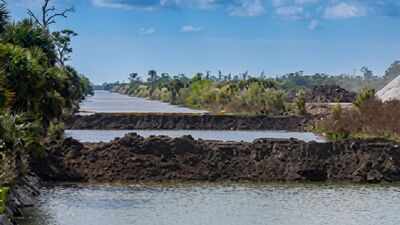
A major restoration project in Southwest Florida has been completed after years of work to bring the natural flow of water back to 55,000 acres of wetlands.According to officials, the Picayune Strand Restoration Project covers area between Alligator Alley and Tamiami Trail in Southwest Florida. It is part of the Comprehensive Everglades Restoration Plan (CERP) which aims at restoring the Everglades ecosystem.The history of the site goes back to the early 1960s, when the land was drained in anticipation of what was intended to become the largest residential subdivision in the world.The drainage changed the natural flow of water across the area. The Picayune Strand project was designed to reverse those changes by removing roads, blocking canals and restoring water movement through the wetlands.The restoration involved major changes to the land and its water network. More than 260 miles of roads were removed, almost 50 miles of canals were plugged and more than 60 miles of logging tram roads were removed. Three pump stations were also constructed as part of the project.The aim was to restore the natural movement of water across the area. The work is expected to improve water flows towards Collier Seminole State Park, the Ten Thousand Islands National Wildlife Refuge and the Rookery Bay National Estuarine Research Reserve. It is also expected to improve wetlands, water quality and habitat for fish and wildlife, including the Florida panther.
Restoration changed flow
The Picayune Strand project focused on restoring the natural flow of water across the 55,000-acre area. This was important because the wetlands are part of the wider Everglades ecosystem.The project removed more than 260 miles of roads that had altered the landscape. It also plugged almost 50 miles of canals. More than 60 miles of logging tram roads were removed as well.These changes allow water to move through the area in a way that is closer to its natural flow. The restoration is expected to reduce drainage from nearby sensitive ecosystems and improve the flow of freshwater to downstream areas.The project is also expected to improve aquifer recharge. Aquifers are underground areas that store water. Better recharge can help protect underground water supplies and prevent saltwater from moving into them.The restoration is expected to improve wetlands and provide better habitat for fish and wildlife. It will also improve water flows into nearby protected areas, including Collier Seminole State Park, the Ten Thousand Islands National Wildlife Refuge and the Rookery Bay National Estuarine Research Reserve.Florida officials said the project is already improving water quality and wildlife habitat. “Thanks to the support of Governor Ron DeSantis and the Florida Legislature and their steadfast commitment to Everglades restoration, we are seeing what is possible when state and federal governments, along with our partners, commit to this work and follow through,” said Alexis A Lambert, Secretary of the Florida Department of Environmental Protection.
Long-term benefits
The restoration is expected to provide several long-term benefits to Southwest Florida. These include restored wetlands, improved habitat for fish and wildlife, reduced drainage of sensitive ecosystems and better aquifer recharge.The project is also expected to reduce freshwater releases and improve the health of downstream estuaries. These benefits are intended to protect the region’s natural resources for future generations.The completion of Picayune Strand comes as other Everglades restoration projects have also reached major milestones. Recent work has included the completion of the Biscayne Bay Coastal Wetlands Project. That project is aimed at improving the health of Biscayne Bay, supporting wetland rehydration, improving water quality and building coastal resilience in Miami-Dade County.Officials have also broken ground on the Everglades Agricultural Area Reservoir Inflow Pump Station in Palm Beach County. The station will have the ability to move about 3 billion gallons of water a day from Lake Okeechobee into the EAA Reservoir.Another project, the Blue Shanty Flow Way in Miami-Dade County, is intended to deliver clean water south across Tamiami Trail and into Florida Bay. The Caloosahatchee (C-43) Reservoir in Hendry County has also started operations.A separate agreement between the State of Florida and the US Department of the Army is aimed at speeding up Everglades restoration, including the EAA Reservoir. Under the agreement, the construction timeline for the EAA Reservoir was brought forward by five years, from 2034 to 2029.