

In the western US, old dams have hindered the natural migration of salmon and steelhead, making it harder for them to reproduce successfully. This is evidenced by the case study in California where a small dam was removed from Cedar Creek. In 2022, California Trout (CalTrout), in partnership, pulled down a concrete dam measuring 8 feet from Cedar Creek, a cold-water tributary stream of the South Fork Eel River in Northern California.
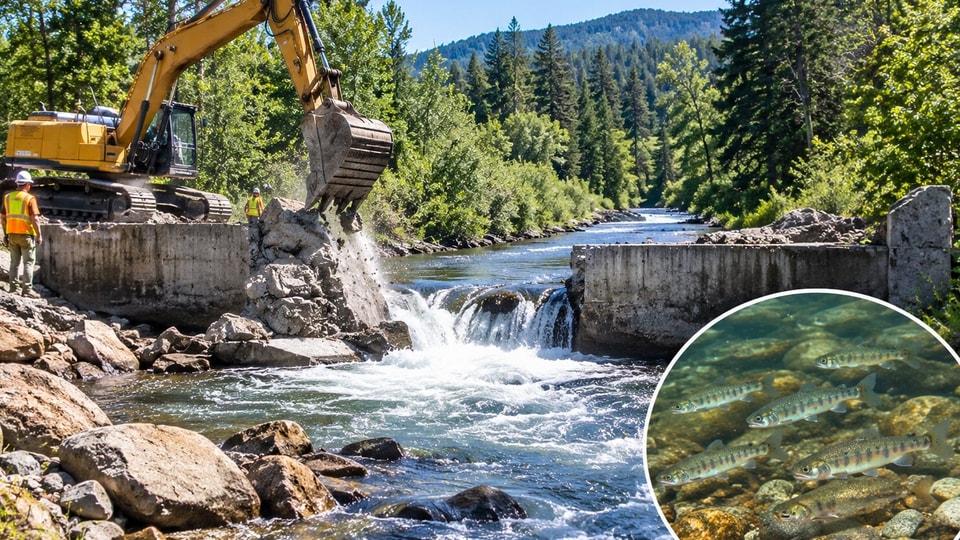
The dam has impeded the movement of fish for well over 60 years and limited them from accessing about 9 miles of river upstream. After pulling down the concrete dam, adult chinook salmon were noted to spawn upstream of the previous location of the dam in December 2022. In August 2023, a snorkel survey revealed thirty-four juvenile coho salmon in the creek, most of which were above the former blockage point.
A decades-old barrier blocked salmon migration
The original use of Creek Dam was for the experimental fish hatchery that was set up in the area sometime in the late 1940s. The hatchery was later discontinued following the destructive flooding of 1964, but the concrete dam stood for decades despite serving no operational purpose. The barrier standing a couple of hundred yards downstream from where the creek meets the South Fork Eel River, created a physical block to the movement of Chinook salmon, Coho salmon, Steelhead, and Pacific lamprey.
The facility not only hindered the movement of the adult fishes, but also prevented juvenile salmonids from reaching the upper areas of the watershed where they could seek food and shade during hot times of the year. Cedar Creek is significant because it provides cool water to the South Fork Eel River in the summertime. Such tributaries with cooler water can be a haven for the fish in times when the bigger water bodies get warm.
CalTrout spearheaded the removal in collaboration with the California Department of Fish and Wildlife, Wildlife Conservation Board, Rangjung Yeshe Gomde California, McBain Associates, SHN Engineers, and Handford Applied Restoration and Conservation. The landowner provided access to the site, while Restoration specialists and agency partners helped plan to carry out the work. The project was completed in 2022, reopening approximately 9 miles of habitat for migratory fish.
Salmon return to the newly accessible habitat
Positive signs of success emerged soon after the dam’s removal. On December 7, 2022, CalTrout personnel observed adult Chinook salmon spawning upstream of the removed dam. The fish would probably not have been able to reach this section of the stream if the dam had remained in place, particularly given the low water levels at the time. Further surveys were conducted on August 8, 2023, when CalTrout staff carried out a snorkel survey of the stream, starting at the confluence of Cedar Creek and the South Fork Eel River and continuing upstream to the Highway 101 crossing.
The survey recorded 34 juvenile coho salmon, most of which were found upstream of the former dam barrier. The findings of coho salmon in the area was especially remarkable, considering that there had been no known evidence of the fish in the past 15 years. However, the researchers could not establish where the juvenile coho salmon originated. They may have hatched in Cedar Creek following the arrival of spawning adults, or they may have migrated into the creek as juveniles after hatching elsewhere in the South Fork Eel River.
Cold water refugees become increasingly important
Besides its positive impacts on migration paths, the project has some importance in relation to fish survival as climate change impacts river temperatures. Fish such as salmon and steelhead need proper water conditions at all life stages, especially during their juvenile stage. Increased water temperature can affect their physiological processes and make suitable habitats less available. In this context, cold water tributaries become very important.
As Cedar Creek provides colder water for the South Fork Eel River during the warmest periods of time. Hence, by eliminating the barrier, this project allowed the restoration of migration paths to upstream areas, which could provide juvenile fish with another habitat and a place to hide from increased water temperature.