
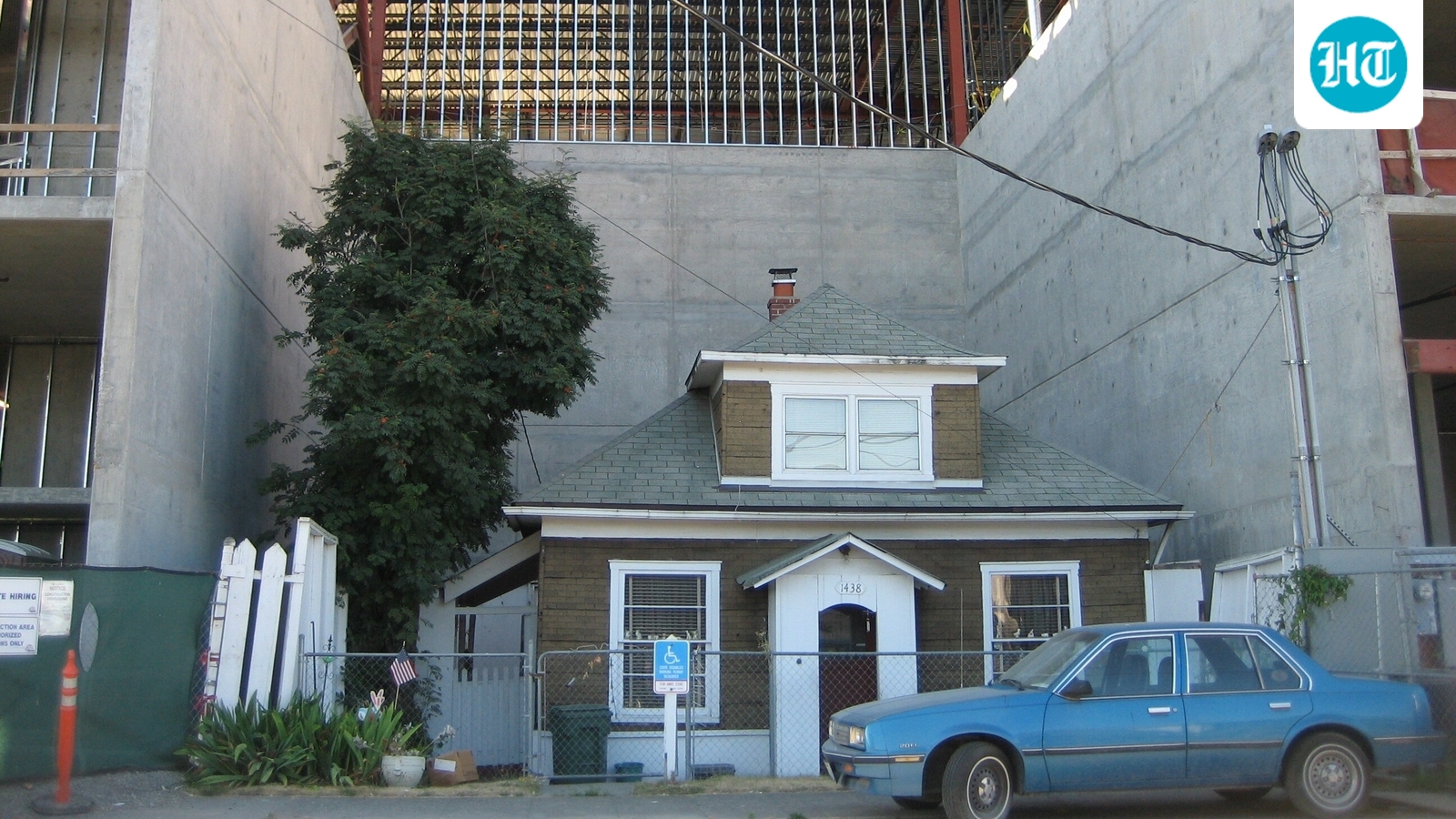
Picture turning down $1 million while a shopping complex rises around your little house. That was everyday life for Edith Macefield in Seattle. A 2007CBS News profile described Macefield as frail but determined to remain in her home. Developers had reportedly offered her $750,000 initially, followed by a $1 million offer that included a comparable home elsewhere and lifetime home health care. She rejected both offers, and developers began building around her house.

The CBS News report noted that only two fence pickets separated her house from the project’s west wall, while the north and east sides were even closer. Once construction ended, the home would be hemmed in on three sides by a five-story concrete structure. Edith was just as firm with the press. She shouted a quick no when the reporter offered to help with her garbage and told his crew to go away. Even the flowers sent in hopes of winning an interview were later given to construction workers.
Why she stayed put
Friends and neighbors gave Macefield several reasons for staying. She had lived there for more than 40 years and kept fond memories of quieter times. She did not want to haul all her belongings somewhere new, and she had grown attached to the familiar people around her, including those working on the construction project. Mike Semandaris, who owns nearby Mike’s Chili Parlor, said developers had asked him to persuade her to sell, with a small reward on the table. He turned it down.
The builders also grew fond of Macefield. Barry Martin, the project’s senior superintendent, told the CBS reporter that he made her lunch, while construction crews drove her to podiatrist appointments and checked on her regularly. Over time, she began asking Martin for rides to hair and doctor appointments. He also helped with groceries, laundry, and dinner. As the months passed, Edith slowly opened up to him about her past. Some observers suspected the friendship was a ploy to get her out. Martin said he was there to manage a construction job, not to play with anyone’s life.
What happened to the house afterward
Macefield’s house stood on its own parcel, while the Bridge Group began buying the surrounding properties in 2006 for Ballard Blocks, a shopping center planned with a Trader Joe’s, an LA Fitness, and a parking garage.HistoryLink.org reported in 2015 that developers first offered Edith $750,000. A second offer, worth $1 million, included a comparable home elsewhere and lifetime home health care. She refused both. Her mother had died in the house; she was content there, and she saw no reason to leave. The 1,050-square-foot home, built in 1900, had passed to her from her mother in 1952. Holdouts like hers are sometimes called “nail houses,” a term used for homes that remain standing while development rises around them.
Edith died at home on June 15, 2008, on the same couch where her mother had died, just as she had hoped. Her will left the house and its contents to Martin, who sold it in July 2009 for $310,000. The house later drew comparisons to the home in Pixar’s film “Up,” released that same year, and a tattoo shop owner in Seattle’s Ballard neighborhood designed a tattoo of it. The property’s story continued after the sale. The owner of the surrounding Ballard Blocks development acquired the house in 2015, and in May 2024, it was listed for lease, with a cafe or another small business among the possible uses. Macefield’s decision remains a notable example of a homeowner refusing to leave a place that held decades of personal memories.