
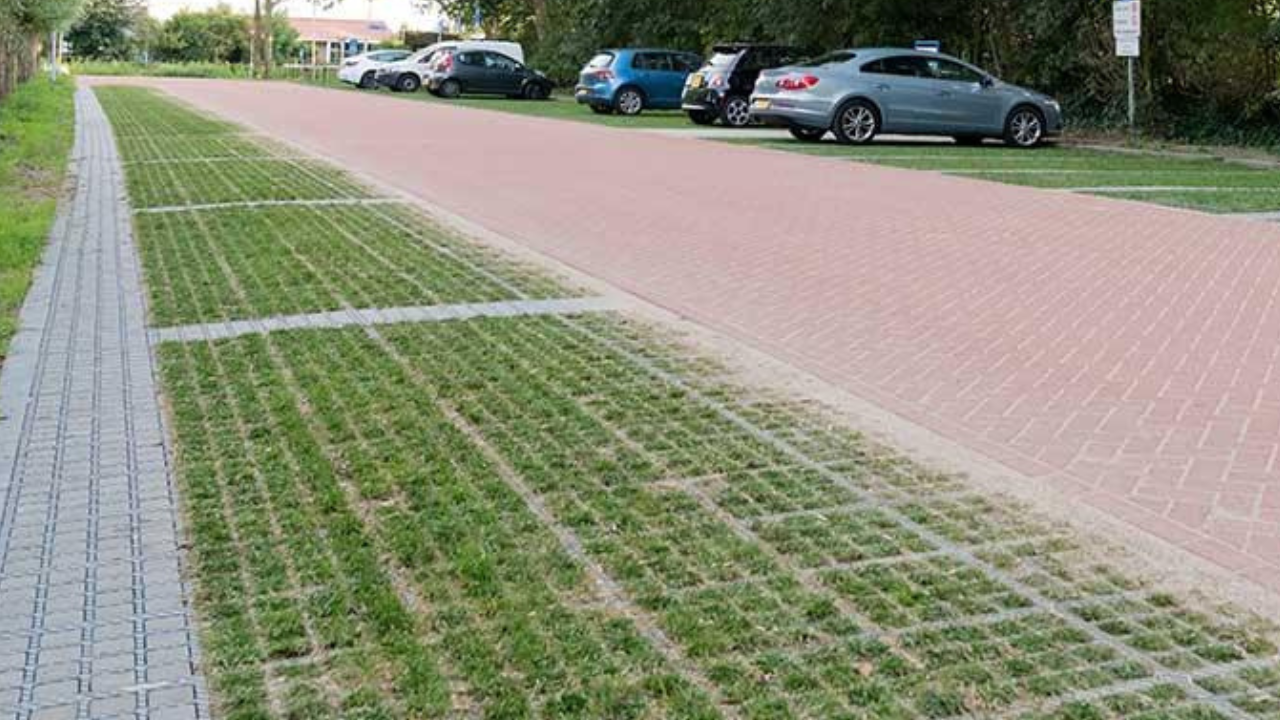
Cities in the Netherlands are experimenting with a greener approach to urban surfaces, using grass-seeded, permeable paving blocks where traditional sealed concrete or asphalt might be used. These purpose-designed blocks contain open spaces for grass to grow, while gaps in the surface allow rainwater to pass through rather than immediately flowing into gutters. The method can help reduce stormwater runoff during heavy rains and, depending on local soil conditions, allow water to seep into the ground or be temporarily stored below the surface. At the same time, introducing vegetation on fully sealed surfaces can help create a cool, green urban environment during hot weather.
Why dutch city Solid concrete is being replaced with grass-filled pavers.
Traditional roads, parking lots and paved public spaces are largely impermeable, meaning rainwater cannot easily penetrate into the soil beneath them. During heavy rainfall, large volumes of water can flow rapidly into drains and sewer systems, increasing the risk of localized flooding when drainage capacity is exceeded.Grassy paving offers a different approach. Sometimes called grass pavers or open-cell concrete blocks, these surfaces contain gaps through which vegetation can grow and rainwater can pass. Depending on the design and local soil conditions, water can seep into the ground, temporarily collect in the subsurface or be released more slowly into the drainage system.The Netherlands has long placed water management at the center of urban planning, and climate change is adding new challenges. Heavy rainfall, dry spells and increasingly hotter weather are prompting cities to explore ways to make communities better prepared for extreme conditions. Replacing unnecessary sealing surfaces with permeable alternatives is a tool available to urban planners.
Grassy roads could help cities cope with heavy rainfall
One of the main benefits of permeable paving is its ability to manage stormwater closer to where it falls. Traditional concrete and asphalt surfaces force water through streets and sidewalks toward drainage systems. When unusually heavy rainfall occurs in a short period of time, these systems can be overwhelmed.Permeable paving slows this process by allowing some water to flow through the surface. This reduces the volume and velocity of stormwater runoff immediately entering the gutters. Under the right conditions, some of the water may also seep into the soil below.However, laying grass does not guarantee that all rainwater will immediately reach the groundwater. Its effectiveness depends on soil permeability, water table, construction methods and maintenance. Some systems are designed to temporarily store water below the surface and then gradually release it.
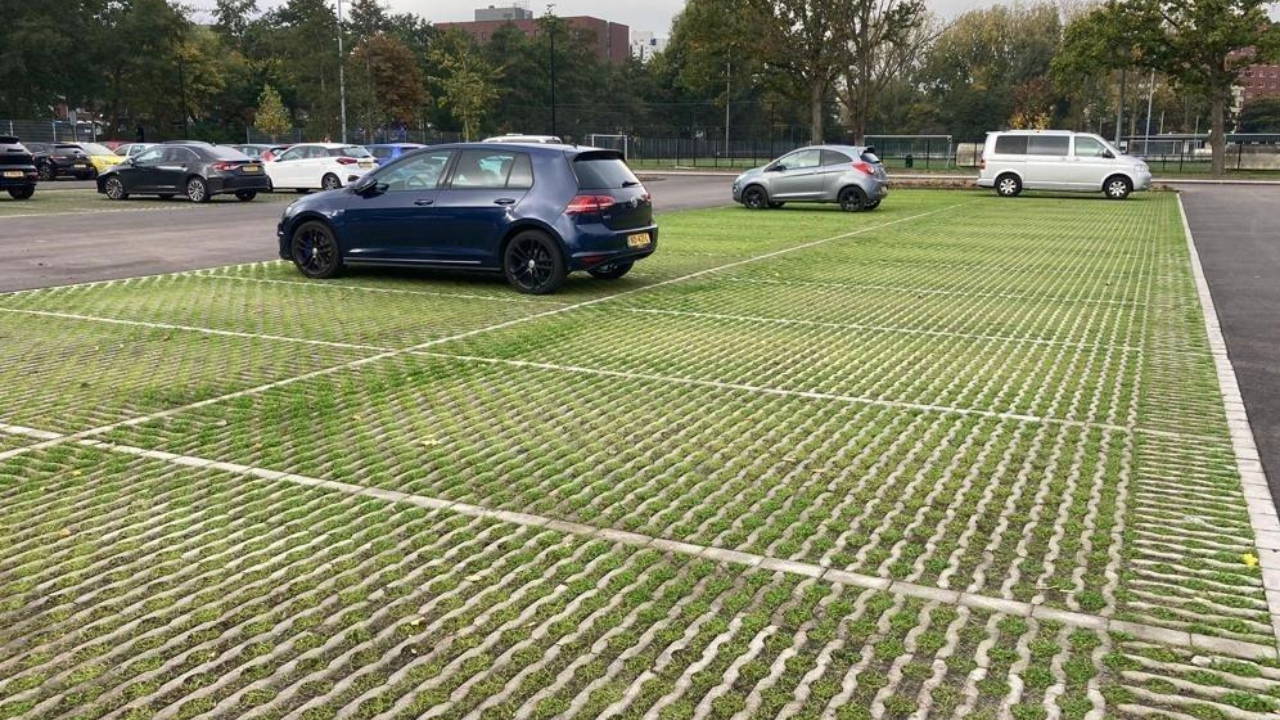
Grass and vegetation help reduce urban heat
The potential benefits extend beyond rainfall. Concrete and asphalt can absorb solar energy during hot weather and then release the stored heat, causing the urban heat island effect, making densely built areas warmer than their surroundings.Vegetation can contribute to local cooling through evapotranspiration, the process by which plants release water vapor into the atmosphere. Therefore, replacing fully sealed surfaces with more environmentally friendly alternatives can play a small role in creating a more comfortable urban environment.The benefits of cooling should not be overstated. Grassy roads alone won’t significantly lower temperatures across a city. Its contribution is even more meaningful when combined with trees, parks, green roofs and other forms of urban vegetation to provide additional shading and cooling.
Part of wider green and blue transition
The grassy pavers are part of a wider approach often described as green-blue infrastructure. The concept involves integrating vegetation and water management into the design of streets, neighborhoods and public spaces.Rather than just treating stormwater as something that needs to be removed through underground pipes as quickly as possible, cities can create areas that absorb, slow down or temporarily store water. Measures can include permeable surfaces, rain gardens, bioswales, green roofs, ponds and specially designed public spaces that can hold excess stormwater.Dutch cities have explored different combinations of these measures, depending on local conditions. Together they help reduce pressure on drainage networks while adding greenery to densely populated neighbourhoods.
Not every road can be a grassy street
Despite their environmental advantages, grass-covered pavers are not suitable for every location. Roads that carry heavy and continuous traffic often require durable surfaces that can withstand heavy loads and repeated wear and tear. Grass may also struggle to survive when vehicles are constantly passing over the same stretch of road.As a result, lawn pavers are often more practical in select locations such as parking lots, residential areas, driveways, curbs, and other relatively low-traffic surfaces.Maintenance is another important consideration. Openings in permeable paving can become clogged with sediment and debris, reducing the amount of water that can pass through. Vegetation also requires suitable growing conditions, and prolonged drought can affect grasses and other plants.
A simple idea that could have a wider role in cities fighting climate change
Grassed pavements are not unique to the Netherlands; permeable pavement systems are used in many countries. The Netherlands is particularly important because of its broader emphasis on integrating water management and climate adaptation into everyday urban planning.As cities around the world face greater rainfall, flooding and rising temperatures, reducing unnecessary sealing surfaces may become an increasingly important part of urban climate adaptation. Grassy paving blocks alone won’t solve flooding or heat stress problems, but they show how common infrastructure can be designed to perform multiple functions.The surface can support vehicles or pedestrians while allowing water to flow through and creating space for vegetation. When combined with trees, parks, rain gardens, green roofs and effective drainage systems, these approaches can help cities become more resilient to extreme weather while creating greener, cooler communities.