
War doesn’t just destroy buildings. It can also erase knowledge collected over centuries. In sixth-century Italy, wars throughout the region destroyed cities, schools, and libraries that had been centers of learning.While the Western Roman Empire has fallen and rival rulers are vying for control of Italy, priceless books and ancient ideas will be lost forever. But one Roman official believed there was a way to protect them.Flavius Magnus Aurelius Cassiodorus worked in government for many years before leaving politics and founding a monastery where monks copied, translated and preserved manuscripts. Their work helped save religious writings as well as important books in history, philosophy, ethics, and literature, which are still read today.
years of conflict
The collapse of the Roman Empire was not caused by a single event. Historians generally regard 476 AD as the end of the Western Roman Empire, as the last emperor, Romulus Augustus, was deposed by the Gothic commander Odoacer.Even after that, fighting continued, with one of the largest conflicts occurring during the Gothic War, which lasted for nearly two decades and caused widespread destruction across Italy.As cities suffered damage, schools and libraries were also damaged. Books become harder to protect and learning itself is threatened. It was during this period that Cassiodorus believed that preserving knowledge became as important as winning battles.
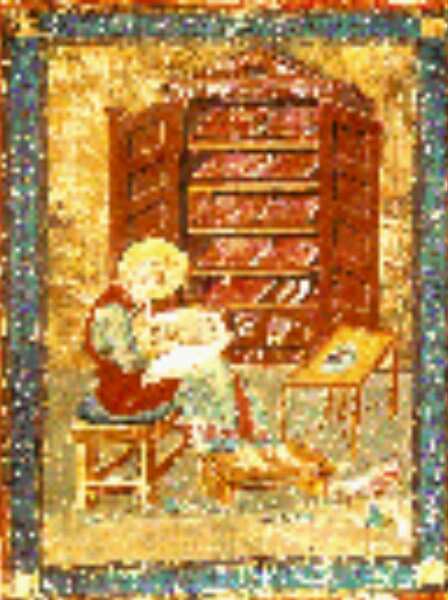
This eighth-century manuscript illustration from Amiatinus depicts Ezra, but many scholars believe it also represents Cassiodorus. (Image source: Georgetown University)
He values learning
Cassiodorus was born around 485 AD near present-day Catanzaro in southern Italy. He worked under the Ostrogothic ruler Theodoric the Great, eventually becoming Prefect of the Praetorian Guard, one of the highest positions in government. Cassiodorus was also highly educated. He studied law, Greek and Latin literature. His writing abilities made him an important advisor, and he often prepared official correspondence for the royal family.Many of these letters were later collected in a book called Variae. In addition to government affairs, they reveal his interest in subjects such as philosophy, mathematics, and music.After leaving public office, Cassiodorus went to Constantinople, where he spent several years studying theology.At the time, many important philosophical and religious works were still available in Greek, including the works of Plato and Aristotle as well as early Christian texts.However, back in Western Europe, even fewer people could read Greek. As ties with the Eastern Roman Empire weakened, so did access to these works.Cassiodorus realized that if no one copied or translated these texts, future generations might never read them. Therefore, he began translating Greek works into Latin while encouraging others to study both traditions.
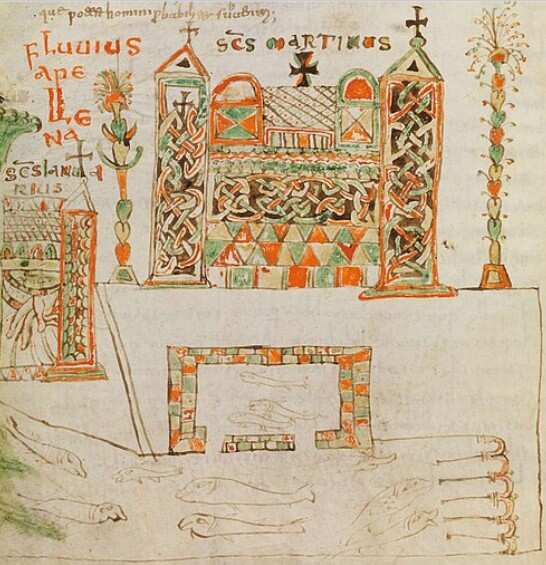
This illustration from an 8th-century Bamberg manuscript shows one of the most famous depictions of the zoological monastery of Cassiodorus. (Image: Georgetown University)
The monastery becomes the center
In his later years, Cassiodorus returned to the family estate in southern Italy and founded the monastery of Vivarium. It includes living spaces for the monks, separate buildings for the hermits, a library, and even a bookstore for tourists. It also provides shelter to those in need and provides treatment to the sick.Unlike many monasteries of the time, the Menagerie placed a strong emphasis on religious life and learning. “I was moved by divine love and, with God’s help, designed these introductory books for the monks in place of a teacher,” Cassiodorus told the monks, according to The Epoch Times.He added that the books would help readers understand the Bible and “concise summaries of secular texts.”Although the monastery was Christian, Cassiodorus believed that knowledge should not be limited to religious writings. The library contains copies of the Bible and Christian commentaries, but also includes works by authors such as Cicero and Aristotle.He also wanted the copied manuscripts to be carefully and attractively copied. Inspired by the idea that beauty and goodness are connected, he believed that making elegant handwritten books was an important task in itself.
lasting impact
Cassiodorus did not stop the ongoing wars throughout medieval Europe. But his ideas changed the role of the monastery.Before the advent of zoos, copying manuscripts was usually done without much organization. After Cassiodorus, many monasteries across Europe began to regard the preservation of books as one of their primary responsibilities.Many of the texts that shaped Western history, including the philosophical works of Plato and Aristotle, historical works, biblical manuscripts, and other classical books, survived because they were copied over and over in monasteries.