
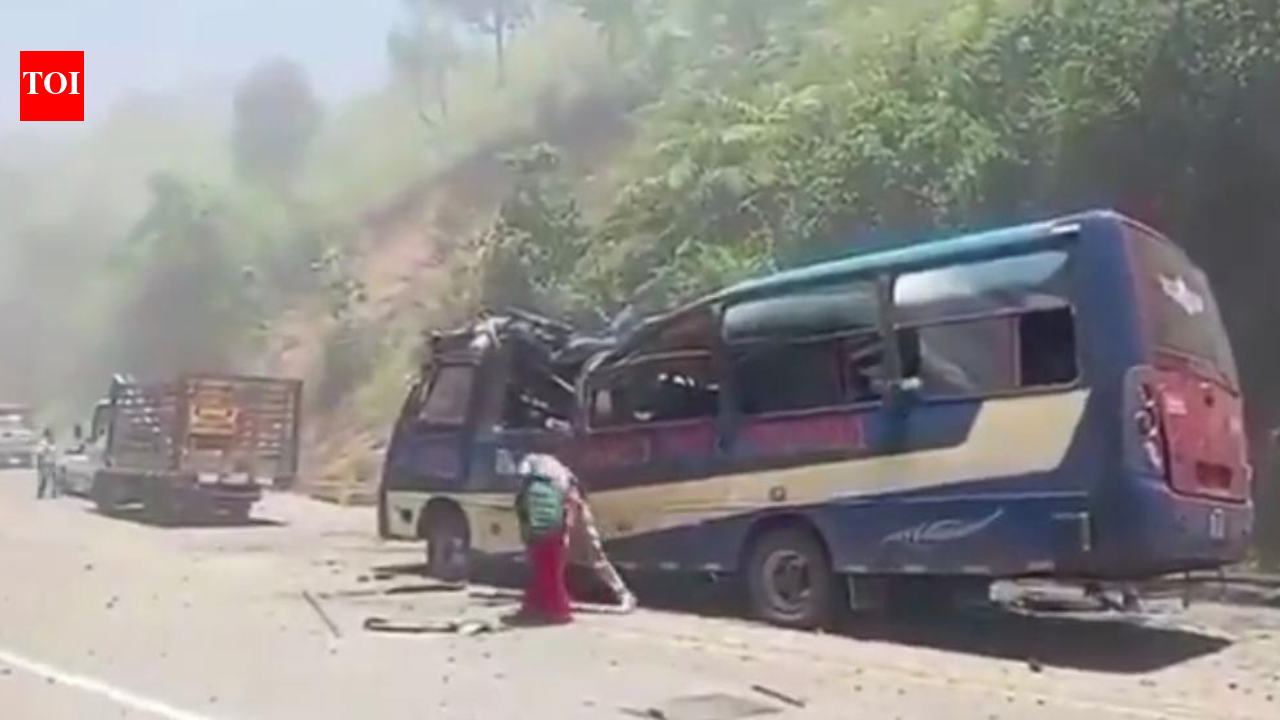
A highway bomb attack in southwestern Colombia killed at least 14 people and injured 38 others on Saturday, highlighting a surge in violence in the weeks leading up to the country’s presidential election.The bomb exploded after the attackers used a bus and another vehicle to block the road, disrupting traffic.Authorities said the blast occurred in the conflict-affected province of Cauca, a coca-growing region long plagued by unrest, and blamed a dissident wing of the now-defunct Revolutionary Armed Forces of Colombia guerrilla group for the attack, AFP reported.“The people who carried out this attack…were terrorists, fascists and drug traffickers. I want our best soldiers to stand up to them,” President Gustavo Petro said in a post on X.The president blamed the attack on Colombia’s most wanted criminal Iván Mordisco, comparing him to slain drug lord Pablo Escobar.“So far, we report 14 deaths and more than 38 injuries, including five minors,” Cauca Governor Octavio Guzman announced on Channel X on Saturday evening.Police sources said rescue teams were continuing to search for several people reported missing.The blast on the Pan-American Highway tore through buses and trucks, overturned several vehicles and dug a huge crater in the road. The victim’s body, covered with a sheet, lay in the rubble as emergency crews worked the scene.The explosion was the latest in a wave of attacks on public infrastructure, with at least 26 incidents reported in southwestern Colombia over the past two days, the Associated Press reported.They included a shooting at a police station in the rural area of Jamundi and an attack on a civil aviation radar facility in El Tambo, where authorities intercepted and destroyed three explosives-laden drones early Saturday.Defense Minister Pedro Sanchez said on Saturday that authorities had stepped up military and police deployment in affected areas.Colombia has long struggled with armed groups that fund their activities through drug trafficking, illegal mining and extortion, and often seek to influence elections through violence. The dissident faction of the FARC, which rejected the 2016 peace deal, has also been accused of trying to undermine stalled peace efforts under President Gustavo Petro.Security has become a central issue ahead of the May 31 presidential election, with political violence thrust back into the spotlight last June after conservative front-runner Miguel Uribe Turbay was shot dead in broad daylight while campaigning in the capital, Bogota.