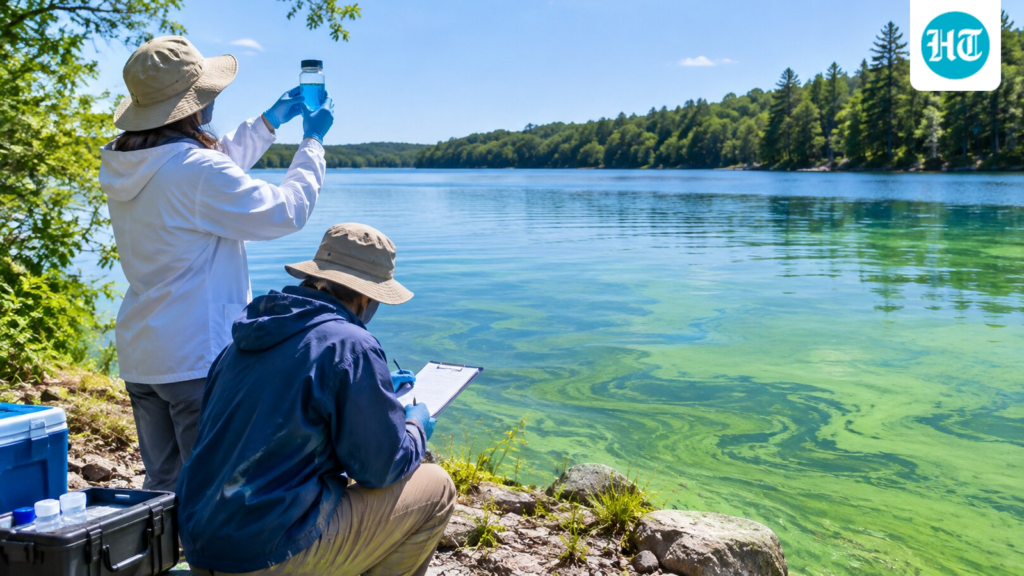

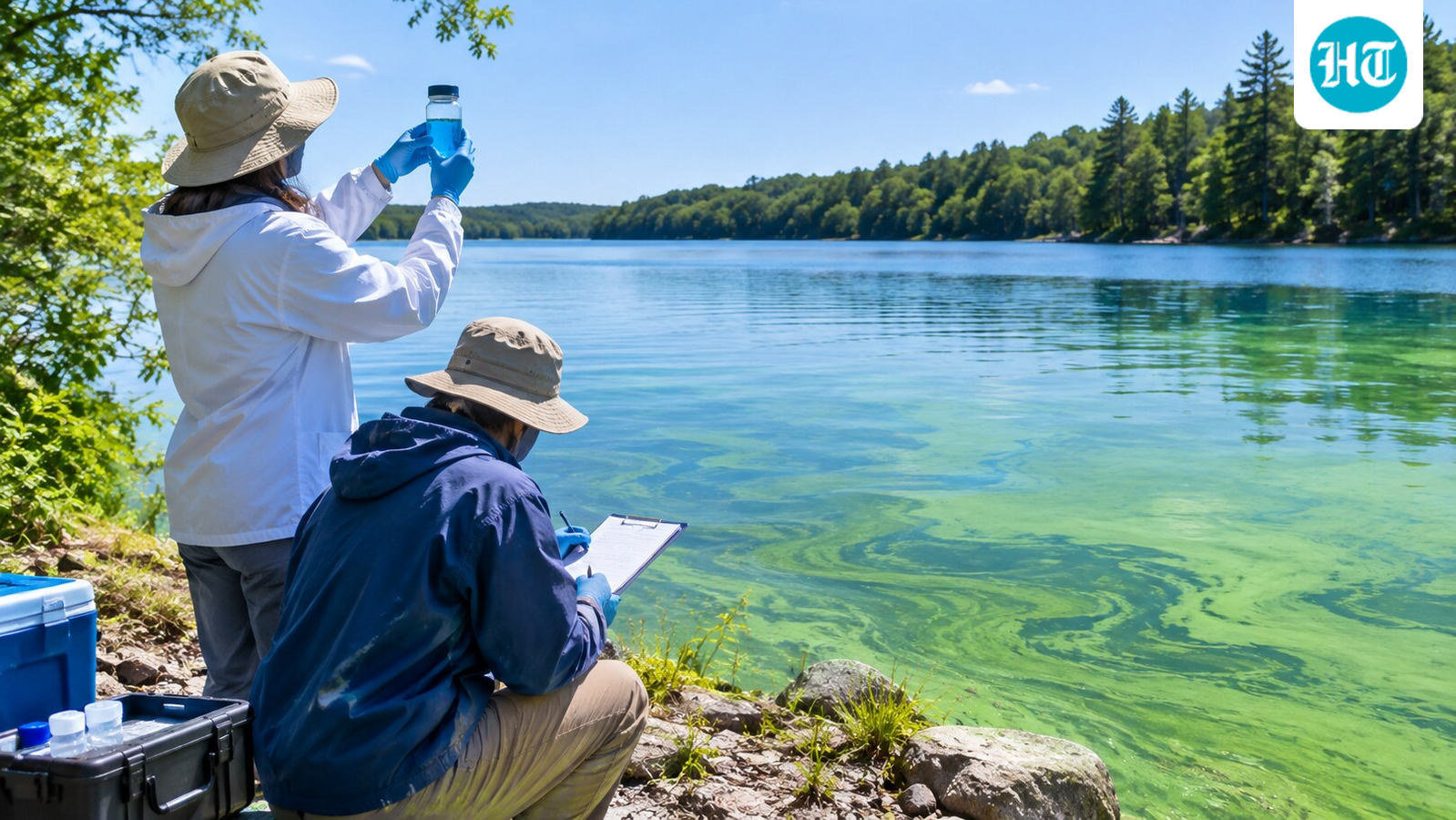
In 2004, researchers dyed Peter Lake in Michigan’s Upper Peninsula blue in an experiment designed to study how limiting sunlight affects algae growth. They added a blue water dye to reduce light penetration, then introduced fertilizer to encourage algae blooms. With reporting by Danny Szydlowski Midwest Climate Adaptation Science Center In January 2025, repeated rainfall may dilute and wash away the dye, allowing more sunlight to reach the water. The experiment shows how difficult it is to control algae growth in natural freshwater ecosystems.
Two adjacent lakes provide a natural comparison
Lake Peter is one of the sites for the long-term Cascade Project, which studies the response of lake and freshwater ecosystems to environmental change. It is adjacent to Lake Paul and is separated from Lake Paul by a slender land bridge. Lake Paul served as the reference lake for the project, while Lake Peter was used for the full-lake experiment in order to evaluate the experimental operations against the reference conditions of Lake Paul.
Both lakes experience similar regional weather, so differences in their ecological responses are useful for study. A study published in 2011 science Titled “Early Warnings of Regime Change: Overall ecosystem “Experiments” investigates changes in ecosystem behavior as signs of impending ecological transitions. Research suggests there may be early warning signs before significant changes are observed.
Dyes and fertilizers produce unexpected effects
The 2004 trial purchased a commercially available blue water dye called Aquashade with the aim of reducing the amount of sunlight entering the room. lake. Algae require sunlight during the photosynthesis process, so reducing the amount of light in the water will theoretically limit algae growth. The dye is added to the water and mixed with an electric trolling motor.
Nutrient fertilizers are also added to the water to encourage algae growth. Plant growth requires fertilizers containing nitrogen and phosphorus. At higher levels, these nutrients can trigger algae proliferation by increasing the availability of nutrients while still having enough light to grow. But researchers observed and documented the effects on the lake.
Lake Peter eventually experienced a green algae bloom; water turned green. It may be that several rainfalls diluted and washed away the dye from the lake. Sidlowski believes that as the dye concentration decreases, more sunlight may penetrate into the lake, allowing algae to grow. They were unsure of the cause and simply cited rainfall events as a possibility. However, it was shown that weather can have a significant impact on experiments.
Survey results highlight challenges facing lake management
Through this experiment, the influence of nutrient supply relative to light supply in freshwater is elucidated and it is demonstrated that the regulation of a single parameter is often insufficient to limit algal blooms if other parameters promote growth. In 2017, research was published in Proceedings of the National Academy of Sciences investigated whether early warning indicators could help detect impending cyanobacterial blooms.
In an experimental lake, nutrient concentrations were gradually increased and the ecological response of the lake was observed. When certain indicators reached preset thresholds, the researchers stopped adding nutrients, slowing the bloom’s development. The Peter Lake experiment showed that dyes were not a useful tool in preventing blooms from forming. It also shows that lake management experiments are highly dependent on the conditions of the lake being studied.