Denmark planted trees for carbon storage, but 21 years later natural forests proved more diverse while plantations captured carbon faster

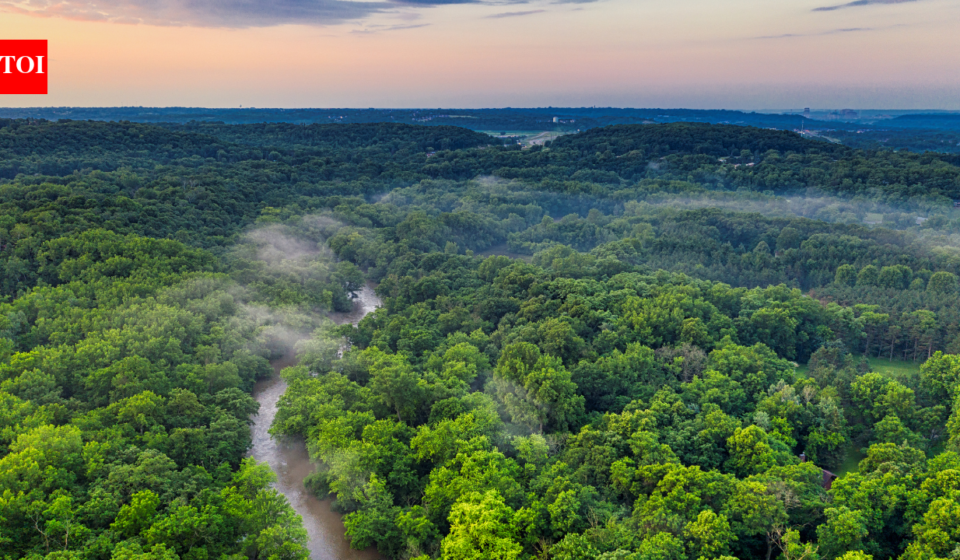
Denmark’s long-running effort to create forests on former farmland has revealed a striking trade-off between carbon storage and biodiversity. After 21 years, scientists compared naturally regenerated forests with areas deliberately planted with trees. Plantations accumulated tree biomass and captured carbon faster, while naturally colonised forests developed greater diversity and more varied ecological structures. The University of Copenhagen conducted a rare long-term comparison of two approaches to forest restoration and found why future reforestation projects may need to balance rapid carbon capture with biodiversity recovery and ecological complexity.
What did scientists discover in Denmark after 21 years
The study ‘Passive versus active afforestation of agricultural land: Two decades of impacts on tree biomass and ecosystem carbon storage’ compared agricultural land that had been abandoned and allowed to regenerate naturally with areas that had been actively planted to create plantation forests. After approximately 21 years, clear differences had emerged between the two approaches. Plantation forests had accumulated substantially more tree biomass than naturally colonised forests, demonstrating that deliberate planting can accelerate early forest development and carbon storage. Naturally regenerated areas, however, developed a different ecological character as vegetation colonised the abandoned farmland without the same intensive planting approach. The researchers also compared these younger forests with mature, actively managed forests, providing a longer-term reference point. The findings show that forest recovery cannot be judged by carbon storage alone.
Why did these plantations capture carbon faster?
The plantations had the advantage of being able to accumulate more biomass early in their life due to trees being purposefully planted instead of waiting for them to come naturally as part of the process of succession. This study shows that the plantation forests have 16 times more above-ground woody biomass compared to the naturally colonised forests within a period of about twenty years. As such, the faster accumulation of biomass led to faster accumulation of carbon in the trees within the early stage of forest development. It is important to note that fast biomass accumulation does not necessarily mean that the plantation mimics all the ecological features of a mature forest.
Why were naturally regenerated forests more diverse?
The colonisation that occurred naturally enabled vegetation to grow by the means of ecological succession without any predetermined planting. This process will take more time, but will lead to greater diversity of plants in terms of their species and structure since different plants will colonise certain areas. The Danish study showed that the naturally colonised forests were distinct from the plantation in terms of vegetation and ecology, which proves the necessity of using natural factors in the process of creation of the forest. However, this statement does not mean that plantations cannot be valuable in terms of biodiversity, but only that the structure and composition of such forests differ greatly from the forests developed without planting.
What does the research mean for future forest restoration?
The results imply that there is no one particular forest restoration approach that would optimise all of the environmental benefits at once. Plantations would be an advantageous choice if the aim is to achieve rapid carbon sequestration because plantations would help to achieve faster carbon accumulation. As for natural regeneration, it would provide greater ecological diversity as the forest develops and could contribute significantly to biodiversity. Therefore, the scientists show a more complex view of afforestation that does not include only the number of trees planted.