Skip to content
-
Subscribe to our newsletter & never miss our best posts. Subscribe Now!
  • https://www.facebook.com/
  • https://twitter.com/
  • https://t.me/
  • https://www.instagram.com/
  • https://youtube.com/
THE_LOCAL_REPORT_ARTICLES_LOGO THE LOCAL REPORT ARTICLES

Trusted Indian news delivering fast, factual, and in-depth coverage of politics, business, society, and stories that truly matter

THE_LOCAL_REPORT_ARTICLES_LOGO THE LOCAL REPORT ARTICLES

Trusted Indian news delivering fast, factual, and in-depth coverage of politics, business, society, and stories that truly matter

  • TRENDING
  • INDIA
  • SPORTS
  • TECH
  • UK
  • WORLD
  • TRENDING
  • INDIA
  • SPORTS
  • TECH
  • UK
  • WORLD
Subscribe
Close

Search

The anti-abortion movement’s new fight
WORLD

The anti-abortion movement’s new fight

By WEB DESK TEAM
July 30, 2026 5 Min Read
Comments Off on The anti-abortion movement’s new fight

Anti-abortion activists once envisioned 2026. Republicans control the Senate, House of Representatives and the White House. The Supreme Court is controlled by conservative justices and overturned Roe v. Wade, the case that established the right to abortion. However, there are more abortions in the United States now than when Roe was in office, as more women are getting abortions via mail-in pills. Allowing women to choose abortion, especially early in pregnancy, has always been popular with voters.
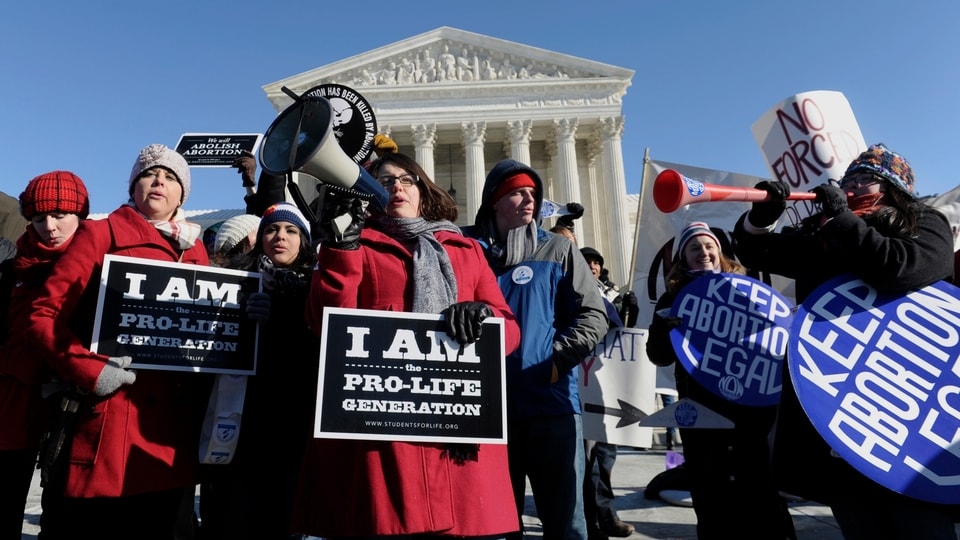
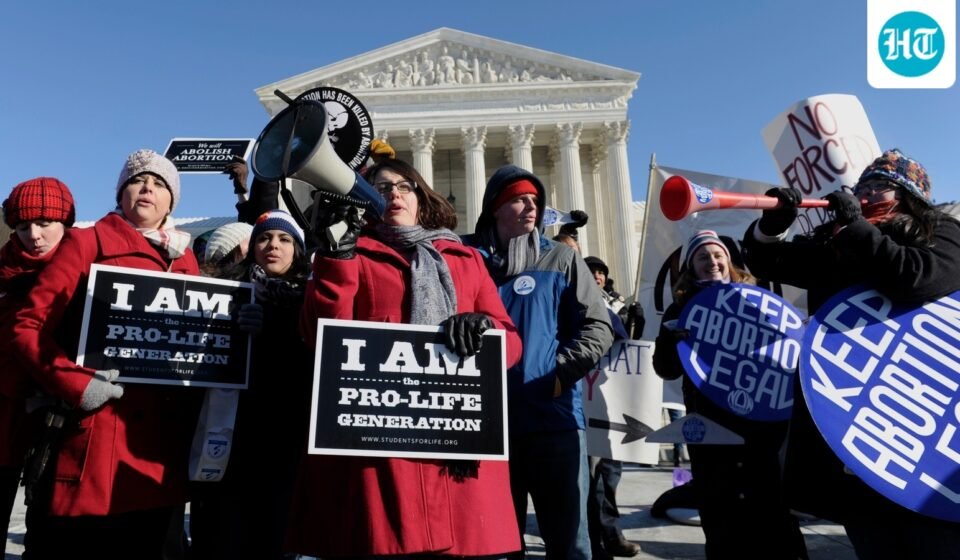
FILE - Pro-life and anti-abortion protesters rally outside the Supreme Court in Washington during the March for Life, Wednesday, Jan. 22, 2014. (Associated Press)
FILE – Pro-life and anti-abortion protesters rally outside the Supreme Court in Washington during the March for Life, Wednesday, Jan. 22, 2014. (Associated Press)

It was an unexpected success for those who defend abortion rights. For those who want to end abortion, it’s inspiring a new fight. Lawyers are seeking to block access to abortion pills by mail. Some politicians want to criminalize the removal of women, breaking a longstanding taboo in a movement that once aspired to win widespread support. That there is now a meaningful debate about this shows how frustrated they are with the status quo.

Erik Baptist of Alliance Defending Freedom, a law firm that helped overturn Roe, said abortion pills are “the largest front for the anti-abortion community.” These drugs were approved in 2000 for use in terminating pregnancy in the first ten weeks of pregnancy. Their use surged after domestic rules were relaxed during the coronavirus pandemic.

Four years ago, after overturning Roe, Massachusetts passed the first so-called Telemedicine “Shield” Actwhich provides protection from criminal and civil charges to abortion pill providers in states without bans. Seven states followed. By December 2025, nearly 15,000 abortions will be provided each month under the protection law, according to the nonprofit Planned Parenthood. “In anti-abortion states like Louisiana,” Mr. Baptiste complained, “they have 800 to 900 abortions every month, when that number should be zero.”

So far, legal challenges have been slow to progress. Louisiana has attempted to extradite doctors from New York and California, but both requests were blocked by the states’ Democratic governors, who refused to sign arrest warrants. Texas Attorney General Ken Paxton, who is running for Senate, also unsuccessfully sued a New York doctor. While the case against the shield law is expected to eventually reach the Supreme Court, “some [the cases] “We’ve just fallen into the trap of protective law design,” said Greer Donley, a professor at the University of Pittsburgh and one of the architects of Proud’s law. For example, the Constitution’s extradition provision applies to fugitives fleeing from one state to another, not just to locals within walking distance of a nearby post office.

Some anti-abortion activists have concluded that seeking medication directly might be faster and more effective. In 2025, Louisiana sued the U.S. Food and Drug Administration (FDA), claiming the agency was reckless in allowing remote dispensing of mifepristone, one of two drugs used for medical abortion. A federal appeals court will hear the case in September.

Meanwhile, activists are hoping the White House will help. After lengthy delays, the FDA is directly reviewing mifepristone’s safety record (complications requiring hospitalization occurred in 0.3-0.9% of cases). Even if remote mifepristone isn’t available, doctors can still prescribe misoprostol, which is approved to treat ulcers and would be difficult to limit its use in abortions. Results from clinical studies vary, but misoprostol appears to be slightly less effective at terminating pregnancy. However, it is more likely to cause side effects such as pain and bleeding.

The White House can do more. Attorney General nominee Todd Branch has agreed to consider enforcing the Comstock Act, an ancient anti-obscenity law that prohibits the posting of any abortion pills. But the government may not take action. Ms. Donley said “one of the big surprises of Trump 2.0 is that he seems to actually mean what he said on the campaign trail” that he would leave abortion policy to the states. That disappoints many anti-abortion advocates, who have vowed to support candidates who want stronger action.

Failing to stem supply, parts of the anti-abortion movement are turning to demand. “This woman is the only actor here right now,” said Mark Corral, an anti-abortion activist in South Carolina. “Who else are you going to hold accountable?” Republican state Sen. Richard Cash there would ban abortion during pregnancy; women who have one would face up to two years in prison. His proposal was approved by the state Senate Health Committee and will go to a broader vote next year. He would prefer abortion to be treated as homicide, punishable by death, but admits that this is not currently politically feasible. “A law without punishment is just a suggestion,” he explained.

Other radical ideas are gaining traction, though they’re still far from the finish line. Abortion “abolitionists” are advocating for “equal protection” bills that would give fetuses the same constitutional rights as persons under the Fourteenth Amendment. According to the advocacy group Foundation for the Abolition of Abortion, 10 such bills will be introduced in eight states by 2024 and supported by 58 lawmakers. This year, that number has grown to 16 bills in 13 states with 130 sponsors. In Oklahoma and Idaho, one-third of state senators signed on. In June, Texas Republicans adopted language in their official party platform that would grant equal protection to the fetus and called for repealing a provision that gives immunity from prosecution for abortions.

While politicians debate new laws, some prosecutors are testing the limits of existing laws. In January, a Kentucky woman who took an abortion pill and buried her fetus was charged with homicide, abuse of a corpse and tampering with evidence. Two months later, prosecutors charged a Georgia woman who had a miscarriage at a hospital with murder after telling a nurse she had taken mifepristone. Nine women have faced such charges since Roe’s case was overturned, according to the nonprofit Pregnancy Justice. Some cases have been dismissed; others are still pending.

The rise of abolitionism exposed a generational divide. For decades, anti-abortion opponents have built their movement around the idea of ​​“loving them both” — mother and unborn baby. These advocates now believe that criminalizing women would squander their political progress. “This is going to cause us to lose voter support,” said Amy O’Donnell of Texas Life Alliance, one of the largest anti-abortion groups in Texas.

Bradley Pierce, the most influential activist among the abolitionists, believed that Christians longed for something that would work. “We need to love our unborn neighbors more than a seat at the table,” he said. “We need to fear God, not the Democrats.”

Staying at the forefront of American politics Introduction to the United Statesour daily newsletter with quick analysis of the most important political news, and checks and balancesa weekly report that examines the state of American democracy and the issues important to voters.

Tags:

1. Abortion2. Roe v. Wade3. Anti-abortion activists4. Abortion pills5. Conservative judges
Author

WEB DESK TEAM

Our team of more than 15 experienced writers brings diverse perspectives, deep research, and on-the-ground insights to deliver accurate, timely, and engaging stories. From breaking news to in-depth analysis, they are committed to credibility, clarity, and responsible journalism across every category we cover.

Follow Me
Other Articles
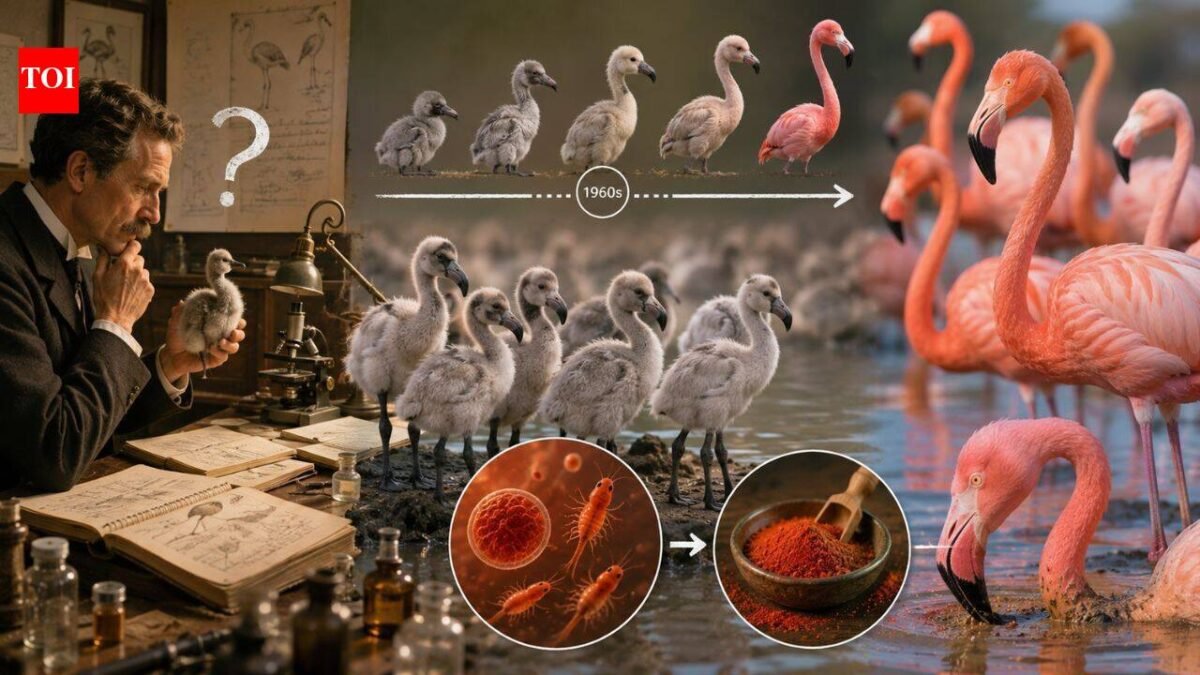
For centuries, scientists couldn't explain why flamingos weren't born pink, until a breakthrough in the 1960s revealed the answer |
Previous

For centuries, scientists couldn’t explain why flamingos weren’t born pink, until a breakthrough in the 1960s revealed the answer |

  • ABOUT US
  • CONTACT US
  • CORRECTION POLICY
  • Home
  • Privacy Policy
  • TERMS AND CONDITIONS
  • Terms of Use
  • ABOUT US
  • CONTACT US
  • CORRECTION POLICY
  • Home
  • Privacy Policy
  • TERMS AND CONDITIONS
  • Terms of Use
Copyright 2026 — THE LOCAL REPORT ARTICLES. All rights reserved. Blogsy WordPress Theme