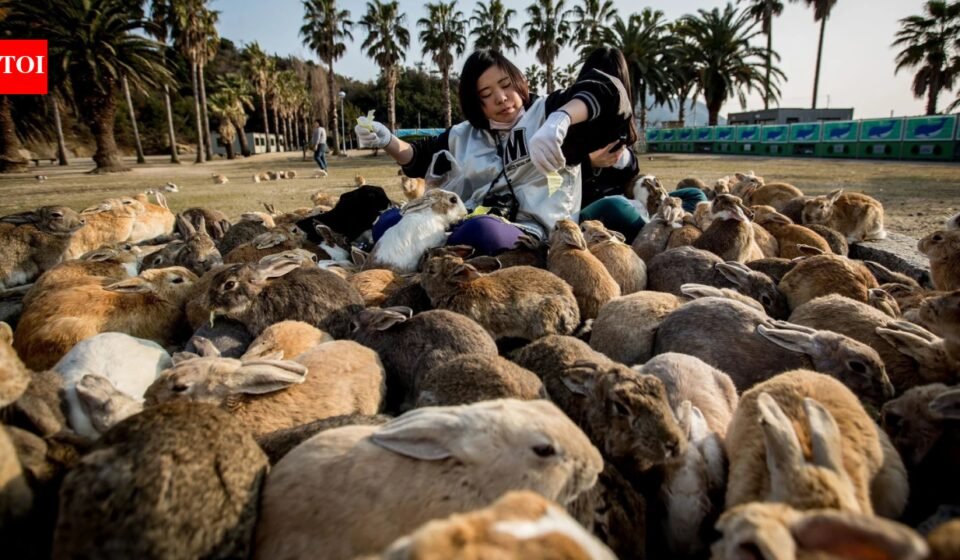
Tourist feeding helped Japan’s famous Rabbit Island push past natural limits; now stripped of vegetation, wild boars are attacking rabbits

Unregulated tourist feeding has pushed Japan’s famous “Rabbit Island” to its natural ecological limits, depleting local plant resources and causing wild boars to prey on live rabbits.On Ōkunoshima in Hiroshima Prefecture, heavy feeding by tourists has caused the rabbit population to far exceed the natural carrying capacity of the local environment. According to a study published in the Journal of Ecotourism on July 29, 2026, this constant flow of food is reshaping the behavior of local animals and causing widespread environmental damage.The study was co-authored by Shingo Kaneko, a professor at Fukushima University’s School of Symbiotic Systems Science and Engineering, and co-author Asami Ogura, an associate professor at Kure Gakuin National Institute of Technology (KOSEN) and researchers at Kobe Gakuin. The project began after the creators of the children’s picture book Rabbit Island asked the team to investigate the animals’ origins and examine the health of local wildlife.
Wild boar adapted to hunt live prey
The extra food brought by tourists changes the way different animal species interact on the island. Researchers observed wild boar eating leftover rabbit food, eating dead rabbits, and trying to capture live rabbits.“We were surprised when we first heard about wild boars taking live rabbits,” Kaneko said. “Wild boar are known to feed on dead animals, but they are not generally considered to actively hunt live prey.”Field surveys show that wild boar, rabbits and humans frequently cross paths.“At the same time, during our fieldwork we were struck by how closely wild boar, rabbits and humans interacted on the island. In this isolated environment, unlike events we usually observe elsewhere, it seems to be happening across the entire island,” Kaneko explained.Researchers believe that several things are happening simultaneously. Leftover food will attract wild boars directly to areas where rabbits congregate. Having so many rabbits in one place results in more rabbits dying, and constant face-to-face contact between the two species creates unusual hunting habits.
Plants stripped to the ground
The rabbits on Okunoshima are not native to Japan. They are European domestic rabbits that were brought to the island to establish a population and breed.Their numbers depend largely on human charity. Rabbit populations surged before the COVID-19 pandemic due to a boom in tourism, but fell rapidly when travel decreased during lockdown.Artificially increased human population has destroyed the island’s flora. The overeating has created a clear “bunny line” across the landscape, with low bushes and lower branches completely eaten away.
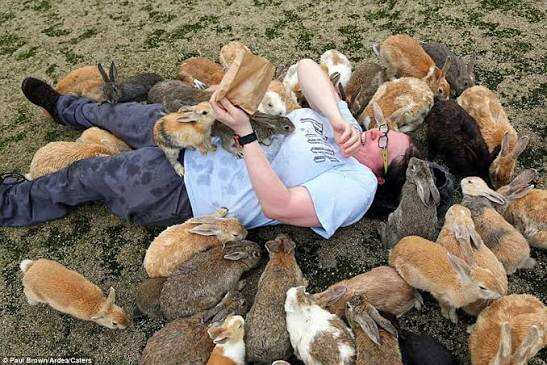
Okunoshima, also known as “Rabbit Island” in Japan, attracts tourists from around the world who want to form true friendships with the local rabbits that roam the island.
Food scraps attract scavengers
Ecological damage is not limited to rabbits and wild boars. Scavenging birds such as crows and black kites also gather around feeding sites, eating leftover scraps and animal remains, altering the wider local ecosystem.The researchers note that their findings do not mean wildlife tourism should be banned. Instead, they argue that feeding requires clear rules and active monitoring to stop further damage.The author recommends developing a long-term plan for Okunoshima. Key steps include controlling feeding practices and food sales, tracking rabbit populations, helping plants recover and studying the impact on other animals.The researchers suggest local communities, tourism businesses, scientists and government agencies must work together to protect local wildlife and the island’s environment.
The history and legacy of poison gas
Long before it was famous for its friendly rabbits, Okunoshima had a darker name: “Gas Island.” During World War II, the Imperial Japanese Army removed the island from official maps and built a secret factory that produced more than 6,000 tons of mustard gas and tear gas.After the war, the Allies destroyed chemical plants and buried or dumped remaining chemical weapons. The island was later turned into a national park, and the Okunoshima Gas Museum opened in 1988 to educate visitors about the site’s wartime history.
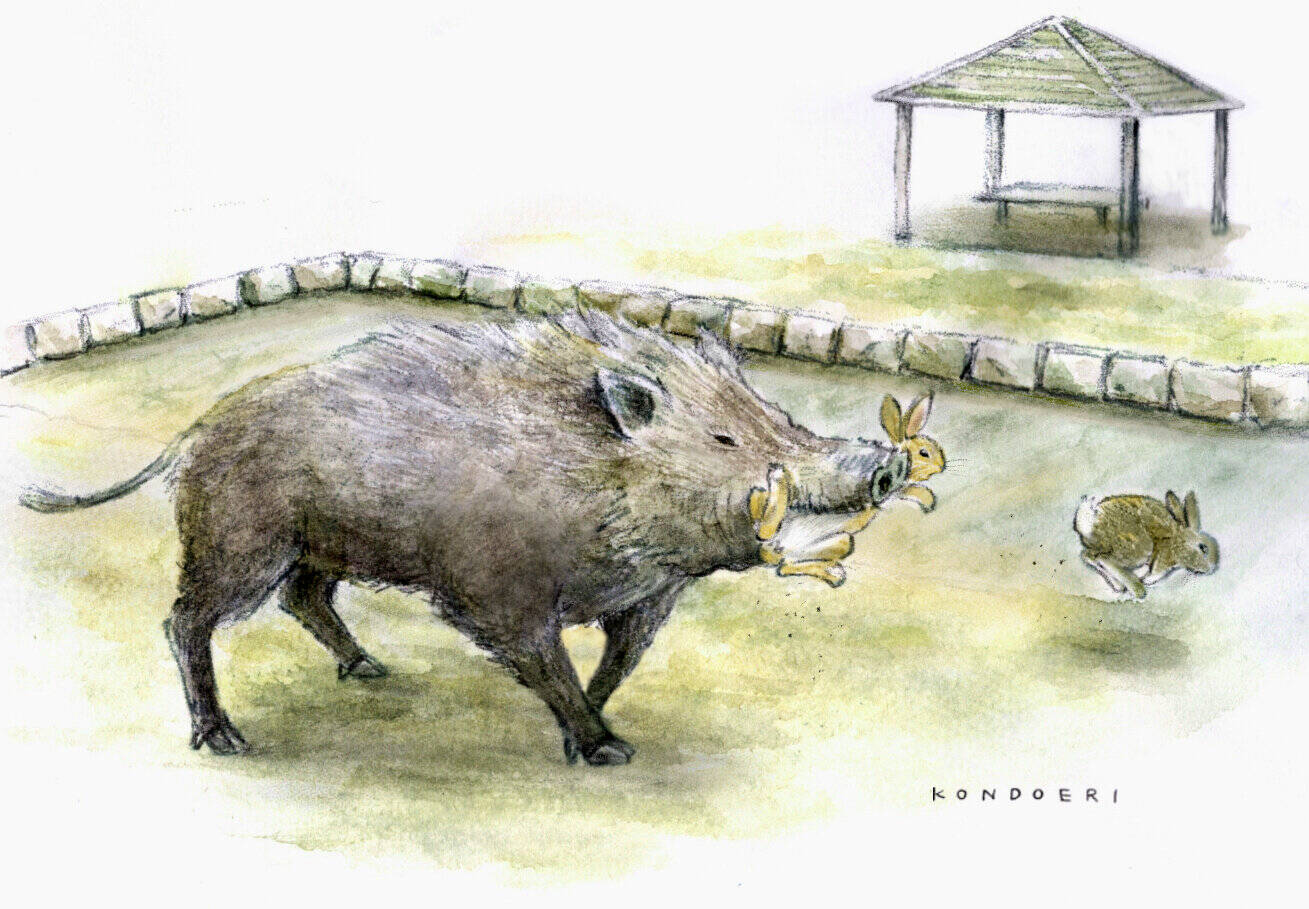
Hidden consequences of improper breeding of rabbits on Okunoshima
How Domestic Rabbits Take Over
The origins of the current rabbit population remain a source of local debate. One popular theory is that in 1971, eight rabbits were released by local schoolchildren. Another theory is that the current animals are descended from test rabbits used in wartime gas labs, although genetic research suggests they are European rabbits introduced much later.Since the entire island is designated as a park reserve, predators such as cats and dogs are strictly prohibited. With no natural hunter or traffic dangers, the introduced rabbits multiplied rapidly, growing from a small colony to over a thousand rabbits at their peak before travel recently declined.