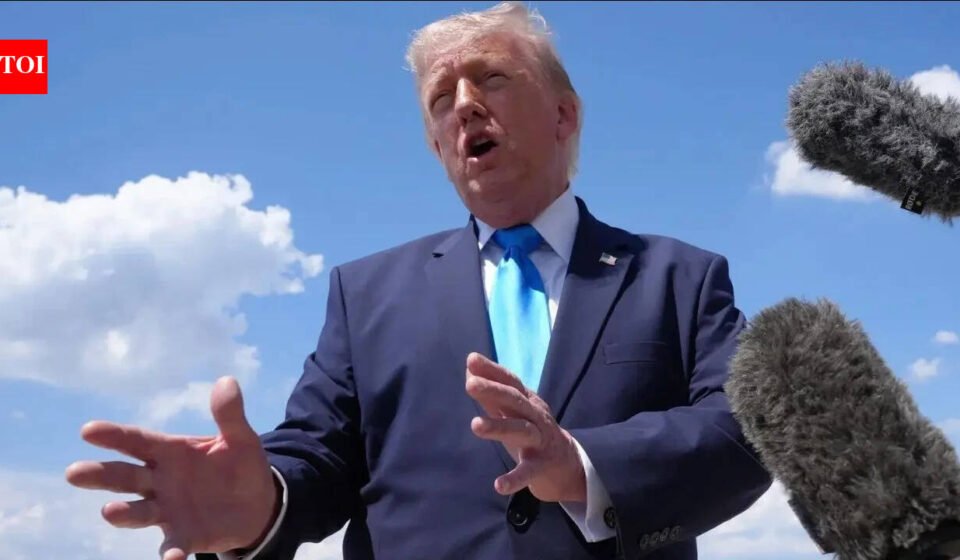

According to CNN, U.S. President Donald Trump has publicly predicted at least 38 times since March that a deal to end the war with Iran is imminent, but each time a final agreement has not been reached.The pattern began on March 23, less than a month after the United States and Israel began launching attacks on Iran on February 28. Speaking aboard Air Force One, Trump announced “almost all points of agreement, I would say.” Iran denies any negotiations are ongoing.Within days, Trump’s predictions became more solid. On March 25, he said Iran “very much wants to make a deal.” On March 26, he claimed that Iran was “begging for a deal.” On March 30, he posted on Truth Social that “tremendous progress has been made” but warned that if a deal was not reached soon, the United States would “blow up and completely destroy all their power plants.”
A ceasefire is not an agreement
On April 7, Trump announced a ceasefire, saying that the two sides “have made great progress” but that “the agreement will take two weeks to finalize and improve.” Ultimately no agreement was reached.But Trump keeps predicting. On April 15, he told Fox Business Channel: “I think it’s coming to an end.” On April 16, he told reporters: “We are going to make a deal with Iran, and it looks very good.” On April 17, he said in three appearances that Iran had “agreed to everything” and expected a deal “within the next day or two.”Trump said Iran was still “eager to make a deal” by April 30. On May 7, he told reporters at the Lincoln Memorial Reflecting Pool that an agreement “may not happen, but it could happen at any time.”
‘We are in the final throes’
Fox News’ chief political analyst said Trump may send different messages to different audiences – trying to calm oil markets while maintaining a tough stance on Tehran.On June 11, Trump announced the cancellation of the attack plan against Iran and claimed that a “great solution” had been reached. He told reporters in the Oval Office that the signing ceremony would likely take place “over the weekend in Europe.” Trump said Vice President Vance will represent the United States.But Iranian Foreign Ministry spokesman Esmail Baghaei said reports of a deal were “speculative” and “nothing has been finalized yet.” He said the United States had made “excessive demands” and added “new demands.”Pakistani Prime Minister Shehbaz Sharif, who has been mediating between the two sides, said in a social media post that “the final agreed text of the peace deal” had been reached, adding that he was working closely with both sides to finalize next steps.As of Friday, no agreement had been signed. Trump’s latest claim is that a deal could be reached “over the weekend or Monday,” which would be his 38th or 39th prediction if a deal fails to materialize.
Suspected of insider trading
A BBC report shows that Trump’s Iran war declaration was accompanied by a consistent pattern of suspicious trading, with financial markets seeing a flood of bets minutes before his market-moving statement was made public.On March 9, 47 minutes before Trump told CBS the war was “very complete,” traders placed huge bets on falling oil prices. After the news broke, oil prices plummeted 25%. These traders made millions of dollars.On March 23, 14 minutes before Trump posted on Truth Social about a “comprehensive settlement” with Iran, $1.5 billion worth of S&P futures and $192 million worth of oil futures traded. Connecticut Sen. Chris Murphy called it “larger than any futures purchased at the time.”On June 11, 70 minutes before Axios reported a potential U.S.-Iran trade, a short position in crude oil worth $920 million was placed. When oil prices fell 12%, these short positions made a profit of $125 million.On prediction markets such as Polymarket, six new accounts won $1.2 million betting on a U.S. attack on Iran on February 28, the day of the attack. Another user won a $570,000 bet just hours before U.S. special forces captured Nicolas Maduro’s ouster.Nobel laureate Paul Krugman calls it “the rebellion of futures markets.” Democratic lawmakers have called for an investigation, but the CFTC has not confirmed any investigation. One financial regulation expert said enforcement would be difficult: Even with clear evidence, “there’s a good chance no one will be prosecuted.”