Consequences of the Indus Waters Treaty? Sindh and Balochistan face water crisis, nearly a third of Pakistan in trouble

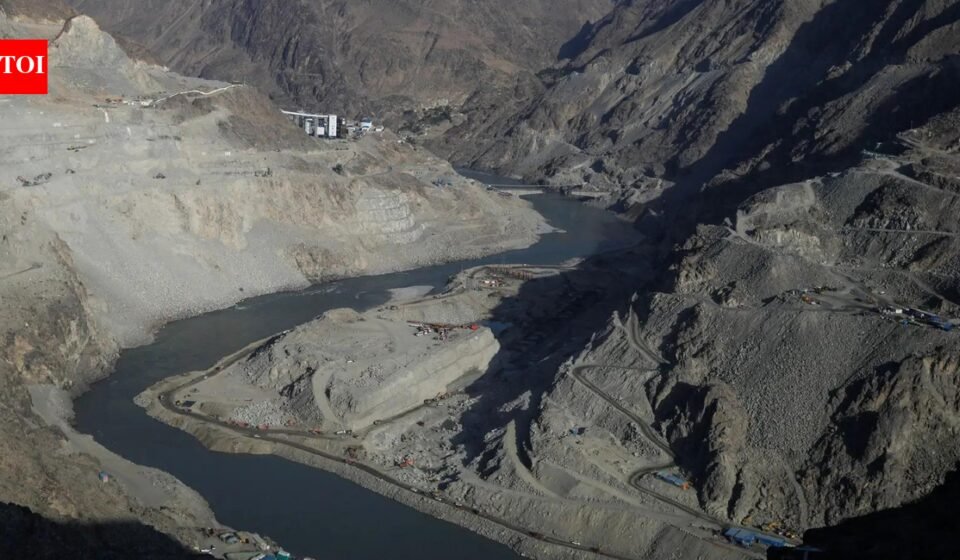
Are the effects of Pakistan’s terror policies now reaching its fields and farms? As India remains Indus Waters Treaty Severe water shortages in Sindh and Balochistan have fueled fears of an “economic carnage” in agricultural areas.New Delhi shelved the decades-old treaty months ago following a Pakistan-sponsored deal. Pahalgam terror attackPakistan is grappling with a worsening water crisis that is now threatening agriculture, livelihoods and regional economies in parts of Sindh and Balochistan provinces.Water shortages are particularly affecting Sindh province, home to Pakistan’s financial capital Karachi, where political leaders, farmers and water experts are increasingly sounding the alarm about dwindling supplies and uneven distribution.The crisis affects nearly a third of Pakistan’s population as Sindh and Balochistan provinces face severe water shortages.
India’s tough stance after Pahalgam incident
India’s response to the Pahalgam terror attack went beyond the military scope of Operation Sindoor. One of New Delhi’s most important diplomatic measures was the suspension of the Indus Waters Treaty, signaling a “zero tolerance” attitude towards Pakistan.Reinforcing this stance, Defense Minister Rajnath Singh recently made it clear that India has no intention of softening its stance.“After the Pahalgam terror attack, we said by suspending the Indus Waters Treaty that those whose tears have dried up should not expect water from us. We will not let the waters of Sindh fall into the hands of patrons of terrorists and enemies of humanity,” he said.The remarks reinforced New Delhi’s position that terrorism and normal bilateral arrangements cannot coexist.
Sindh’s irrigation network under pressure
The crisis around the Sukkur Barrage, one of the largest and most important irrigation facilities on the Indus River, is becoming increasingly apparent, Dawn reported. The barrage supports millions of acres of farmland in parts of Sindh and Balochistan provinces, which is vital to Pakistan’s agricultural economy.Water shortage in Sindh’s canal network has reached alarming proportions. “Dawn” quoted sources as saying that the Northwest Canal faces a deficit of 64.1%, the Rice Canal is 38%, and the Dadu Canal is as high as 82%, which is shocking.The situation is further complicated by allegations of illegal water abstraction and unequal distribution of water in upstream areas.According to reports, Sindh Irrigation Department data showed that Punjab’s water consumption was 53,394 cubic feet, while its allocation was 44,000 cubic feet, more than 21% more than its entitlement.Likewise, Taunsa Barrage is said to be withdrawing 25,694 cubic feet from its approved allocation of 24,000 cubic feet, equivalent to an excess withdrawal of approximately 9.3%.Meanwhile, the water level in the Chashma barrage continues to rise, indicating rising water levels in the upstream areas while water shortages in the downstream areas are getting worse.
Political blame game intensifies
The worsening crisis has triggered intense political exchanges within Pakistan.Jamaat-e-Islami Chairman Hafiz Naeem-ur-Rehman has accused the Sindh government led by the Pakistan People’s Party (PPP) of failing to resolve Karachi’s chronic water shortage despite being in power for many years.However, PPP directed criticism at federal authorities and water managers.PPP Sindh Chairman Nisar Ahmed Khuhro has repeatedly warned that despite being one of the most productive agricultural regions in Pakistan, Sindh is being deprived of its due water resources.He mentioned that Sindh produces about 5.5 million tons of rice every year and generates nearly $1.4 billion in revenue through rice exports.Khuhro warned of the economic consequences, calling cuts in Sindh’s kharif season water allocation an “economic carnage” for the province.“Sindh produces 67 per cent of the country’s agricultural output but is deprived of its fair share of water resources,” Khuhro said.
Canals dry up, farmers struggle
This crisis is already being felt on the ground.According to Dawn, the acute shortage is affecting the right bank canal of the Sukkur barrage system, which irrigates Larkana, Qanbar-Shahdakot, Dadu, Shikarpur and parts of Balochistan.Ishaq Mugheri, former chairman of Qambar-Shahdadkot chapter of Abadgarh Committee in Sindh, said the North-West Canal faces a shortfall of 64.1 per cent, the Rice Canal has a shortfall of 38 per cent and the Dadu Canal has a shortfall of 82 per cent.These figures illustrate the scale of the problem. The Dadu Canal is allocated 4,995 cubic seconds of water and currently only receives 860 cubic seconds. The Northwest Canal has an allocation of 6,260 cusecs against an allocation of 2,100 cusecs, while the Rice Canal has an allocation of 8,700 cusecs against an allocation of 5,300 cusecs.Years of delays in infrastructure upgrades and incomplete renovation of irrigation channels have further exacerbated the situation, preventing farmers from starting seasonal farming.“We are still waiting for the water to reach the end and start preparing the rice field nurseries,” Mughri told Dawn.
Pakistan faces growing challenges
Pakistan’s dependence on the Indus River system has long made water security a strategic issue. The crisis has increasingly exposed the fragility of the country’s irrigation management and agricultural infrastructure as shortages deepen and political disputes over distribution intensify.Pakistan’s water challenges look set to become more difficult in the coming months as India maintains a hardline stance on the Indus Waters Treaty and internal disputes over allocations intensify.