
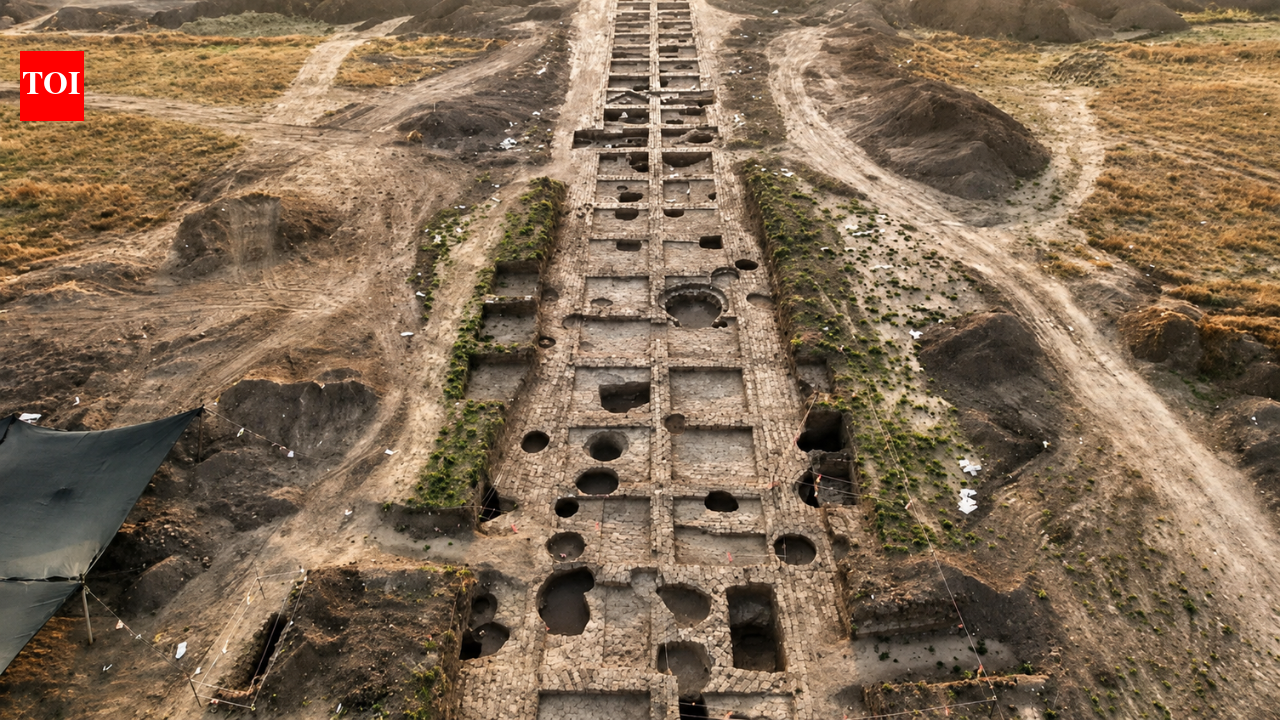

For generations, the Canaanites have occupied a strange space between archeology and biblical tradition. They are mentioned numerous times in the Hebrew Bible as the inhabitants of the land before the rise of ancient Israel, and they are often viewed through a biblical lens rather than material evidence. Now, a major discovery in southern Israel is offering a rare glimpse into their world. Archaeologists have discovered a 5,500-year-old flint blade production center near Kiryat Gat that dates back to the Early Bronze Age. Far from being a humble workshop, the factory was a highly organized manufacturing center producing precision-crafted tools on a scale rarely seen in this period. The discovery reveals not only the technological capabilities of an ancient society, but also a society that already showed signs of economic specialization, a skilled workforce and regional trade.
Discoveries in ancient Israel reveal advanced Canaanite Technology Since the Bronze Age
The excavation, conducted by the Israel Antiquities Authority (IAA) in Nahal Kum near the village of Ghat, uncovered what researchers say is the first known large-scale Canaanite blade workshop found in southern Israel. The site contains huge flint cores that were carefully shaped to produce long, sharp blades. Archaeologists have also discovered hundreds of underground pits that served a variety of purposes, including storage, craft production and ritual activities.In a statement reported by The Times of Israel and the Israel Antiquities Authority (IAA), the researchers highlighted the complexity of the technology:“The most impressive find at the site was a large flint core from which extremely sharp, uniformly shaped blades could be produced.”The authorities added:“The blade itself was used as a cutting and butchering knife, as well as a harvesting tool, like a sickle blade.”These are not crude stone tools used directly. The blades showed remarkable uniformity in size and shape, indicating that a standardized production process requires extensive expertise. Archaeologists note that specialized techniques were used to apply controlled pressure to the flint, allowing craftsmen to separate long, even blades with extraordinary precision.
Archaeologists uncover first known Canaanite blade production center with evidence of mass manufacturing
One of the most striking aspects of this discovery is its scale. The workshop did not represent a cottage industry but acted as a specialized manufacturing center, supplying tools to the wider region.Dr. Jacob Vardi, a prehistorian israel antiquities authorityexplains:“This is a complex industry, not only because of the tools themselves, but also because of what’s not being discovered.”He continued:“The scraps, the debits, are not scattered off site, perhaps to better protect and preserve the expertise within the panel.”This observation provides fascinating insights into how knowledge was managed nearly six thousand years ago. Careful control of manufacturing waste suggests that blade production was not an open craft but a specialized occupation, probably limited to a small group of highly trained craftsmen.According to the IAA, the workshop was likely a distribution center for tools used in the Levant. Such operations suggest that trade networks and organized economic systems were established much earlier than many expected.
5,500-year-old seminar sheds light on society, trade and urbanization in biblical times
The implications of this discovery extend far beyond the blades themselves. Archaeologists believe the site provides valuable evidence for understanding the social transformation that occurred during the early Bronze Age, when small farming communities developed into larger, more complex settlements.The Israel Antiquities Authority stated:“This is clear evidence that local society here was already highly organized, complex and specialized by the time the Bronze Age began.”The authorities further stated:“The discovery of complex workshops shows that societies already had complex social and economic structures in the early Bronze Age.”For historians, this conclusion may be the most important aspect of the discovery. The symposium showed that technical expertise, economic organization and a specialized workforce were already present in the southern Levant around 3500 BC. These developments laid the foundation for the construction of subsequent urban centers.While it may be misleading to claim that this discovery “proves” all biblical records, it does provide tangible archaeological evidence of a complex society living in an area traditionally associated with the Canaanites. It paints a picture of communities innovating, organizing, and connecting through trade long before written records became common.Thousands of years later, the razor-sharp edges of those flint blades still tell a surprisingly modern story: knowledge is valuable, expertise creates influence, and technology helped shape the rise of civilization itself.