
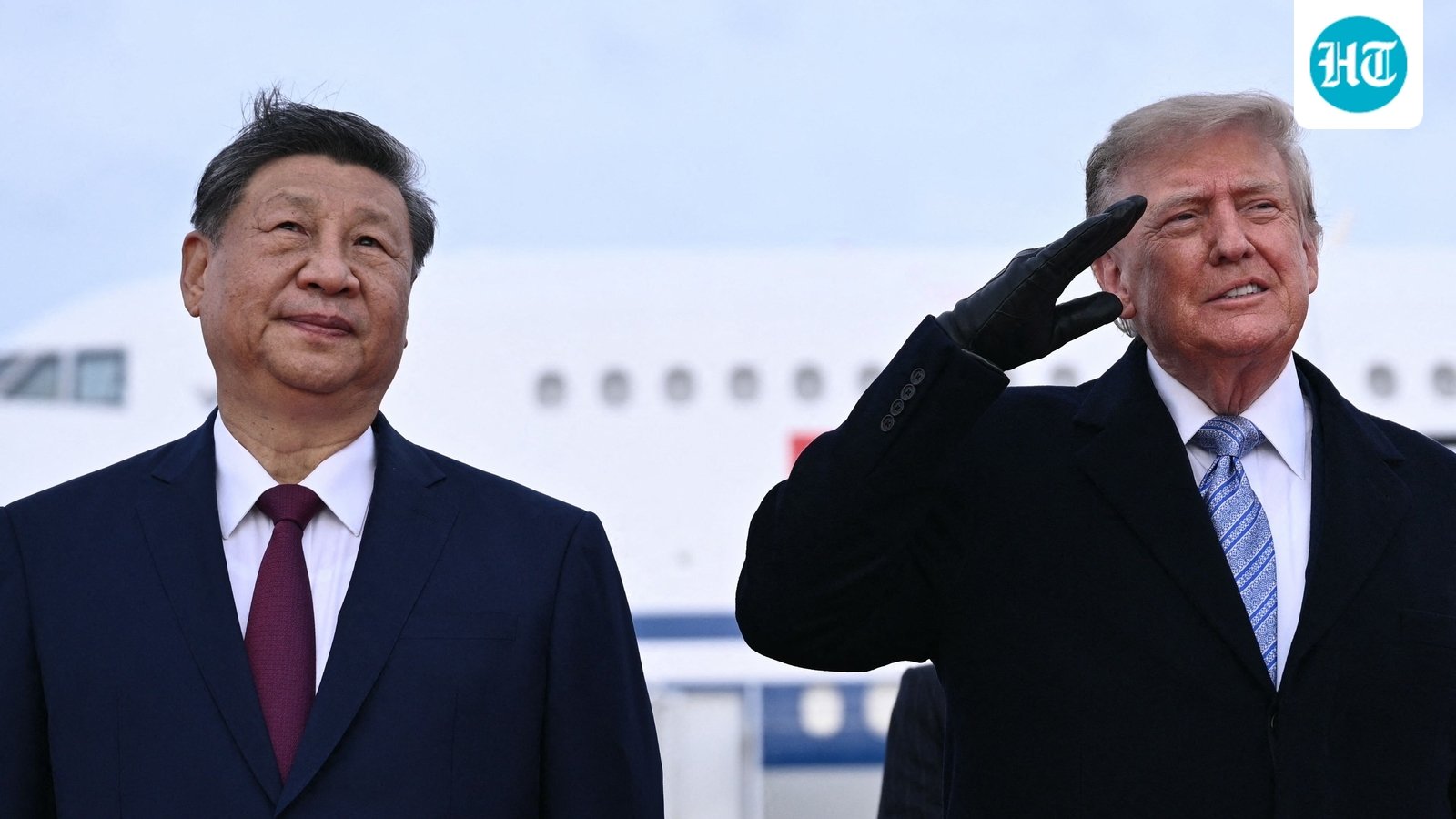
AI is expected to be a major topic when Chinese President Xi Jinping meets US President Donald Trump in Washington on Thursday. The two countries have also agreed to an “AI hotline” that could be used to warn each other about dangerous or uncontrolled AI systems, according to the US side.
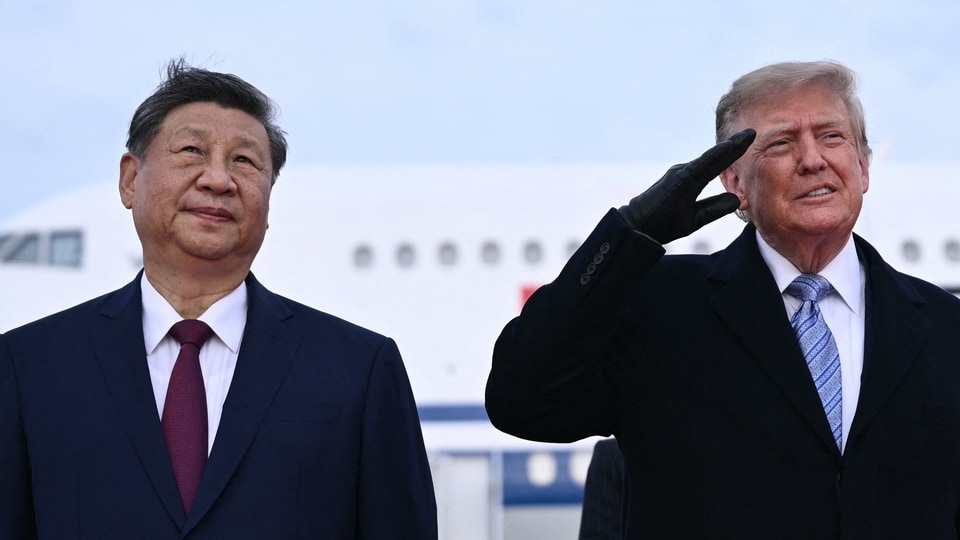
The US once viewed China mainly as a fast follower in technology. But China is now developing technology at the frontier in areas such as artificial intelligence, chips, robotics and advanced manufacturing, according to Fortune.
US-China AI rivalry
US pressure on China has also helped push Beijing to build more technology at home. Restrictions on Chinese access to advanced technology have encouraged the country to invest more heavily in its own chips, research, companies and supply chains, Fortune reported.
China tech industry grows
China is now using government support, private investment and scientific talent to build major technology companies. Recent stock market debuts by ChangXin Memory Technologies and Unitree Robotics show how Beijing is helping companies in semiconductors, robotics and advanced manufacturing attract large amounts of capital.
China’s 15th Five-Year Plan for 2026 to 2030 places technological self-reliance at the center of its economic strategy. The plan is designed to reduce the country’s dependence on foreign technology and strengthen domestic capabilities.
Also read: Oil prices today: Why crude is falling while diesel prices surge on Trump export ban plan
Xi Jinping AI push
Xi has personally pushed for more investment in basic science and hard technology. During a visit to Shanghai in April, he highlighted basic research as an important foundation for industries that depend on advanced technology.
Xi later told China’s financial system to put more money into hard technology. At the National Science Conference in Beijing, he called for investment to start early, support smaller projects and continue for the long term. Xi also used the World Artificial Intelligence Conference in Shanghai to call for greater cooperation over AI. He warned against creating what he described as “new historical injustices” during the development of AI.
US China tech war
At the same time, Washington is trying to slow China’s access to advanced technology. The US has expanded entity-list sanctions and launched the “Pax Silica” initiative, which aims to strengthen AI, semiconductor and critical-mineral supply chains among trusted partners.
The US is also asking other countries to choose between competing technology systems. Reuters reported in August that Washington was preparing to warn dozens of countries that they could be excluded from a US-led AI coalition if they also joined a competing Chinese framework.
China tech self reliance
China’s past experience shows how foreign technology restrictions can push it toward self-reliance. After the Soviet Union withdrew technical experts in the 1960s, China developed its own nuclear and ballistic capabilities, according to Fortune.
Similar pressure later helped China build its own navigation system. Tensions during the 1996 Taiwan Strait crisis contributed to Beijing’s decision to develop BeiDou, its own satellite navigation system that competes with GPS.
China also responded to its exclusion from the International Space Station by building its own space station. The country developed the Tiangong space station after US law prevented China from participating in the International Space Station program.
China AI investment
Beijing is now moving money and resources away from its older property- and consumer-led growth model. Semiconductors, advanced manufacturing and humanoid robots are increasingly being treated as important national industries.
China is using three major tools to support this technology push: capital, talent and international academic cooperation. Together, these are helping Beijing expand its domestic technology industry while building links with researchers and companies overseas.
Also read: US diesel prices hit record high: Could rising fuel costs trigger a stock market crash?
The first major tool is money. China’s growing IPO market and the rise of scientist-entrepreneurs are changing how money reaches technology companies, with financial markets increasingly supporting hard-tech businesses.
China spent more than 3.9 trillion yuan, or about $568 billion, on research in 2025. Spending on basic research reached almost 280 billion yuan and crossed 7% of total research spending, according to the figures cited by Fortune.
Beijing has also created a national venture capital guidance fund for early-stage technology companies. The fund is aimed at supporting hard-tech businesses over the long term and is expected to mobilize about 1 trillion yuan, or $145 billion, in total capital, according to Reuters.
China AI talent
The second major tool is talent. Researchers and academics from around the world are increasingly moving to Chinese universities and research institutions, giving China access to experienced scientists. At least 85 world-class researchers moved to China between early 2024 and late 2025. That figure comes from a tally by CNN and Times Higher Education.
Several internationally known scientists have also taken positions at Chinese universities. In July, Nobel Prize-winning chemist Omar Yaghi left the University of California, Berkeley, for a full-time position at Tsinghua University, where he is expected to start an AI-assisted materials laboratory, according to The New York Times.
Other Nobel Prize winners have also joined Chinese or Hong Kong institutions. Nobel chemistry laureate Hartmut Michel moved to Jilin University, while Nobel economics laureate Philip H. Dybvig joined Southwestern University of Finance and Economics.
Nobel physics laureates Ferenc Krausz and Andre Geim have also taken positions in Hong Kong, while Fields Medalist Ngô Bảo Châu joined the University of Hong Kong. These moves are being cited as signs of China and Hong Kong becoming more attractive destinations for high-level scientific research.
China is also becoming more important in the global AI talent pipeline. A Carnegie Endowment for International Peace study found that slightly more than 57% of top AI talent in 2025 had degrees from Chinese institutions, compared with 46% in 2022.
Only about 13% of the top AI talent in that study had degrees from US institutions. The figures show the growing role of Chinese universities in producing highly trained AI researchers.
China global AI push
China is also using international education partnerships to strengthen its research system. The country’s transnational education sector has started recovering after two years of slower approvals.
In 2026, China approved 86 joint institutions and 133 joint education programs involving 174 universities. The programs include areas such as brain-computer interfaces, big data and basic science, according to the education data cited by Fortune.
Chinese officials are also being encouraged to keep the education system open to foreign cooperation. According to the author’s conversations with senior officials in Beijing, Chinese leaders want more international partnerships in engineering, mathematics and other hard-tech fields. This means China is following a two-track technology strategy. It is trying to become more self-sufficient at home while also expanding its influence through international partnerships.
Also read: Nasdaq hits record high as oil prices fall: Can US-Iran talks lift stocks?
China open source AI
Chinese companies can use robots, chips and AI-powered vehicles to make money while also generating large amounts of real-world data. That data can then help improve AI systems by giving Chinese companies information from actual products and users. China is also trying to expand its influence through open-source AI. Models such as Kimi K3, Alibaba’s Qwen and DeepSeek are being developed as part of a more open, hardware-focused technology ecosystem.
China tech push faces costs
These open-source AI models could allow countries in the Global South to develop their own AI systems. Such countries would have less need to depend completely on Western technology infrastructure, according to Fortune. China’s technology push also has economic costs. Heavy spending on research and advanced industries has come alongside weaker household consumption and a sluggish consumer market.
This has created a two-speed Chinese economy. The hard-tech sector is expanding rapidly, while parts of the consumer economy remain weak, according to analysis cited by Fortune. Beijing appears willing to accept some of these costs because it sees technology independence as a national priority. US restrictions have strengthened the Chinese leadership’s focus on building domestic alternatives to foreign technology.
The Xi-Trump meeting could therefore be only one moment in a much longer US-China technology competition. Any agreement reached on AI or technology would not remove the wider rivalry between the two countries.
The central issue is no longer only whether the US can restrict China’s access to technology. China is simultaneously trying to build its own chips, AI systems, robotics industry, research institutions and international technology partnerships. The broader shift is that US pressure has become one of the forces behind China’s push for technological self-reliance. Instead of depending as heavily on foreign technology, Beijing is directing more capital, talent and research toward creating domestic technology capabilities.