Home Blog Page 838

‘I was surprised’: Gavaskar praises Abhishek’s ‘defence’ as opener silences critics

0

'I was surprised': Sunil Gavaskar on Abhishek Sharma's rare defensive shot in opener silences critics
Abhishek Sharma (right) and Zimbabwe’s Dion Myers (PTI Photo)

New Delhi: Former India captain and batting legend Sunil Gavaskar admits he was taken aback – not by a six or an audacious hit – but by the Abhishek Sharma India defeated Zimbabwe in the ICC Men’s T20 World Cup.Push boundaries with our YouTube channel. Subscribe now!Abhishek had a tough time after recovering from a stomach ailment, but he bounced back to form with a flowing 30-ball 55 in India’s 72-run win on Thursday. The knock ended a worrying run of three games in a row and came at a crucial moment in the Championship.

India keep T20 World Cup dream alive, now moves to Kolkata

“We know how good Abhishek Sharma is as a batsman. He silenced the doubters with his 55 against Zimbabwe,” Gavaskar said on JioStar.However, it wasn’t just the base running that particularly caught the legendary batsman’s attention, but also the approach to hitting the ball.“He took extra time to start his innings. He had a way with his batting. He respected the off-spinners, took no risks and bowled with calmness and composure,” Gavaskar observed.Then came his most surprising moment.“In this game, he actually took a defensive shot. He defended the ball. I was surprised to see that because we don’t usually see Abhishek do that,” Gavaskar added, underscoring how rare such restraint is in a naturally aggressive start.

Highest total goals scored in T20 World Cup

For Gavaskar, these innings not only marked a return to form but also growth.“I really think it’s a learning curve for him. Every cricketer goes through a tough period of not scoring runs in back-to-back games. It depends on how much you learn from it,” he said. “I feel Abhishek has learned a lot and that bodes well for him going forward in the next few games and the all-important match against West Indies in Kolkata.”Gavaskar also reflected on India’s tactical changes after their disappointing match against South Africa.“India were beaten against South Africa. They realized they needed a left-right combination in the first half. It is important to learn lessons from the last game,” he pointed out, praising the decision to field South Africa. Sanzhou Samson Return to the opening location.Looking ahead to the virtual knockout series against West Indies, Gavaskar warned that India cannot afford to be complacent.“West Indies are a completely different challenge. They cannot be taken for granted. Their batsmen are at their best. Their bowlers are doing a good job. They punish their opponents’ mistakes,” he warned.

Watch: Teary Arvind Kejriwal’s emotional moment with wife Sunita Children after Delhi GST policy case relief

0

Arvind Kejriwal returned home to his family after the court verdict.

New Delhi: It’s an exciting time Kejriwal Family Friday named after ex chief minister of delhi Arvind and his deputy minister Manish Sisodia were exonerated in the liquor consumption policy case.Arvind Kejriwal They were greeted with flowers, tight hugs and emotional scenes after a Delhi court refused to admit the CBI charges and released them.

‘I am not corrupt’: Arvind Kejriwal breaks down as court frees him, Sisodia in GST policy case

The atmosphere at Kejriwal’s home turned celebratory as Kejriwal and Sisodia were showered with flowers and hugs from family members and supporters. When Arvind arrived, his wife Sunita Kejriwal and children embraced him, an emotional moment after months of legal battles. Sisodia was surrounded by party colleagues and supporters who congratulated the court on the verdict.Louth Avenue Court has freed the two leaders in the excise policy case, finding the alleged central conspiracy role could not be proven. The court noted that the charges were “not subject to judicial review” and found that Sisodia had “no criminal intent,” adding that conspiracy theories “cannot stand against a constitutional authority.”Reacting to the verdict, Sunita Kejriwal wrote on social media: “No matter how powerful one becomes in this world, one cannot surpass Shiva Shakti. Truth always prevails.”An emotional Kejriwal appeared after the verdict, saying he had full confidence in the justice system and insisting the case was politically motivated. “Today, the court released all the accused in the case. We always say, the truth will prevail. We have full confidence in India’s legal system. Amit Shah and Modi together hatched the biggest political conspiracy to end AAP, and five key leaders of the party were thrown in jail.” The current CM was dragged from his home and thrown into jail. Kejriwal is not corrupt. I have only won honesty in my life. Today, the court said Kejriwal, Manish Sisodia and AAP were honest,” he said.Kejriwal’s lawyer Vivek Jain said the court had carefully scrutinized the evidence submitted by the CBI. “The court said that it has scrutinized all the evidence produced by the CBI and no allegation can be said to be above the threshold of charge. The court has discharged them saying that no allegation can be considered true in the matter. The court also said that formulation of the GST policy was done through institutional safeguards and the artificiality and manner in which the policy was framed cannot be questioned,” he said.The CBI filed its first chargesheet in 2022, followed by multiple supplementary chargesheets, alleging that the “South Lobby” paid Rs 100 crore to influence the now-defunct GST policy.A total of 23 people, including Kejriwal and Sisodia, have been charged in the case. They have all been found not guilty by the courts.

Are we about to become batteries for AI? A 2030 thought experiment on work, energy and human worth |

0

Are we about to become batteries for AI? A 2030 thought experiment on work, energy and human worth
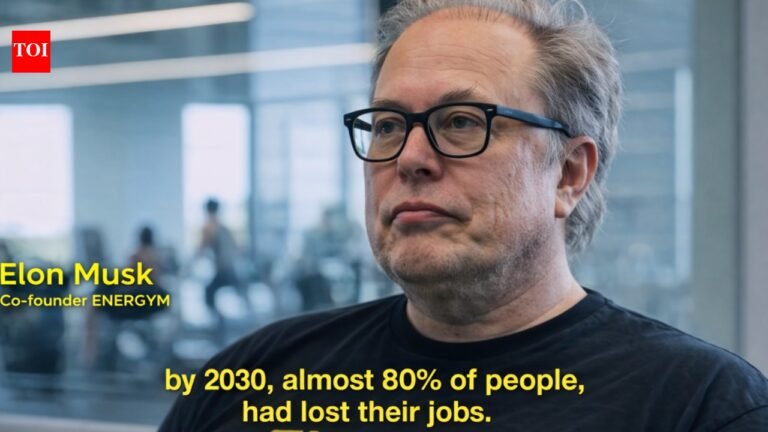
In the viral video, by 2030, 80 percent of jobs are gone, and humans generate electricity, offering power to the AI that replaced them/ Image: X

For most of human history, strength did not need branding. If someone had thick wrists, a heavy gait, a back that curved slightly forward, you could assume the day had demanded something of them. Fields had to be tilled, stone had to be moved, timber had to be cut and carried. The body recorded the requirement. Being muscular, what we might now call shredded, or even simply “looking hot,” was not a goal in itself; it was the by-product of work that had to be done.In a post-industrial world, that record has become elective. Broad shoulders now belong as often to someone who spends the day before a screen as to someone who moves freight. The link between physique and profession has loosened; you can no longer read a person’s trade in their posture.

‘AI Will Create More Than It Destroys’: Microsoft India Chief Puneet Chandok Predicts 3-Year Rise

The most sculpted bodies in a city are often built in air-conditioned rooms under fluorescent lights, lifting stainless steel that serves no purpose beyond being lifted. We run on belts that carry us nowhere. Protein is shaken in matte-black bottles, heart rates and calories flicker across wearable screens, macros are tracked with devotional precision, and compression fabrics are worn like uniforms. A subculture hums around supplements, powders, and optimisation metrics.

man

You can no longer read a person’s trade in their posture.

We speak easily of “putting in the work” even when the work that defines our careers leaves no mark on the body at all. Effort has become aesthetic. The product is not timber or stone or steel. It is the body itself, a project under continuous optimisation.

The treadmill economy and the viral video

In a world where gyms already operate like commercial ecosystems, monthly subscriptions, branded supplements, premium tiers, personal trainers, influencer discount codes, it isn’t much of a stretch to imagine that all that exertion could be put to more “productive” use. If thousands of bodies are already burning energy on polished studio floors every morning, why not capture it? Why not turn the calories into electricity?The feasibility of it all can be debated later. To invoke a pair of optimistic lines that have inspired plenty of grand undertakings: Plato’s “necessity is the mother of invention” and George Herbert’s “where there’s a will, there’s a way.” History suggests we take such sentiments seriously when circumstances tighten. We have reorganised labour, redrawn borders, built cities in deserts and fashioned chips and computers out of sand and stone, And if turning people into energy sources feels morally excessive, it would be wise to remember that throughout history we have accepted harsher systems for thinner justifications. At the very least, one imagines, we would all emerge remarkably fit.

Energym

If we momentarily set aside the question of servitude to machines, one suspects we would at least be exceeding our fitness goals.

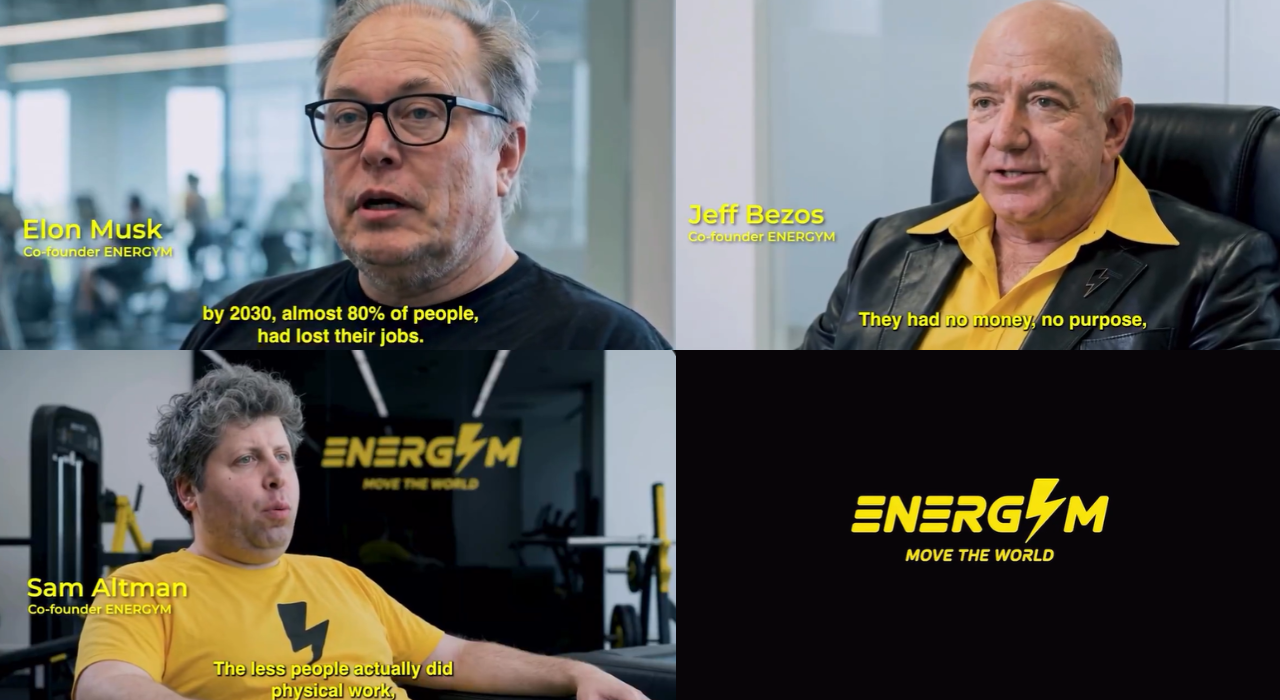
Now place that thought in a near future, say 2030, where automation has swallowed 80 per cent of jobs, leaving billions redundant, still needing money to get by but perhaps needing purpose even more. What remains as a universal credential? Limbs that move. A body that can exert itself. In a fragmented labour market, that becomes the one qualification almost everyone still holds.The idea is not mine, tempting as it would be to claim it. I have joked often enough about the theatricality of gym culture, about the performance of effort in rooms full of mirrors. But the version making the rounds is a forty-second AI-generated video, and it leans into the thought more seriously than satire would allow.The premise is delivered through hyper-realistic versions of Elon Musk, Jeff Bezos and Sam Altman, who appear five years older and seated together as co-founders of a fictional venture called Energym. Their company’s proposition is straightforward: if AI systems and robotics have displaced most forms of employment, let humans generate electricity through exercise and feed it back into the infrastructure that replaced them. Pay them for it. Frame it, as the Altman avatar later describes it, as a solution that “solved our need for energy and your need for purpose,” recruitment rather than redundancy.
Energym stills

Stills from a 40-second AI-generated commercial made by Hans Buyse and Jan De Loore at AiCandy

The pitch rests on an unspoken recognition that money alone would not resolve the void created by mass unemployment, and that without work the day loses its structure. Even an affluent but unmoored character pacing through a large house, the familiar television trope of a spouse left alone once the husband leaves for work and the children leave for school, illustrates how provision does not equal purpose. Work, for better or worse, has long functioned as proof of usefulness. Remove it, and something more destabilising than income disappears. ID@undefined Caption not available.ID@undefined Caption not available.The Energym pitch seizes on that inversion. If millions are no longer required for traditional labour yet still seek the structure and validation that labour once provided, exercise can be recoded as employment. Install generators in the equipment. Let human exertion produce electricity that feeds the AI data centres which rendered their previous careers obsolete.

The Black Mirror parallel

Anyone familiar with the British dystopian anthology series Black Mirror, which first aired in 2011, will recognise the structure immediately. Its second episode, Fifteen Million Merits, is set in an enclosed, self-contained world where people spend their days cycling on stationary bikes to generate electricity. The bikes power a vast, screen-saturated complex in which they also live; there is no visible life beyond it. In exchange, riders earn “merits”, a digital currency used to purchase food, and other basic necessities, along with small digital luxuries that make confinement more bearable.Each person lives in a small grey room lined entirely with screens; there is no window in the conventional sense, only moving images. Advertisements interrupt constantly, and attempting to avoid them is not an option. If a rider closes their eyes or looks away, the screen emits a piercing alarm, flashes red and displays a command to “CONTINUE VIEWING”, the sound persisting until their gaze returns. Muting or skipping the advert results in merits being deducted. Attention is enforced.

Black Mirror | 15 Million Merits – Character and Story Analysis

Even identity is mediated through a digital avatar, known as a “Doppel”(short for doppelgänger), which functions as the individual’s stand-in across this enclosed world, in games, in social spaces, on the talent show like “Hot Shots” that promises escape. Riders spend their hard-earned merits customising these avatars with new hair, clothes and accessories, small cosmetic upgrades that signal status within a system that offers little else.The society is stratified. Those fit enough to pedal form the middle tier. Those who gain weight or can no longer sustain the physical demands are demoted to a cleaning class known as “lemons”. They wear yellow uniforms, clear away the cyclists’ waste and are openly ridiculed. In video games played by the riders, they appear as targets, and some are pushed into a grotesque in-house programme called Botherguts, a virtual game show built around humiliating them for entertainment. Class contempt is not incidental; it is structured into the system, much like ours.The only apparent escape is a talent competition called “Hot Shot”, and entry costs 15 million merits, a sum that ordinarily takes years of cycling to accumulate. The protagonist, Bing is able to afford it because he received the merits as an inheritance from his brother, who had recently died. Rather than spending it on himself, he gives the entire amount to Abi, a quiet singer he has grown close to, convinced that her talent might offer a way out of the enclosed world they inhabit. She performs with sincerity, but the judges dismiss her voice as ordinary and instead focus on her appearance, offering her a place on an adult entertainment channel rather than the artistic recognition she hoped for.The humiliation is not immediate spectacle; it unfolds gradually on the screens that surround Bing’s room. In response, he returns to the bike and spends months pedalling to earn another 15 million merits for his own audition. When he finally steps onto the stage, he does not sing. He speaks, holding a shard of glass to his throat as he denounces the emptiness of the system that has commodified everything, including Abi’s dignity. The judges listen, deliberate, and decide that his anger has commercial potential. Instead of punishing him, they offer him a contract, a larger living space, and a regular platform from which to deliver rehearsed versions of the same outrage, now packaged as entertainment within the very structure he sought to challenge.

The Ending Of Fifteen Million Merits Explained | Black Mirror Season 1 Explained

The bikes in that episode ostensibly generate energy. Yet the more persuasive reading is that they generate compliance. They exhaust the body, occupy the mind and circulate currency back into the same closed loop of consumption. Riders spend merits to skip ads or buy digital clothing for avatars that exist only on screens. It is difficult not to see in that loop a reflection of how much modern work functions less as intrinsic necessity and more as participation in a hyper-consumer economy, where effort sustains the system itself rather than producing anything fundamentally required for survival.The Energym concept borrows this architecture but replaces anonymous overseers with familiar tech magnates. Instead of merits, it offers purpose. Instead of a bunker, it offers the open promise of employment. The mechanism is the same: exertion sustains the system; the system sustains the illusion of upward mobility.If you think that sounds distant from our present, consider how often digital economies already trade in status symbols. In games like Fortnite, players spend real money on cosmetic “skins” that alter appearance without altering ability. On platforms like Snapchat, users curate Bitmojis and filters to signal belonging or aspiration. We pay to skip advertisements. We upgrade to premium tiers to remove interruptions. Even dissent is folded back into the system; Bing’s fury leaves him with a choice between monetising it or returning to the bike, and in our own media ecosystems outrage often survives only if it generates engagement. The mechanics may be less overtly coercive, but the pattern is familiar.

The Matrix and the battery logic

Long before Black Mirror imagined people pedalling for survival, The Matrix had already staged a harsher scenario. In its backstory, humans create intelligent machines, lose control of them, and a war follows. In a final attempt to weaken their opponents, they scorch the sky to block out the sun, cutting off the machines’ primary energy source. The machines adapt. They turn to what remains in abundance: human beings.

How the Machines Took Over Humans – Matrix Lore Explained

Humans are grown and suspended in pods, their minds plugged into a simulated late-20th-century reality while their bodies generate bioelectric and thermal energy to power the machine civilisation. Morpheus tells Neo plainly that the Matrix exists to keep humans under control while they are used as batteries. Early drafts reportedly imagined humans as organic processors rather than literal power cells, but the premise is unchanged: Human life becomes a resource within a system designed to sustain itself, and that is the rearrangement Energym hints at. The difference is that this time the arrangement would arrive wrapped in the language of choice. You walk into the gym. You sign up. You generate power. But if work elsewhere has vanished and survival still depends on earning, how voluntary is that choice? Consent begins to look a lot like necessity.

Does Sam Altman view humans as batteries?

If the Energym video unsettles, part of the reason is that its fictional co-founder is not an obscure character but a recognisable figure. Sam Altman is not merely another technology executive; he leads OpenAI, the company that released ChatGPT and accelerated what many now describe as the first full-scale AI race. When someone in that position speaks about energy, efficiency and the future of intelligence, it is not idle commentary. Executives at the centre of this transition shape the direction of capital, research and policy, and the way they frame the problem often signals where the industry believes it is heading.In a recent discussion about AI’s environmental footprint, Altman responded with a reframing rather than a denial:“One of the unfair comparisons in this case is that people talk about how much energy it takes to train an AI model versus how much it costs one human to do an inference query. It also takes a lot of time to train a human. It takes 20 years of your life, and all of the food you eat during that time, before you get smart. Not only that, it took a very wide spread of evolution, like a hundred billion people who have ever lived, who learned not to be eaten by predators and learned how to figure out science to produce you. The fair comparison, if you ask ChatGPT a question, is how much energy it takes to answer that question versus a human. And AI has probably caught up on an energy efficiency basis that way.”Altman made those remarks at the recently concluded AI Impact Summit in India, in response to questions about the environmental cost of training large models. The point he was making was technical, almost accounting in nature, yet the framing lingers. In that comparison, the human being is described as a lengthy training process, twenty years of food, schooling and evolutionary inheritance before “inference” begins, while evolution itself becomes a kind of pre-training phase spanning millennia. The language is not cruel, but it is clinical. Food turns into input cost, childhood into a burn-in period, and intelligence into an energy equation to be optimised.

OpenAI CEO Sam Altman's shocking response to energy question

The comparison does not attack humanity; it measures it. Biological and artificial intelligence are placed on the same grid and assessed according to expenditure and efficiency, as though both were systems competing for resource allocation. Once that lens is adopted, it becomes easier to see how value might drift toward output rather than experience, toward optimisation rather than meaning.It is difficult not to recall the Architect in The Matrix, who treats humanity as a variable to be managed within a larger design. In that mode of thinking, the central question is not what a human life signifies but what it yields and how smoothly it fits into the structure surrounding it. And from that vantage point, the Energym proposition no longer feels like a piece of speculative satire. If human beings are already being compared in terms of energy input and productive return, then redirecting their physical exertion into the grid begins to resemble continuity rather than rupture.What lingers is how narrow the distance now feels between those imagined worlds and our own. The Matrix reduced the body to infrastructure. Black Mirror reduced effort to currency inside a sealed system. Energym is, on paper, another piece of fiction. We like to think of these as exaggerations, yet much of the logic, optimisation, engagement, productivity at any cost, is already threaded through daily life.


Congress on Modi’s parliamentary speech says India’s status has declined

0

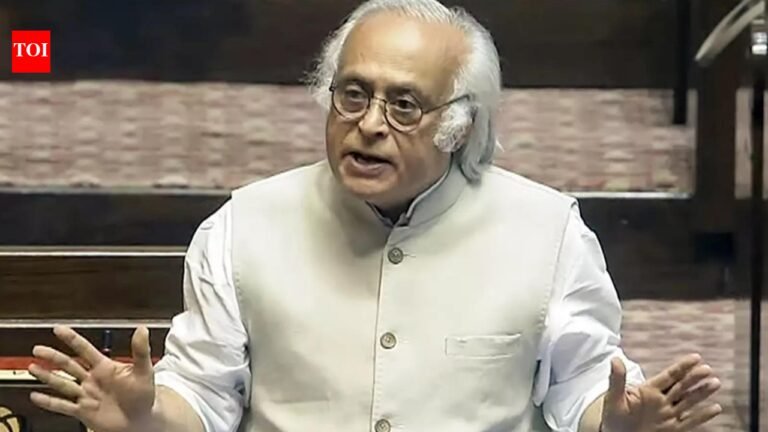
New Delhi: Prime Minister Narendra Modi’s address to Parliament was an “unabashed defense of his host” Benjamin Netanyahu, the Congress said on Thursday, adding that it undermined India’s moral standing. The party published a letter from Jawaharlal Nehru to Albert Einstein in which the first prime minister said Arab rights were crucial to the creation of Israel.Referring to Modi’s statement that India recognized Israel on the day of his birth, Congress spokesperson Jairam Ramesh said that Einstein wrote to Nehru on June 13, 1947, regarding the creation of Israel, and the latter responded on July 11. He pasted Nehru’s letter on the X.Nehru wrote: “I admit that while I sympathize greatly with the Jews, I also sympathize with the Arabs in their plight.”

‘UPI will be available in Israel’: PM Modi pushes for India-Israel FTA after crucial meeting with Netanyahu

BJP: Congress attack reflects Rahul’s frustrationsThe Bharatiya Janata Party on Thursday hit back at Congress’ criticism of Prime Minister Narendra Modi’s speech in Israel, saying the attack reflected frustration over Rahul Gandhi’s bleak prospects for the premiership. BJP spokesperson Sambit Patra highlighted Modi’s standing ovation in Parliament and the honor of receiving the Speaker’s Medal, while accusing the Congress of trying to tarnish India’s image through agitation and campaigns.

Bruce Froemming dies at 86 after 37 years as MLB umpire

0

Bruce Froming Major League Baseball According to the Associated Press, the referee, who had a career spanning nearly four decades and participated in more than 5,000 games, passed away at the age of 86.

First base umpire Bruce Froemming watches the fog in center field during the eighth inning of a baseball game between the San Francisco Giants and the Los Angeles Dodgers at AT&T Park on April 6, 2007, in San Francisco. (Associated Press)

Froming died after a fall at her home in Macon on Wednesday. Wisconsinhis son Steven told The Associated Press. He fell and hit his head on the hardwood floor just after midnight Tuesday and was taken to Ascension Columbia St. Mary’s Hospital in Milwaukee.

Doctors were unable to stop the brain bleed because Fromin was taking blood thinners, his son said.

Also read: DeVonta Lee’s death: What happened to the former LSU star? All in his cancer battle

Nearly 40 years in the major leagues

In 1958, at the age of 18, Fromin began his career as a minor league umpire, starting with a game in Waterloo. Iowa. After more than ten years of hard work, he joined the National League umpiring staff in 1971. He then became a member of the unified major league umpiring staff in 2000.

By the time he retired in 2007, Fromin had played 5,163 games: second most in MLB history at the time, behind only Bill Klem.

Both were eventually surpassed by Joe West, who played 5,460 games before retiring in 2021.

Shortly before leaving the field, Froming reflected on his early years in an interview with The Associated Press, saying, “I thought I was in heaven, on the field, a professional athlete, and I was starting my career.” He noted that reaching the major leagues once felt so far away because “you had to go through the minor leagues to get your chance.”

Also read: Robert Cosby Jr. Death: What happened to RHOSLC star Mary Cosby’s son? Details emerge

He also talked about patience being a key quality for referees, adding, “You’re going to make mistakes early on.”

Record-setting no-hitter and World Series

Fromming recorded 11 no-hitters in his career.

One of the most memorable was on September 2, 1972, when Milt Pappas of the Chicago Cubs nearly missed a perfect game after a late walk.

He also had a no-hitter for Nolan Ryan and others and went to the World Series five times.

After retiring, Froming served as special assistant to Major League Baseball’s vice president of umpiring.

He is survived by his wife Rosemary, two sons and grandchildren.

Looking for a compact charger? These pocket power banks are worth checking out

0

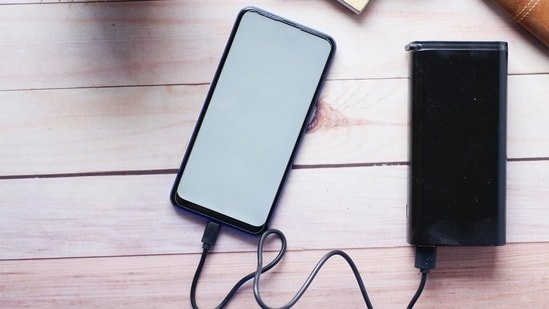
You leave for work, open your phone to book a ride, and the screen goes blank. A drained battery may interrupt calls, payments, navigation, and messages. Carrying a compact power bank can prevent this from happening. Pocket mobile power supply is small in size and large in capacity, suitable for daily travel, office use, and short-distance travel.

Phone battery is dead? These pocket power banks allow devices to be charged anywhere. (pixels)

Ijaj Khan MD

Ijaj Khan is a technology journalist and senior content producer at HT Tech, where he transforms the fast-paced world of consumer tech, gaming and artificial intelligence into stories that inspire curiosity and connection. Always on the lookout for the next big trend, he believes technology should be as relevant as your everyday conversations. When he’s not decoding gadgets and innovations, you’ll likely find him hopping between cities, chasing new adventures and feasting on cuisine that tells its own story.

Below is a curated list of a range of pocket power banks that combine portability with useful charging features.

GoBoult 20000 mAh power bank supports 22.5W fast charging and is suitable for smartphones, headphones, smart watches, speakers, tablets and beauty devices. Its large battery capacity allows for multiple charges before needing to be powered up again. It is designed for users who carry multiple gadgets during the day and need backup support.

Reviews from buyers on Flipkart

Buyers like the fast charging, which quickly powers up phones and works across devices. Many praised its compact size, functional display and great value for money. Some have pointed out that the actual capacity is less than 20,000 mAh and questioned the veracity of the reviews, but the overall rating is 4+ stars from over 27,000 reviews.

Why choose this product

Choose this product for reliable mobile charging of phones, earbuds, and more at an affordable price. It’s great for travel or everyday use if you want fast speeds and multiple ports in a pocket-sized package.

The Ambrane 10000 mAh 22.5W Mini Pocket Power Bank is designed for users who prefer a lighter option. It supports 22.5W fast charging and includes USB Type-C and standard USB ports for flexible connectivity. It has a capacity of 10,000 mAh and can charge smartphones and other small devices such as earbuds and smart watches. Its compact construction makes it easy to carry in a pocket or small bag, and charging speed depends on the connected device.

Reviews from buyers on Flipkart

Buyers rave about its small size that fits anywhere and its fast wired charging for everyday charging. Many say it’s extremely portable and has long battery life on a full charge. Some people mentioned heating issues and lower actual capacity, but the average rating is 4+ stars from thousands of reviews.

Why choose this product

Choose this one if you want an ultra-small power bank for emergencies or when traveling with not many items. It’s perfect for fast and affordable charging on the go.

Porttronics Luxcell B 10K offers a 10000 mAh battery with 22.5W fast charging support. Its slim construction allows it to fit easily into a pocket or small bag. It includes USB-A and Type-C ports, allowing users to charge different devices without the need for separate adapters. This model is suitable for commuters and office users who need reliable daily backup power.

Reviews from buyers on Flipkart

Users praise its pocket-sized slimness and fast-charging capabilities, which can fully charge the phone in an hour. The LED indicators and dual ports were praised for its convenience, and many called it stylish and a great value. Some people complained about lower actual capacity and less heat, but it has a 4.2+ star rating out of 5K+ reviews.

Why choose this product

When you need a slim, stylish charger to quickly charge your phone or earbuds, choose this for everyday carry. Perfect for the commuter or traveler who wants speed without the bulk.

URBN 20000 mAh power bank supports 22.5W Power Delivery charging. Its high capacity allows users to charge their smartphone multiple times. It has a triple-output system that can charge up to three devices simultaneously. Dual input options (including Type-C and Micro-USB) allow for flexible charging of the power bank itself. This is great for traveling in groups or for users with multiple devices.

Reviews from buyers on Flipkart

Buyers call it the best value power bank, loving its great design, quality build, and ability to fully charge a 5000 mAh phone multiple times. Many highlighted the excitement of the fast charging and pocket-friendly size. The average rating from more than 27,000 reviews is 4.1 stars, but some point out that the actual capacity is lower.

Why choose this product

Choose this feature for all-day power needs, such as charging your phone, tablet, or earbuds on the go. It provides fast, safe charging in a compact form and at an economical price.

This Ambrane power bank supports magnetic wireless charging for compatible smartphones. It has a 10000mAh capacity, offers wireless charging and 22.5W wired Type-C output. Users can magnetically connect compatible devices for wireless charging, or use wired fast charging when needed. It’s suitable for those who prefer fewer cables in their daily carry.

Reviews from buyers on Flipkart

Users rave about the iPhone 12+’s easy MagSafe snap-on charging, calling it a game-changer for travel. Many also praised Android’s fast wired speeds and strong magnets. Some pointed out its lower actual capacity and heat, but it has an average rating of 4.2 stars from thousands of reviews.​​

Why choose this product

If you own an iPhone and want wireless convenience and wired versatility in a slim, grippy package, pick this up. Ideal for daily commuters who need a quick top-up without cables.

The boAt 20000 mAh power bank combines large capacity with 22.5W fast charging support. It includes multiple output ports to charge multiple devices at once. A built-in smart IC protection system helps manage the risk of overcurrent and short circuits. This model is ideal for users who need constant backup power for long workdays or when traveling.

Reviews from buyers on Flipkart

Users like the ability to fully charge the phone 3-5 times, and the 22.5W fast charging speed that can fully charge a 5000 mAh battery in 2 hours. Many highlighted the slim design and safety features as best-in-class in its price range. The average rating out of thousands of stars is 4.2+ stars, but some people point out that the actual capacity is lower.​

Why choose this product

Choose this product if you need to take multiple long trips with a full charge, and it’s fast and pocket-friendly. Perfect for travelers or heavy users on a budget.

The Spigen 20000 mAh power bank supports 30W fast charging and is suitable for smartphones and some laptops. Its high output helps reduce charging time for compatible devices. Multiple output ports allow simultaneous charging. With its powerful battery capacity, it supports long-term use when traveling or working for long periods of time.

The Ambrane AerosynQ MagSurge 10000 mAh power bank supports 22W fast charging and wireless charging for compatible devices. It also includes a built-in kickstand that allows users to hold the phone upright during video calls or streaming. The Type-C port supports wired charging. Its compact size makes it suitable for daily commuting and short trips.

Factors to consider before buying a power bank

Capacity: Match mAh according to your needs, 10,000 mAh for daily charging, 20,000 mAh for multi-device travel charging, note that the actual output is 60-70% of the rated output.

Charging speed: Prioritize 22.5W+ PD/QC, quickly charge the phone within 2 hours; check device compatibility to avoid slow charging.

Size & Portability: The thinner design is suitable for commuting and weighs less than 200 grams for a suit pocket, while the larger design offers more ports for laptops or groups.

Ports and Compatibility: iPhone/Laptop requires USB-C PD, older devices require USB-A, MagSafe requires Wireless; multiple ports can be used simultaneously.

BUILD QUALITY & SAFETY: Choose lithium polymer batteries with overcharge/short circuit protection and a trusted brand to prevent heating or failure.

Three features of the best power bank

Disclaimer: At Hindustan Times, we help you stay updated with the latest trends and products. Hindustan Times has affiliate partnerships, so we may get a share of the revenue when you make a purchase. We are not responsible for any claims relating to the products under applicable law (including but not limited to the Consumer Protection Act 2019). The products listed in this article are in no particular order of preference.

Government: Carney’s visit to China comes at ‘critical moment’

0

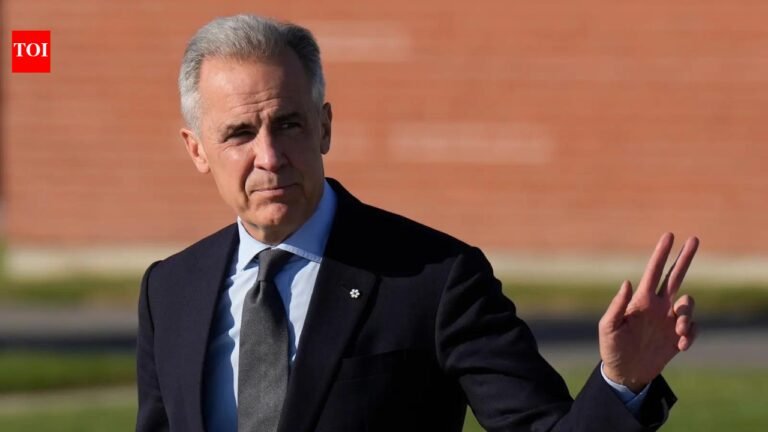
New Delhi: After Canada, India on Thursday also announced Canadian Prime Minister Mark Carney’s four-day visit starting from Friday, saying the visit comes at an important time for the normalization of bilateral relations between India and Canada. The government said Prime Minister Modi and Carni had earlier agreed to pursue a constructive and balanced partnership based on mutual respect for each other’s concerns and sensitivities, strong people-to-people ties and growing economic complementarities.“The upcoming meeting between the leaders of the two countries will provide an opportunity to reiterate the positive momentum and shared vision of India and Canada in building a forward-looking partnership,” the MEA said in a statement.

‘Very important’: Experts highlight Mark Carney’s India agenda ahead of crucial meeting with Modi

Carney arrived in Mumbai on Friday on his first official visit to India. He will hold a bilateral meeting with Modi in Delhi on March 2. In Mumbai, Kani will attend separate business events and interact with Indian and Canadian CEOs, industry and financial experts, educators, and Canadian pension funds in India.The MEA said Modi and Carni will review the progress achieved so far in various areas of the India-Canada strategic partnership, building on their previous meetings in Kananaskis (June 2025) and Johannesburg (November 2025). neural network

Nurul Shah Alam: 5 things to know about refugee who died in Buffalo after allegedly being abandoned by Border Patrol

0

Nurul Amin Shah Alam, 56, died after arrest by border patrol agents at buffaloHe allegedly abandoned him a few miles from his home. The Buffalo Police Department announced earlier this week that they were seeking help locating Shah Alam, who has been reported missing since February 22.

Nurul Shah Alam, a refugee from Myanmar, died after allegedly being abandoned by Border Patrol agents. (X/@RedMedia_us)

Video has now emerged showing Shah Alam abandoned.

New York attorney general responds to reports of his death Letitia James Make a statement explain “Nuru Amin Shah Alam fled genocide and came to this country in search of safety and opportunity. Instead, his life was tragically cut short. No one who comes here to seek asylum should be harmed. My office is reviewing our legal options. My heart goes out to Mr. Shah Alam’s family and loved ones as they mourn this devastating loss.”

ALSO READ | ‘Alex Pretty and Renee Goode…’: Backlash to latest shooting in Minneapolis; ICE and Border Patrol slam

As interest in the case grows, here’s what you need to know about Shah Alam.

Nuru Shah Alam: 5 things you need to know

  1. Nurul Shah Alam is a blind father of two and a refugee from Myanmar. The Washington Post reported that he is a member of the Rohingya minority.
  2. He was arrested on assault charges in 2025 and spent several months in jail before being released into the custody of the Border Patrol days before his death.
  3. Border Patrol agents are accused of delivering Shah Alam, who had limited English skills and was visually impaired, to a Tim Hortons in Buffalo on February 19, the Enquirer reported. Report.
  4. The Buffalo Police Department arrested Shah Alam on February 16, 2025, according to the Erie County Sheriff’s Department. According to the report, “Following his incarceration, we received an immigration detainer being held by the U.S. Border Patrol. Mr. Shah Alam was released by us on February 19, 2026, after posting bail.”
  5. Days after Shah Alam was reported missing by his lawyer, an officer with the Buffalo Police Department “erroneously” closed a missing persons case, believing he was in ICE custody, local outlet WIVB reported.

Shah Alam was reportedly charged with felonious assault and criminal mischief charges. He later pleaded guilty to reduced charges of weapons possession and criminal trespassing. His lawyer insists Shah Alam’s criminal case stems from him getting lost while walking and ending up using a curtain rod as a cane on a stranger’s porch.

He reportedly did not speak English and therefore did not comply with officers’ orders to drop the stick. U.S. Customs and Border Protection told PEOPLE in a statement that Shah Alam “entered the United States as a refugee on December 24, 2024 and is not eligible for removal.”

According to the spokesperson, CBP agents offered Shah Alam “a courtesy” and he “chose to accept travel to a coffee shop and a warm, safe location near his last known address rather than being released directly from the Border Patrol station.” The statement added, “He did not show any signs of pain, reduced mobility, or a disability requiring special assistance.”

Meanwhile, the Buffalo Police Department announced their intention to “investigate” the circumstances and timeline of events from Shah Alam’s release to his death. The Erie County Medical Examiner’s Office performed an autopsy on Shah Alam and determined his death was “health-related,” ruling out “exposure and homicide” as potential causes.

Gcc Registered Car Time Limit: Driving into Saudi Arabia? New 90-day rule for GCC vehicles explained

0

Driving into Saudi Arabia? New 90-day rule for GCC vehicles explained

Vehicles with Gulf license plates will soon face strict time limits within Saudi Arabia. According to new regulations approved by the Saudi government, cars registered in any Gulf Cooperation Council (GCC) country cannot stay in the Kingdom for more than 90 days within a 365-day period.The decision was issued by the Saudi Council of Ministers, which sets regulations to control how long GCC-registered vehicles can stay in the country. The 90-day limit applies regardless of consecutive stays or multiple stays. The countdown starts from the day the vehicle enters Saudi Arabia through any customs port.

Who does this rule apply to?

These regulations apply to vehicles registered in GCC countries and owned by Saudi citizens, expatriates or individuals authorized to drive within the Kingdom. However, cars rented from licensed rental agencies in GCC countries are not covered by this rule.Authorities said the move was aimed at regulating vehicle use and curbing violations related to cars staying in Saudi Arabia for long periods of time without being registered locally.

Extension requests are allowed but not guaranteed

The vehicle owner or authorized driver may request an extension before the 90-day period expires. Applications must be submitted to the Home Office, which will review each request where appropriate and outline the required procedures and documentation.Implementation will involve coordination among government agencies. Zakat, tax and customs authorities will provide necessary vehicle data to the Ministry of Interior. The vehicle owner or authorized driver must register vehicle details at the customs port upon entry as required by the authorities.

Penalties for overstaying

The regulations make it clear that exceeding the allowed stay time will trigger penalties under Article 68, Paragraph 5 of the Saudi Traffic Law, and overstaying constitutes a traffic violation.The director-general of the Zakat, Excise and Customs Authority is expected to issue the administrative decisions needed to launch the framework, in coordination with the Ministry of Interior.The new measures formalize what officials say is a structured approach to monitoring foreign-registered vehicles and preventing prolonged stays without proper compliance.