Home Blog Page 2

Buckingham Palace hosts historic meeting between King Charles and New Zealand’s Maori Queen

0

白金汉宫举办查尔斯国王与新西兰毛利女王之间的历史性会面

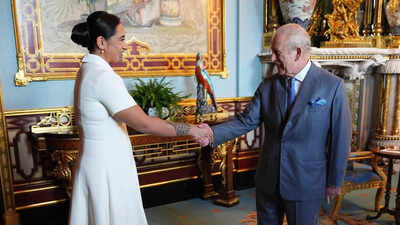
The world watches as the Maori Queen meets King Charles during his historic visit to London / Picture: @TheRoyalFamily

Buckingham Palace witnessed a remarkable royal moment this week as New Zealand’s Māori Queen Ngā Wai Hono i te Pō met King Charles III during a landmark visit to London that has now attracted attention across the Commonwealth.The audience marked the first official meeting between the British monarch and the young Māori Queen at Buckingham Palace since she ascended the throne of Kingitanga in 2024 following the death of her father, King Tuheitia. Aged just 29, she has quickly become one of the most watched Aboriginal leaders in the world, with her appearance alongside King Charles sparking huge interest from New Zealand and the UK.Photos released from the palace showed the two leaders having a heated conversation during a week of royal events in London. While ceremonial on the surface, the meeting had a deeper meaning for many who watched closely.For the Māori community, it represents the continuation of centuries-old relationships between Aboriginal leaders and the British Crown. For watchers of the British royal family, it provides a clear picture of how the modern monarchy is increasingly engaging with Indigenous voices, youth leadership and environmental causes.The meeting comes as conversations around colonial history, treaty rights and representation become more prominent across the Commonwealth.

Why is the Maori Queen’s visit important?

The Māori Queen’s visit isn’t just for royal tradition or formal photos.Behind palace walls, discussions reportedly focused on issues affecting the future of younger generations, including climate challenges, indigenous leadership, economic opportunity and youth empowerment.According to representatives of the Kīngitanga movement, Ngā Wai Hono i te Pō used the visit to highlight how indigenous knowledge and modern global leadership can work together to solve major world problems.This information appears to be of great relevance to King Charles’ long-term interests. Long before he became monarch, Charles spent decades advocating for environmental protection, sustainable development and interfaith dialogue. Palace watchers point to a clear overlap between the king’s priorities and the Māori Queen’s growing international platform.The timing of this meeting is also important.New Zealand will move steadily towards the 200th anniversary of the Treaty of Titiritio Waitangi in 2040, a treaty signed by Māori chiefs and representatives of the British Crown that still shapes political and social debate today. Issues surrounding Aboriginal rights, treaty obligations and national identity continue to dominate New Zealand’s public conversation, giving the Buckingham Palace meeting additional symbolic significance.

Prince William meets young Māori entrepreneurs

The Maori Queen also held talks with Prince William at Windsor Castle before meeting King Charles, another historic moment during her visit to the UK.Their discussions reportedly focused on young people, environmental action and Indigenous-led initiatives, topics that are increasingly important to royal diplomacy for younger generations.Four young Māori entrepreneurs accompanying the Queen on her visit to the UK have been invited to take part in celebrations related to the King’s Trust, the charity founded by King Charles nearly 50 years ago. The group attended high-profile events at Buckingham Palace and the Royal Albert Hall, using the opportunity to showcase Māori innovation and community-driven businesses.The presence of young Māori business leaders adds a contemporary touch to the royal visit and reflects the Māori Queen’s wider focus on creating opportunities for younger generations, rather than relying solely on ceremonial traditions.This generational change is one reason the queen has attracted increasing global attention since she ascended the throne last year. Unlike older royal figures associated primarily with ritual, Ngā Wai Hono i te Pō represents a youthful leadership style that blends Aboriginal traditions with modern activism, diplomacy and global outreach.

The future of the Commonwealth relationship

For many Britons, images of Buckingham Palace feel different to the typical royal audience.There is history in the room, but there is also a sense of transition.The meeting reflected on how the relationship between modern governments and Aboriginal communities is evolving. Debates over colonial history, reparations, cultural recognition and Aboriginal representation continue to rage in countries with links to the Commonwealth. In this context, the sight of King Charles welcoming the Maori Queen takes on symbolic and political significance.The moment also highlighted changes in royal diplomacy itself.Modern royal events are no longer purely focused on statecraft and ceremony, but are increasingly centered around social impact, climate issues, youth opportunities and cultural identity. The Maori Queen’s London tour brings all these themes together in one of Britain’s most historic royal settings.For Buckingham Palace, it was another reminder that the monarchy’s global influence increasingly depends on how it engages with a rapidly changing Commonwealth.It was a defining international moment for the Māori Queen, placing her firmly on the world stage.
Eric Swalwell, wife Brittany Watts split after former congressman sexual assault accusations: report

0

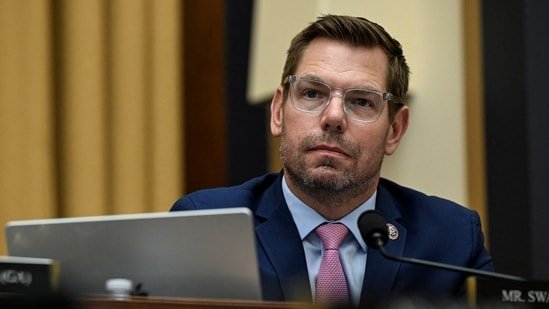
Eric Swalwell and his wife of nine years, Brittany Watts The two reportedly separated after explosive accusations against the Democratic congressman.

Eric Swalwell has been accused of sexually abusing multiple women. (Reuters)

Swalwell45, suspend his california On April 12, he entered the gubernatorial campaign after multiple women accused him of inappropriate behavior, including sending lewd and unwanted messages, drugging, raping and strangling them.

The sexual abuse allegations have reportedly left Watts shaken and he is trying to take things “day by day,” according to People Magazine. A source close to the couple said there was “no way” Watts knew about the allegations against Swalwell before they were made public. Swalwell has denied the accusations.

ALSO READ | Chuck Edwards Family: Republican lawmaker accused of sexual misconduct with former aide

However, Watts was reportedly recently spotted without her wedding ring, and People has learned the two are separating. Watts married Swalwell in 2016 and now lives with their three children – Nelson, 8, Cricket, 7, and Hank, 4.

Where do Eric Swalwell and Brittany Watts stand?

“She is focused on protecting her children and doing the best she can to deal with this painful situation,” a source told the publication. Additionally, they said Watts “will never in any way condone or excuse any of Eric’s actions.”

“It’s clear that Eric has incredible tactics with his double life – he’s deceived everyone,” the source added. They added that “the whole thing is devastating” and that Watts is “taking things day by day, prioritizing the stability and privacy of his children.”

Elaborating on Watts’ current situation, the source noted, “She has no idea what’s going on, and she’s grappling with the same shock, hurt, and disbelief that those close to her family are feeling. She’s been handling this with dignity and discretion — and I believe that’s for the sake of her children.”

The source also described Watts as “very strong, successful and very capable of leaving him.” However, neither Swalwell nor Watts confirmed their separation.

When Swalwell announced he was suspending his campaign for governor, he first apologized to his wife. The statement on

How the case against Swalwell unfolded

Swalwell was first accused of sexual assault by a former employee on April 10, along with three other women. Days later, the two women appeared in CBS News interviews alongside political social media influencer Cheyenne Hunt, whose video of Swalwell’s accusations went viral.

A few days later, Hunter said she received letters from more than 30 women who claimed to have had similar experiences with Swalwell.

Iran is threatening undersea cables. The world’s “digital bottlenecks” have never been more vulnerable

0

MELBOURNE: Earlier this week, Iranian state media laid out a plan to charge undersea internet cable operators in the Strait of Hormuz for access to what they say is Iran’s offshore territory.

Iran is threatening undersea cables. The world’s “digital bottlenecks” have never been more vulnerable

The suggestion came after Iran warned that several vital cables in the strait were vulnerable points for Middle Eastern economies.

Iran’s comments exposed an invisible foundation of the Internet and globalization itself: a network of more than 500 undersea cables that carry more than 95 percent of international data traffic.

We might think of the Internet as existing in a kind of virtual cloud. But its physical foundations are fragile—and that vulnerability is becoming a very real geopolitical issue.

Bays, straits and cables

Several of the world’s most important submarine cable routes pass through the Middle East. Narrow sea lanes through the Red Sea, Bab el-Mandab, Suez Canal and Strait of Hormuz also serve as “digital choke points”.

These maritime corridors connect major economic centers in Europe, Asia and Africa. In 2024, a submarine cable incident in the Red Sea disrupted approximately 25% of Internet traffic between Europe and Asia.

Iran has not ignored the strategic importance of undersea cables. Damage to these cables, whether accidental or intentional, can have serious consequences.

Looking at the bigger picture, the message is unmistakable. Digital infrastructure can provide countries with strategic leverage, but it is also a potential target.

digital infrastructure

In the past, critical infrastructure was oil pipelines, ports or power grids. But data infrastructure is equally important to national and economic security.

The core problem with submarine cables is the concentration of infrastructure. Many cables are bundled together along the same undersea routes and pass through a handful of offshore chokepoints.

This creates a dangerous single point of failure. Cable cuts (whether intentional or accidental) can reduce connectivity in multiple areas at once.

While cable breaks are not uncommon, repairs can be difficult—especially in contested or militarized waters. Repairing ships requires safe access, international coordination and time.

fragmentation and destruction

A severe submarine cable disruption could have far-reaching consequences. One immediate impact is the fragmentation of global connectivity. The ability we now take for granted to communicate with anyone, anywhere could take a major hit.

Areas that rely heavily on fragile cable lines may experience degraded internet performance, communications outages or financial instability.

Countries lacking backup infrastructure, particularly developing countries in parts of Africa, the Middle East and South Asia, will be disproportionately affected.

Financial markets are also fragile. Extremely fast and reliable data flows underpin high-frequency trading systems, global payment networks and international banking transactions.

Even brief disruptions can cause markets to move rapidly, delay trading and leave investors feeling uncertain.

With much of the global economy so interconnected, digital instability in one region could quickly trigger global financial shockwaves.

Insurance markets, the shipping industry and energy supply chains will also face greater uncertainty if cable disruptions coincide with conflicts or instability in major maritime trade routes such as the Strait of Hormuz or the Suez Canal.

Military field

The military and strategic consequences of a cable outage could be even more serious. The armed forces rely on secure remote communications and real-time coordination.

When you get down to it, everything from command and control systems to drone operations and logistics planning relies on undersea cables. Damage to these networks will reduce force effectiveness, make coordination with allies more difficult, and make miscalculation more likely.

Cable sabotage is not an overtly provocative act like a conventional attack on a military target. It’s difficult to pinpoint who did it – cases such as the Baltic cable break are often blamed on Russian behavior – and the legal situation is murky.

This ambiguity creates the risk of conflict escalation, as states may struggle to determine whether damage was accidental, criminal, or an act of war.

The digital world has a physical basis

The US-Iran conflict has delayed the construction of new undersea cables. It also highlights a broader reality: the foundations of the digital world are real and concrete, and not invulnerable.

Any deliberate targeting or destruction is not just a local incident. It will have repercussions in global communications, economic and security systems.

The seafloor has become a zone of geopolitical contestation—and the consequences of disruption could affect the world’s stability for years to come. GRS

GRS

This article was generated from automated news agency feeds without modifications to the text.

Spotify stock drops thousands of dollars as Drake releases three albums; Apple Music also faces problems

0

Spotify and apple music encountered problems on Friday as many people flocked to these platforms to listen to the rapper DrakeThree new albums – Habitat, Bridesmaids and Iceman.

Thousands of Spotify users were shut down after Drake released three albums together. (no splash)

According to DownDetector, as of this writing, more than 5,000 people have faced Spotify issues. More than 500 people have also logged issues with Apple Music.

Spotify, Apple Music outages elicit reaction from Drake fans

People immediately linked the outage to the platform’s sudden surge. On DownDetector, someone wrote “FREEZE THE WORLD” in reference to the Grammy Award-winning ICEMAN album. Another quipped: “Iceman froze Spotify and Apple Music. Only a goat could do that.”

ALSO READ | Drake Habibti Meaning: The rapper has previously used an Arabic term in this 2020 track

The issue seems to be temporary, as someone noted that the issue works for them “right now.” The number of complaints has also dropped significantly to more than 2,500, according to DownDetector. The main complaints people have are about issues with the app.

As for Apple Music, their users don’t have many complaints and praise Drake’s album. One person wrote: “OMG this is the best album ever and both songs are 2 perfect 10/10s.” Another user compared Spotify’s problems to those of Apple Music, saying “A certain app is so bad I’m considering switching to Apple Music.”

On X, people also started commenting on the outage. One person responded to Spotify’s post and said “Drake may temporarily shut down the app!!! I’m so happy!!!”

Another user pointed out that YouTube Music also crashed wrote “Spotify, Apple Music, YouTube Music. All three collapsed at the same time. Beyoncé took down iTunes with one album in 2013. Drake took down three platforms with three albums. This is not a music decline. This is an infrastructure incident.” However, DownDetector did not notice complaints about YouTube Music.

In fact, one person noted that they were listening to ICEMAN on YouTube because both Spotify and Apple Music were temporarily unavailable. “Ever since Spotify and Apple Music went down, Iceman has been focusing on yt music,” they wrote.

Drake initially planned to release “ICEMAN,” but made the surprise announcement that he would be releasing two more albums. This was completely unexpected and shocked fans. As the song title surfaced on social media, fans flocked to their music streaming apps to see what Drake had to offer.

While Spotify is now back on for most users, if in individual cases it doesn’t open, you can try restarting the app, switching networks (Wi-Fi/data), logging out/in, or clearing cache.

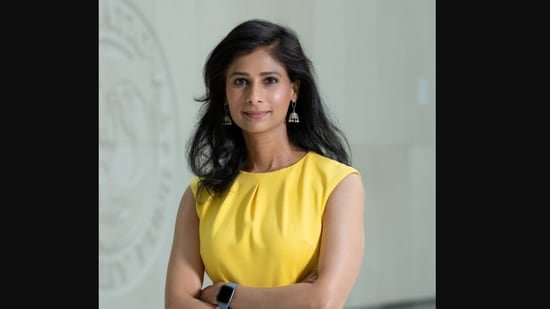
Gita Gopinath points out lack of female representation in high-level US-China talks

0

Former First Deputy Managing Director of the International Monetary Fund (IMF), Geeta Gopinathpointing to the lack of female representation in bilateral meetings between U.S. President Donald Trump and Chinese President Xi Jinping.

Gita Gopinath is the Gregory Coffey and Aniya Coffey Professor of Economics at Harvard University. (LinkedIn/Gita Gopinath)

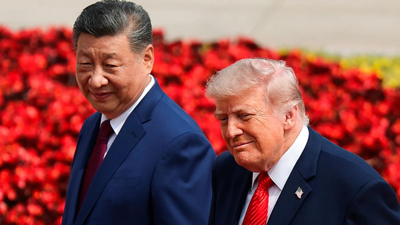
“A picture of the end of meritocracy: a meeting of the two largest economies, but not a single woman at the table,” said the leader, who currently serves as the university’s Gregory and Aniyah Coffey Professor of Economics. Harvard Universitytweeted.

Also read: Special Xi-Xi meeting: Experts explain the secret power game in the first handshake during the visit to China

She included in her X post a photo of a meeting between Trump and Xi Jinping, in which women from both delegations were absent from the table.

“We somehow got back to the idea that it’s your network that’s important rather than your abilities — and that’s important [in terms of] Whether you get a seat at the table or not,” she told The Guardian of the situation.

“Given there are so many talented women around the world, it’s puzzling why you would end up with a single-sex table,” she added.

Halima Kazem, associate director of the Feminist, Gender, and Sexuality Studies Program at Stanford University, echoed Gopinath’s sentiments.

Also read: ‘He’s 100% right’: Trump agrees with Xi Jinping on US’s ‘down country’, blames Biden

she told way out

Kazem continued, “This is not due to a lack of qualified women – both countries have ample women in their diplomatic and security agencies. It is a choice about what kind of authority to project: masculine, militarized and exclusive,” adding, “When two superpowers exercise power in this way, they are jointly defining what ‘serious’ diplomacy is and who is excluded.”

During this high-level meeting, President Donald Trump and Chinese President Xi Jinping discussed several global issues. The two leaders met at the Great Hall of the People in Beijing on Thursday. Xi Jinping was reportedly hosting Trump at the secretive Communist Party leadership compound in Beijing.

Trump arrived in Beijing with some of America’s biggest CEOs, including Elon Musk, Tim Cook, Jen-Hsun Huang, Larry Fink and others. A handful of women also accompanied him on the trip, including Trump’s daughter-in-law Lara Trump, Citigroup CEO Jane Fraser and Meta President Dina Powell McCormick.

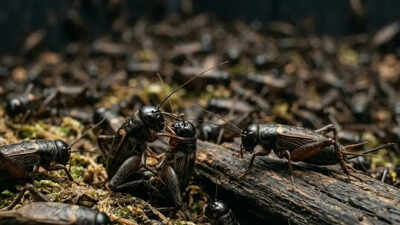
Shocking new research suggests the 370 billion crickets farmed each year may actually feel pain

0

令人震惊的新研究表明,每年养殖的 3700 亿只蟋蟀实际上可能会感到疼痛Proceedings of the Royal Society B Question the old notion that crickets are simple creatures that respond to stimuli like robots. The scientists noticed something interesting: Crickets seemed to take care of themselves by grooming only injured limbs and ignoring those that were intact. This suggests that the way they feel pain may be more complex than we previously thought. So there is now a discussion about whether these insects have some form of consciousness, which makes us think about how ethical it is to continue an industry without proper welfare legal guidance.

Research shows 370 billion humans Polygonum May feel pain

Researchers have found that house crickets (Acheta homeus) don’t just react to heat or injury and immediately flinch; They display “flexible self-preservation.” A study in the journal Proceedings of the Royal Society B points out that after being injured, crickets will repeatedly groom and protect the specific injured area. This behavior suggests that the insect’s nervous system is treating the injury as a lasting negative state rather than a brief reflex. This distinction is crucial in studies of animal perception because it suggests the existence of a sensory experience of pain.

Why Crickets’ Behavior Shows True Emotions

Nociception involves only the detection of noxious stimuli. Pain, on the other hand, is how we experience hurt emotionally. Research shows that crickets don’t just sense danger; Their protective actions vary depending on the situation. When scientists applied different thermal or mechanical pressures, the crickets showed a preference for protecting injured limbs. This behavior suggests brain responses similar to those of vertebrates. A study in the journal Proceedings of the Royal Society B notes that crickets appear to be able to process sensory details into complex internal states that resemble pain.

370 billion reasons to rethink animal welfare

According to the Journal of Insect Food & Feed, raising 370 billion crickets on farms each year can cause tremendous suffering. Currently, many farmers kill the insects by chopping, boiling or slowly freezing them because they believe crickets cannot feel pain. If crickets have the ability to feel pain, these methods could represent a significant animal welfare issue. As a result, research shows there is an urgent need for the industry to create humane methods of killing crickets and provide better living conditions. This approach should reflect standards applicable to farm animals such as cows and pigs to reduce suffering at scale.

Why invertebrates are being left behind

The discovery of insect pain created a huge regulatory vacuum. Most animal welfare laws around the world explicitly exclude invertebrates, leaving billions of sentient creatures without legal protection. Ethicists are now calling for a precautionary principle approach: if an animal is likely to suffer, we should act as if it did suffer. This could lead to new international standards for insect rearing, transport and killing, fundamentally changing the economics and operations of the global alternative protein market.

How menstruation is weaponized in war

0

Myanmar’s military junta has reportedly expanded a ban on the transport of menstrual products through major routes in the country as part of the country’s ongoing civil war.

How menstruation is weaponized in war

The attack on sanitary napkins appears to be an extension of the military’s so-called “four cuts” strategy, which aims to cut off the resistance’s supply of food, money, intelligence and recruits.

Menstrual products seem to have been added to this logic – and in the process stolen women’s dignity and basic human rights. While there has been no official communication about the ban, a spokesperson for local NGO Sisters2Sisters said local soldiers said the crackdown was carried out because they believed the products were “used by the People’s Defense Forces for medical reasons and as support for their feet and boots to absorb sweat and blood.”

As medical experts point out, the logic here is absurd because sanitary napkins are not a good substitute for actual classification. Furthermore, international law explicitly prohibits the targeting of medical supplies during conflicts.

The consequences of restricting access to menstrual products go beyond being inconvenient and can be particularly dire during times of conflict.

Laws governing armed conflict provide only limited protection. While women are considered objects of “special respect” under international humanitarian law, the focus is on women who are pregnant or mothers or potential victims of sexual violence.

Ironically, this gender essentialism ignores an important component of reproductive biology: menstruation. Persistent cultural taboos about talking about menstruation across cultures have resulted in it becoming a neglected part of everyday life. This also means wider application for civilian protection.

In theory, the law requires that basic needs be provided to civilians, and the language should be broad enough to cover menstrual products.

However, in reality, neutral language defaults to a male perspective, and the specific needs of menstruating people have not been recognized and addressed. While this is slowly starting to change globally, menstrual products are still often viewed as a luxury rather than a basic need.

Menstruation remains a neglected part of the impact of conflict on daily life. But Myanmar’s deliberate targeting of menstrual products goes a step further, turning menstruation into a weapon of war.

Restricting access to menstrual products limits movement, damages health and robs people of their dignity. This is an insidious form of gender-based violence. And the taboo surrounding menstruation means we don’t know how common this ban actually is in Myanmar. It also raises the question of how many people in other countries have been targeted by such products.

Acknowledging the full reality of how conflict affects women and others who menstruate means acknowledging all of it—including the parts that are hard to discuss. Binh Duong

This article was generated from automated news agency feeds without modifications to the text.

Donald Trump talks US-China talks

0

Donald Trump on US-China negotiations: 'Xi Jinping also wants to see Strait of Hormuz open'

President of the United States Donald Trump Chinese President said Xi Jinping The two leaders discussed the ongoing Iran conflict and global energy disruptions in high-level talks in Beijing, hoping to reopen the Strait of Hormuz.In an interview with Fox News after his meeting with Xi, Trump said the two leaders agreed that the strategically important route, which has been effectively closed since the outbreak of the war with Iran in late February, must be reopened to stabilize global energy supplies.“He wants to see the Strait of Hormuz open,” Trump said of Xi. “He said if I could help in any way, I’d be willing to help.”Before the conflict, about 20% of the world’s oil passed through the Strait of Hormuz, and the prolonged disruption caused a sharp rise in global crude prices and raised concerns about a broader economic slowdown.Trump said Xi also opposed any proposals to impose tolls on ships crossing the strait and expressed interest in China potentially buying more U.S. oil in the future to reduce reliance on Gulf energy supplies.

Iran, economy dominate Trump-Xi talks

Although Trump downplayed the issue before traveling to Beijing, the Iran conflict became the main focus of the two leaders’ two-hour meeting at the Great Hall of the People.U.S. Secretary of State Rubio said before the summit that Washington would urge Beijing to pressure Tehran to end the conflict.The Associated Press quoted Rubio as saying that “the economy is collapsing because of this crisis,” and he warned that long-term instability will eventually harm China’s exports.China has publicly criticized the United States and Israel for their strikes against Iran, but analysts say Beijing wields considerable influence as Iran’s largest trading partner.

Trump praises relationship with Xi Jinping despite tensions

Trump concluded his visit by insisting that relations between Washington and Beijing were improving despite differences over Iran, Taiwan and trade.Trump claimed in the Truth Society post that Xi Jinping congratulated his administration on its “tremendous success” and said the Chinese leader’s comments about the United States being a “declined country” were directed at former President Joe Biden, not the current administration.“Two years ago we were actually a nation in decline,” Trump wrote. “But now, the United States is the hottest country in the world.”Xi also hosted Trump at Zhongnanhai, a compound for Chinese leaders usually reserved for special diplomatic events, in what observers viewed as a personal gesture to the U.S. president.

Taiwan remains a key flashpoint

Despite the cordial public atmosphere, Taiwan remained a sensitive issue during the summit.According to the Associated Press, Xi Jinping privately warned Trump that improper handling of the Taiwan issue could lead the two countries to “conflict or even conflict.”Rubio later said U.S. policy toward Taiwan remained “unchanged” and warned that it would be a “terrible mistake” for China to try to seize the self-ruled island by force.Trump and Xi also discussed a possible trade deal that would include increased Chinese purchases of U.S. agricultural products and Boeing aircraft, as both sides try to ease economic tensions amid broader geopolitical uncertainty.

‘Are there elections in India?’: NRI blocks US media with 17-word reply

0

While attending a senior dinner party with American colleagues, national research institute A series of remarks led them to question the “bubble” in which some people live. From being told lasagna doesn’t exist in India to being asked if elections exist, this pro took to Reddit to share a look back at what they call “confident ignorance” displays. The post has since sparked a discussion about the strange misconceptions some Americans have about the world’s largest democracy and its modern way of life.

The American man's question left the NRI speechless. (Representative image). (no splash)
The American man’s question left the NRI speechless. (Representative image). (no splash)

“You can’t get lasagna and other table treasures in India,” the Reddit user wrote, adding, “I was at a dinner party recently and a co-worker’s cousin (the quintessential redneck) made a series of incredible comments. I wanted to share them here to see if anyone else has encountered this particular brand of confident ignorance.”

Also read: Indian woman in US shares why Indian work experience ‘absolutely important’ abroad: ‘It helped me get my first job’

The conversation took a strange turn when the man, who apparently believed that 1.4 billion people were completely cut off from the global cuisine, claimed with all sincerity that “you can’t get lasagna in India.” What follows is a puzzling question about the “yellow animals” that Indians use to commute.

The tone becomes condescending. American Casually remarking that he had no problem with immigrants “as long as they work”, the NRI found the comment ironically insular given his own professional success. The man further expressed his confusion, asking if it was possible to “go” to India, making it unclear whether he was questioning travellers’ freedom or basic transportation in the country.

The “finale” comes when the man asks if there are elections in India. Recalling the ensuing conversation, the NRI wrote: “Are there elections in India?” This was the third time I had heard this statement in the United States (the previous two were from Uber drivers). I just looked at him and said, “Yeah, that’s why we have a prime minister, not a supreme leader or a king.” It’s exhausting that some people here live in an absolute bubble about the rest of the world, especially when it comes to the largest democracy in the world. “

What is social media saying?

The post drew mixed reactions. While some understood the article, others took issue with it.

One person wrote, “Haha! You get real illiterate comments. Mine was ‘you speak English very well’ and I thought ‘you too’. I’ve started throwing the same comment back at them. ‘So, could you ever want to go back to India?’ – ‘yeah we’re not settlers’. The silence after my reply is like a drug to me now.” OP responded: “Awesome, I love these responses. My barber once said, and I quote – ‘So, you’re from the richer side of India, right? Because your English is… I mean, if you don’t tell, I won’t know. Because I know most of India People unfortunately live like in the movie…um…I can’t remember the name…Slumdog Millionaire’. I then laughed it off with “well, good for you” but now I have a great response, thanks a lot for those damn “poverty porn”.

Also read: Rs 500 to $1000 I Hojata'”>Indian woman in the US was shocked after paying $250 to fix a small leak: “Indian me” $500 to $I was born in the year 1000

Another commented: “OP, you need to develop a backbone.” OP responded: “What do you mean? What does this have to do with my spine?” The Reddit user replied, “These questions are not that bad, ignorance is not uncommon anywhere, in fact I have come to realize that the more ignorant you are, the happier you will be. Also, my wife is white. When we visit India, she gets more questions from her Indian relatives than you can imagine.”

OP responded: “You’re right. There’s nothing particularly surprising about it. This happens in rural India too. The average middle class Indian is equally ignorant and uneducated about anything outside their small town and local community. Cultural isolation breeds the exact same bubbles around the world. Yet. , the purpose of this article is not to emphasize ignorance; but to emphasize the condescending tone. I assume that your Indian relatives may not ask questions of them. Ordinary middle class Indians are usually very humble when talking to strangers, especially when they know that the other person is well educated and doing well for themselves.”

(Disclaimer: This report is based on user-generated content on social media. HT.com has not independently verified these claims and does not endorse them.)

After Trump and Xi Jinping talks, Iran is done and should reach a deal to end the war

0

BEIJING, US President Donald Trump said Iran is “done” and must negotiate a deal to end the ongoing conflict or face destruction.

After Trump and Xi Jinping talks, Iran is done and should reach a deal to end the war

“Either make a deal or destroy Iran,” Trump told Fox News in an interview on the final day of a three-day trip to China. He emphasized that the United States cannot “let Iran possess nuclear weapons.”

“They’re screwed now; they can make a deal or they’re going to be wiped out,” Trump said after an in-depth discussion with Chinese President Xi Jinping on a variety of issues, including Iran.

Trump is scheduled to meet Xi Jinping again on Friday, then have lunch before returning home to wrap up his visit to China.

Trump noted in the interview that “President Xi would like to see the United States and Iran reach an agreement.” He added that Xi Jinping is willing to help, saying: “If I can help in any way, I am willing to help.” Trump expressed his belief that China also does not want Iran to have nuclear weapons.

In addition, Trump also mentioned that General Dan Kaine, chairman of the Joint Chiefs of Staff, told him that the United States could decisively suppress Iran’s Kharg Island in “four or five minutes.”

When asked about China’s support for Iran, Trump said the topic had been discussed with Xi Jinping, who assured him that China “will not provide military equipment to Iran.” China currently buys 90% of Iran’s oil and maintains a strategic partnership with Tehran, including close military ties.

Trump described Xi Jinping as a “passionate man” who “only cares about business.” He appreciated it, saying: “I like that – it’s a good thing. There’s no competition.”

He defended his positive remarks about his relationship with Xi Jinping, saying he is often criticized for praising certain leaders but that he respects Xi Jinping as the leader of China, a country of nearly 1.5 billion people.

He called the military honor guard ceremony that welcomed him “incredible,” adding, “If you go to Hollywood, you won’t find anything like this.”

Trump reiterated that his approach to relations with China has been successful, saying “we’re doing great with China” and pointing to his deep friendship with Xi Jinping. “He’s a great leader. He’s been here a long time, very strong, very strong. There’s no doubt about it. We have a great relationship,” he said.

Trump again defended military actions against Iran, saying they were much shorter than previous U.S. conflicts, such as those in Vietnam and Iraq.

He said that Iran’s navy has been eliminated and currently lacks air force and air defense capabilities. “They built it up a little bit. We’re going to tear it down one day,” he declared.

Trump, who brought in top CEOs from U.S. companies including Tesla CEO Elon Musk and Apple chief Tim Cook, said business leaders were doing very well.

He described the meeting with U.S. executives as a “good idea” but noted it was different from the original timetable.

Trump also mentioned that he encouraged Xi Jinping to “buy oil” from the United States, and Xi Jinping responded that he “liked the idea.”

“They’re going to go to Texas. We’re going to start sending Chinese ships to Texas, Louisiana and Alaska. I think that’s another thing that’s agreed upon. It’s a big deal,” he said.

He expressed a desire to see China open up its markets, saying: “If they open up their markets, it would be incredible for our company and I think it would be good for China as well.”

Trump mentioned that Xi Jinping agreed to order 200 Boeing aircraft during a “very good meeting” and emphasized, “They are big aircraft, a lot of them.”

In addition, he also asked China to use Visa for trade and said that China would buy a lot of American agricultural products, which he described as “great.”

This article was generated from automated news agency feeds without modifications to the text.