Home Blog Page 698

India a natural partner in building inclusive, trustworthy AI; Sri Lankan President Dissanayake acknowledges India’s security interests in Indian Ocean India News

0

India is a natural partner in building inclusive, trustworthy AI; Sri Lankan President Dissanayake recognizes India’s security interests in the Indian Ocean

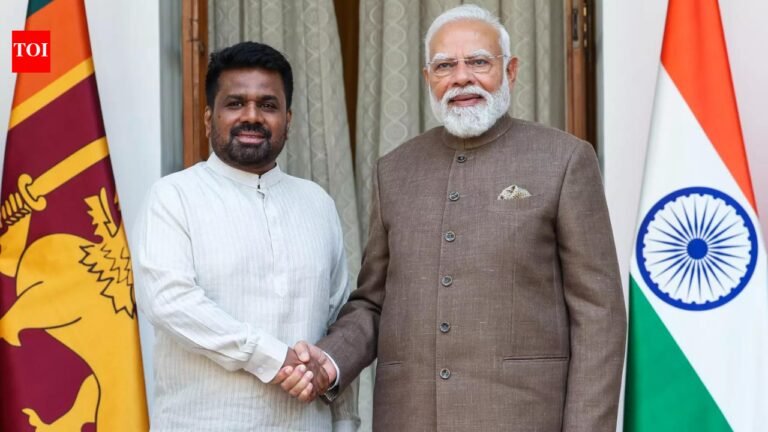
In an exclusive interview your Sachin Parasharpresident of sri lanka Anura Kumar Dissanayake Talking about the importance of the AI ​​Impact Summit, he supported India’s legitimate security interests in the Indian Ocean and expressed Sri Lanka’s hope to resume ETCA negotiations in a progressive and transparent manner. you are visiting india Prime Minister Narendra ModiAI Summit invitation letter. You have spoken in the past about the disparity between countries in AI and the inability of some countries to leverage AI for development due to insufficient infrastructure. What are your expectations for this summit and its outcome documents? We congratulate India for hosting this important AI Impact Summit for countries in the Global South. The summit is not only important for technology, but also for partnerships. Sri Lanka sees this as an opportunity for India and Sri Lanka, and the wider South, to work together to shape AI governance. Artificial intelligence will define competitiveness, public service delivery and economic transformation. For a developing country like ours, access to infrastructure, research networks, and human capital development are crucial. This is the importance of cooperation.For Sri Lanka, the theme of this summit must be the democratization of AI infrastructure and the translation of global principles into practical partnerships in the global South. Sri Lanka has laid the foundation for AI-driven development, including the National Digital Public Infrastructure Framework, AI Governance Structure, Departmental AI Councils and AI Champions Program to build institutional capacity. We are also advancing initiatives to expand our sovereign data centers and AI computing capabilities, including partnering with hyperscale cloud providers and developing infrastructure to support AI-ready workloads. But it remains critical for countries like ours to have access to the global computing ecosystem, research networks, and advanced talent development. Initiatives like the Global AI Impact Share and the Trusted AI Share are important because they can help democratize AI resources and ensure that innovation is not limited to a few developed economies. The real impact of the summit will be in translating principles into practical partnerships and Sri Lanka stands ready to work with India. We are already building such pragmatic partnerships, for example, IIT Madras is hosting 25 Sri Lankan technology startups for six-week internships.What do you think about India’s focus on inclusive and human-centered AI and the fact that the AI ​​Summit is being held for the first time in the Southern Hemisphere? what is sri lanka What’s your stance on artificial intelligence regulation?India’s human-centric approach to AI is closely aligned with Sri Lanka’s own reform and development priorities. Sri Lanka supports a balanced and risk-based regulatory framework that protects citizens while encouraging innovation. Sri Lanka has enacted strong data protection legislation, strengthened its cybersecurity framework, and is establishing a structured AI governance structure to guide responsible adoption. Regional cooperation between Sri Lanka and India can promote interoperability, ethical safeguards and shared learning rather than fragmented standards. AI governance should foster growth, strengthen institutions, and expand opportunity. This is best achieved through partnerships. We see India as a natural collaborator in building a trusted and inclusive AI ecosystem.Looking back, how has your vision for India-Sri Lanka relations evolved over the past 18 months, given your party’s historical suspicion of India and the Indian government’s recent support for Sri Lanka’s economic recovery and aid following Cyclone Ditwa? The first country I visited as President was India; the first foreign leader I hosted as President in Sri Lanka was Prime Minister Narendra Modi. In recognition of India’s support to Sri Lanka under Prime Minister Narendra Modi’s leadership, including during the economic crisis, we confer on him the highest honor Sri Lanka bestows on a foreign leader – Sri Mithra Vibhushana. The ties between our two countries and peoples are deep, historic and civilized. When I visited India as President in December 2024, we adopted the India-Sri Lanka Joint Statement titled “Promoting a Community with a Shared Future”. Relations between our two countries now cover all areas of contemporary relevance to our peoples. India provided important support during Sri Lanka’s economic stabilization period. The same goes for India’s support in the context of cyclone Ditwa. Our relationship today is about structural integration and long-term growth. India is Sri Lanka’s largest trading partner. India is an important investor and the largest source of tourism. Just a few days ago, we welcomed a large number of Indians to Sri Lanka to watch the India-Pakistan T20 Cricket World Cup match. We are exploring expanding cooperation in energy connectivity and renewable energy; digital systems and public infrastructure; maritime security and Indian Ocean stability and security; ports, logistics and supply chains; skills and human capital development and a range of other areas. We are willing to consider all possible cooperation. The strength of Sri Lanka’s economy complements India’s growth trajectory. When Sri Lanka and India work together, it will enhance regional stability and economic resilience across the Indian Ocean region.Your government appears to be engaging in a difficult balancing act as it looks to secure Chinese investment without jeopardizing India’s security. As Sri Lanka hopes to finalize standard operating procedures for foreign research vessels this year, will it consider India’s concerns about not allowing ships with dual-use capabilities to dock in Sri Lanka? Sri Lanka pursues an independent foreign policy. At the same time, geography determines liability. We recognize India’s legitimate security interests in the Indian Ocean region. Our security is intertwined. We signed a defense cooperation agreement between the two countries. Sri Lanka will not allow its territory to be used to undermine the security of other countries. Stability in the Indian Ocean region is our common responsibility, and Sri Lanka will always work closely with India to jointly safeguard this responsibility. Negotiations on the Economic and Technical Cooperation Agreement remain at an impasse. You have emphasized economic freedom, but given growing economic ties, do you think now is the time to sign a deal?Sri Lanka believes that now is the best time to re-strengthen its economic engagement with India. Global trade dynamics are changing. India is expanding its trade architecture. Sri Lanka will explore how to integrate into this growth environment in a mutually beneficial manner. We hope to restart the discussion on ETCA in a progressive and transparent manner. We are expanding our free trade zone capacity and welcome Indian investment. In addition to the trade agreement, the port partnership between Sri Lanka and India offers huge opportunities. Sri Lanka’s ports have emerged as major transshipment hubs for Indian cargo. By deepening our cooperation, we can: position Sri Lanka as a logistics and value-added partner for Indian manufacturing; develop maritime services joint ventures; strengthen industrial connectivity; and integrate more closely into regional supply chains. Economic integration should create jobs in Sri Lanka and enhance the resilience of both economies. Our direction is clear: deepening cooperation with India, structural integration, common growth, and mutual benefit.
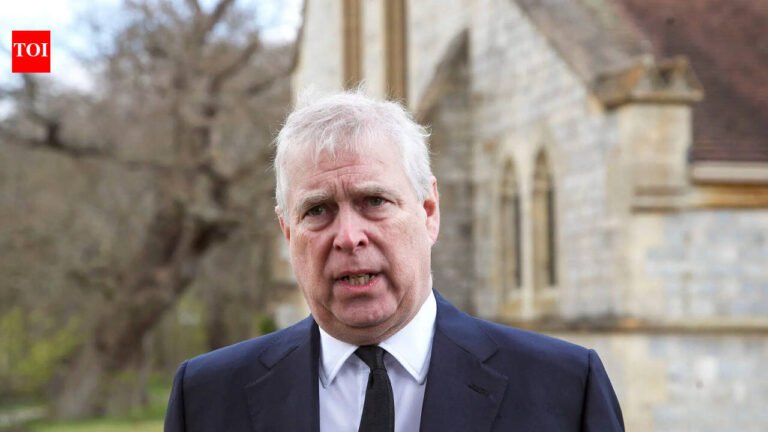
Epstein dossier: From beheading to murder – why former Prince Albert’s arrest is tame world news compared to Europe’s bloody history of royal treatment

0

Epstein Dossier: From beheading to murder – why former Prince Andrew’s arrest is tame compared to Europe’s bloody history of treatment of royals
Prince Andrew banned from private members’ club in London due to social ostracism

If Prince Andrew’s recent arrest sounds like royal drama, that’s only because the modern monarchy exists in a very subdued, embellished version of history. In the long and extremely violent story of the European throne, the brief detention was hardly an inconvenience. By historical standards, it falls somewhere between “an awkward afternoon” and “a somewhat unfortunate diary.”Because for much of Europe’s past, the royal family’s “trouble” didn’t involve lawyers and press statements. It involved betrayal, imprisonment, mutilation and public executions. The crown is more than just a symbol of power. It was a flashing target.Britain alone reads like a warning manual to anyone tempted by hereditary privilege. In 1327 Edward II was overthrown and murdered in captivity. Richard II was deposed and died under mysterious circumstances in prison, almost certainly being eliminated to prevent a resurgence. Then came Charles I, whose fortunes remain one of the most shocking political reversals in history. After losing the civil war to his own parliament, he was tried for treason and publicly beheaded in 1649. A king who was believed to rule by divine right was overthrown by his own subjects in full view of the public.France elevated the royal family’s downfall into a national spectacle. During the Revolution, Louis XVI and Marie Antoinette were not only stripped of power. They were guillotined before cheering crowds. The atmosphere of the execution was more that of a grim carnival than a solemn act of state. Almost overnight, royalty went from sacred to disposable.Russia’s attitude was even harsher. In 1918, Tsar Nicholas II and his family were executed in the basement by the Bolsheviks. There is no exile. There is no retirement. There is no ceremony. A dynasty that had ruled for centuries was suddenly violently wiped out.Even when monarchs were not executed, their endings were rarely gentle. Napoleon Bonaparte spent his final years in exile on a remote island in the Atlantic Ocean, effectively sentencing him to a slow decline in isolation. After World War I, Kaiser Wilhelm II fled to the Netherlands and lived out the rest of his life as a bitter relic of a vanished world.Against this backdrop, modern royal scandals feel almost ridiculously benign. The most serious consequences today are reputational damage, media scrutiny, and perhaps a temporary decline in public support. The tools of accountability have shifted from swords to headlines.Interestingly, pop culture captures this contrast perfectly. The Red Wedding in Game of Thrones is one of the most shocking scenes on television, and it wasn’t a crazy fantasy invention. It is inspired by real historical events, specifically Scotland’s “Black Supper” of 1440 and the Glencoe Massacre of 1692. In both cases, guests who had been entertained were betrayed and killed after the banquet. Young nobles invited to the banquet were dragged outside and executed. Families sheltering soldiers were murdered in their sleep.

‘Red Wedding’ #ForTheThrone Clip | Game of Thrones | Season 3

In other words, the fictional cruelty experienced by the audience is simply history dressed in slightly different costumes.This is the true transformation of monarchy. Once upon a time, kings lived in danger but wielded great power. Today’s royals live a secure life but have almost no power. Their power comes from symbolism, visibility and public goodwill, not military or divine claims.So if Prince Andrew’s arrest feels dramatic, history provides a rather dry punchline. His predecessors lost their thrones, kingdoms, and lives. Some members of the royal family disappeared overnight. Many people have never seen old age. At worst, he faces legal proceedings and a noisy news cycle. For the royals, this isn’t a scandal. It was the gentlest fate a monarchy ever had.

Thomas may choose Thrissur or Irinjalakudar for Kerala polls India News

0

Thomas is likely to choose Thrissur or Irinjalakudar for the Kerala polls

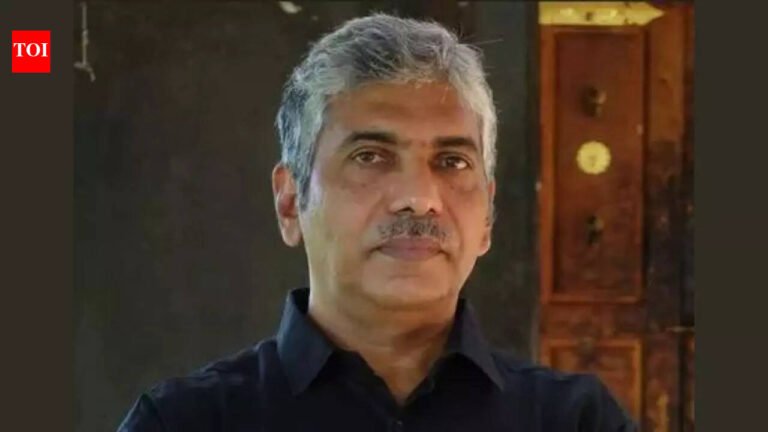
Thiruvananthapuram: The BJP is likely to field former deputy solicitor general Jacob Thomas from Thrissur or Iringalakuda assembly constituency in the upcoming assembly elections. It is understood that Thomas’ candidacy is more in the interest of the RSS than the BJP leadership in the state.Thomas announced his support for Prime Minister Narendra Modi and joined the Bharatiya Janata Party in 2021. He obtained party membership from JP Nadda, the then national president of the party. The central leadership has repeatedly relied on his independent assessment of political developments and organizational matters related to the BJP’s Kerala unit. However, the state leadership of the BJP failed to realize his full potential, which to some extent alienated him from the BJP activities in the state. From then on, he became more aligned with the RSS and its ideology.He made headlines in October 2025 when he joined the RSS Padasanchalan in Kochi wearing traditional RSS attire. Replying to questions, Thomas always said that RSS has no caste or religion, adding that the organization is committed to social welfare.According to BJP sources, sending Thomas to Thrissur or Iringalakuda will provide a legitimate reason for members of the Christian community to vote for the BJP candidate. They believe his public profile as an anti-corruption activist will make him an ideal candidate for all segments of society. Party supporters also point to his earlier confrontations with the SDF government and the unfair treatment he received from the political establishment as factors that could work in his favor as a candidate.Meanwhile, some leaders in the state unit of the BJP have expressed doubts about Thomas’ prospects in the two constituencies. According to them, Union Minister Suresh Gopi has been a huge disappointment as Thrissur MP and Thomas or any other BJP candidate may find it difficult to overcome this disappointment factor. The weak organizational structure of the BJP in Thrissur is also cited as a matter of concern.They also fear that the UDF’s better relations with the Christian churches may also be detrimental to the BJP. They point out that there is still a glimmer of hope for the BJP candidate. Gopi won 40,457 votes in the last assembly election from Thrissur assembly seat, although he came third. CPI’s P Balachandran’s lead is about 3%. According to people supporting Thomas’ candidacy in Thrissur, Thomas has a chance of winning as the BJP increased its vote share in the subsequent Lok Sabha elections.

Will businesses receive tariff refunds? What the Supreme Court ruled; ‘It could be a mess’

0

The U.S. Supreme Court voted 6-3 to overturn tariffs imposed by President Donald Trump under the International Emergency Economic Powers Act (IEEPA).

Costco has filed for a refund in lower court. (Reuters)

Liberal Justices Ketanji Brown Jackson, Elena Kagan and Sonia Sotomayor joined conservative Justices Amy Coney Barrett, Neil Gorsuch and Chief Justice John Roberts in voting to strike down the tariffs.

“The administration has interpreted IEEPA to give the president unilateral authority to impose unlimited tariffs and change them at will,” Roberts wrote. “This view would represent a transformative expansion of the president’s authority over tariff policy.”

Roberts noted that in the half-century of IEEPA’s existence, “no president has invoked the statute to impose any tariffs, let alone tariffs of this magnitude and scope.”

He added that the lack of historical precedent, “combined with the extent of the president’s now claimed authority, suggests the tariffs are beyond” Trump’s authority.

Also read: Trump tariffs live updates: US Supreme Court rejects Trump’s global tariff ruling, says it ‘exceeded his authority’

Justices Samuel Alito, Clarence Thomas, and Brett Kavanaugh dissident.

“The tariffs at issue here may or may not be wise policy,” Justice Kavanaugh wrote in his dissent. “But they are clearly lawful from the text, history, and precedent.”

Justice Clarence Thomas wrote in his dissent that “neither the statutory text nor the Constitution provide a basis for ruling against the President.”

He added, “The courts have long conveyed to Congress that it can give the president broad discretion in enforcing matters related to other countries’ trade and commerce regulations.”

Also read: Why did the US Supreme Court overturn Trump’s global trade tariffs? Four points of explanation

Will businesses receive tariff refunds?

The Supreme Court did not discuss whether companies can recoup the billions of dollars they have paid in tariffs.

Many companies, including retailer Costco, have petitioned lower courts for refunds.

In his dissent, Justice Kavanaugh noted that the process of refunding levied duties can be complicated and “a mess.”

“The court did not address today whether the government should refund the billions of dollars collected from importers and, if so, how. But as acknowledged during oral argument, the process can be ‘messy,'” he wrote.

National Retail Federation’s reaction

The National Retail Federation (NRF) said the “ruling on tariffs provides much-needed certainty to American businesses.”

“Clear and consistent trade policy is critical to economic growth and creating jobs and opportunity for American families,” the NRF said. “We urge the lower courts to ensure smooth refunds of tariffs to U.S. importers.”

“Refunds will boost economic growth and allow companies to reinvest in their businesses, employees and customers.”

The NRF is one of the top trade groups for retailers and manufacturers.

Australia chase target 10 overs to beat Oman by 9 wickets in final T20 World Cup group match | Cricket News

0

Australia chased target 10 overs to beat Oman by 9 wickets in final T20 World Cup group match
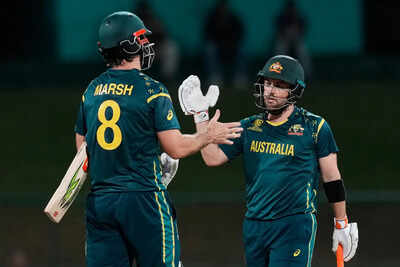
Australia celebrates after winning the T20 World Cup cricket match (AP Photo/Eranga Jayawardena)

Australia ended their disappointing T20 World Cup campaign with a resounding win over Oman, but the win came too late to change their fortunes. They are already out after losses to Zimbabwe and Sri Lanka, so this game is just for pride.Australia bowled first and dominated Oman. Adam Zampa was the star with the ball and took four wickets while Xavier Bartlett and Glenn Maxwell Each took two wickets.

Why does Pakistan no longer trust Babar Azam? 2026 T20 World Cup

Oman struggled to score and were eliminated with just 104 points in 16.2 overs. Wasim Ali was Oman’s top scorer with 32 points but the rest of the team failed to form partnerships.After that, Australia quickly pursued the target. Captain Mitchell Marsh played an aggressive innings and scored 64 not out while Travis Head scored 32 runs. They hit many boundaries and sixes to make the chase look easy. Australia ended the match with just 9.4 overs, one of the fastest teams in the tournament chasing a 100-plus target.Marsh and Hyde put on a formidable partnership of 93 runs together and attacked the Omani bowlers from the start. Their batting helped Australia win by nine wickets.As impressive as the win was, it doesn’t hide how poor Australia’s campaign was.Their early exit shocked fans and pundits alike, with many now calling for a major review of the team’s performance and future plans.In the game, the Oman team achieved some results early in the game, but they kept conceding goals. The Australian bowlers continued to pile on the pressure and Oman could not recover. Australia finally looked like a strong team, but at a time when performance no longer mattered.

Never obtained H-1B, unable to return home for 8 years: 30-year-old Indian man died in the United States, fundraisers said he was under great pressure

0

Never obtained H-1B, unable to return home for 8 years: 30-year-old Indian man died in the United States, fundraisers said he was under great pressure

A fundraiser for Sasikanth Reddy Donthireddy, 30, who died of cardiac arrest in the United States claimed the Indian man was under a lot of stress because he had never participated in the H-1B lottery. The fundraiser aims to raise funds to bring Reddy’s body back to India. Sasikanth came to the United States to study in 2018 and completed a dual master’s degree. But despite several attempts, he was never selected for the H-1B visa lottery. “Repeated disappointments and visa uncertainty have caused him significant stress, particularly over the past few months,” the appeal said. Sasikanth’s story at a time when the H-1B visa program is in disrepute for alleged fraud and abuse fundraiserreveals the struggle of Indians in the United States to find ideal jobs. This shows that despite his strong credentials, he was never picked and he continued to work long hours without giving up. “He continued to work long hours and did not give up. In the early morning of February 16, he complained of chest pain. He was immediately taken to the hospital, but unfortunately, he could not be rescued.” “Sasikant has not been able to visit his parents since he moved abroad in 2018. For nearly eight years, they have been waiting for their son to come home. They want to welcome him back with pride and joy. Instead, they are now waiting to take him home for the last rites,” it said. “His grieving parents are facing not only emotional pain but also financial hardship. The cost of transporting his remains back home and arranging the last rites is prohibitive. We ask for your support: Help repatriate Sasikanth’s remains; Support his parents at this heartbreaking time,” the statement said.

Shashi Tharoor: Congress paradox: Shashi Tharoor praises AI summit, youth leaders protest live | India News

0

Congress paradox: Tharoor praises AI summit while youths protest topless at the venue

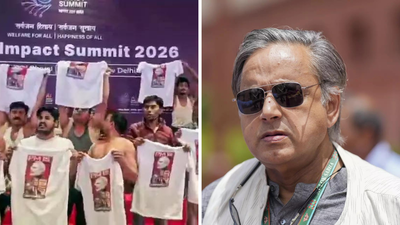
New Delhi: Hours after meeting of MPs ends Shashi Tharoor Youth Congress workers praised the organization and global standing of the New Delhi Artificial Intelligence Impact Summit, which staged a shirtless protest against the India-US trade deal on Friday, forcing security personnel to intervene on the final day of the summit.Several Youth Congress members took off their shirts and raised slogans against Prime Minister Narendra Modi at the Bharat Mandapam before being quickly detained and taken away to prevent disruption to the high-profile international event attended by government officials, industry leaders and foreign representatives, officials said.

Congress paradox: Tharoor praises AI summit while youths protest topless at the venue

Protesters were quickly detained and removed from the venue to prevent disrupting the high-profile international event attended by government officials, industry leaders and foreign representatives.Interestingly, just hours earlier, members of Congress were heaping praise on the AI ​​Summit, claiming the event was “very well organized.”Speaking to reporters, the Thiruvananthapuram MP said: “The first few days went very smoothly. There were some hiccups, but these things happen at large events.”Tharoor said: “What was impressive was the attendance of presidents, prime ministers and world leaders who brought a strong message of wanting to see a new integrated world where AI develops, where impact on society will be the principle. India’s focus is clearly leading the way in this area.”“As far as the French Rafale is concerned, part of it is being manufactured in India and that is a very important aspect of the agreement because it is part of strengthening our defense and part of increasing our self-reliance in the defense sector. Defense is important for India not because we want to start a war but because we don’t want others to think that we are so weak that they might be tempted to start a war.” It is literally a defensive defence, and I support the government in that,” he further said.This is not the first time that Shashi Tharoor has taken a contrary stand against the party and praised the government.After India launched Operation Sindoor in the wake of the Pahalgam attack, Tharoor was involved in the government’s diplomatic outreach to garner international support.

What is IEEPA? The heart of Trump’s Liberation Day tariffs is law

0

The U.S. Supreme Court ruled 6-3 that the International Emergency Economic Powers Act (IEEPA) does not give the president the power to impose tariffs. The case focuses on tariffs pushed by President Donald Trump, Reuters reported.

What is IIEPA? Supreme Court limits presidential tariff powers (AP)

What is IEEPA?

The International Emergency Economic Powers Act (IEEPA) is a U.S. federal law passed in 1977. The act allows the president to regulate international commerce, freeze assets and impose sanctions during a national emergency declared due to a foreign threat to U.S. security, foreign policy, or the economy.

In its ruling, the court said Congress, not the president, has the power to set tariffs. The majority opinion stated that IEEPA “does not authorize the President to impose tariffs.”

The ruling limits how future presidents can use emergency powers in trade matters.

Mr Bengal: Bangladesh vs EU: SC takes ‘extraordinary’ step, judicial officers to be part of SIR mandate | India News

0

Bangladesh v EC: SC takes 'extraordinary' step, judicial officers to be part of SIR mandate

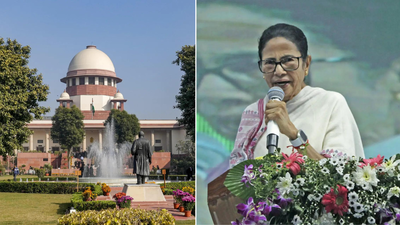
New Delhi: The Supreme Court on Friday passed a “special order” directing the Calcutta High Court to appoint current and former judicial officers of West Bengal as Electoral Registration Officers (EROs) to adjudicate claims and objections in the Special Intensive Revision (SIR) of the state’s electoral rolls, Live Law reported.The court said the judicial officers will be supported by micro observers and state government officials. It directed the collector and police to provide logistical support and security to the officials.The Supreme Court observed that there was a “trust deficit” between the Mamata Banerjee-led state government and the government. election committee.

‘Targeting people like terrorists’: Mamata Banerjee attacks EC over SIR, citing Bangladesh polls

The SC said the “extraordinary order” was issued after “extraordinary circumstances” emerged in the state.Recognizing special circumstances, by chief justice of india (CJI) asked the Chief Justice of the Calcutta High Court to appoint sitting and retired judicial officers at the level of district judge or additional district judge to resolve pending claims and objections regarding inclusion and exclusion from the electoral list, especially cases involving “logical discrepancies”.The intervention came to resolve the impasse between the Election Commission and the Bengal government over the representation and rank of senior officers on the state’s electoral rolls, noting that it was “virtually impossible” to decide on the appropriate rank of officers to be deployed by either party.A Supreme Court bench comprising CJI Surya Kant, Justice Joymalya Bagchi and Justice Vipul M Pancholi is hearing the SIR-related cases in Bengal.

Indian-American Jay Bhattacharya to head CDC and NIH

0

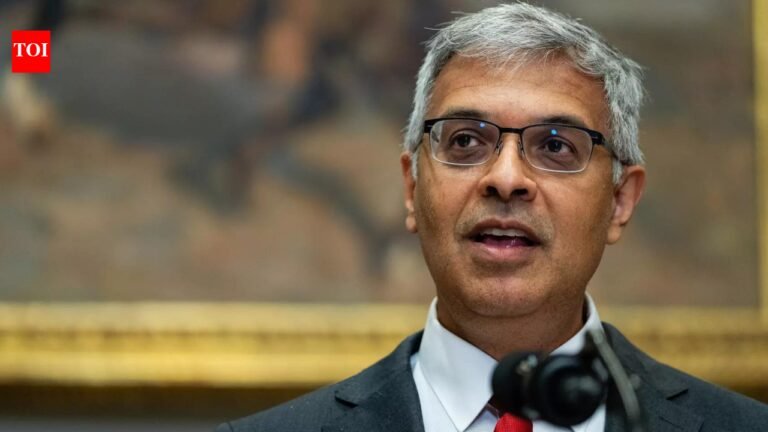
Indian-American Jay Bhattacharya to head CDC and NIH

TOI reporter in Washington: In a comprehensive effort to solidify federal health leadership, President Donald Trump Appointed Dr. Jay Bhattacharya, director of the National Institutes of Health (NIH) and an Indian American, to lead the Centers for Disease Control and Prevention (CDC). The move marks the first time an individual has led both the nation’s premier medical research institution and its leading public health agency, marking an unprecedented step in U.S. public health leadership amid continued turmoil in the scientific establishment. The White House sees the decision as a necessary step to synchronize federal health policy, a dual-role strategy that administration officials say is designed to bridge the gap between biomedical research and public health implementation. Bhattacharya succeeds Jim O’Neill, who will lead the National Science Foundation (NSF) after its director, Dr. Sethuraman Panchanathan, resigned amid deep funding cuts. Dr. Jayanta “Jay” Bhattacharya, 57, is a physician and health economist with a decades-long background at Stanford University. Born in Calcutta, he immigrated to the United States as a child, eventually earning four degrees from Stanford University, including an MD and a PhD. He earned a PhD in economics with a focus on health economics and disadvantaged populations before becoming a tenured professor there. His research emphasizes the impact of aging populations, chronic disease, and government programs on well-being.Bhattacharya came into the political spotlight in 2020 when, as a co-author of the Great Barrington Declaration, he opposed widespread COVID-19 lockdowns and advocated for “focused protection” of the elderly while allowing the young and healthy to live their lives normally. His opposition to vaccine mandates and censorship from officials like Dr. Anthony Fauci pushed him into the MAGA orbit. He has since framed his views as opposing “politicized science,” in line with Trump’s agenda to reform institutions and restore trust in public health.This stance put him in direct opposition to the public health establishment of the day, leading former NIH Director Francis Collins to call him a “fringe epidemiologist.” The career blow solidified his standing within the MAGA movement, which viewed him as a courageous dissident against “medical overreach.” Now positioned as the nation’s No. 1 health official, Bhattacharya faces a daunting task. Although he expressed support for standard childhood vaccinations during a Senate hearing, he took over the CDC, whose vaccine schedule has been aggressively scrutinized and multiple tasks reversed under Surgeon General Robert F. Kennedy. Supporters, however, hailed it as a step toward decentralizing power, increasing funding for innovation, and addressing chronic conditions like obesity and autism in the United States through Trump’s “Make America Healthy Again” initiative, within a broader global focus on infectious diseases.Critics, however, worry it will advance Kennedy’s vaccine-skeptic agenda, exacerbating outbreaks of preventable diseases amid funding cuts, staff layoffs and policy rollbacks at both agencies. They also point to the logistical challenges he will face in managing the $50 billion budget of the NIH in Bethesda, outside Washington, D.C., on the one hand and more than 10,000 employees at the Atlanta-based Centers for Disease Control and Prevention (CDC), which has a $10 billion budget on the other. Bhattacharya’s tenure at the NIH has already seen budget freezes and an exodus of experts, raising concerns that divided leadership is hampering efforts to address new threats. But for ordinary Americans, the shift in leadership could signal a reduction in federal mandates and a continued emphasis on “medical freedom” and personal choice.