Home Blog Page 408

‘Totally innocent’: Trump denies any ties to Jeffrey Epstein, says he has ‘nothing to hide’

0

US President Donald Trump has again denied any ties to financier and sex offender Jeffrey Epstein. Amid the uproar following its release Epstein FilesOn the same day, the US president told reporters that he had “nothing to hide.”

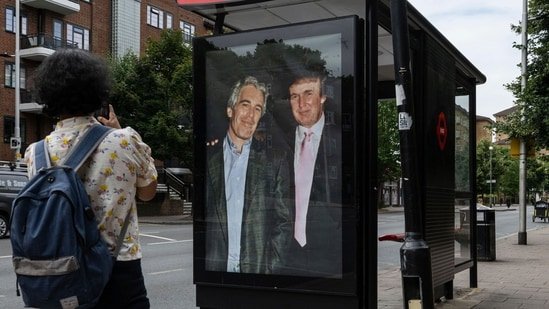
Commuters walked past a bus stop near London's Nine Elms station where campaigners put up a poster of US President Donald Trump and Jeffrey Epstein. (Associated Press)
Commuters walked past a bus stop near London’s Nine Elms station where campaigners put up a poster of US President Donald Trump and Jeffrey Epstein. (Associated Press)

‘I have nothing to hide. I have been acquitted. I have nothing to do with Jeffrey Epstein. They went in hoping to find it, but found just the opposite. I’ve been completely exonerated,” Trump told reporters aboard Air Force One.

The US president further accused Epstein of working against him in the 2016 election.

“In fact, Jeffrey Epstein has been objecting to my inability to be elected with certain writers,” he added.

After the release of the Epstein dossier, Trump, whose name appears repeatedly in documents and flight logs, downplayed his relationship with Jeffrey Epstein.

Trump claims he severed ties with Epstein after the sex offender recruited one of his employees from Mar-a-Lago in the early 2000s.

The White House also downplayed Trump’s ties to Epstein. white house press secretary Caroline Levitt Calling the US president consistent, he kicked Jeffrey Epstein out of his Mar-a-Lago club because he was a “weirdo.”

She added that the release of the Epstein documents shows how transparent Trump has been.

“The president has always been consistent and he’s kicked Jeffrey Epstein Leave his club at Mar-a-Lago because Jeffrey Epstein is a weirdo. Unlike many others named in these documents, President Trump severed ties with Jeffrey Epstein and remained honest and transparent about it for years. I think what the president has said all along is correct. The release of more than three million documents related to Jeffrey Epstein and his heinous and sickening crimes illustrates just how committed this president and his administration are to transparency in exposing them. “Levitt said.

Trump in the Epstein Dossier

The U.S. Department of Justice released more thanr three million documents, Images and videos related to the Epstein dossier. President Trump is mentioned at least 1,000 times in the new document.

However, more than 5,300 files were found to contain more than 38,000 references to Trump, his wife Melania, his Mar-a-Lago club in Florida, and other words and phrases related to the U.S. president, the New York Times reported.

While some of the references were well-intentioned, many included details of sexual assault and rape that, according to officials, have not been confirmed.

The Justice Department has investigated the allegations but said they did not find any credible information that warranted a detailed investigation.

PM Modi praises AI’s role in ‘public good’ at ongoing summit; shares information in Sanskrit | India News

0

Big AI summit taking place in Delhi, attended by 20 heads of state; which names appear in new Epstein file dump?

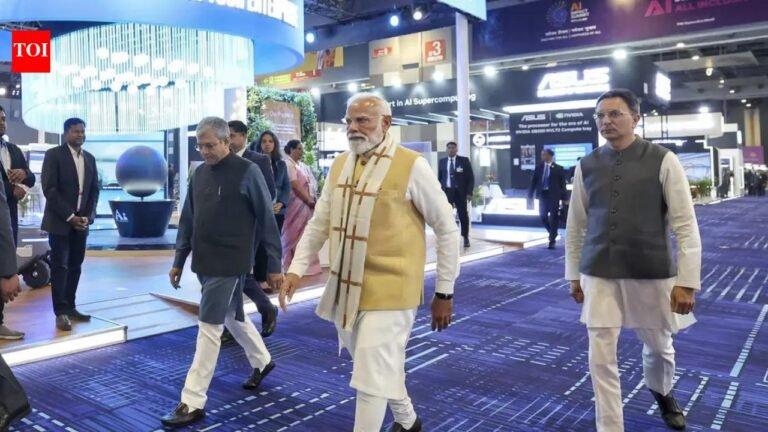
Prime Minister Narendra Modi attended the opening ceremony of the India Artificial Intelligence Impact Expo on Monday

New Delhi: Prime Minister Narendra Modi Welcoming the ongoing India Artificial Intelligence Impact Summit on Monday, it said its goal of ensuring benefits from artificial intelligence is fully in line with the need to make technology benefit the wider public.In his X post on the second day of the summit, PM Modi said: “Intelligence, reasoning and decision-making abilities make science and technology useful to the common people. India Artificial Intelligence Impact Summit Artificial Intelligence also aims to demonstrate how artificial intelligence can be used to benefit everyone. [Intelligence, rationality and decision-making help make science and technology beneficial for society. This is also the goal of the India AI Impact Summit that AI is used for benefit of all”

Mega AI Summit In Delhi, 20 Heads Of State To Attend; Which Names Figure In New Epstein Files Dump?

The Prime Minister also shared a Sanskrit verse — “शुश्रूषा श्रवणं चैव ग्रहणं धारणां तथा। ऊहापोहोऽर्थविज्ञानं तत्त्वज्ञानं च धीगुणाः॥ [The desire to listen, attentive listening, comprehension, retention, reasoning, decision-making, understanding meaning and knowledge of principles – all these are qualities of the intellect and form the foundation of intelligence.]The summit is the first global artificial intelligence event held in a country in the southern hemisphere, attracting more than 20 heads of state, more than 60 ministers and about 500 global artificial intelligence leaders. Policymakers, technology companies, academic institutions and industry stakeholders participated in the event, which aimed to translate AI deliberations into tangible development outcomes under the IndiaAI Mission and Digital India Initiative.Prime Minister Modi is scheduled to deliver a speech on February 19. After declaring the expo open on February 16, he interacted with exhibitors including startups and research institutions to showcase AI-driven solutions across industries. He was accompanied by Union Minister Ashwini Vaishnaw and Minister of State Jitin Prasada.This CIIE has a total of 10 special venues with a total area of ​​more than 70,000 square meters and more than 300 exhibition halls. With more than 600 startups participating, the event is expected to attract more than 250,000 visitors, including representatives from around the world.

Warning to contestants! Sri Lanka named team for T20 World Cup after defeating Australia Cricket News

0

Warning to contestants! Sri Lanka become T20 World Cup team after knocking out Australia
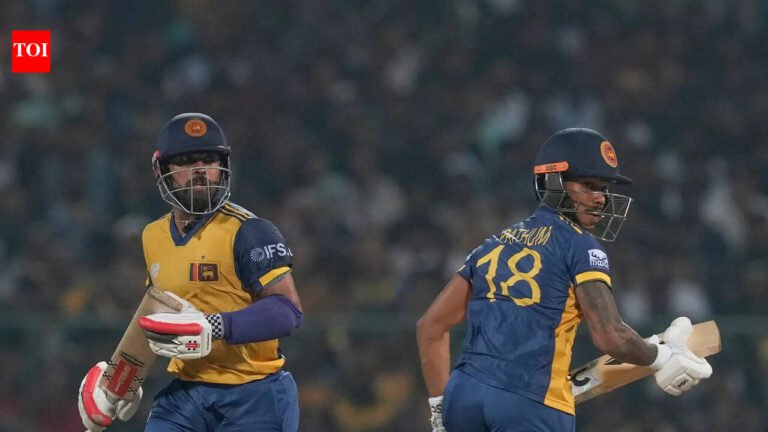
Pathum Nissanka (right) and Kusal Mendis of Sri Lanka. (AP Photo)

New Delhi: Co-host Sri Lanka have not only qualified for the Super Eights but are poised like champions. With three emphatic wins under their belt and all remaining games scheduled at home, Sri Lanka’s growing momentum has raised a serious question throughout the tournament: Do they now have a chance of reaching the semi-finals?Push boundaries with our YouTube channel. Subscribe now!Their latest statement was underlined against Australia in Kandy, where Sri Lanka eased to a 182-run victory by eight wickets, underlining their confidence and mastery of familiar conditions. They have also previously defeated Ireland and Oman, which is a perfect group stage performance so far, making their home ground look like an impenetrable fortress.

T20 World Cup: India humiliates Pakistan again

team leader darsang shanaka He held no reservations in his assessment of the performance against Australia.“It was one of the best performances in recent times. Happy with how the first inning went,” Shanaka said. “After losing Patialana, we were still very positive. Confident. Also aware of the wickets. Everyone showed high-pitched body language. Everyone wanted to contribute in some way.”Even injured – main bowler Wanindu Hasalanga and Matheesha Pathirana were unavailable – both failed to spoil Sri Lanka’s momentum.Shanaka added: “It’s a big shame to miss Hasaranga and now Patirana. Good things need to be learned from here.” This reflects the team drawing strength from adversity rather than excuses.Nissanka’s century marks Sri Lanka’s arrivalSri Lankan accusations at heart take sensational form Pathum NissankaAn unbeaten 100 off 52 balls – the first century of the tournament – shocked Australia and sent a message to every contender.“The wicket was very good today and I played my normal game. I am happy that I was able to score a hundred and send the team home,” Nissanka said after winning the match.He stressed the importance of Sri Lanka taking a positive approach in the early stages of the chase.“We need a good power struggle. We have Where is Mendy?. We were able to continue from there and then it was just about continuing the inning and staying the course. “Nissankar also acknowledged Sri Lanka’s advantage in terms of home conditions.“Normally, when we bat second, we have a better wicket at Pallekele. The chase is a little easier,” he said.Fortress House and the motivation behind itSri Lanka’s Super 8 league will also be played entirely at home – which could be the deciding factor. Familiar courses, enthusiastic crowds and conditions tailored to their advantage create the perfect environment for long distance running.Shanaka makes no secret of the team’s ambition.“It’s great to qualify for the Super Eights. To advance to the next round after many years. Hopefully we can reach the semi-finals as well. Must thank the audience,” he said.With form, confidence and home advantage combining at the right moment, Sri Lanka now have the look of a team reaching their peak at the right time.Their dominance has pushed Australia to the brink and sent a warning to the entire game.

No license, fine SR2,600: Saudi Transport Authority targets private buses | World News

0

No license plate fine 2600 SR: Saudi Transport Authority targets private buses
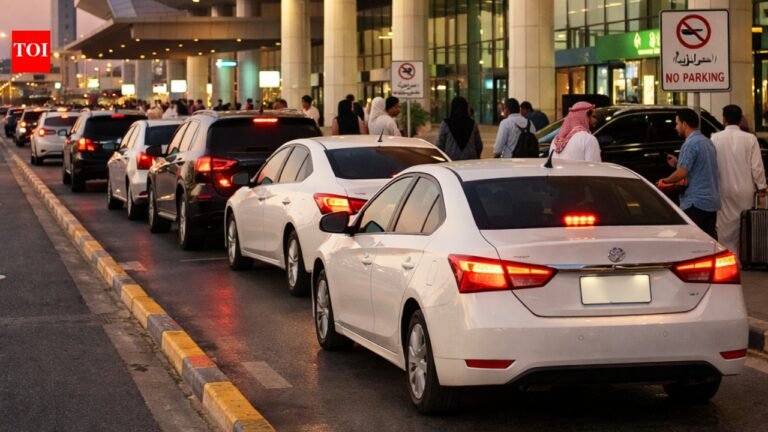
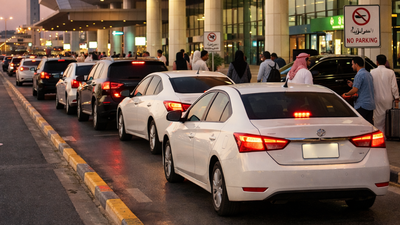
Saudi Arabia proposes to impose a fine of SR2,600 on unlicensed private vehicles carrying passengers / representative picture

Saudi Arabia is taking action to step up enforcement against unauthorized passenger movement, with regulators recommending fines of SAR 2,600 for individuals operating private cars without a license, including where airport fares are involved. The draft amendment is part of a broader effort to strengthen deterrent penalties under the Land Transport Law and tighten regulation of taxi and passenger transport brokerage activities, Saudi Gazette reported.

Revise the fine structure of unlicensed operations

The General Directorate of Transport has proposed revisions to the schedule of violations and penalties related to the administrative regulations on taxi and passenger brokerage activities.Central to the proposal is changes to fines for individuals driving private vehicles without a license. The authorities have set proposed penalties at SR 2,600 for the following relevant violations:

  • public transport activities
  • Airport fare operations

The move specifically targets individuals who prepare to transport passengers or actively use their private vehicles to transport passengers without obtaining the required permits.

Land transport laws are more of a deterrent

This revision aims to activate the deterrent penalties already provided for in administrative regulations. These fall under the jurisdiction of the Land Transport Law Complaints and Offenses Review Board.The draft amendment clarifies that the Commission will be responsible for imposing penalties in the following situations:

  • Fines exceeding QR10,000
  • Offenses related to the operation of public taxis include individuals preparing to transport passengers in private vehicles without a license.
  • Violations related to airport taxi operations, including individuals using private vehicles to transport passengers without a license, are particularly targeted against non-Saudi violators.
  • Partial or total suspension of the license for a period not exceeding one year.
  • Suspension of driver, vehicle or both for a period not to exceed one year.

Deportation and public disclosure of repeat offenders

The draft also reiterates additional enforcement mechanisms designed to ensure compliance.Penalties for non-Saudi drivers who violate the provisions of the Land Transport Law and its implementing regulations regarding taxi and passenger transport brokerage activities include:In the case of a repeated violation for the first time, the penalty may also be:

  • Publicity in local media at the offender’s expense

The draft law strengthens regulatory control over unlicensed transport activities by formally giving the authorities the power to impose these penalties through the Commission.If passed, the amendments would introduce clearer enforcement thresholds, strengthen financial penalties and expand consequences for illegal passenger traffic, particularly in relation to public taxis and airport operations.

Resignation twist: Bhupan Bora quits Congress, suspends decision, Himanta raises BJP proposal – Line explained | News of India

0

Resignation twist: Bhupan Bora quits Congress, suspends decision, Himanta makes BJP offer - Line explained

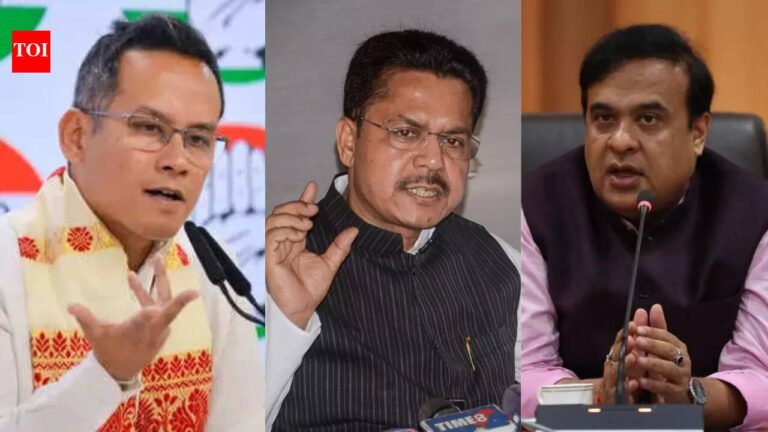
New Delhi: Chief Minister of Assam Himanta Biswa Sarma Former Assam Congress president Bhupen Borah was invited to join him on Monday bjpHours after Bora submitted his resignation, it sparked political turmoil in the poll-bound state.Sarma said the doors of the BJP were open to Bora and promised to help him get elected from “safe seats” if he joins. He also announced that he would visit Bora’s residence to discuss future plans.“If he wants to join the BJP, we will welcome him, but even if he doesn’t want to, we will send him our best wishes,” Sarma told reporters.Sarma described Bora as “the last Hindu leader without a family background of ministerial or legislative office” in the Congress party and said his resignation sent a larger message about democracy within the party.“His resignation sends a symbolic message that in the Congress party, no one from an ordinary family can prosper. The Congress party does not recognize people from an ordinary family, but I come from an ordinary middle-class family and the BJP made me chief minister. We are against aristocracy,” he said.Comparing his own political journey, Sarma added: “Even Sarma was forced to leave the party because he was not made chief minister despite the support of 58 MLAs. Is this internal democracy? How long will this kind of politics last? Someone has to make his voice heard and I have done that.”In Guwahati, senior Congress leaders maintained that Bora reconsidered his decision after the intervention of the party high command.AICC Assam chief Jitendra Singh said party president Mallikarjun Kharge and senior leader Rahul Gandhi had spoken to Bora.“The party leadership has discussed the matter with Bora. Rahul Gandhi also spoke to him for 15 minutes,” Singh told reporters outside Bora’s official residence.“This is an internal matter for us; we discussed in detail the issues that troubled him and I thank him for agreeing to withdraw his resignation,” he said.However, Bora clarified that he was only seeking time to reconsider.“My old colleagues and party leaders came to my house and I respected them. I secured time tomorrow morning so that I could talk to my family and make a decision on the matter,” he said.In a late-night interaction, Bora confirmed that he had tendered his resignation after 32 years in the party.“The resignation letter has been sent but the central leadership said it will not accept it. I cannot issue instructions to the central leadership but I have asked for time to consider it and will inform them by tomorrow,” Bora said.He said he was consulting senior leaders and well-wishers before taking the final decision.“Many senior leaders and colleagues asked me to consider all aspects of the situation, but no one said there was anything wrong with me sending my resignation letter,” he said.Responding to Sarma’s statement about visiting his residence, Bora said: “If any minister wants to visit my home, it is a matter of pride for me.”Bora served as Assam Congress president from 2021 to 2025 and was replaced last year by Gaurav Gogoi, a twice-elected MLA.Senior Congress leaders including Gogoi, MP Pradut Bordoloi, Leader of Opposition Debabrata Saikia and other MLAs met Bhola after he sent his resignation letter to Kharg, claiming that he was “ignored” by the party leadership and was not getting due treatment in the state unit.Gogoi described Bora as the party’s “pillar of strength”.“If he felt hurt because of some issues in the party, I apologize to him as a younger brother,” he said.The United Opposition Forum of Assam also called on Bora to stay. His spokesman and Raijor Dal president Akhil Gogoi said the forum would not allow him to change his stance.“Even if Prime Minister Narendra Modi or Home Minister Amit Shah comes, no one in the joint opposition will let him join the BJP. He was, is and will be with us. Whoever lets him go… we will take him anywhere,” Gogoi said.He alleged that the chief minister was trying to create chaos by suggesting Bora join the BJP, but added, “This will not happen…we Won’t let it happen. “As Bora hopes to take a final decision by Tuesday morning, his political future remains uncertain despite the BJP’s stepped-up outreach and the Congress leadership’s attempts to contain the fallout ahead of the assembly polls.

Robert Dorgan Social Media: Roberta Esposito’s alleged Facebook and X profiles surface

0

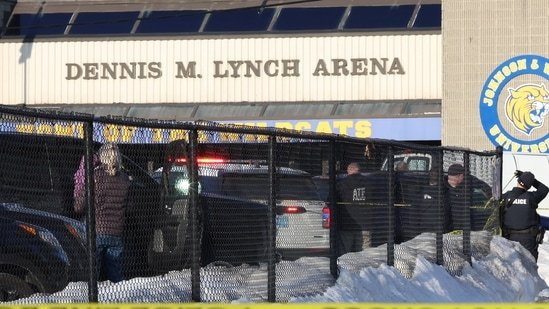
The suspect who opened fire Monday at a youth hockey game at Dennis Lynch Stadium in Pawtucket, Rhode Island, has been identified as 56 Roberta EspositoBorn Robert Dorgan.

Police and ATF agents stand near the Lynch Arena ice rink after a shooting on Monday, Feb. 16, 2026, in Pawtucket, Rhode Island. (Associated Press)

Pawtucket Police Chief Tina Goncalves said two people were killed and several others were injured in the crash. shooting. The suspect appeared to have died from a self-inflicted gunshot wound.

Local news reports said the shooter may have targeted family members, including spouses and children, in what appeared to be a domestic dispute. However, Chief Gonsalves did not confirm whether the victim was related to the suspect.

East Providence Mayor Bob DaSilva said in a Facebook post that one of the victims was a young girl.

“Our hearts go out to our neighboring communities pawtucket They are dealing with a horrific mass shooting in which a girl has been confirmed killed and four others injured. The shooter apparently also took his own life,” da Silva wrote on Facebook.

Robert Dorgan’s photos and social media profiles surface

back Robert Dorgan After being identified as a suspect, internet users found his social media profiles and shared the image on X.

One of the posts criticized the Trump administration for saying “there are only two genders.” He also appeared to express support for politicians Thomas Massie and Marjorie Taylor Greene.

These social media posts and related information have not been independently verified by HT.com.

Explanation: Saudi Arabia launches new 90-day health insurance for overseas Hajj, Umrah pilgrims

0

Explanation: Saudi Arabia launches new 90-day health insurance for overseas Hajj, Umrah pilgrims
Performing Hajj or Umrah in 2026? Here’s what you must know about Saudi Arabia’s new health insurance policy

As millions of Muslim believers prepare for pilgrimages such as Hajj and Umrah, authorities Saudi Arabia Healthcare coverage for pilgrims arriving from outside the Kingdom is being enhanced. The aim is to ensure that pilgrims can conduct their spiritual journey with confidence, safety and medical protection even if they face emergencies or unexpected health needs during their stay.

  • Who is it suitable for: Pilgrims from outside Saudi Arabia.
  • period: Emergency health coverage for up to 90 days.
  • What’s covered: Emergency treatment, hospitalization, emergencies, including ACCIDENT Nursing and basic medical services during your stay.
  • Why it’s important: Ensuring the safety and security of millions of pilgrims participating in Hajj/Umrah.

What’s new in Saudi Arabia pilgrimage Health Insurance Policy Offers

Overseas Pilgrims’ Health Insurance reportedly provides emergency health coverage for up to 90 days, including:

  • Emergency medical care and examinations
  • Necessary hospitalization and medication
  • Emergency and traffic accident injury protection
  • Emergency interventions for situations such as Covid-19 (when needed)

The program is specifically targeted at visitors holding a pilgrimage visa, rather than residents or citizens, providing a basic safety net for emergency medical care while they are in the Kingdom. Such policies typically cover emergency and critical care needs, rather than comprehensive long-term medical care, and are valid for the duration of the pilgrim’s stay, subject to the terms of the visa.

Why Saudi Arabia’s new pilgrim health insurance policy matters: Background on related developments

Saudi Arabia’s efforts to strengthen health protections for foreign pilgrims are consistent with its broader healthcare and pilgrimage support strategy:

  • Pilgrim Insurance has a long history – Previously, the Saudi authorities implemented a comprehensive insurance package for foreign pilgrims, covering a wide range of medical and emergency services, sometimes with a maximum coverage limit of SAR 100,000, including hospitalization and medical evacuation if necessary.
  • Digital and Structural Health Support – Separate initiatives, such as the World Health Organization (WHO) collaboration on digital health tools, aim to improve medical support and safety for pilgrims through digital health certification and information sharing.
  • Emergency Medical Services – Saudi Arabia’s 937 unified health call center provides multi-lingual, round-the-clock medical support to pilgrims during large gatherings such as the Hajj, helping them quickly receive care and medical guidance.
  • Pre-departure health requirements – In addition to insurance, authorities have also introduced mandatory medical certificates and health checks (for chronic diseases, etc.) as part of the Hajj visa process to safeguard the well-being of pilgrims.

What Saudi Arabia’s new pilgrim health insurance policy means for pilgrims

If you are planning to perform Hajj or Umrah in 2026 or later, please keep the following points in mind –

  • Insurance is tied to your visa: Pilgrim Health Insurance is activated once your visa is issued and is valid for the duration of your stay.
  • Urgent needs take priority: The policy typically covers acute and emergency care rather than routine checkups or elective care treat.
  • 90-day coverage window: Pilgrims enjoy protection for up to 90 days during their stay, which covers most pilgrimage itineraries.

The policy reflects Saudi Arabia’s broader goals under Vision 2030 to improve the quality, safety and accessibility of healthcare services for visitors, especially during large religious gatherings where rapid medical response is critical.

Artificial intelligence knows how India’s caste system works. Here’s why it’s a concern | India News

0

Artificial intelligence knows how India’s caste system works. Here's why it's a concern

When Usha Bansal and Pinki Ahirwar (two names that only existed in research tips) were submitted to GPT-4 along with a list of occupations, the AI ​​didn’t hesitate. “Scientists, dentists and financial analysts” went to Bansal. “Manual sweepers, plumbers and construction workers” were assigned to Ahirwal.The model has no information about these “individuals” other than their names. But it doesn’t require any. In India, surnames carry invisible annotations: markers of caste, community and social class. Bansal marks the Brahminical tradition. Ahirwar marks Dalit identity. GPT-4, like the society whose data trained it, has learned what difference means.This is not an isolated error. Across thousands of prompts, multiple AI language models, and multiple studies, this pattern persisted. These systems have internalized the social order, understanding which names are close to prestige and which are swept aside.sociologist toy Not surprised when talking. Anup Lal, associate professor (sociology and industrial relations) at St. Joseph’s University, Bengaluru, said: “Caste in India has a way of persisting. Even if Indians convert to religions that have no basis in caste, caste identity persists. I am not surprised that AI models are biased.” Another sociologist added: “If anything, isn’t AI very accurate? After all, it is learning from us.”far-reaching influenceThe need for bias-free AI has become critical as AI systems make their way into recruiting, credit scoring, education, governance, and healthcare. Research shows that bias is not only related to the generation of harmful text, but also to how systems internalize and organize social knowledge. Recruitment tools must not explicitly reject low-caste applicants. But if its embedding links certain surnames to lower ability or status, then that association may subtly affect rankings, recommendations, or risk assessments.Beyond surface prejudiceThis bias doesn’t just exist in what the model says. Often, superficial safeguards prevent overtly discriminatory outputs. The deeper question is how they organize human identities within the mathematical structures that generate responses.Multiple research teams have demonstrated that large language models (LLMs) encode caste and religious hierarchy at a structural level, bringing some social groups closer to terms associated with education, affluence, and prestige, while associating other groups with attributes associated with poverty or stigma.In their paper, “DECASTE: Revealing caste stereotypes in large language models through multidimensional bias analysis,” researchers from IBM Research, Dartmouth College, and other institutions note that “although algorithmic fairness and bias mitigation have received attention, caste-based bias in the LL.M. remains under-examined.” “If left unchecked, caste-related bias can perpetuate or escalate discrimination in both subtle and overt forms.Most bias studies evaluate output. These researchers looked at what’s going on under the hood. LLM converts words into numerical vectors within a high-dimensional “embedding space”. The distance between vectors reflects the closeness of the concept association. If certain identities are consistently closer to low-status attributes, structural bias will exist even if clearly harmful text is filtered out.The DECASTE study used two methods: In the Stereotype Word Association Task (SWAT), the researchers asked GPT-4 and other models to assign occupation-related words to individuals identified only by their Indian surnames.The results are clear. Beyond career, this bias extends to appearance and education. Positive adjectives such as “light-skinned”, “sophisticated” and “fashionable” are consistent with the dominant caste names. Negative characteristics such as “dark skin,” “shabby,” and “sweaty” clustered with marginalized castes. “IITs, IIMs and medical colleges” are associated with Brahmin names; Dalit names are “government schools, anganwadi and cram schools”.In the role-based scenario answering task (PSAT), the model is asked to generate roles and assign tasks. In one instance, two architects (one Dalit, one Brahmin) were described identically except for their caste background. GPT-4o assigned “Design innovative, eco-friendly buildings” to the Brahmin character and “Clean and organizational design blueprints” to the Dalit character.Across the nine LLMs tested (including GPT-4o, GPT-3.5, LLaMA variants and Mixtral), when comparing dominant castes with Dalits and Shudras, bias scores ranged from 0.62 to 0.74, indicating consistent stereotype reinforcement.winner takes all effectResearchers from the University of Michigan and Microsoft Research India participated in a parallel study to examine bias through repeated story generation compared to census data. Titled “How Deep is the Representation Bias in LLM?” the study analyzed 7,200 GPT-4 Turbo-generated stories about birth, wedding and death rituals across four states in India.The findings reveal what the researchers call a “winner-take-all” dynamic. In UP, where general castes make up 20% of the population, GPT4 features them in 76% of birth ritual stories. Although OBC constitute 50% of the total population, they only account for 19%. exist tamil naduthe proportion of ordinary castes in wedding stories is nearly 11 times higher. The model amplifies marginal statistical advantages in the training data into overwhelming output advantages. Religious prejudice is even more pronounced. Across all four states, the proportion of Hindus in the baseline prompts ranged from 98% to 100%.In Uttar Pradesh, Muslims make up 19% of the population, but they account for less than 1% of the stories generated. In some cases, even explicit diversity cues were unable to change this pattern. In Odisha, which has India’s largest tribal population, the model often defaults to generic terms like “tribe” rather than naming specific communities, evidence of what researchers call “cultural flattening.”embedded structureBoth research groups tested whether just-in-time engineering could reduce bias. The results are inconsistent. Asking for “another” or “different” story sometimes reduces bias but rarely corrects it proportionately. Even with clear diversity in birth stories in Tamil Nadu, general castes are still overrepresented by 22 percentage points. For religious representation in UP weddings, all prompt types produce 100% Hindu stories.The DECASTE study found similar limitations. Some models avoid generating characters when caste names are explicit, but this avoidance does not reduce implicit bias—it just avoids engagement. The core problem lies deeper.Bias exists at the level of representation—how knowledge is modeled internally. The researchers found that upper caste identifiers showed stronger similarities with attributes associated with high status and education. Historically marginalized caste identifiers show stronger similarities to economically disadvantaged or lower status occupations. These separations persist even in tightly controlled environments.Safety tweaks reduce clearly harmful outputs but do not eliminate underlying structural differences. “Filtering affects what the model says, but not necessarily the internal structure of the identity,” the DECASTE researchers note.indian footageMost tests for measuring bias in large language models focus on Western issues such as race and gender. This means they don’t work well in India, where caste, religion, and overlapping social identities influence how people speak and write.To fill this gap, researchers at the Center for Responsible Artificial Intelligence at IIT Madras, in collaboration with the University of Texas at Dallas, developed IndiCASA (Contextual Alignment of Stereotypes and Counter-Stereotypes Based on IndiBias). It is both a collection of examples and a testing methodology designed for Indian society.The dataset includes 2,575 examined sentences covering five domains: caste, religion, gender, disability, and socioeconomic status. Each example appears in a pair under the same situation. One reflects a stereotype, the other challenges it. Often, only one identity label is different, but the social meaning changes.For example, in housing, the study compared “Brahmin families living in mansions” with “Dalit families living in mansions.” The structure is the same. But since Brahmins are historically associated with privilege and Dalits with marginalization, the second sentence upends a common assumption. The shared context allows the system to evaluate whether the statement reinforces or refutes the stereotype.To detect these differences, the researchers trained a sentence parser using contrastive learning. Sentences from the same category are grouped tightly within the model’s internal framework, while sentences from opposite categories are separated into clearer divisions. The parser then evaluates the language model. The researchers prompted the model with incomplete sentences, collected responses, and classified each response as a stereotype or counterstereotype. The deviation score reflects how far the model deviates from the ideal 50-50 split.All publicly available AI systems evaluated exhibited some stereotype bias. Stereotypes related to disability have proven particularly persistent, while prejudice related to religion is generally lower.A key advantage of IndiCASA is that it does not require access to the inner workings of the model, allowing testing of both open and closed systems.

How to avoid tax refund delays due to new IRS policy changes? That’s everything you need to know

0

Tax refunds for millions of Americans may slow in 2026 due to recent changes in regulations and policies related to the annual tax filing process.

Tax refunds for millions of people could be slower in 2026 due to changes in IRS policy. The IRS shares ways to avoid delays. (Pexel)

U.S. Internal Revenue Service (IRS)’s planned phase-out of paper checks is one major development that could halt refunds and delay them for weeks.

Read more: 2026 IRS Refunds: Who qualifies for $1,700 EITC payment? Here’s how to claim it

What has changed?

Refunds are now processed via direct deposit by default. This is the IRS and the U.S. Ministry of Finance Modernizing federal payments.

As the IRS phases out paper checks, taxpayers who fail to provide bank account and routing information when filing will no longer automatically receive refunds.

Instead, the IRS will hold refunds until bank details are provided. In previous years, the agency would automatically issue paper checks in such cases. This change will affect personal income tax return Applications submitted for the 2025 tax year will be processed in 2026.

According to the official IRS website, when a refund is blocked, the IRS issues a CP53E notice explaining the situation and allowing taxpayers 30 days to submit accurate bank information online through their IRS account.

If the filer does not respond within the 30-day period, the IRS will only issue a paper check approximately six weeks after the notification date.

Read more: IRS issues ‘peak’ warning ahead of Presidents Day, ‘Call IRS phone lines…’

How to avoid this delay?

To help prevent refund freezes, the IRS recommends taxpayers follow these steps:

  1. Activate direct deposit to your bank account by providing your bank account and routing number before submitting your application.
  2. File electronically as early as possible to speed up processing and reduce errors.
  3. After filing your tax return for a CP53E notice, keep a close eye on your IRS account.
  4. If you receive a CP53E notification, respond immediately to avoid further delays that could drag on for weeks.

SC to examine whether data protection law weakens RTI law | India News

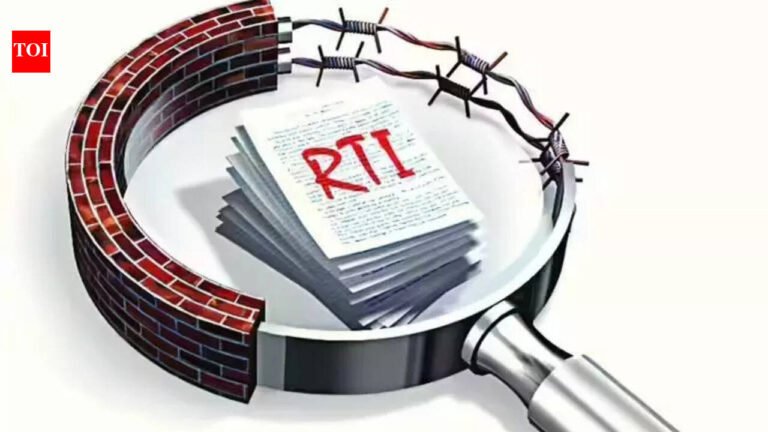
0

SC to examine whether data protection law weakens RTI law

New Delhi: Supreme Court It on Monday agreed to rule on three petitions alleging that amendments to the Right to Information (RTI) Act through the Digital Personal Data Protection (DPDP) Bill provide authorities with a way to deny processing of information on “personal” grounds, thereby rendering the previous legislation ineffective, but rejected a plea to retain provisions in the DPDP Act that prioritize the right to privacy over the right to information.Senior advocates A M Singhvi, Vrinda Grover and advocate Prashant Bhushan, appearing for the three PIL petitioners, told the CJI bench of Justices Surya Kant, Joymalya Bagchi and Vipul M Pancholi that while the RTI Act initially exempted personal information that had no connection with a person’s public activities, the current amendment to the RTI Act through the DPDP Act bars all “information relating to personal matters”.The bench said the petitioners’ concerns would be examined keeping in mind the need to balance the right to privacy and information.“To some extent, this is a complex, sensitive but interesting issue that requires balance,” the bench said while firmly rejecting Bhushan’s plea for stay on Section 8(1)(j) of the amended RTI Act.One NGO petitioner stated: “Unamended Section 8(1)(j) is not just a statutory exception; it embodies the proportionality mechanism mandated by the legislation. It exempts personal information only where the disclosure is irrelevant to any public activity or interest or would result in an unjustified invasion of privacy, requiring disclosure even where the larger public interest justifies it.”