Home Blog Page 352

Sheikh Mohammed launches Dh1 billion campaign to fight hunger during Ramadan | World News

0

Sheikh Mohammed launches Dh1 billion campaign to fight hunger during Ramadan
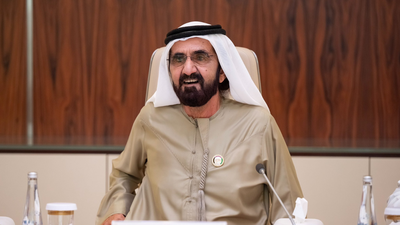
Sheikh Mohammed launches Dh1 billion Ramadan 2026 campaign to save 5 million children / Photo: X

As the holy month of Ramadan approaches, the Ruler of Dubai has put ending child hunger at the heart of the UAE’s humanitarian efforts. His Highness Sheikh Mohammed bin Rashid Al Maktoum on Friday announced the launch of the Edge of Life campaign, an initiative aimed at saving 5 million children under the age of five from dying from malnutrition and hunger.In a message shared on social media, Sheikh Mohammed described the arrival of Ramadan as a month of generosity and preciousness, adding that launching humanitarian campaigns has become an annual tradition in the UAE, extending the support of Emirati people to communities around the world. He stressed that the holy month is an opportunity to strengthen the values ​​of compassion and collective responsibility.

More than just optics: Why PM Modi’s rare airport gesture to UAE president matters for India’s strategy

The event takes place against a grim global backdrop. Sheikh Mohammed noted that more than 118 million children worldwide suffered from malnutrition last year. Of these, an estimated 2.6 million children died from hunger. These figures represent a human tragedy that cannot be ignored, he said, adding that witnessing suffering on such a scale and doing nothing is not in line with the nature or values ​​of the UAE.The Edge of Life initiative will be implemented in partnership with a number of international organizations. Its main goal is to raise at least Dh1 billion locally and internationally. The funds will be used for projects aimed at preventing deaths from hunger among vulnerable children living on the edge of survival.At the end of the announcement, Sheikh Mohammed prayed for the continued protection of the UAE and its people. He also reiterated the devotional spirit of Ramadan, stressing the importance of feeding the hungry and supporting the poor and needy as one of the most meaningful acts of charity.The campaign positions child nutrition and survival as a core focus of humanitarian aid in the UAE this Ramadan, with the goal of transforming charitable donations into tangible, life-saving impact

Why Nehru recognized Tibet as part of China – CDS Anil Chauhan explains | India News

0

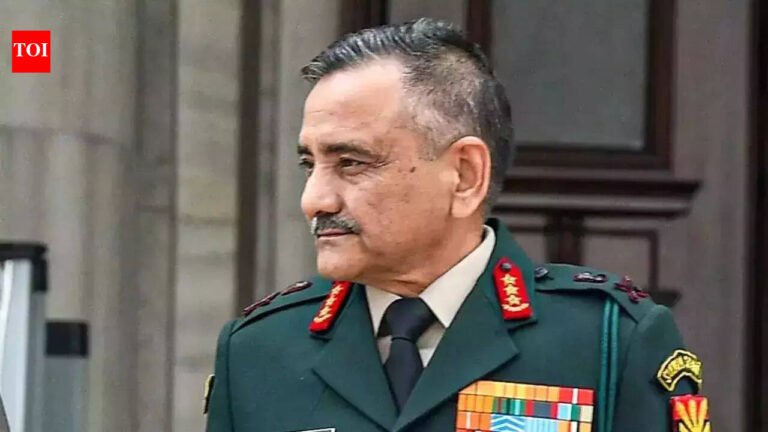
CDS General Anil Chauhan links history to border dispute with China, Nehru knew about it

New Delhi: Chief of Defense Staff General Anil Chauhan on Friday claimed that former Prime Minister Jawaharlal Nehru recognized Tibet as part of China as he wanted to build good relations with China.Speaking at the Bharat Himalayan Strategic Forum in Dehradun, General Chauhan recalled how the Panchsheel Agreement was signed between India and China and said, “With regard to independence, the British left and it was actually India that decided where the front line would be. Nehru probably knew that we had something because the McMahon Line was in the east and we had some kind of claim to the Ladakh region but it was not here. So that’s why he wanted to join a front.” Panchsheel Agreement, while for China too. When they liberated Tibet, they moved to Lhasa. Both ends of this particular area are extreme. “

CDS General Anil Chauhan links history to border dispute with China, Nehru knew about it

“So they wanted stability, probably in this particular region. Independent India aspired to have good relations with China. In 1954, India recognized Tibet as part of China. The two countries signed the Panchsheel Agreement,” he added.General Chouhan also said that India must rethink how it views its Himalayan borders, especially the central part of Uttarakhand.“The Himalayas serve more as a zone of interaction than as a border of exclusion. Uttarakhand is a civilized landscape where the sacred and the strategic have long coexisted,” the CDS said.In fact, a think tank like BHISM is the right place as it is uniquely positioned in Dehradun to develop static thinking that is terrain-aware, systems-oriented and has a long-term perspective,” he added.

Why is Wall Street questioning the U.S. jobs report in January? What we know about Fed rate cut expectations shifts

0

stronger than expected January jobs report That boosted sentiment, but some economists said the data may not be as reliable as the headline suggested. Data released by the Bureau of Statistics U.S. Bureau of Labor Statistics It showed the unemployment rate edged down to 4.3% from 4.4%, with 130,000 new jobs created in January, about twice what economists predicted.

Despite misgivings, traders appear to be taking the data at face value. (Representative image)

S&P 500 futures rose 0.32% following the news, with the index closing unchanged at 6,941 points the previous day.

Why are analysts skeptical?

Analysts cast doubt on the report, largely because of the sharp downward revision to previous data and the fact that most of January’s hiring came from health care, raising doubts about whether the gains reflected broad strength.

The surprising strength prompted some economists to question whether the headline employment data would subsequently be revised lower. The Bureau of Labor Statistics also lowered its previous employment forecast for 2024-25 to 181,000 from 584,000.

“I would not be happy with today’s jobs data. The job market remains fragile, and very fragile,” Moody’s Chief Economist Mark Zandi wrote on X. Overall job growth over the past year would have been much weaker, he added.

Economists at Pantheon Macroeconomics described January’s data as “incredible,” noting that simulated job creation surged during periods when health care businesses opened or closed. They believe statistical assumptions may have exaggerated hiring momentum, Fortune reported.

Also read: Billionaire parents worry their children won’t find jobs, wealth manager says; ‘Real concern’

What does this mean for the Fed to cut interest rates?

Despite misgivings, traders appear to be taking the data at face value. According to data from CME FedWatch, the market currently believes that there is a 92% chance that the Federal Reserve will stabilize interest rates at 3.5% in March, and interest rate cuts are expected to continue into this year.

“The broad-based strength in the January jobs report supports our view that the Fed will not cut spending [current Fed Chair Jerome] PowellBank of America analysts said in a report, Fortune reported.

Also read: The United States: A debt-ridden superpower

Others even believe that if the labor market continues to be tight, the possibility of raising interest rates may arise again. Still, some economists warn it may be too early to declare a turning point.

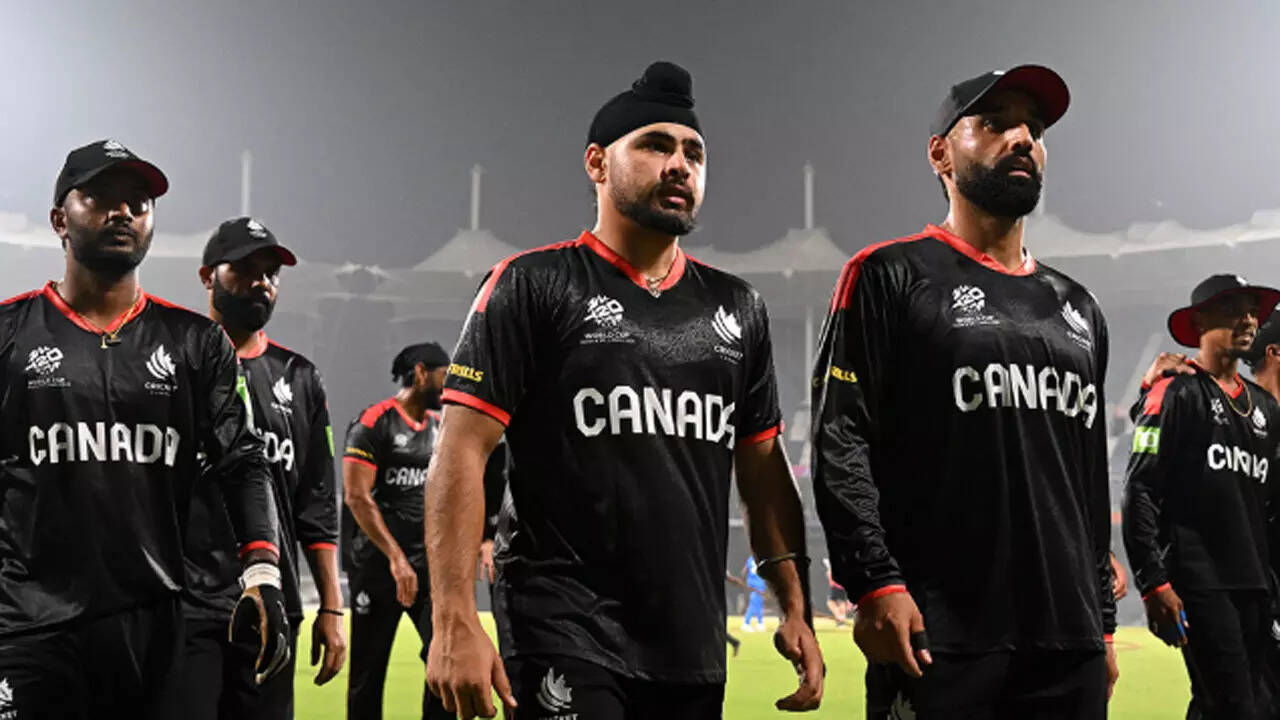
Canada vs UAE live score, T20 World Cup 2026: Canada, UAE look to reset after early setbacks

0

Canada: Dilpreet Bajwa (c), Ajayveer Hundal, Ansh Patel, Dilon Heyliger, Harsh Thaker, Jaskarandeep Singh, Kaleem Sana, Kanwarpal Tathgur, Navneet Dhaliwal, Nicholas Kirton, Ravinderpal Singh, Saad Bin Zafar, Shivam Sharma, Shreyas Movva, Yuvraj Samra.

UAE: Muhammad Waseem (c), Alishan Sharafu, Aryansh Sharma, Dhruv Parashar, Haider Ali, Harshit Kaushik, Junaid Siddique, Mayank Kumar, Muhammad Arfan, Muhammad Farooq, Muhammad Jawadullah, Haider Shah, Rohid Khan, Sohaib Khan, Simranjeet Singh.

Egypt removes monolith from 2,000-year-old Lighthouse of Alexandria buried under the sea | World News

0

Egypt salvages massive 2,000-year-old Alexandria Lighthouse buried under sea
Egypt removed huge stones from the 2,000-year-old Lighthouse of Alexandria buried under the sea (Photo: GEDEON Programs/CEAlex)

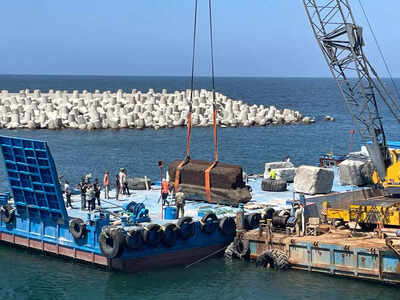
Off the coast of Alexandria, divers and cranes have returned to a site that has rested underwater for centuries. Large boulders linked to the ancient lighthouse of Alexandria are being pulled from the seafloor as part of new archaeological work. Known as the Lighthouse, this building once stood at the entrance to the city’s harbor and is listed as one of the Seven Wonders of the Ancient World. Thirty years after the underwater ruins were first discovered in 1995, researchers are now picking out some of the building fragments to study in detail. The work is part of the PHAROS project, a French-led project to document, scan and digitally reconstruct lighthouses using recovered blocks and debris from beneath the Mediterranean Sea.

Egypt Excavation uncovers twenty-two lighthouse blocks lifted from the seabed

Dassault Systèmes FoundationTo support the technical aspects of the project, 22 of the largest surviving blocks have been lifted. Some weigh between 70 and 80 tons. These works include monumental lintels, door frames, thresholds and large base panels. Among the discoveries was a previously unknown part of the tower, which features an Egyptian-style doorway dating from the Hellenistic period. The scale of the stone gives a sense of the original quality of the lighthouse. Each block was studied on land before further analysis.

Excavation work in Egypt has lifted 22 lighthouse blocks from the seabed (Photo credit: GEDEON Programs / CEAlex)

Excavation work in Egypt has lifted 22 lighthouse blocks from the seabed (Photo credit: GEDEON Programs / CEAlex)

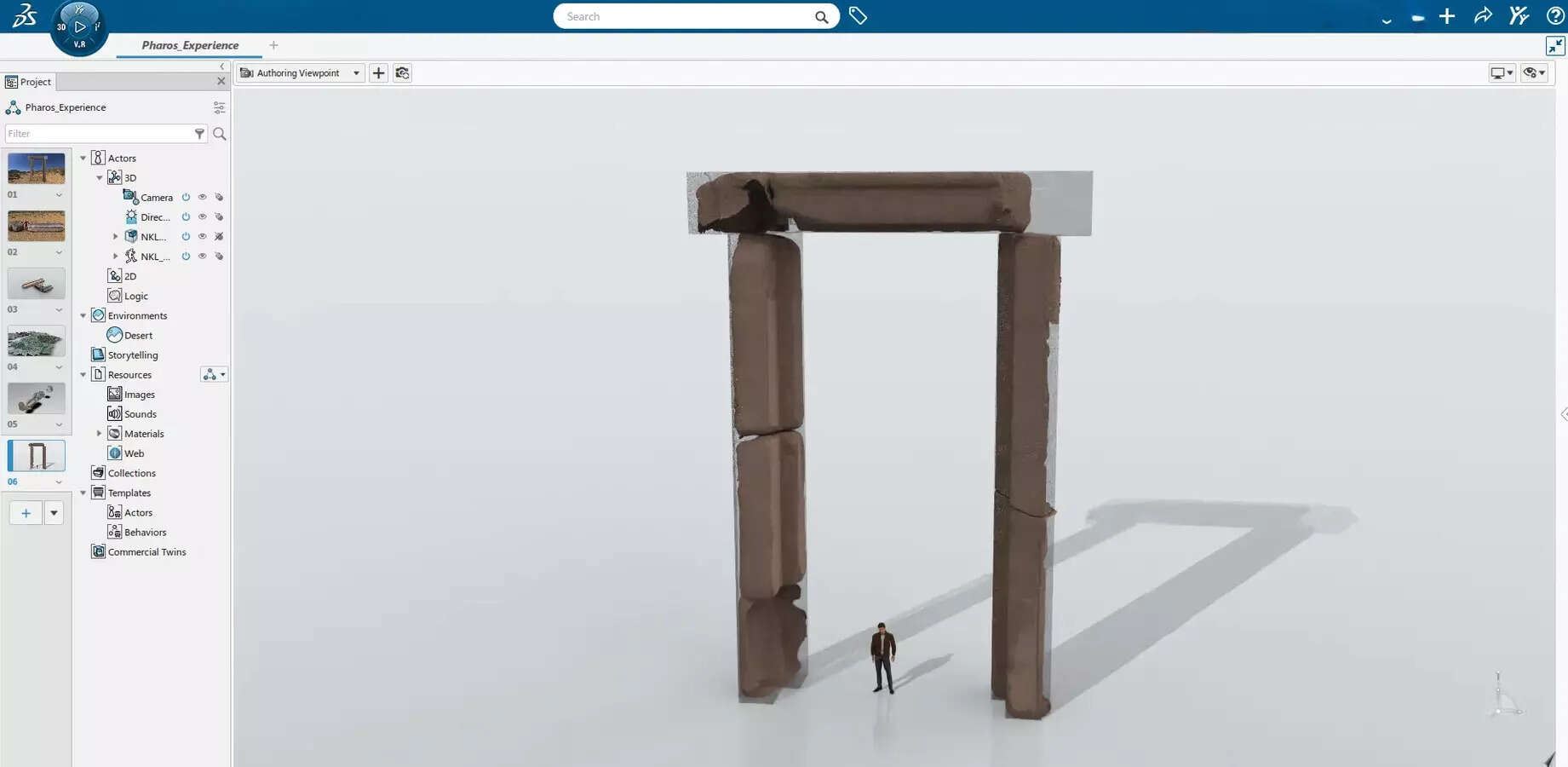
digital reconstruction aims to virtually recreate the lighthouse

Recycled elements will be scanned and processed using photogrammetry. They will join more than 100 blocks that have been digitized underwater over the past decade. Engineers working with the Dassault Systèmes Foundation will analyze the data and try to reposition each part in a virtual environment.The aim was to test different hypotheses about how the lighthouse was built and ultimately how it collapsed. The team plans to create a digital twin of the structure through simulation. The model allows viewers to explore a detailed reconstruction of the lighthouse without having to physically recreate it.

Digital reconstruction aims to recreate the lighthouse virtually (Photo credit: Isabelle Hairy - Center d'Etudes Alexandrines)

Digital reconstruction aims to recreate the lighthouse virtually (Photo credit: Isabelle Hairy – Center d’Etudes Alexandrines)

French and Egyptian agencies lead excavations

The excavation was carried out by the French National Center for Scientific Research (CNRS) through its permanent unit in Egypt, under the jurisdiction of the Egyptian Ministry of Tourism and Antiquities. The project has received financial support from the Dassault Systèmes Foundation for the past three years.Researchers also collect ancient texts, coins and visual depictions of lighthouses. These sources help fill in the gaps left by the fragmented remains. After it ceased operations in 1303, much of the structure was dismantled, and the stone was reused in 1477 when the fortress of Ketbe was built.

The Lighthouse of Alexandria shaped ancient maritime trade

The lighthouse was built in the early third century BC during the reign of Ptolemy I and is believed to be about 100 meters high. It guided ships along the difficult coastline and became a symbol of the city’s place in Mediterranean trade. No ancient lighthouse of similar size survives today. Alexander’s current work is no longer about spectacle, but about the reconstruction of patients. Little by little, the outlines became clearer, although still incomplete.

‘Excessive secrecy’: Congress Manikam Tagore calls for transparency in defense book guidelines India News

0

'Excessive secrecy': Congress Manikam Tagore calls for transparency in defense book guidelines
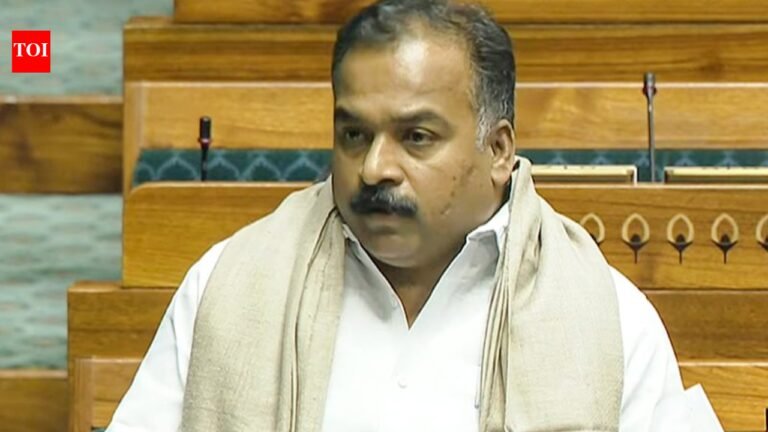
MP Manikam Tagore

New Delhi: Congress MP Manikam Tagore on Friday criticized the government’s “culture of excessive secrecy” on defense and armed forces issues. He shared an image of a news article stating that the center is developing detailed guidelines for serving and retired armed forces personnel who wish to publish books in the future. The proposed guidelines will outline the process that should be followed before any manuscript is approved for publication.In a post on X, Tagore said rules should not be used to silence voices or hide uncomfortable truths from the public.“By 2029, when Rahul Gandhi One of the guiding principles that must change upon becoming Prime Minister is this culture of excessive secrecy. National security must always be maintained. But using rules to silence voices and hide uncomfortable truths from the Indian people is unconscionable. “He added, “Our armed forces deserve dignity. Our democracy deserves transparency.”This comes after Leader of Opposition in the Lok Sabha Rahul Gandhi showed excerpts from former Army Chief Naravane’s unpublished memoirs during the budget session of Parliament in early February and was repeatedly interrupted by BJP leaders Rajnath Singh and Kiren Rijiju.Gandhi accused Prime Minister Narendra Modi of “failing to fulfill his responsibilities” in the 2020 India-China military conflict in Ladakh. Defense Minister Rajnath Singh objected, questioning whether the books cited had been officially published or authenticated. He told the House that unpublished material could not be cited and accused Congress leaders of misleading the parliament. Speaker Om Birla later ruled that unpublished books or magazine articles not directly related to the proceedings cannot be read out in the House.Despite the ruling, congressional leaders maintained that the excerpts they referred to were authentic and could be obtained through published magazine articles citing the memoir.

A Texas woman co-signed a $10,000 bicycle loan for her missing ex-boyfriend. How to protect credit from collection calls? detail

0

one Texas A woman thinks she will outdo her ex. Unfortunately, since she co-signed a check for $10,000, fate had other plans. bike Borrow money from that individual and then the individual disappears. Now, years after the breakup, this woman, Anne, has been dealing with debt Collectors bought a bike she hadn’t seen in four or five years, and a man she didn’t know “alive or dead.”

Whether a person is a co-signer or not, defaulting on a loan payment can also affect their credit score. Images used for representational purposes. (Pixar Bay)

A few weeks ago, she recounted her ordeal on The Ramsay Show, which offers advice on how to build wealth. “He hasn’t paid yet. I don’t care about my credit, but they keep calling,” she shared.

However, Anne heard bad news. Although Annie can’t be with her ex or use her bicycle, she still faces the dilemma of borrowing money. According to the Consumer Financial Protection Bureau (CFPB), co-signers can be legally responsible if the primary borrower stops making payments. Additionally, it states that the lender does not have to find the counterparty first. They can contact the co-signer directly, in this case Anne.

ALSO READ | “Singles Tax”: What is it? Why does living alone cost $10,000 more per year? Details here

Since the bike could not be repossessed and the ex could not be found, the lender took the logical step and contacted the co-signer. The showrunners got some advice from Anne.

How to protect credit?

Host Jade Warshaw told Anne, “You have to save your money,” adding, “If you don’t pay it, your credit will be ruined.”

Joint loans appear on borrowers’ credit records, so late payments and defaults can affect both parties. Anne is now married and living on a tight budget, which has led her to return to work after retirement to make ends meet.

Warshaw added that Anne should sit down with her husband and go over their finances together so they have a clear picture and can plan ahead accordingly. At the same time, from CFPB, Experian and the Federal Trade Commission (Federal Trade Commission) explains how to protect credit in this situation.

  1. According to the CFPB, debt is inescapable, and if the primary borrower fails to pay, it’s best to treat the debt as your own and make prompt payments to avoid increased fees, penalties, and credit damage.
  2. The consumer watchdog advises that if a collector contacts someone, respond quickly. Ignoring a phone call or letter will only make the situation worse.
  3. Experian recommends paying close attention to your credit reports. This will give you an idea of ​​how to report a cosigner loan. Late payments, charge-offs, etc. are bound to significantly affect the credit scores of both parties.
  4. Under FTC regulations, repayment or settlement options can be negotiated with creditors. The agency notes that in some cases, particularly with older debts, creditors may not only be willing to negotiate but may also accept a lump-sum settlement for less than the entire amount owed. However, in this case, it’s best to get the deal in writing before money changes hands.
  5. It’s essential to have a complete home plan that includes non-negotiable rent so people know what expenses can be cut in the short term to pay down debt.

Bharat Mela 2026 comes to Kuwait: Over 700 artists to showcase India’s vibrant heritage at Green Island | World News

0

Bharat Mela 2026 is coming to Kuwait: Over 700 artists will showcase India’s vibrant heritage in Green Island
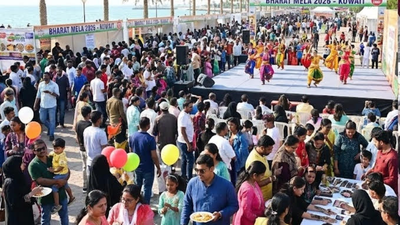
Bharat Mela 2026 coming to Kuwait: Green Island to host grand Indian cultural festival/Photo: X

Kuwait’s coastline is about to become even more colorful. The Embassy of India in Kuwait officially invites everyone to attend Bharat Mela 2026, a massive open-air festival celebrating India’s rich heritage. Mark your calendars on Friday, February 13, 2026 from 12:00 noon to 7:00 pm. The festivities will cover Green Island’s waterfront (specifically the area behind Chili’s on Arabian Gulf Street). The most important thing? Admission is free, making it the perfect weekend plan for families, expats and culture lovers looking to enjoy a breezy Friday by the sea.

What to expect from Kuwait Bharat Mela 2026?

The core of the Bharat Mela Festival 2026 will be its non-stop entertainment. A massive line-up of over 700 artists is expected to perform throughout the day, showcasing the incredible diversity of Indian performing arts. What you can expect:

  • Classical and folk dance: stunning performances BharatanatyamKathak and high energy Bhangra.
  • Live Music: Wow the audience with a fusion of soulful ghazal music, traditional folk songs and the latest Bollywood hits.
  • Immersive Crafts: Beyond the stage, you’ll find a bustling bazaar filled with Indian handicrafts, textiles and Ayurvedic products. You can even get intricate mehndi (henna) designs or watch live demonstrations of traditional pottery and rangoli art.

If there’s one thing that defines “Mela”, it’s food. This year, the festival brings a veritable “flavor of India” to the Bay Area. Visitors can explore more than 25 specialty stalls, ranging from the spicy and aromatic street food of North India to the unique coconut flavor of South India. Whether you’re in the mood for crispy samosas and chaats or looking for hearty biryani, this food trail is designed to take you on a gastronomic journey across the subcontinent. For those with a sweet tooth, traditional desserts like Jalebi and Gulab Jamun are freshly prepared and fill the air with the aroma of festive spices.

Entry details

Joining the festivities is easy as the event is designed to be accessible to everyone. You don’t need to worry about booking tickets or paying any admission fees as admission to the entire festival is completely free for all visitors. To find the exact location, head to the iconic Green Island on Arabian Gulf Street and head to the waterfront area behind Chili’s Restaurant. The festivities officially begin at 12:00 noon and continue until 7:00 pm, giving you the perfect window to enjoy the afternoon sunshine and beautiful seaside sunsets.

A day of unity between India and Kuwait

While the mela is a celebration of Indian culture, its deeper purpose is to serve as a cultural bridge between the Indian diaspora community and the multicultural society of Kuwait. Indian Ambassador Dr. Adarsh ​​Swaika emphasized that such events strengthen the centuries-old “people-to-people” friendship between India and Kuwait. To make it truly inclusive, organizers have set up a dedicated children’s play area with magic shows and games to ensure even the smallest visitors have an unforgettable day. This is more than just an expo; it’s a vibrant display of “Unity in Diversity” in the heart of Kuwait.

Orange is the new gold: How India’s influencer economy turned visibility into value | India News

0

Orange is the new gold: How India’s influencer economy turned visibility into value
The image is used for representation pupose only (AI-generated)

On a busy afternoon in Old Delhi’s Parathe Wali Gali, Darshit Singh held up his phone and did something unusual.He didn’t hype the food.He critiqued it.The reel — an “honest review” of a legacy eatery and Daulat ki Chaat — crossed 7.3 million views. Messages flooded in. Invitations followed. Cities called.That was 2024.Today, Singh calls himself India’s first “food deinfluencer”.Elsewhere, Santosh was boarding a late-night flight after wrapping up a full corporate workday.An IIT-Delhi alumnus by degree and a traveller by instinct, he refuses to choose between spreadsheets and sunsets.“I’m a traveller with a full-time job,” he says — a line that has now become his digital identity.Every month, a new state. Every trip, a vlog. Every journey, proof that passion doesn’t need permission.What once looked like just another viral reel is now part of something bigger — a creator economy projected to be worth thousands of crores, and increasingly recognised in India’s economic blueprint.This year’s Union Budget did something subtle but significant: it placed creativity inside the growth narrative.Welcome to India’s Orange Economy moment.

The Orange Economy: When creativity became economic policy

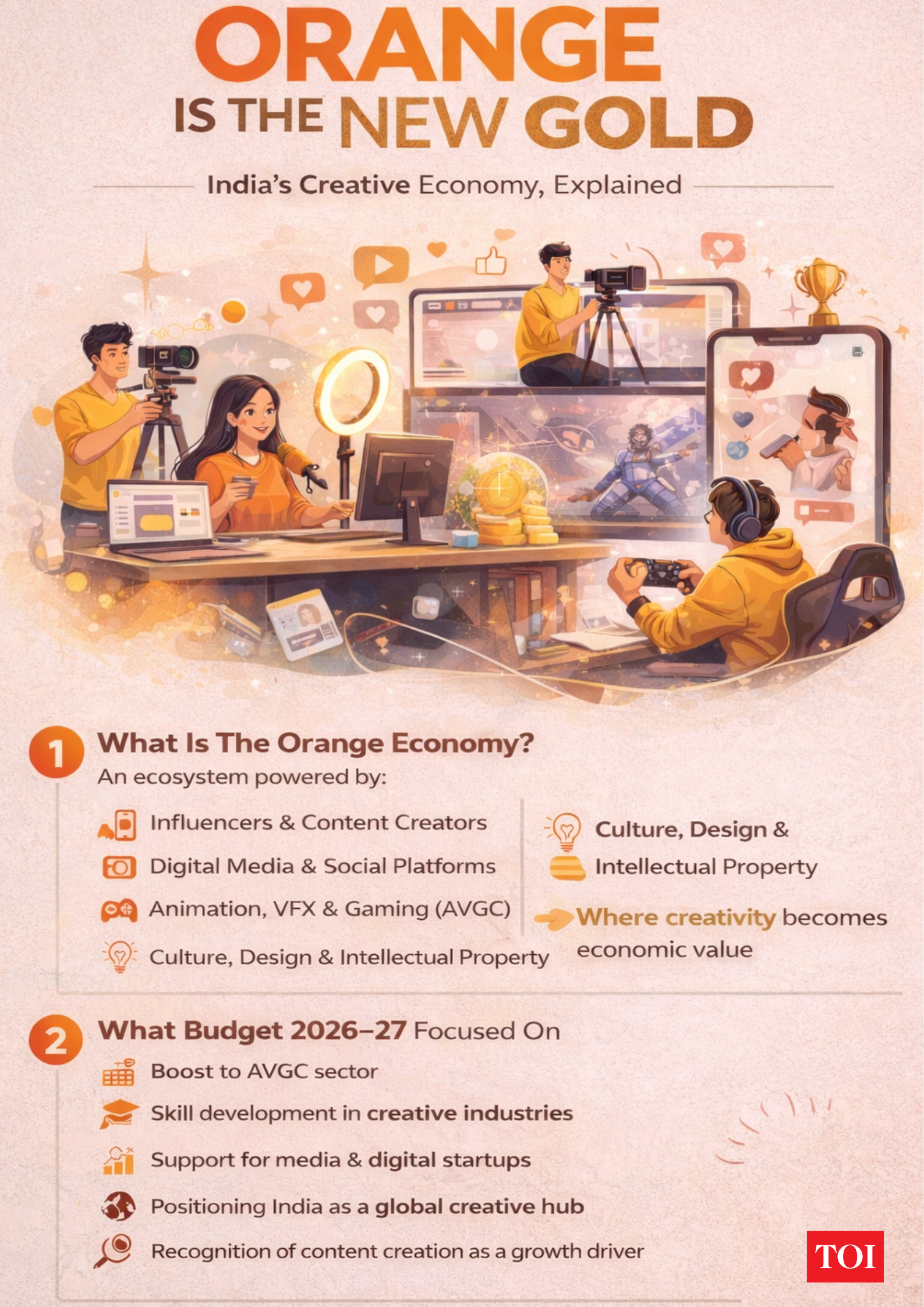
For decades, art, storytelling and digital creation lived in the margins of economic planning — celebrated culturally, rarely counted financially.That is beginning to change.The “Orange Economy” — a term popularised by the Inter-American Development Bank refers to industries that transform ideas into cultural goods and services protected by intellectual property. It includes media, film, music, publishing, animation, gaming, advertising, design, fashion, digital content and now, increasingly, independent creators.In India’s Union Budget 2026–27, finance minister Nirmala Sitharaman announced a major push for India’s creative industries — or what is increasingly being called the “Orange Economy.”

.

.

Presenting the Budget, Sitharaman emphasised that India’s creative and AVGC-XR (Animation, Visual Effects, Gaming, Comics and Extended Reality) ecosystem has the potential to generate large-scale employment and position India as a global content hub.She announced:

  • Rs 400 crore allocation for the Indian Institute of Creative Technologies (IICT) in Mumbai
  • 15,000 AVGC labs to be set up in schools
  • Integration of creative and digital skills in 500 colleges across India
  • Policy support aimed at building a workforce pipeline for the AVGC-XR sector

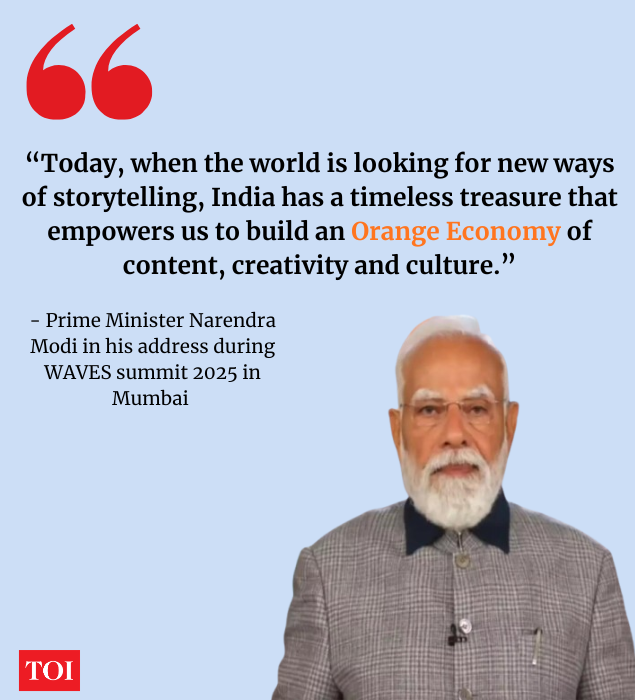
The Economic Survey projected that the AVGC sector alone could require up to 2 million skilled professionals by 2030.Sitharaman highlighted that India’s demographic dividend must be aligned with emerging sectors, particularly those driven by digital platforms and intellectual property.At the WAVES summit earlier this year, Prime Minister Narendra Modi reinforced this direction, describing India as a nation with “a billion-plus stories” and positioning the creative economy as both cultural capital and economic opportunity.
.

.

India’s creator economy is projected to grow at an 18% compound annual growth rate, rising from Rs 19 billion in 2023 to Rs 34 billion by 2026, according to Ernst & Young.

Influencer economy & marketing: From digital voices to structured media power

Influencer marketing is defined as “a collaboration between popular social-media users and brands to promote brands’ products or services.” What began as informal brand shoutouts has now evolved into a regulated, data-driven industry. The scale today is substantial. Globally, the influencer marketing economy was valued at $21.1 billion in 2023, having more than doubled since 2019 on the strength of platforms such as Instagram and YouTube. According to ET, the global influencer marketing platform market grew from $6 billion in 2020 to a projected $24.1 billion by 2025, at a CAGR of 32%.
.

.

Forbes highlighted that the broader creator economy is now a $250 billion global force, projected by Goldman Sachs to reach $480 billion by 2027. Statista reports that over 200 million creators operate globally, while social commerce is expected to touch $2.9 trillion by 2026.India’s influencer marketing sector is projected to reach Rs 3,375 crore by 2026, growing at a CAGR of 18%, according to EY’s ‘State of Influencer Marketing in India’ report. Exchange4Media estimates the core influencer market at around Rs 3,600 crore in 2024, projected to reach Rs 4,500 crore in 2025, though insiders suggest the real size may exceed Rs 10,000 crore due to direct brand-creator deals outside conventional tracking.Creator fees rose between 10–30%, while top-tier creators in India reportedly earned between Rs 10–25 crore annually through endorsements, platform monetisation, live events and equity partnerships.Types of InfluencersInfluencers are categorised by follower size:

  • Nano influencers: Fewer than 10,000 followers
  • Micro influencers: 10,000–50,000 followers
  • Medium influencers: 50,000–100,000 followers
  • Macro influencers: More than 500,000 followers
  • Mega influencers: Over one million followers

EY observes that marketers leverage both large/macro and micro/nano influencers equally. While mega and macro influencers drive awareness and brand loyalty, micro and nano influencers often deliver stronger engagement and relatability.Regional creators are becoming central to brand strategies. According to Influencer.in (Social Beat), regional creators drive 35–40% better engagement in Tier-2 and Tier-3 cities. Budget allocation for regional creators has increased from 3–10% earlier to 8–20%, with expectations of further growth.

Gen Z: The creator generation

The ecosystem is increasingly youth-driven. A 2024 YouTube India–SmithGeiger report found that 83% of Indian Gen Zers consider themselves creators, and 75% see content creation as a genuine career path. More than 55% reported gaining financial independence through digital platforms.As ET highlights, influencer marketing is seen as cost-effective and personalised. Influencers build relatability and directly shape purchase decisions. In fact, 61% of consumers trust recommendations from creators more than traditional brand advertising, according to Sprout Social cited by Forbes.Influencer partnerships typically follow two models:

  • Flat-fee brand deals per post (ranging from Rs 2,000 to Rs 30 lakh per post in India, depending on scale).
  • Affiliate commissions, where influencers earn from sales generated via links or promo codes.

Increasingly, creators are moving beyond endorsements to ownership — launching brands, seeking equity partnerships and building independent revenue streams. Exchange4Media notes a visible shift from “endorser to owner.”From hyper-local memers to pan-India gaming stars, from nano creators in Tier-3 cities to mega influencers earning crores annually, India’s influencer economy is no longer peripheral to marketing. It has become a structured, high-growth pillar of brand strategy — reshaping commerce, culture and consumer trust in the digital age.For creators like Darshit, having a mass following of 51.7K followers, the viral Old Delhi reel was only the beginning. What followed was a clearer understanding of how the influencer economy actually works. “I started making content post-COVID but it was mostly just pictures and a few videos with music. No voiceover,” he says. It was only after that breakout moment in 2024 that he began studying the platform more closely — especially the algorithm.“Instagram is fundamentally different… it thrives on recommendations,” he explains. Unlike platforms that depend heavily on follower count, Instagram pushes reels to users who may never have heard of the creator but are likely to engage. “Someone who has never made a video in their life can come to this platform and make one and get millions of views.”Uploading identical content across YouTube Shorts, Facebook and Threads, Singh says Instagram consistently delivers his highest reach. For him, discovery is not accidental — it is engineered.But growth alone was never the goal. His identity as a “food deinfluencer” is built on resisting what he sees as blind positivity in brand culture.“Our society today has a trust crisis. Be it government, institutions, or media. Everyone is facing that. So for me, my audience’s trust is paramount,” he says. Even in paid collaborations, he critiques dishes he does not like. “I wanna be the reason behind someone’s memorable meal.” His approach reflects a broader shift in marketing strategy. “Earlier brands used to only work with celebrities and movie stars but now they prefer influencers in most cases as the latter gives them higher ROI,” he observes. “Celebrities promoting a product feels like an ad. But some influencers subtly promote the brand in their organic way… audiences are more likely to purchase that product later.”A few kilometres away from Old Delhi’s food lanes, Santosh is planning his next trip — between client calls.Santosh began his creator journey not in airports or mountains but inside hostel rooms. What started as campus vlogs on YouTube, hostel stories, placement anxiety, the reality of being an IIT student slowly built a community of aspirants and peers.Then came Instagram.Reels allowed him to compress entire journeys into seconds — a new state every month, documented between office deadlines. The platform’s real-time engagement — stories, reels, DMs helped him move beyond informational content into something more personal. “You can be discovered without being famous,” he says, pointing to how a few of his travel and IIT reels travelled far beyond his existing follower base.More importantly, he has watched the industry change.“When I started, content creation felt experimental,” Santosh says. “Now brands plan structured budgets. Long-term collaborations. There’s more professionalism.” In his words, the creative economy is no longer informal hustle. It’s recognised work.

Instagram’s revenue model: The business behind the scroll

If the orange economy is the ecosystem and creators are its lifeblood, then Instagram is the marketplace — the digital high street where attention turns into advertising, and creativity converts into commerce.To understand how influencer marketing thrives, it’s important to understand how Instagram itself makes money.Founded in 2010 by Kevin Systrom and Mike Krieger as a simple photo-sharing app, Instagram was built on one idea: visuals connect people. What started as a minimalist platform for filtered photos has evolved into a billion-user ecosystem of Stories, Reels, shopping tabs and creator tools.After Meta (then Facebook) acquired Instagram in 2012 for $1 billion, the platform scaled rapidly. Today, Instagram is estimated to be worth around $400 billion, making it one of the most valuable digital assets globally.The engine driving all of this? Advertising.Instagram’s primary revenue model is advertising. What makes Instagram powerful for marketers is its algorithmic precision. Content appears based on user behavior, engagement patterns and interests.The platform’s shift toward short-form video has supercharged engagement. According to a Meta-commissioned IPSOS study:

  • 97% of Indian consumers watch short-form videos daily
  • 95% daily usage for Reels, compared to 83% for television

Meta India’s Managing Director Arun Srinivas said: “India is leading the world in video adoption, and Reels is at the center of this shift. Five years since its launch, Reels is India’s leading short-form video platform—driving massive engagement, shaping culture, and delivering real business impact.”Instagram’s model is symbiotic with the influencer economy.

  • Shoppable tags allow influencers to link products directly.
  • Affiliate links enable commission-based earnings.
  • Sponsored posts generate flat-fee income.
  • Bonuses and milestone incentives reward engagement growth.

While food reels dominate one corner of the ecosystem, knowledge-driven creators are building influence in quieter but equally powerful ways.For Bikramjeet Dutta, having a massive following of 51.9K followers, Instagram’s inflexion point came during the 2024 Lok Sabha elections. “I was attending several political rallies, press conferences etc. I started uploading that it started gaining views and followers,” he says. His content extends beyond political coverage into books, geopolitics and history. “Instagram helped me to connect with those who are experts in these fields,” he says, adding that credibility assessment feels more immediate on the platform. “In Instagram it’s quite easy to verify whether the person is credible or not.” Discovery, he believes, has fundamentally shifted the opportunity landscape. Posting book reviews led to requests from publishers. Geopolitical commentary brought invitations to panel discussions and book launches. “Yes, Instagram has made it easier for creators to be discovered,” he says.

Instagram and small businesses: Visibility, trust and the new storefront

For many small businesses in India, Instagram is no longer just a marketing add-on. It functions as a storefront, catalogue, customer service desk and storytelling space — often all at once.The shift became especially visible during the pandemic. In 2020, Instagram introduced the ‘Support Small Business’ sticker, which grouped Stories using the sticker into a shared feed so “more people can discover more small businesses.” Around the same time, it rolled out features that made it easier to discover gift cards, online food orders and fundraisers, allowing users to tap directly and purchase through partner websites. For Nidhi who runs a handmade chocolate business, Instagram became more than a display window.“Instagram didn’t just become a platform… it became the space where my creativity found its voice,” she says. She explains that unlike other platforms, Instagram allowed her “to connect, not just sell — to share stories, build trust, and grow a community that appreciates handmade details and thoughtful gifting.”Instead of simply listing prices, she moved toward behind-the-scenes reels — melting chocolate, assembling hampers, last-minute packing. The shift from static posts to process-driven video felt “more genuine for the audience.”Another small business owner Harsh in the fabric trade echoes a similar sentiment.“Instagram has played a major role in building our fabric brand identity. Through reels, product videos, and live customer interactions, we showcase our manufacturing quality, fabric textures, and latest collections in a very visual way.”Increased competition, he highlights, has pushed businesses “to become more creative by high-quality reels and by making it more realistic.”In the architecture of the orange economy, small businesses are not just beneficiaries of digital platforms. They are active participants: adapting content, tone and strategy in response to algorithmic culture and rising competition.

The White House said this would save Americans $2,400 on car purchases. The method is as follows

0

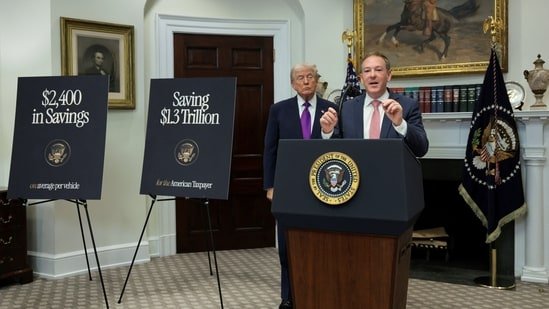
Trump administration says scrapping keys Climate policy in the Obama era The cost of buying a new car will be reduced by an average of $2,400: White House and the Environmental Protection Agency (EPA).

Environmental Protection Agency (EPA) Administrator Lee Zeldin speaks at the White House in Washington, D.C., accompanied by U.S. President Donald Trump. (Reuters)

The move repeals a 2009 “hazard finding” that allowed the EPA to regulate greenhouse gas emissions from vehicles starting with the 2012 model year, the New York Post reported.

What is the cancellation policy?

The hazard finding, proposed by former President Barack Obama, allows the EPA to measure and limit emissions of carbon dioxide, methane and other greenhouse gases from cars and engines.

president Donald Trump EPA Administrator Lee Zeldin announced the repeal of the rule this week, arguing that it places a heavy compliance burden on manufacturers.

“Manufacturers will no longer have the burden of measuring, compiling or reporting greenhouse gas emissions from vehicles and engines,” Zeldin said at the White House.

Also read: ‘Trump pooped his pants…’: Climate activists’ big statement after Oval event ends abruptly

How to save $2,400 per vehicle?

The government believes that removing emissions compliance requirements will significantly reduce production costs for automakers.

The EPA said “regulatory compliance costs” were avoided and “costs associated with purchasing associated equipment were avoided.” [electric vehicles]”It will help reduce car prices.

“Gas prices will stay low and car prices will go down because of this move,” Steve Milloy, a former Trump EPA transition adviser and senior fellow at the Energy and Environmental Law Institute, told the New York Post.

He added that “lower gas prices and lower car prices will impact the economy for decades to come.”

The government also said the start-stop engine function introduced under the emissions framework is no longer needed: a change that some industry figures say reduces manufacturing complexity and costs.

Also read: Trump withdraws U.S. from dozens of international U.N. entities, including key climate ones

Industry reactions and warnings

“We appreciate the work President Trump and Commissioner Zeldin have done to address the imbalance between current emissions standards and customer choice,” a Ford Motor Company spokesperson said.

However, industry leaders warned that price cuts may not happen immediately. Tim Pohanka, vice president of Pohanka Automotive Group, told the New York Post: “Are we going to see $2,400 off the price of the car immediately? Probably not.”

Auto analyst Lauren Fix added that “every car brand will be slightly different,” but she described the move overall as “a win to make cars more affordable.”