
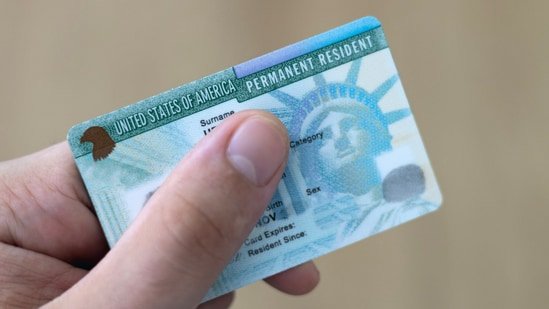
The United States has slashed a key immigration route used by hundreds of thousands of Indian professionals, instructing officials to approve green card applications from within India only in “exceptional circumstances” – the latest in a series of restrictions that have led to a drop in H-1B visa registrations for people from all countries, new data shows.

Registrations fell 38.5%, reflecting Trump administrationTough immigration policies have reshaped the prospects for Indian workers, who account for 71% of all H-1B petitions approved.
U.S. Citizenship and Immigration Services (immigration office) announced the policy change Thursday with a new memo instructing officials to default to consular processing — requiring applicants to return to their home countries and go through U.S. Embassy or consulate – rather than allowing adjustment of status within the United States.
The U.S. Citizenship and Immigration Services also released data showing that H-1B visa This dropped from 343,981 in fiscal year 2026 to 211,600 in fiscal year 2027. USCIS said 71.5% of selected applicants had a U.S. master’s degree or higher, up from 57% the previous year, and only 17.7% of selected applicants were in the minimum wage category. “The days of abusing the program for mass low-wage registrations are over,” USCIS said in a post on X.
For Indian H-1B workers, many of whom have spent a decade or more in the employment-based green card backlog, the change creates new uncertainty in the final stages of a process they have waited years to complete.
“The traditional assumption — that if you maintain status, pay taxes and meet the requirements, your I-485 will go through — is no longer reliable,” immigration attorney Nicole Gurnara told HT. “Applicants need to obtain a green card, not just qualify for a green card.”
The memorandum does not change the underlying law, which treats adjustment of status as a discretionary benefit. But over the years, this discretion has been rarely exercised. The new policy suggests officials will invoke it more frequently — and the U.S. Supreme Court’s 2022 ruling in Patel v. Garland means such denials are largely unreviewable in federal courts.
The practical consequences of Thursday’s memorandum will be most felt by Indian applicants in the EB-2 and EB-3 backlog categories, who typically have to wait 10 to 15 years to receive a visa number. Many people live with children and spouses in the United States. Under the new framework, Gunara said, accumulated history — family relationships, tax records, career progression — becomes the primary evidence applicants must provide, rather than background details that officials take for granted. Maintaining valid H-1B or L-1 status throughout the green card process is not by itself sufficient to justify a favorable decision, he added.
Students holding F-1 visas face special risks.