
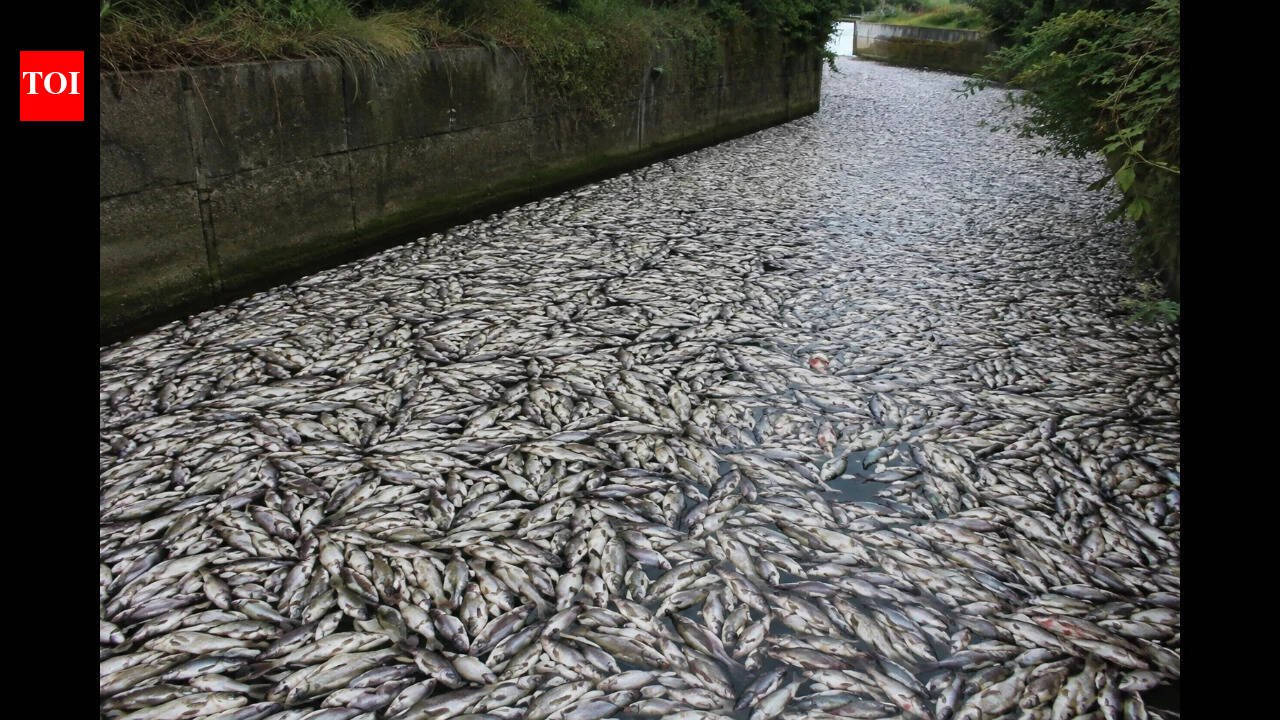
Tons of dead fish have been removed from the Gliwice Canal in southern Poland after a toxic golden algae bloom triggered a new environmental crisis in the Oder River system. Polish authorities said the fish deaths were linked to Prymnesium parvum, a microscopic organism capable of producing toxins that can be lethal to aquatic life. The incident has revived memories of the devastating 2022 Oder River ecological disaster, when hundreds of tonnes of fish and other wildlife died across the waterway. Authorities are now closely monitoring the affected canal and surrounding waters to prevent the outbreak from spreading further. The latest event also highlights the complex conditions that can allow golden algae to flourish, including elevated salinity, nutrient pollution, unusually warm temperatures and low water levels. Research and conservation groups have warned that these pressures could make similar ecological crises more likely as climate change intensifies.
Toxic golden algae is behind the mass fish deaths
The immediate concern in the Gliwice Canal is Prymnesium parvum, commonly known as golden algae. The single-celled microalgae is capable of producing prymnesins, toxins that can severely damage the gills of fish and other aquatic organisms. Once the toxins enter the animals’ bodies, they can cause extensive internal damage and death. Unlike many algae associated with freshwater ecosystems, Prymnesium parvum is particularly associated with brackish and saline environments. Under favourable conditions, however, it can proliferate rapidly in freshwater systems. The organism was identified as the key driver of the catastrophic 2022 fish die-off in the Oder, making its detection in the river system particularly concerning. The latest deaths have occurred in part of the Gliwice Canal, which is connected to the wider Oder basin. Polish authorities have been carrying out regular patrols on both land and water while monitoring conditions and removing dead fish from affected areas.
Why the Oder River system is vulnerable to another algae crisis
The current situation is particularly worrying because it follows the enormous ecological disaster that struck the Oder in 2022. During that event, hundreds of tonnes of dead fish, clams, crayfish and other wildlife were found along the river. Investigations eventually linked the mass mortality to a large-scale bloom of Prymnesium parvum. The algae did not emerge in isolation. Researchers have described the 2022 disaster as a compound environmental event involving several pressures at the same time. High levels of salt, nutrients, hot water temperatures, and low flow in the rivers provided suitable conditions for rapid proliferation of the algae. This is still relevant. High temperature could lead to proliferation of harmful algae, and low flows to high levels of salt and nutrients. Water pollution could also change the chemistry of the water bodies in such a way that species that are normally found in low amounts can now dominate.
How golden algae can kill fish so quickly
It is the capability of Prymnesium parvum to release potent toxins referred to as prymnesins that represents a threat from this organism. Based on the results obtained within the AEGIS research project, these toxins are able to destroy the gills of fish, which gives rise to penetration into the blood and poisoning of internal organs. In this way, a large-scale development of Prymnesium parvum can result in massive death among fish. Moreover, the corpses of fish are evidence of the critical state of ecology of the ecosystem. Hence, a sharp increase in dead fish can be considered an indicator of changing conditions in water. It can produce energy through photosynthesis but can also feed on other organisms. This flexibility may help it survive and expand when environmental conditions shift in its favour.
A warning for Poland’s waterways
The latest fish deaths show that the environmental problems associated with the Oder have not simply disappeared since the 2022 disaster. Prymnesium has become established within the Oder system and high concentrations have continued to be reported since the original catastrophe. For authorities, the priority is to contain the affected area and prevent the algae and its effects from spreading further through connected waterways. Continued monitoring is essential because changes in water temperature, salinity, nutrient levels and river flow can influence how quickly a bloom develops. The renewed fish deaths also demonstrate how vulnerable freshwater ecosystems can become when several environmental pressures occur simultaneously. As warming temperatures, intensive water use and persistent pollution place additional stress on rivers, scientists warn that compound ecological events could become more frequent or severe.