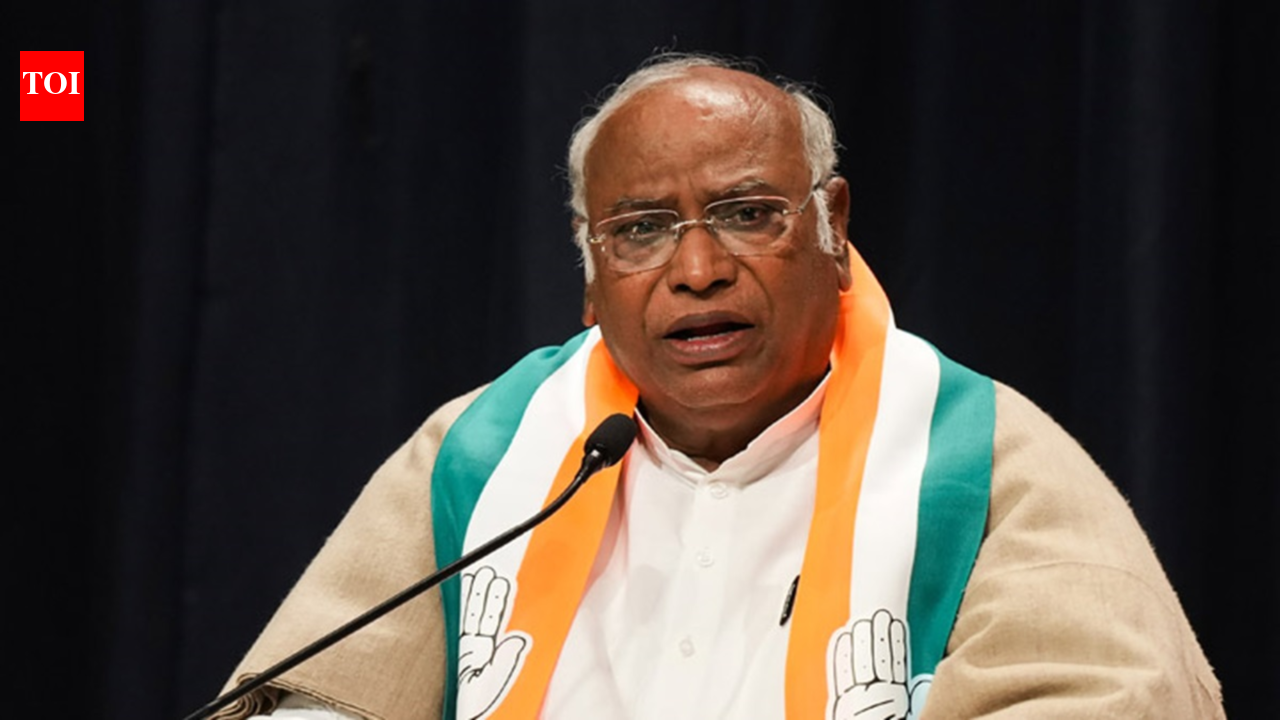

New Delhi: Congress president Mallikarjun Haq on Wednesday announced that the opposition parties united under the India Bloc have resolved to resolutely oppose the proposed delimitation bill in Parliament.Speaking to reporters after a key meeting with opposition leaders at the Constitution Club, Hague stressed the EU’s collective position. “We are united in our decision to oppose the delimitation bill,” he asserted, while expressing concern that the bill could undermine democratic representation.
“We all support the Women’s Reservation Bill. But we have reservations about the way they have brought it. This is politically motivated. The government does this to suppress the opposition parties. Although we have always supported the Women’s Reservation Bill, we insist on the implementation of the earlier amendments,” Hag said.“They have played some tricks on the delimitation issue. We parties should come together and fight in Parliament. We will oppose the bill but we are not against reservation (for women). The way they have proposed it in the bill, whether it is delimitation, they have not even passed the census. All the powers of the constitution have been taken away by the executive. Mostly, the powers that can be exercised by the institutions, they have given to Parliament so that they can change the delimitation at any time...They have already cheated us in Assam and J&K,” he added.The gathering, which was attended by key figures from political parties including Trinamool Congress, Samajwadi Party, DMK and Aam Aadmi Party, marks a renewed coordination ahead of the Assembly session that begins on April 16. Opposition leaders fear that the bill, which seeks to redraw constituency boundaries, could favor states in the Hindi heartland and dilute the influence of southern and eastern states due to demographic differences.Haq accused the BJP-led government of pushing the measure to consolidate power and warned it threatened federalism.The move comes amid rising political tensions as the opposition seeks to rally against what it calls “electoral gerrymandering.”