
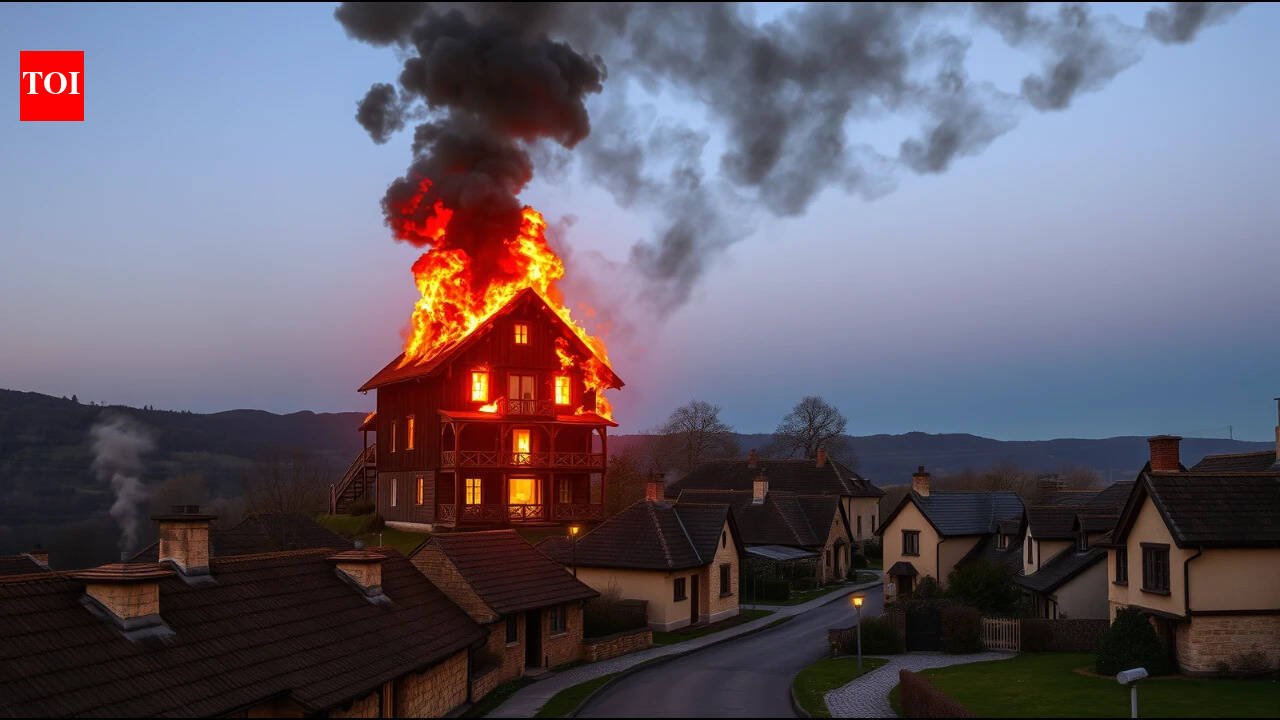
Not everything has to be done now, choosing those things solves half the problem. Rushing for everything will only lead to bad results, so you need to stop and decide whether to rush for success. You don’t need to hesitate when your house is on fire. In this case, you need to take immediate action. But not all situations in life require the same urgency, which is what this succinct Norwegian proverb reminds us. In today’s fast-paced life, it’s worth returning to this old saying because it’s designed to reorient us when we’re juggled with multiple ideas and to-do lists.Today’s proverb of the day It’s: “When the house is on fire, act fast.”
The origins of Norwegian wisdom
Like many traditional Scandinavian proverbs, this quote has no clear author. It is part of Norway’s rich oral tradition, where wisdom has been passed down from generation to generation long before it was ever written down.The Norwegian context helps explain why these recommendations resonate. For centuries, Norwegians lived in remote farming communities, valleys, and coastal villages, where survival relied on careful planning. Harsh winters require preparation months in advance. Fishermen must study weather patterns before venturing into dangerous waters. Farmers cannot afford careless decisions that could ruin their harvests throughout the year.At the same time, wooden buildings are highly susceptible to fire. Historical towns in Norway such as Bergen, Trondheim and Oslo have experienced devastating fires over the centuries because most houses were built of wood and were located close to each other. Once the flames spread, hesitation can prove fatal.Thus, two complementary lessons are learned. Most aspects of life require patience, but fires require immediate action. This proverb sums up both realities in one memorable sentence.
What do we learn from this Norwegian proverb?
Practicality: Norwegian culture has historically valued solutions over drama. Encourage people to assess situations realistically and respond appropriately rather than react emotionally. Do what you think is practical. Your house isn’t on fire, is it? chill.Moderate: Scandinavian society generally values balance over extremes. This proverb speaks against both reckless impulse and endless indecision. Instead, it recommends careful judgment.Prepare: Since life in Norway has historically required planning for adverse weather and limited resources, careful preparation has become a cultural virtue. If you are properly prepared, emergencies can be handled more effectively.
Avoid a false sense of urgency
False urgency is when everyone pretends the work must be done first. And the priority list is endless. Modern workplaces often operate under what psychologists call “false urgency.” The email is marked urgent. The meeting is marked as an emergency. Even if the deadline is flexible, it can become a crisis.Sometimes our minds get cluttered with this false sense of urgency.A Norwegian proverb challenges this mentality.If every task is treated like a house on fire, people will experience ongoing stress and burnout. Decision quality declines because hasty thinking often overlooks important details.Managers who believe in this proverb differentiate between true emergencies and routine work. They encourage employees to react quickly when necessary but allow for thoughtful decision-making whenever possible.Modern psychology supports the wisdom of this proverb.Research consistently shows that people under excessive time pressure make poor decisions. Stress narrows focus, reduces creativity, and increases reliance on mental shortcuts. When people believe that everything requires immediate action, they are more likely to make mistakes, reason emotionally, and make impulsive choices.Real emergencies activate different psychological processes. In these cases, delaying action often increases risk. Emergency responders, firefighters, surgeons and pilots receive extensive training to make informed decisions quickly and not act recklessly.Norwegian proverbs are ultimately an exercise in harmony. It does not condemn speed, nor does it worship slowness. Instead, it promotes situational urgency.It reminds us that wisdom is not a static set of rules but a dynamic response to changing circumstances. We must develop the patience to build slowly, carefully, and beautifully when life is calm. But we must also retain our raw, unhesitating instinct to act like lightning when the alarm sounds.