Taiwanese students are turning discarded oyster shells and coral waste into 3D-printed structures for damaged reefs

A group of students in Taiwan has found a way to give discarded shellfish waste a second life beneath the waves. Their project, named Reefvive, takes oyster shells and coral gravel that would otherwise be thrown away and turns them into 3D-printed bases for growing coral. According to the James Dyson Award, the structures have already been trialled in open water, with 28 coral fragments attached and a host of marine creatures moving in soon after. At National Taiwan Normal University and tested alongside National Taiwan Ocean University, the idea sits at the crossroads of waste reduction and habitat repair, offering coral fragments a stable place to take hold while keeping shell waste out of landfill.
How Taiwan students created reefs from oyster shells
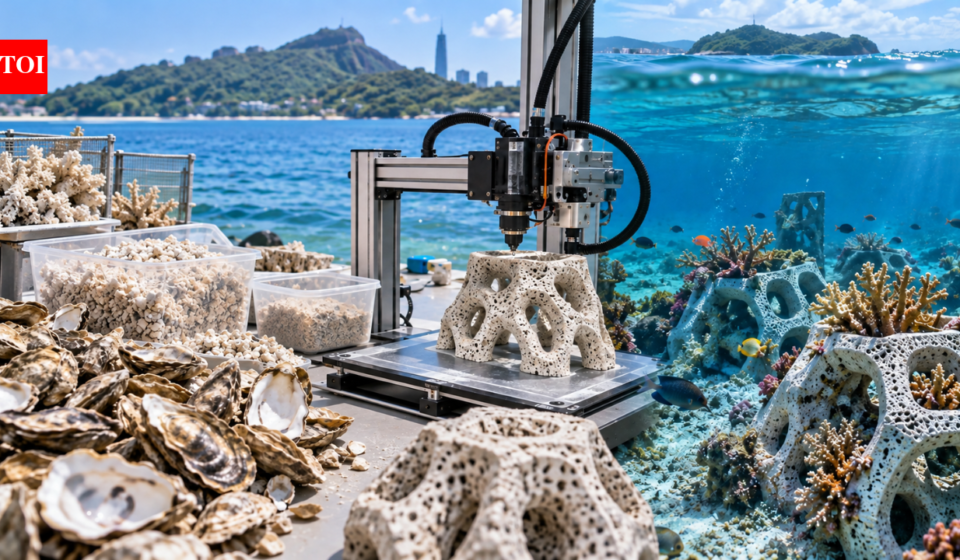
Rather than relying on concrete, as most artificial reef structures do, the Reefvive team ground up coral gravel and oyster shells and worked them into a material that could be fed through a 3D printer. This let them shape modular bases with rough, textured surfaces, something the James Dyson Award notes was done deliberately to encourage young coral to settle and grow.Each base can be slotted together with others, so a handful of small units can grow into a much larger reef framework over time. The intention is for the structures to do two jobs at once: give coral a foothold and offer shelter to the fish and invertebrates that move in around them.
What inspired the reef base design
Before settling on a final design, the students looked closely at brain corals and the winding, symmetrical ridges on their surface. That pattern became the starting point for the base’s shape, which was reworked through several prototypes until the team landed on a structure with three large openings, allowing units to be stacked on top of one another underwater.Folded ridges along the sides add grip against currents, while three legs lift and anchor each base on sandy seafloors, reducing movement caused by waves. The modular units themselves click together without any additional clips or fasteners, making it straightforward to link several bases into a larger reef structure.
Reefvive aims to make coral restoration easier
Reefvive has already moved past the prototype stage and into the ocean. Working with National Taiwan Ocean University, the team carried out underwater trials in which 28 separate coral fragments were attached to the bases. Every one of them survived the testing period, a 100% survival rate that was entered for the award.Marine life didn’t take long to notice. Algae, fish, hermit crabs and even octopuses have been spotted using the structures, according to the James Dyson Award. The team now plans to expand testing to more restoration sites and refine the design for larger-scale production, with the long-term goal of making coral restoration cheaper and easier to scale up. Reefvive was named National Runner-Up in the Taiwan region of the James Dyson Award, and was also entered for the 2026 Young Pin Design Awards.
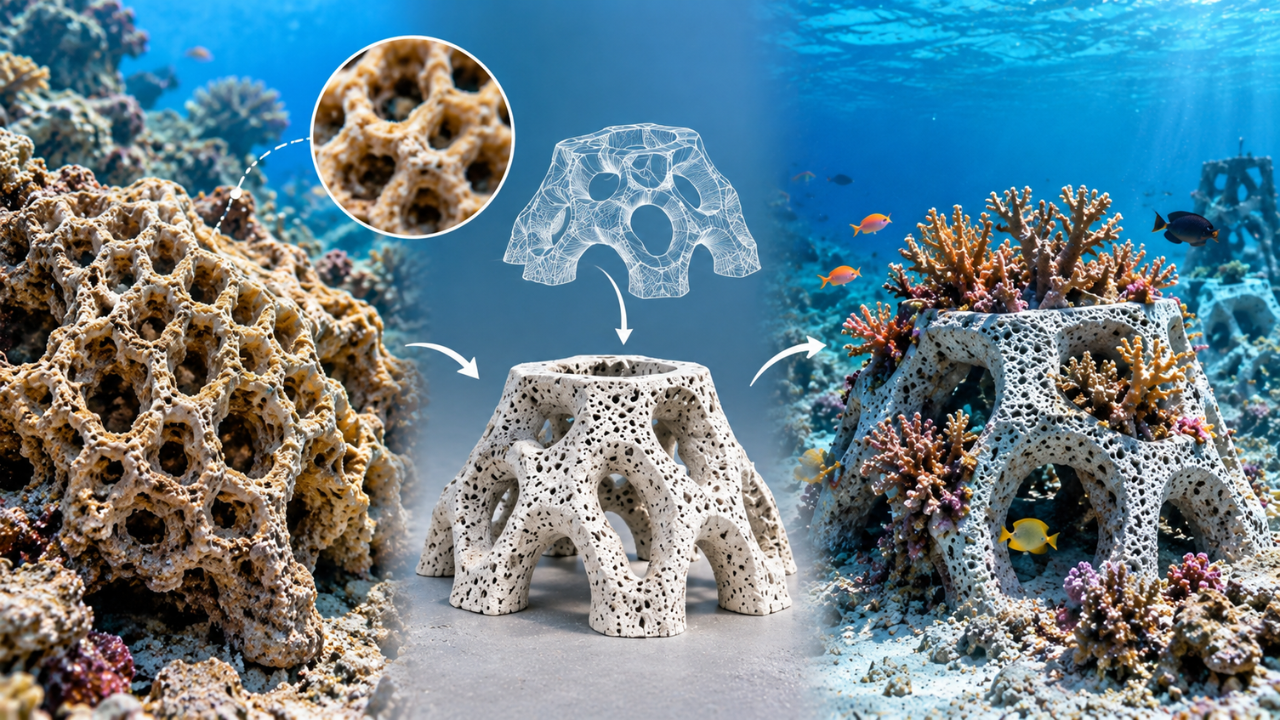
Image AI generated