
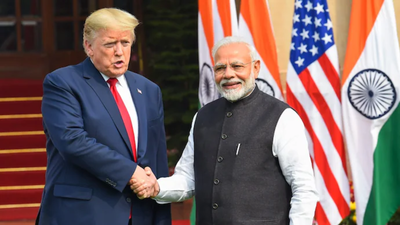
New Delhi: Prime Minister Narendra Modi on Saturday welcomed the India-US interim trade agreement, calling it an important step to strengthen economic ties, boost domestic manufacturing and create jobs.In X’s post, Prime Minister Modi said, “Great news for India and the United States! We have agreed on a framework for a temporary trade agreement between our two great countries. I thank President Trump for his personal commitment to the strong relationship between our two countries. This framework reflects the growing depth, trust and dynamism of our partnership. It strengthens’Made in India“Providing new opportunities to India’s hardworking farmers, entrepreneurs, MSMEs, start-up innovators, fishermen, etc. Large-scale employment opportunities will be created for women and youth. India and the United States share a commitment to promoting innovation, and this framework will further deepen our investment and technology partnership. The framework will also strengthen resilient and trustworthy supply chains and contribute to global growth. We remain committed to building global partnerships as India moves towards building a ‘Viksit Bharat’”.India and the United States issued a joint statement earlier, announcing an interim trade agreement framework. According to the agreement, tariffs on Indian goods entering the United States will be reduced from 50% to 18%. “The United States and India are pleased to announce that they have reached an interim framework agreement on mutually beneficial trade,” the statement said.Months of negotiations ensued after Washington imposed a 50% tariff on Indian imports, causing a stalemate in trade talks. The 25% tariffs were imposed in August, with the United States accusing India of supporting Russia’s war effort in Ukraine through its oil purchases.The framework also reaffirmed both sides’ commitment to negotiations on a broader US-India bilateral trade agreement, which was launched by Modi and US President Donald Trump in February 2025 amid long-running trade tensions over India’s energy imports from Russia.Under the interim agreement, the United States will reduce tariffs to 18% on a variety of Indian products, including textiles and apparel, leather and footwear, plastic and rubber products, organic chemicals, home furnishings, handmade products and selected machinery. Washington has also said that if the deal is successful, it will remove tariffs on other Indian exports such as generic medicines, gems and diamonds, and aircraft parts.In turn, India will eliminate or reduce tariffs on all U.S. industrial goods and a basket of food and agricultural products, including dried distillers grains, red sorghum for animal feed, tree nuts, fresh and processed fruits, soybean oil, wine and spirits.Union Commerce and Industry Minister Piyush Goyal said that the agreement protects the Indian agricultural sector and sensitive agricultural products and dairy products are fully protected. These include corn, wheat, rice, soybeans, poultry, milk, cheese, fuel ethanol, tobacco, certain vegetables and meat.The framework also outlines India’s intention to purchase US$500 billion worth of US energy products, aircraft and aircraft parts, precious metals, technology products and coking coal over the next five years, a move expected to significantly expand bilateral trade.As for claims that India will stop importing Russian oil, New Delhi has not confirmed any such commitment. The government reiterated that energy security remains a top priority. “Diversifying energy procurement in line with objective market conditions and changing international dynamics is at the core of our strategy to ensure this goal,” MEA spokesperson Randhir Jaiswal said.The agreement provides preferential market access to key areas in both countries. The United States will lift tariffs on certain Indian aircraft and aircraft parts on national security grounds, while India will receive preferential tariff quotas on auto parts and the outcome of negotiations on generic drugs and raw materials.Goyal said the agreement opens up a $30 trillion market for Indian exporters, especially micro, small and medium enterprises, farmers and fishermen, and is expected to create hundreds of thousands of job opportunities for women and youth.The framework also includes measures to promote digital and technology trade, with both sides committing to address barriers to digital commerce, increase trade in technology products such as GPUs and data center equipment, and expand joint technical cooperation.The two countries agreed to work towards eliminating non-tariff barriers that affect bilateral trade. India will address issues related to U.S. medical devices, information and communications technology products, and food and agricultural products, lifting restrictive import licenses and review standards within six months to ease market access.Officials said the framework paves the way for finalizing an interim agreement and advancing negotiations for a comprehensive bilateral trade agreement, with room for further reductions in tariffs.