
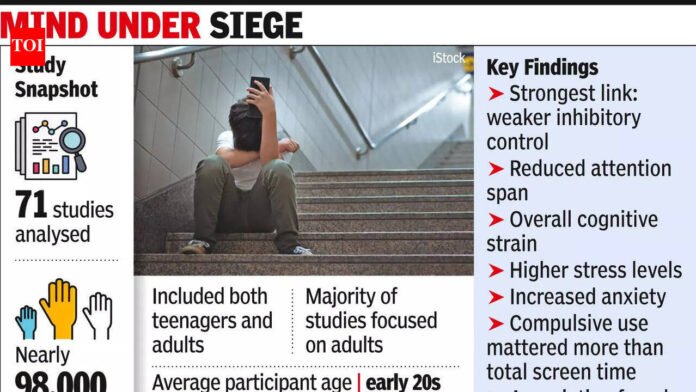
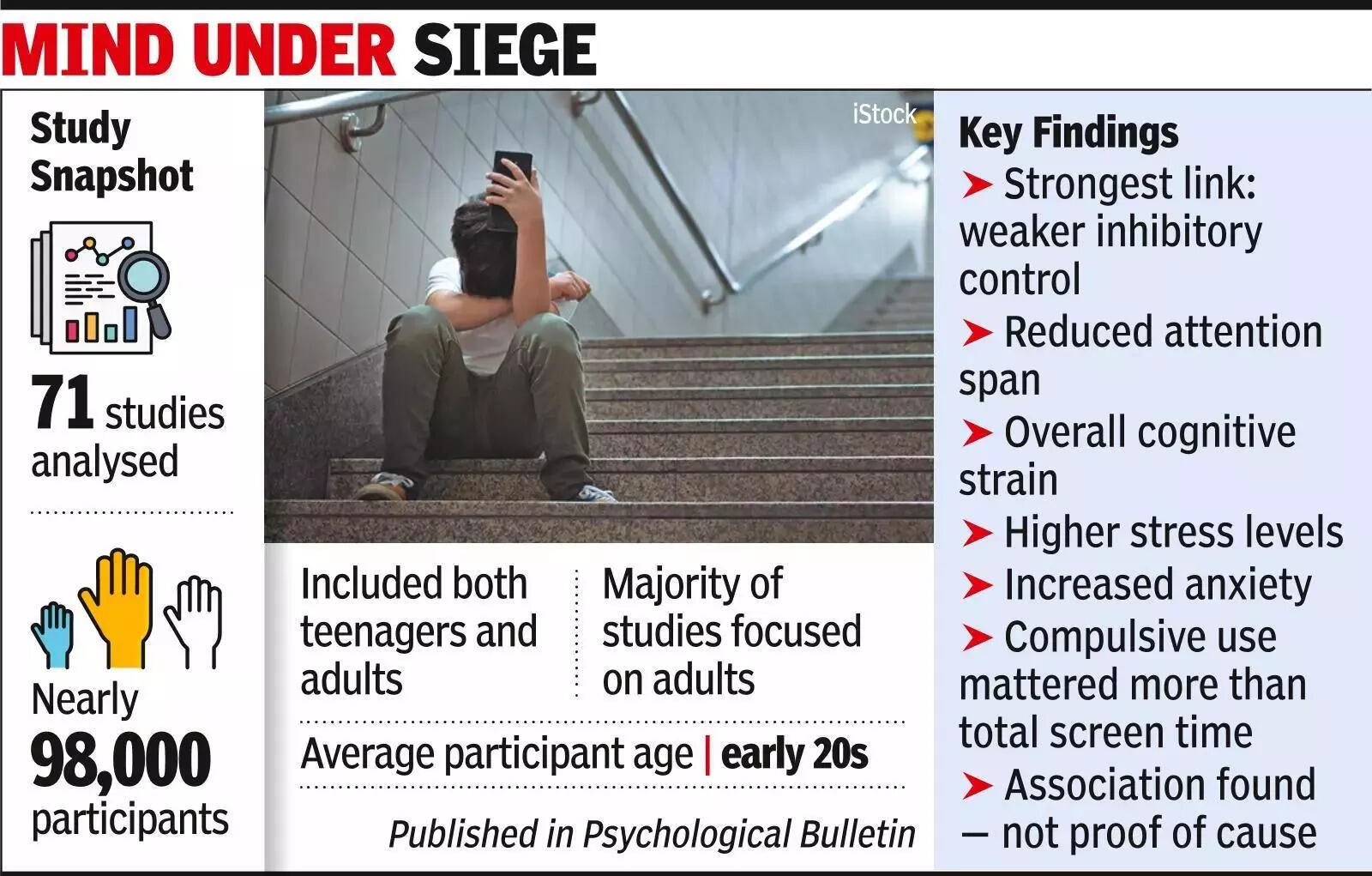
Simply put, the more you scroll, the harder it is to focus on slower tasks—reading, studying, or getting work done without checking your phone. Researchers say that when each swipe brings something new, the brain begins to expect constant stimulation. When this pace slows down, boredom may set in more quickly.Clinicians say the design of these platforms makes a difference. Brief novelty, color, and immediate reward repeatedly activate the brain’s reward pathways, reinforcing the urge to continue watching. Dr Paramjeet Singh, a counselor at PSRI Hospital, said most people can consciously leave, but those prone to addiction or obsessive-compulsive disorder may find it difficult to break free. He noted that excessive scrolling is increasingly manifesting itself in clinics as fatigue, poor concentration, and even strained relationships.From a psychological perspective, it’s not huge damage that people worry about, but rather gradual changes in the way the brain responds to stimuli. Dr Jyoti Mishra, senior consultant, psychology, Apollo Spectra Hospital, Delhi, said short films are designed around novelty and instant gratification. Compulsive viewing slowly erodes concentration and impulse control. She explains that prolonged exposure to fast, emotionally charged content puts neural networks on high alert, which can manifest as restlessness, difficulty concentrating, and anxiety, especially in young people. The good news, she adds, is that practicing digital hygiene — limiting screen time, taking breaks and protecting sleep — can reverse many of these effects.The review found that addictive or difficult-to-control use was more strongly linked to these effects than total screen time alone.Importantly, research shows an association, not a cause. People who already struggle with attention or anxiety may be more attracted to fast-paced content. Still, the pattern is noteworthy when dozens of studies point in the same direction. The reels are effortless. Sustained attention takes effort. This balance may be worth maintaining.