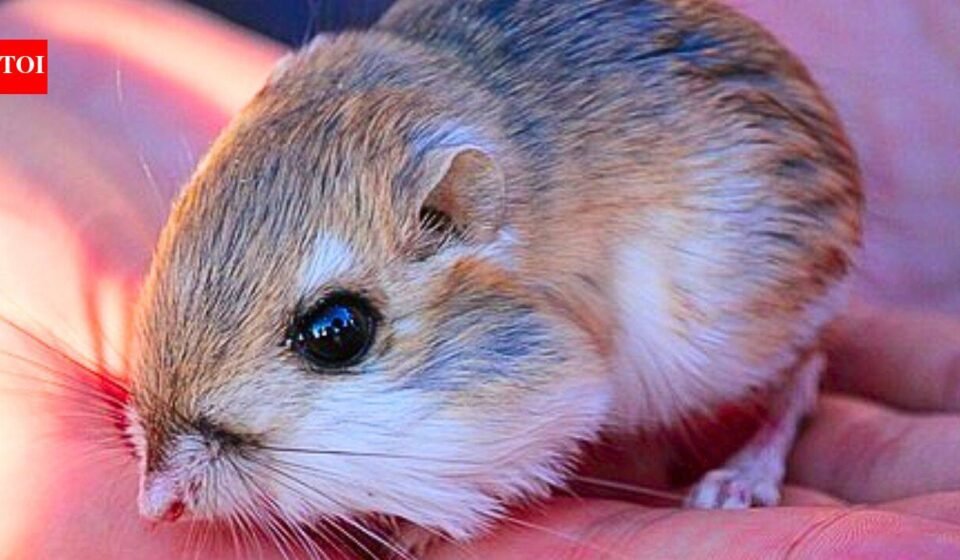
Scientists removed kangaroo rats from desert plots for 13 years, revealing how the rodents shape vegetation in the Chihuahuan Desert

In the Chihuahuan Desert, kangaroo rats play an important role in shaping vegetation. Between 1977 and 1990, researchers excluded three kangaroo rat species from experimental plots to see how their absence affected plants and other animals. The 13-year experiment found that two grasses became significantly more abundant in plots without the rodents that are the tall annual ‘Aristida adscensionis’ and the perennial bunchgrass Eragrostis lehmanniana. According to the research published in Oecologia titled ‘Effects of kangaroo rat exclusion on vegetation structure and plant species diversity in the Chihuahuan Desert,’ researchers indicated that reduced soil disturbance and lower predation on large seeds may have contributed to the increase in grasses.
How did kangaroo rat removal affect the plants
The researchers found that excluding the three kangaroo rat species led to clear changes in vegetation. During the 1977 to 1990 experiment, two grasses became significantly more abundant in plots where the rodents were absent. Both Aristida adscensionis, a tall annual grass, and Eragrostis lehmanniana, a perennial bunch grass, became more abundant. These vegetation changes also altered plant cover across the plots, which affected how other animals used the area. Several rodent species and foraging birds changed their use of the plots as the vegetation shifted. Together, these findings indicated that kangaroo rats played an important role in shaping both plant cover and species composition in this environment.
How did researchers study the role of kangaroo rats in vegetation
The experiment examined how vegetation changed when kangaroo rats were kept out of selected plots over a long period. The exclusion ran from 1977 through 1990 and involved three kangaroo rat species. This extended period allowed researchers to track changes beyond short-term fluctuations. The study site was located in a natural transition between desert scrub and grassland, where environmental conditions and interactions among species influence vegetation. By comparing plots with kangaroo rats to those where the rodents were excluded, researchers could assess differences in plant abundance and diversity.
Why did grass abundance increase after kangaroo rats were removed
The researchers proposed two linked mechanisms that may explain the vegetation changes. The first mechanism was a reduction in soil disturbance after the rodents were removed. Removing the rodents reduced soil disturbance, which may have altered conditions for plants and seeds. Their absence also meant less predation on larger seeds, which kangaroo rats normally consume. Fewer kangaroo rats feeding on larger seeds may have allowed more of these seeds to remain in the plots, thereby contributing to the increase in grass abundance. The researchers noted that these mechanisms were possible explanations, but the study did not show that either process alone caused the vegetation changes.
How did different plant groups respond to kangaroo rat removal
The experiment did not affect all plant groups in the same way. Summer annual dicots had greater species diversity in plots where kangaroo rats remained present, a pattern the researchers said was consistent with predictions from keystone predator models. However, they could not determine whether this difference resulted directly from kangaroo rat activity or indirectly from the increase in grass cover after exclusion.Among winter annual dicots, the study found no experimental effect on species diversity. These contrasting results indicate that removing kangaroo rats changed some parts of the plant community, but did not lead to a uniform shift in diversity across all plant groups.
Kangaroo rat removal changed how other animals used the plots
The vegetation changes also affected other animals using the experimental plots. As grass cover increased after kangaroo rats were excluded, several other rodent species changed how they used the plots. Foraging birds responded to the altered vegetation as well. The effects of excluding kangaroo rats therefore extended beyond the plant community, changing conditions for other animals in the area. The study site was a natural transition between desert scrub and grassland, where environmental conditions and interactions among species shape vegetation structure.