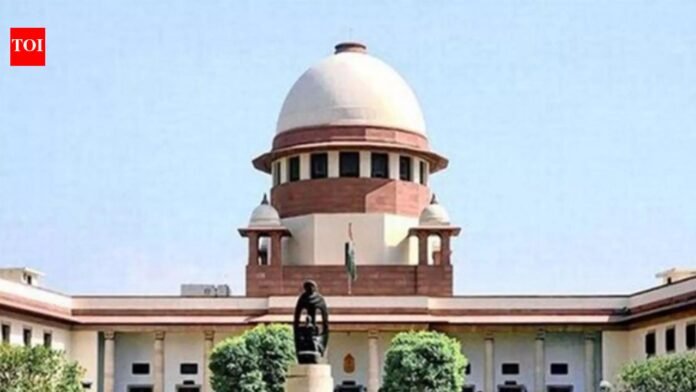
New Delhi: Supreme Court The West Bengal government on Tuesday asked the West Bengal government how the central agency can engage with the state authorities headed by the chief minister when its complaint is against the chief minister himself. Court raises questions to CM Mamata BanerjeeKapil Sibal, the lawyer for law enforcement bureau Complaints cannot be filed before the SC for alleged violation of their fundamental rights but statutory remedies such as filing of FIR under BNS should be resorted to.Sibal’s bench of Justices Prashant Kumar Mishra and NV Anjaria said the charges leveled by the education ministry constituted an infringement of statutory rights and a complaint could be filed with the police, while the infringement of statutory rights did not amount to an infringement of fundamental rights and therefore a writ could not be filed.
“If ED comes in for investigation, your remedy to ED is to go to the state government headed by CM, inform them about the matter and seek redress,” the bench asked Sibal while hearing a petition filed by ED and its officials against the Bengal government, CM, Kolkata Police Commissioner and other state officials for not allowing ED to discharge its duties during raids in Kolkata in January, including at the office of political consultancy firm I-PAC. In connection with a money laundering investigation related to the coal “scam” case.However, the senior defense lawyer said the judges erred in finding the chief minister guilty when the matter was still under investigation. He said government officials acting under statutory provisions cannot invoke fundamental rights if the discharge of their duties is impeded and there are statutory remedies. He said the ED and its officials filed a writ petition without alleging that any specific fundamental rights of theirs were violated.“If the Enforcement Directorate is investigating (the case) under PMLA (Prevention of Money Laundering Act) and its officers notice some other violation, then the relevant agency, in this case the state government, should be notified under Section 66 of PMLA,” Sibal added.However, the judge said the so-called second charge – not allowing the Enforcement Directorate to conduct raids – was separate from the PMLA case because the offense was against the ED officials.“The person filing the writ petition has not claimed any fundamental right. Not only that, assuming he has fundamental rights, then the petition must state which fundamental right has been violated… There are statutory remedies for this and the statutory remedies must be followed. If the offense has been committed within the jurisdiction of a particular police station in a particular state, then the investigation must be conducted by that state,” Sibal argued.Abhishek Manu Singhvi, senior counsel for Bengal DGP, told the SC that the issue of maintainability of the petition should be decided by a larger bench as it involves important legal issues.