
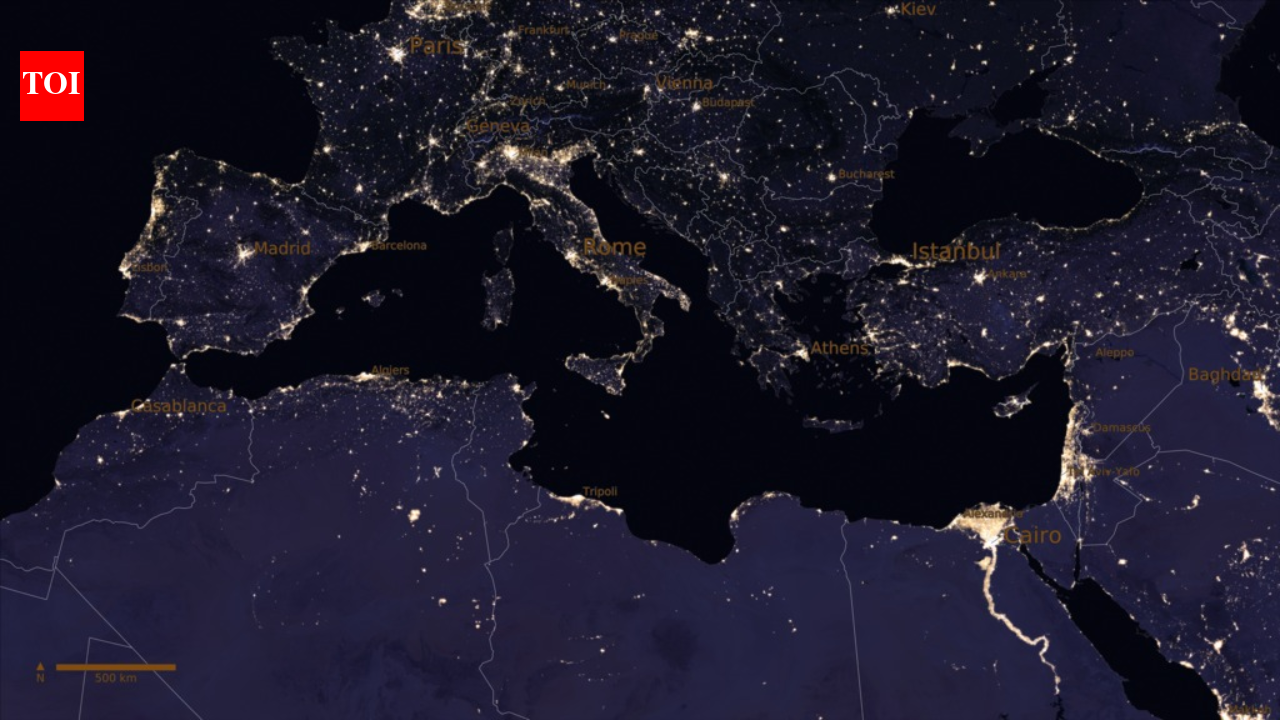
Go outside at night when it’s clear and you’ll see fewer stars than when your grandparents were young. This is not just an illusion; Satellite measurements now show that the Earth is getting brighter at night due to the rapid spread of artificial light. As humans continue to develop cities and villages, they are transforming the darkness of nature. The once peaceful starry sky is slowly but surely disappearing into a blanket of light.
satellite data The rise of night brightness
New research using satellite measurements shows an interesting pattern: Our planet is getting brighter at night, but the process is neither linear nor uniform. For example, NASA’s Nighttime lighting changes from 2012 to 2023 – EIC version Showing an overall increase of 16% in global nighttime light levels.This phenomenon is particularly fascinating because of its multifaceted nature. Researchers describe nighttime lighting conditions on Earth as “highly unstable,” constantly changing as some areas get brighter and others get dimmer.The conclusion was reached by analyzing millions of satellite photos processed by a NASA-funded algorithm, providing more detail than previous studies on the matter.In short, our planet isn’t just getting brighter; It does so in a dynamic way, reflecting human activity and other factors such as power outages and military operations.
reason light pollution and global brightening
according to Leibniz Institute of Freshwater Ecology and Inland FisheriesIncreased artificial lighting at night is the primary cause of increased brightness, also known as light pollution.Areas of the world experiencing the largest increases in brightness include sub-Saharan Africa and Southeast Asia. Increased urbanization and electrification in these areas are the main reasons for rising brightness levels.At the same time, advances in lighting technology have also made a huge contribution. Although LEDs are more efficient, they bring greater illumination due to their intensity and coverage.Artificial light at night has now become a destroyer of global darkness. However, not everything in the world is getting brighter. For example, parts of Europe have taken steps to reduce artificial lighting.
Environmental and health impacts of bright nights
The effects of increased brightness in the night sky are far more profound than simply depriving us of starry nights. Scientists have long recognized that light pollution is harmful to the functioning of ecosystems. It affects nocturnal ecosystems, animal migrations, and human circadian rhythms.Many species depend on darkness and light to survive. Birds rely on light for guidance, insects rely on light for direction, and the activity of plants depends on the alternation of day and night. Artificial light disrupts natural processes, leading to negative consequences.The effects of artificial light on humans are less obvious. Our body’s biological clock requires darkness to regulate our sleep cycles, and increased brightness at night can lead to more serious health problems. There’s also a cultural dimension: Many people can no longer observe the Milky Way due to light pollution.Yet, in every way, it clearly illustrates the ways in which we impact the nature of our planet. While development brings undeniable benefits, it also challenges us to find balance so that progress does not come at the cost of a complete loss of natural nights.